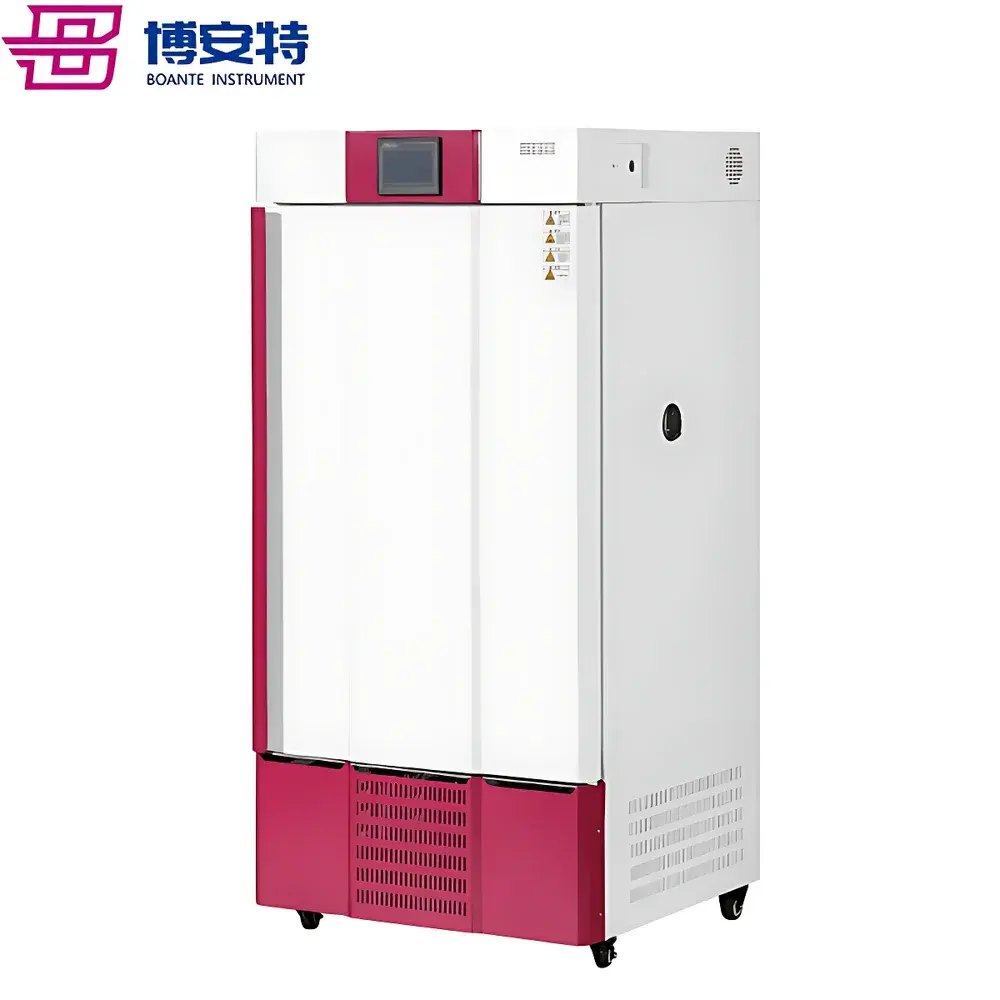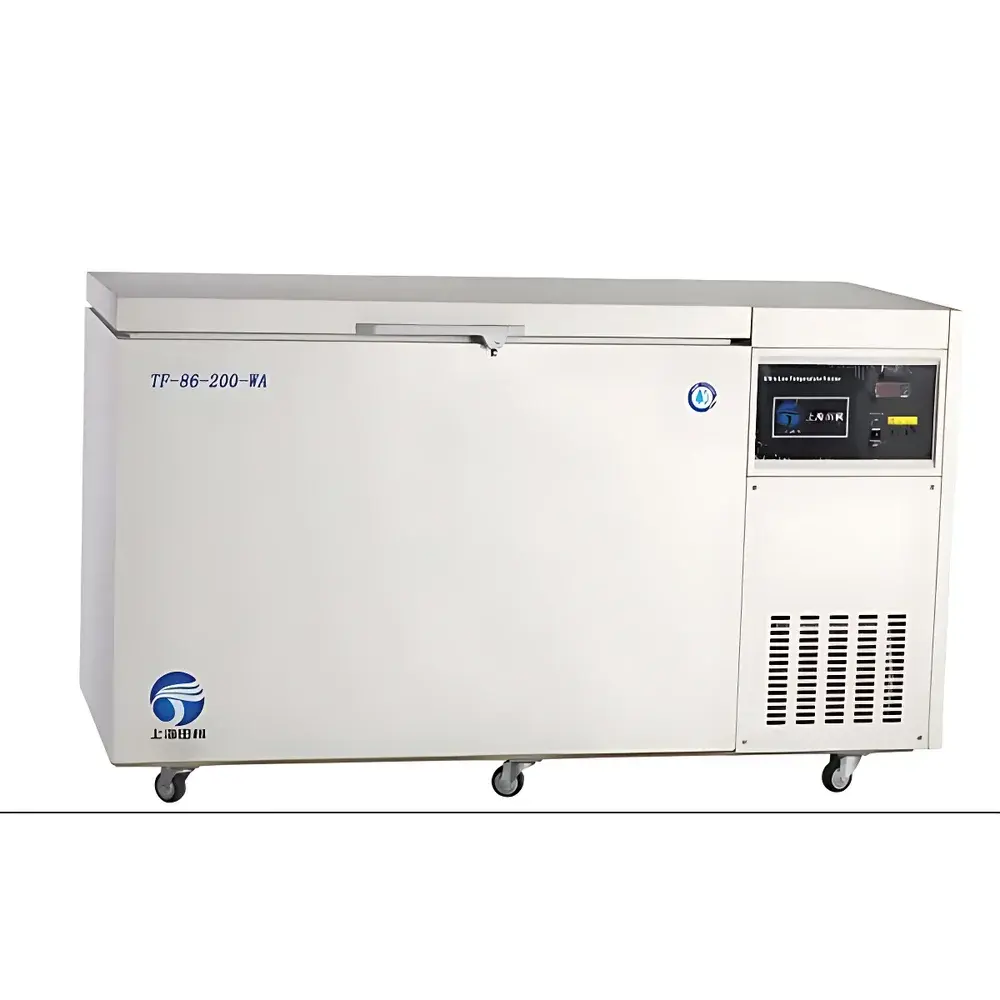
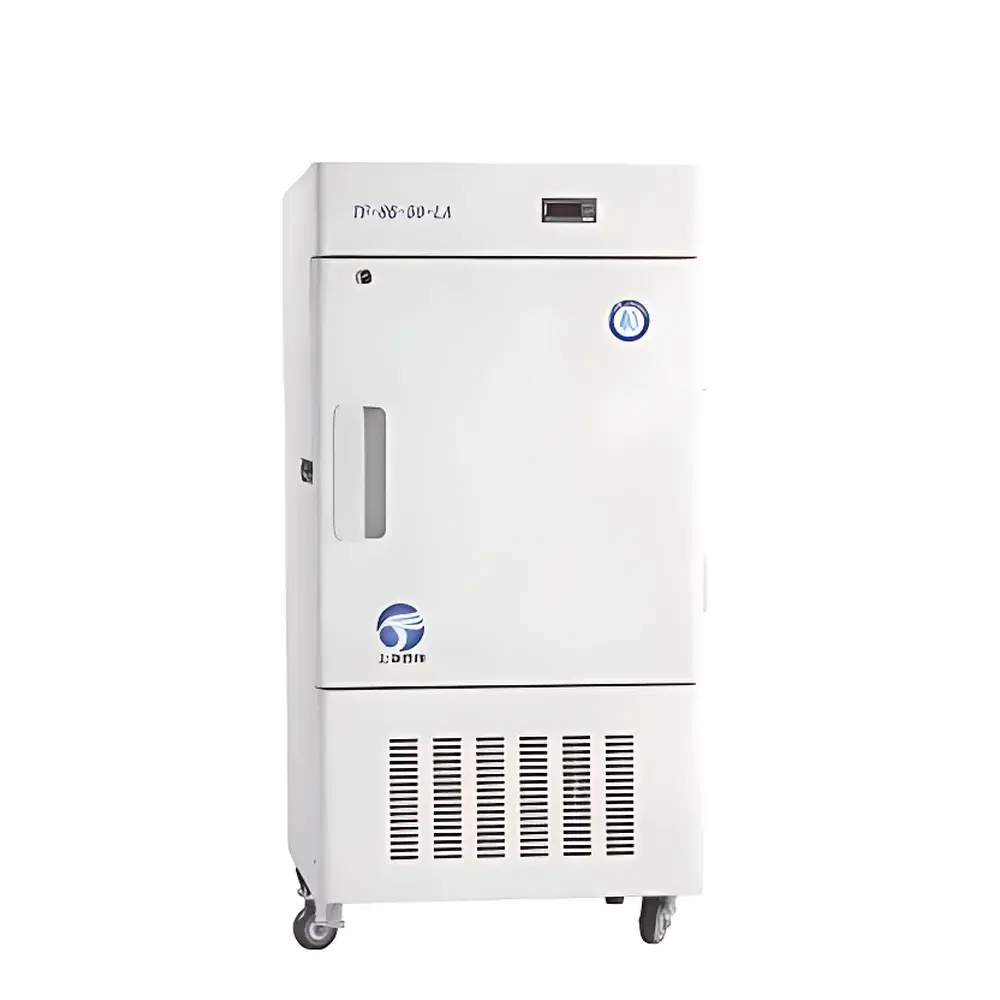
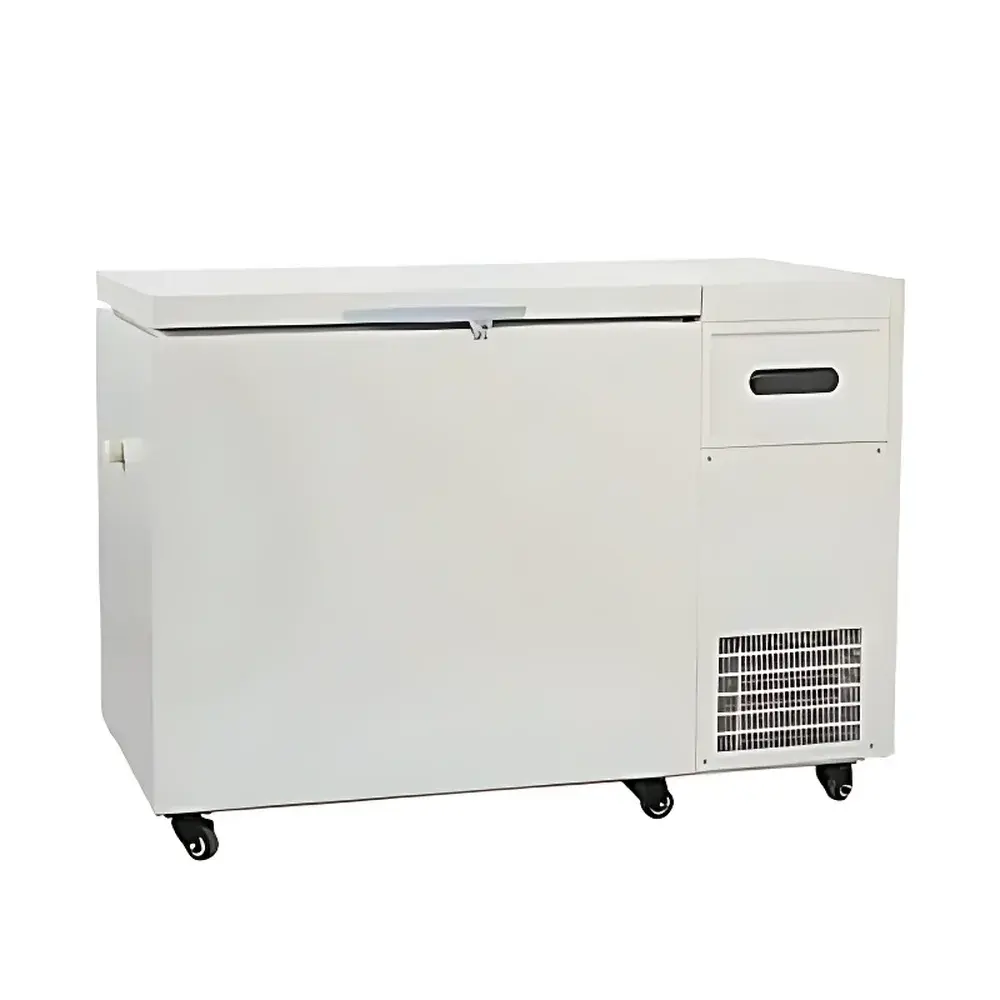
Tianfeng TF-40-218D-WA Ultra-Low Temperature Freezer
| Brand | Tianfeng |
|---|---|
| Origin | Shanghai, China |
| Manufacturer Type | Direct Manufacturer |
| Country of Origin | China |
| Model | TF-40-218D-WA |
| Effective Volume | 218 L |
| Interior Dimensions (mm) | 960 × 470 × 570 |
| Exterior Dimensions (mm) | 1160 × 750 × 860 |
| Power Supply | 220 V / 50 Hz |
| Rated Power | 550 W |
| Temperature Range | −15 °C to −40 °C |
| Noise Level | 57 dB(A) |
| Refrigerant | Eco-friendly non-CFC/HFC blend |
| Insulation | Dual-layer high-density polyurethane foam |
| Interior Material | Stainless steel (304) |
| Door Configuration | Four independent inner doors |
| Data Interface | RS-232 (optional) |
Overview
The Tianfeng TF-40-218D-WA Ultra-Low Temperature Freezer is an engineered solution for reliable, energy-efficient long-term storage of temperature-sensitive biological and chemical materials at stable sub-zero conditions. Designed specifically for laboratory and clinical environments requiring consistent thermal performance between −15 °C and −40 °C, this unit employs a dual-mode heat dissipation architecture—combining natural convection with controlled forced-air cooling—to ensure operational resilience in ambient temperatures up to 35 °C and in non-ideal installation spaces (e.g., laboratories with limited ventilation or elevated dust exposure). Its refrigeration system integrates internationally sourced compressors and critical components, calibrated to maintain ±1.5 °C temperature uniformity across the entire 218 L chamber volume under standard loading conditions (per ISO 23570:2021 for low-temperature storage equipment). The cabinet’s structural integrity, stainless-steel interior (AISI 304), and radius-corner cavity design support both GxP-compliant sample integrity and routine cleaning protocols required in GLP and ISO 15189-accredited facilities.
Key Features
- Stable operating range from −15 °C to −40 °C, validated per IEC 61000-4 electromagnetic compatibility standards
- Dual-mode condenser system: hybrid natural convection + fan-assisted cooling minimizes risk of compressor overload during partial airflow obstruction
- 57 dB(A) acoustic emission—optimized for shared lab environments where noise-sensitive instrumentation (e.g., mass spectrometers, microscopes) operates nearby
- Four independently sealed inner doors reduce cold air loss during frequent access; each door features magnetic gasket sealing compliant with EN 60335-2-24 safety requirements
- Three-position adjustable stainless-steel shelving supports flexible configuration for vial racks, cryoboxes, or bulk containers
- RS-232 serial interface (optional) enables integration with laboratory information management systems (LIMS) for audit-trail-capable temperature logging
- Integrated mechanical door lock and power switch lock meet institutional security policies for controlled substance or biohazard storage
- Eco-conscious refrigerant formulation complies with EU F-Gas Regulation (No. 517/2014) and China’s HCFC Phase-out Management Plan
Sample Compatibility & Compliance
This freezer accommodates a broad spectrum of biospecimens—including whole blood units, PBMCs, plasma aliquots, microbial cultures, vaccine formulations, and tissue explants—as well as electronic components and specialty polymers requiring thermal stabilization below −20 °C. Internal geometry (960 × 470 × 570 mm) allows standard 2-inch cryovial racks (up to 1000× 2 mL vials) and ISO-standard cryoboxes (e.g., Nunc™ 1000-cell boxes) without spatial interference. All materials contacting stored samples conform to USP Class VI biocompatibility testing criteria. The unit meets CE marking requirements under Directive 2014/35/EU (Low Voltage Directive) and 2014/30/EU (EMC Directive); factory calibration certificates include traceable NIST-traceable temperature mapping data per ASTM E2874–21 Annex A1.
Software & Data Management
While the TF-40-218D-WA operates via a dedicated microprocessor-based controller (no embedded OS), its optional RS-232 port supports ASCII protocol communication for external data acquisition. When interfaced with validated third-party software (e.g., LabArchives ELN, Thermo Fisher SampleManager), it delivers time-stamped temperature logs with configurable sampling intervals (1–60 min), alarm event timestamps, and user-accessible firmware version reporting. All data transmissions comply with FDA 21 CFR Part 11 principles when paired with appropriate system validation documentation and electronic signature workflows. Local display includes real-time setpoint/actual temperature, compressor runtime counter, and visual status indicators for door-open duration (>30 s), high-temperature deviation (>±3 °C), and power interruption events.
Applications
- Long-term archival storage of human biospecimens in biobanks and clinical trial repositories
- Cold-chain maintenance for WHO-prequalified vaccines during distribution staging at regional health centers
- Stabilization of thermolabile reagents (e.g., restriction enzymes, RNA isolation kits) in molecular diagnostics labs
- Precision storage of reference standards for pharmaceutical QC laboratories operating under ICH Q5C guidelines
- Material science applications involving low-temperature coefficient testing of semiconductors and superconducting ceramics
- Marine biology field stations preserving deep-sea microbial isolates prior to genomic sequencing
FAQ
What is the recommended ambient temperature range for optimal operation?
The unit is rated for continuous operation in ambient environments between 10 °C and 35 °C, with relative humidity ≤80% non-condensing. Performance validation was conducted at 25 °C/60% RH per ISO 23570 Annex B.
Does the freezer support remote monitoring via Ethernet or Wi-Fi?
No. It offers only RS-232 serial connectivity. For networked monitoring, integration requires an external RS-232-to-Ethernet converter validated per IEEE 802.3 standards.
How frequently should preventive maintenance be scheduled?
Compressor oil inspection and condenser coil cleaning are recommended every 12 months. Full system leak check and refrigerant charge verification should occur every 24 months by authorized service personnel.
Is the unit compatible with liquid nitrogen backup systems?
It is not designed for direct LN₂ integration. However, its physical footprint and rear clearance (≥100 mm) accommodate adjacent passive cryogenic buffer cabinets used in tiered cold storage architectures.
Can temperature mapping studies be performed internally?
Yes. The chamber accommodates up to 15 Class N thermocouples (per ISO 14644-3) through designated probe ports. Mapping reports must be generated using qualified external data loggers meeting ILAC-G8:2009 metrological requirements.