
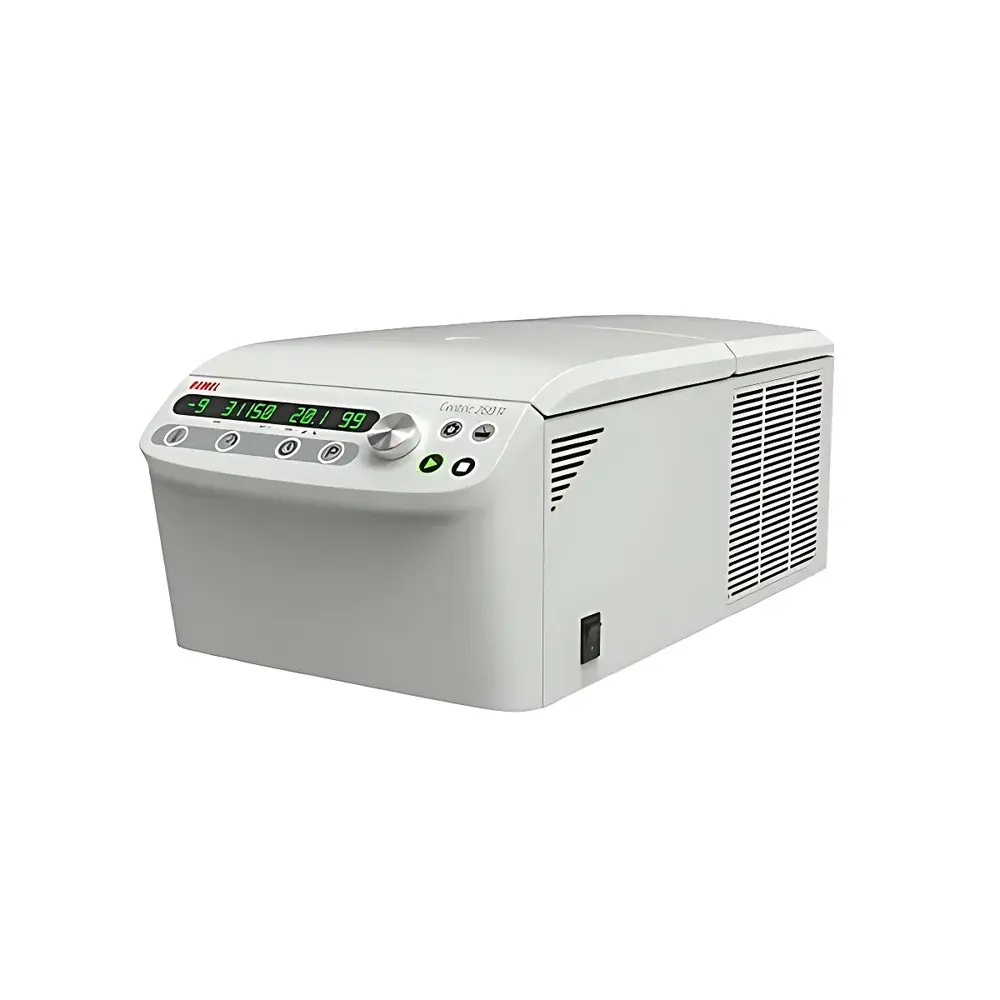
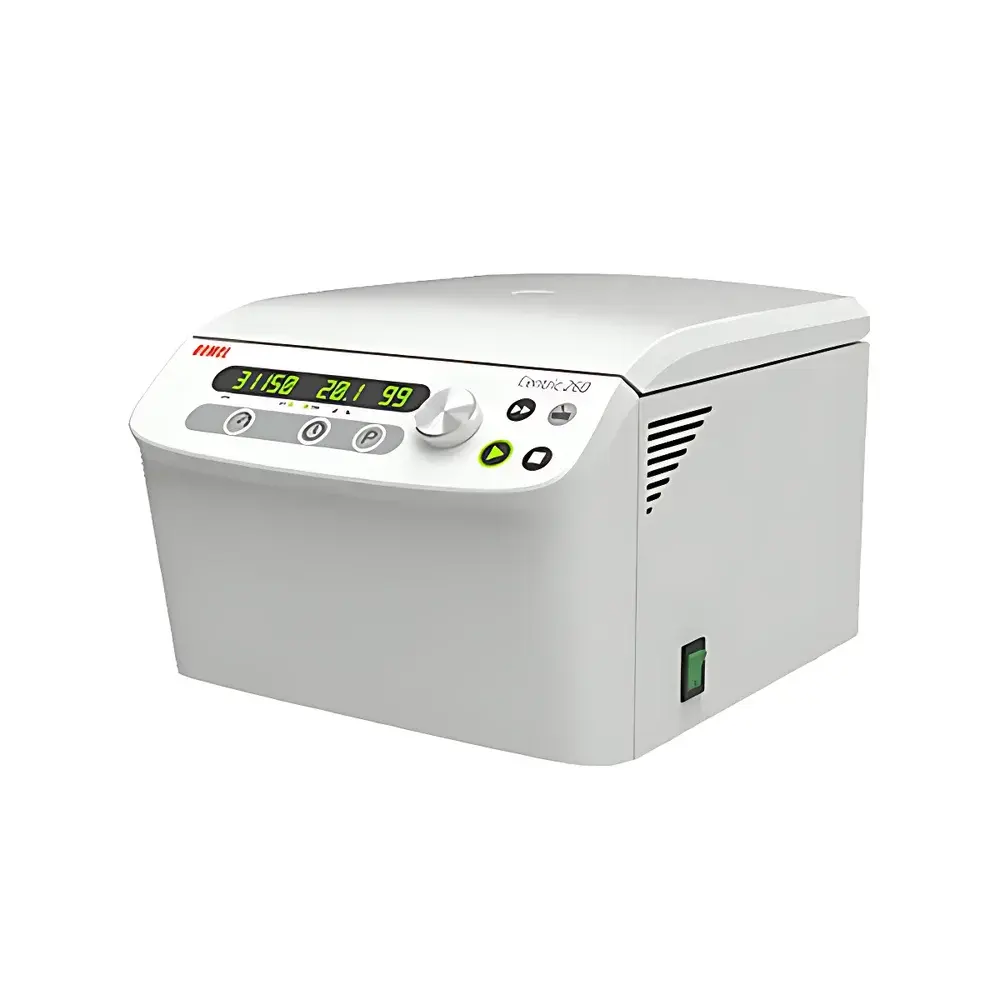
Domel CENTRIC 260 Benchtop High-Speed Refrigerated Centrifuge
| Brand | Domel |
|---|---|
| Model | CENTRIC 260 |
| Type | Benchtop Refrigerated Centrifuge |
| Max Speed | 18,000 rpm |
| Max RCF | 31,150 × g |
| Max Capacity | 6 × 50 mL (angular rotor) |
| Temperature Range | −19 °C to +40 °C |
| Acceleration/Deceleration Steps | 10 each |
| Timer Range | 10 s – 99 min (10 s increment) or continuous |
| Cooling Time (20 °C → 4 °C) | 5–10 min |
| Noise Level | <66 dB(A) |
| Dimensions (H×W×D) | 288 × 360 × 675 mm |
| Net Weight | 22.5 kg |
| Power Supply | 230 V, 50/60 Hz |
| Motor | Brushless Induction Motor |
| Programmable Methods | 100 |
| Compliance | GLP-compliant audit trail support via software interface |
Overview
The Domel CENTRIC 260 is a precision-engineered benchtop high-speed refrigerated centrifuge designed for routine and demanding separation tasks in life science laboratories, clinical diagnostics, and pharmaceutical quality control environments. Operating on the principle of sedimentation under controlled gravitational force (RCF), the CENTRIC 260 delivers reproducible separation of biological macromolecules—including nucleic acids, proteins, organelles, and subcellular particles—through precisely regulated rotational dynamics. Its refrigerated architecture maintains sample integrity during prolonged high-speed runs, with active cooling spanning −19 °C to +40 °C and rapid thermal stabilization (20 °C → 4 °C in ≤10 minutes). The unit employs a brushless induction motor for low-maintenance operation, minimal vibration, and long-term rotational stability—critical for applications requiring consistent RCF delivery across repeated cycles.
Key Features
- High-performance refrigeration system with digital temperature control (±0.5 °C accuracy) and real-time monitoring
- Maximum relative centrifugal force of 31,150 × g at 18,000 rpm, optimized for biomolecular pelleting and density gradient separations
- 10-step acceleration and deceleration profiles, including “soft stop” and “quick brake” modes for sensitive samples
- LED display with intuitive menu navigation, supporting timer settings from 10 seconds to 99 minutes (10-second increments) or continuous operation
- Programmable storage for up to 100 user-defined methods, each retaining speed, temperature, time, and braking parameters
- Dual electric locking lid with dual latch mechanism compliant with IEC 61010-2-020 safety standards
- Low-noise design (<66 dB[A]) achieved through balanced rotor dynamics and acoustic insulation, suitable for shared laboratory spaces
- Compact footprint (288 × 360 × 675 mm) enabling integration into biosafety cabinets or confined benchtop workflows
Sample Compatibility & Compliance
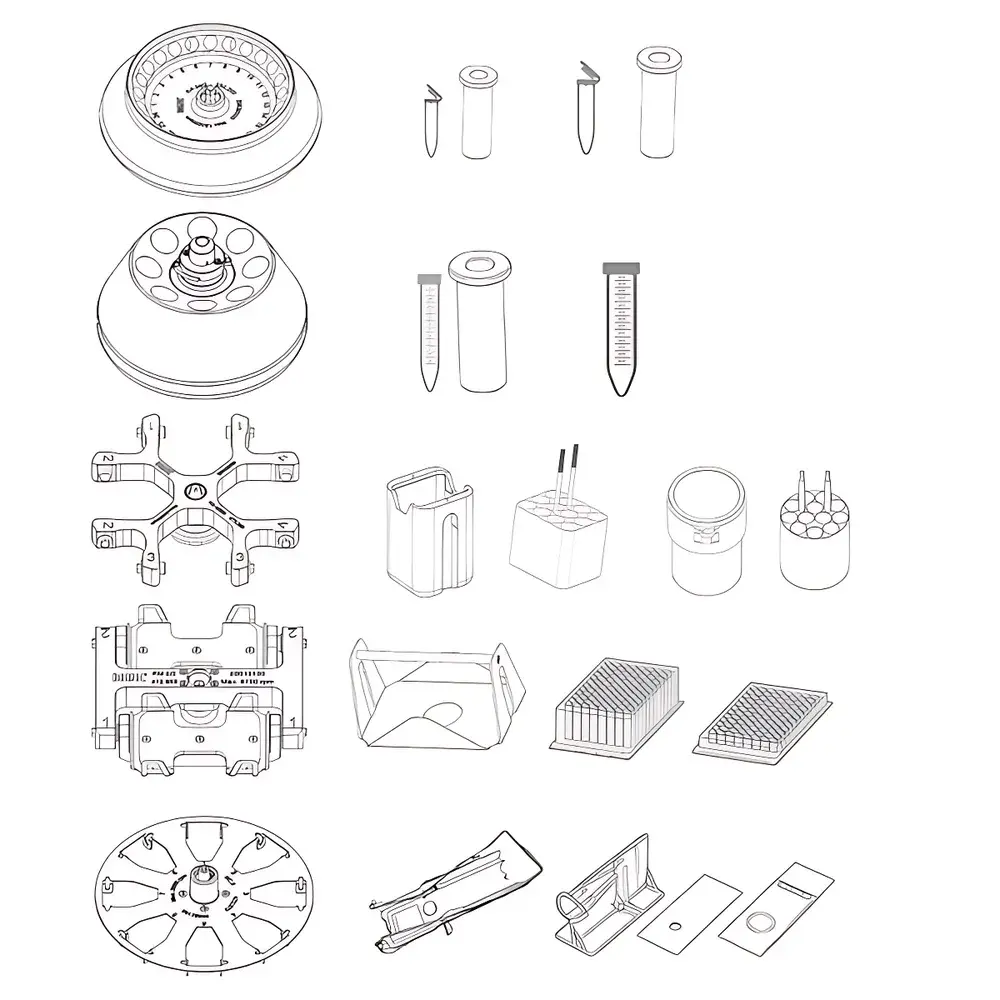
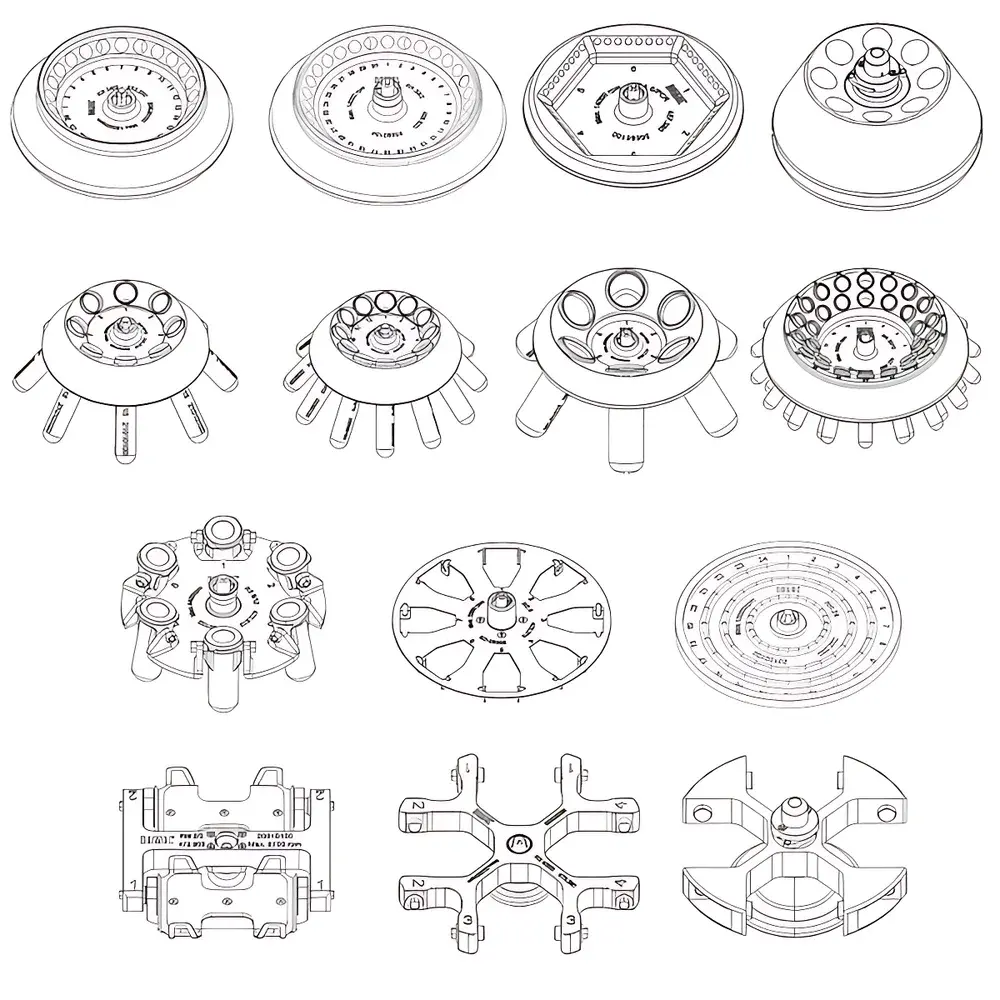
The CENTRIC 260 supports a broad range of rotor configurations—including fixed-angle, swing-out, and microplate carriers—enabling flexible adaptation to diverse sample formats. Standard angular rotors accommodate tubes from 0.2 mL PCR strips to 50 mL conical tubes; optional adapters allow use of smaller volumes without compromising balance or RCF uniformity. All rotors are certified to ISO 15195:2019 for calibration traceability and undergo full dynamic balancing per ISO 21501-4. The system meets essential electrical and mechanical safety requirements outlined in IEC 61010-1 and IEC 61010-2-020. When operated with validated software modules, it supports audit-trail generation aligned with FDA 21 CFR Part 11 and EU Annex 11 expectations for electronic records in GxP environments.
Software & Data Management
While the CENTRIC 260 operates autonomously via its onboard interface, optional PC connectivity (RS-232 or USB) enables remote configuration, method synchronization, and export of run logs in CSV format. Software packages provide timestamped event logging—including lid status, temperature deviation alerts, rotor identification, and RCF verification—and support GLP-compliant documentation for internal audits or regulatory submissions. Firmware updates are delivered via secure encrypted channels and include version-controlled release notes traceable to ISO/IEC 17025 calibration records.
Applications
- Purification of plasmid DNA, genomic DNA, and RNA from bacterial lysates or mammalian cell suspensions
- Isolation of mitochondria, lysosomes, and nuclear fractions using differential centrifugation protocols
- Preparation of viral vectors and exosome pellets in bioprocessing development labs
- Routine serum/plasma separation in clinical chemistry and hematology workflows
- High-throughput processing of microplate-based assays requiring pellet consolidation prior to ELISA or mass spectrometry analysis
- Stabilization of temperature-sensitive enzyme preparations during purification steps
FAQ
What is the maximum RCF achievable with the standard 6 × 50 mL angular rotor?
The RA 6/50 rotor achieves 3,620 × g at 6,000 rpm. For maximum RCF (31,150 × g), the RA 24/2 rotor must be used at 18,000 rpm.
Does the CENTRIC 260 support automatic rotor recognition?
Yes—each rotor includes an embedded RFID tag that communicates model-specific speed and temperature limits to the control system upon insertion.
Can the centrifuge maintain −10 °C during a 30-minute run at 15,000 rpm?
Yes—the compressor and airflow design ensure stable temperature maintenance within ±1 °C across the full operational envelope, verified per ISO 13485 environmental validation protocols.
Is rotor imbalance detection integrated into the safety system?
Yes—vibration sensors continuously monitor radial displacement and trigger immediate deceleration if imbalance exceeds 0.5 mm peak-to-peak amplitude.
Are rotor lifetime logs stored internally?
Yes—each rotor’s cumulative run hours, maximum speed history, and thermal cycling count are recorded and accessible via service mode for preventive maintenance scheduling.



