
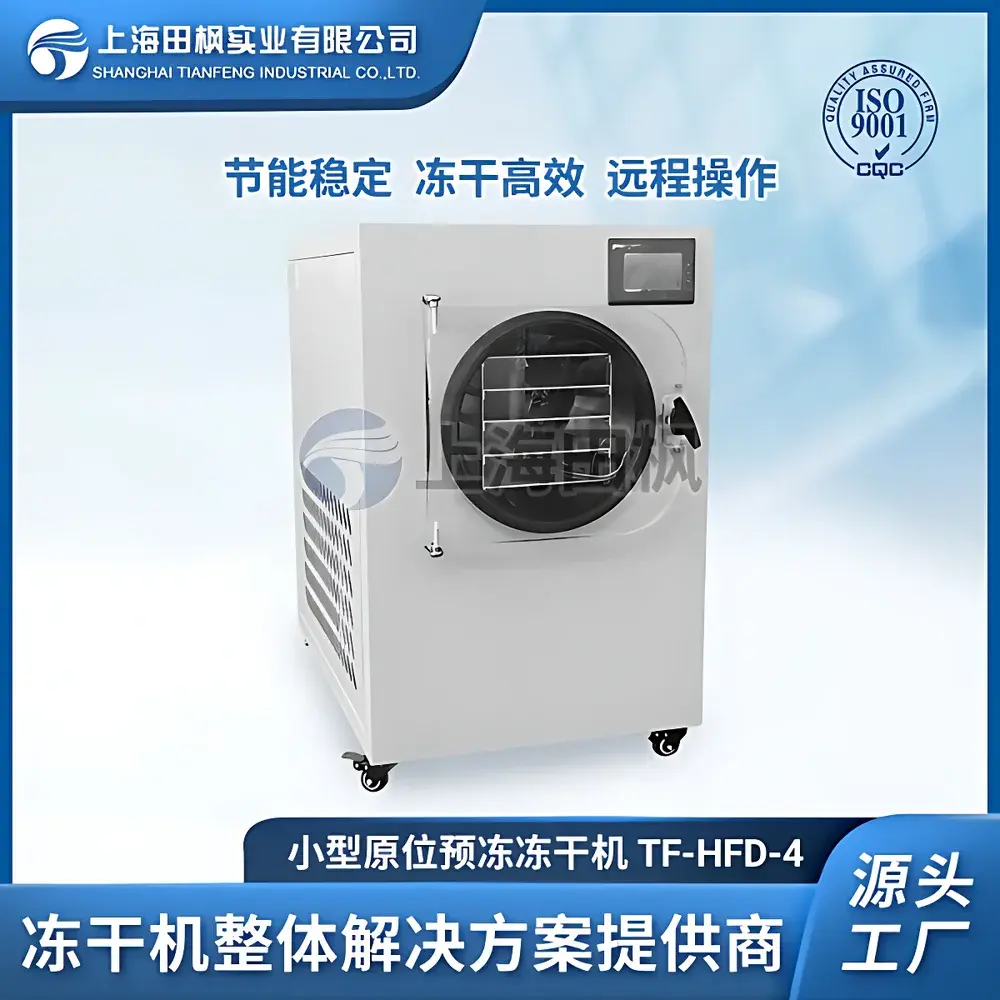
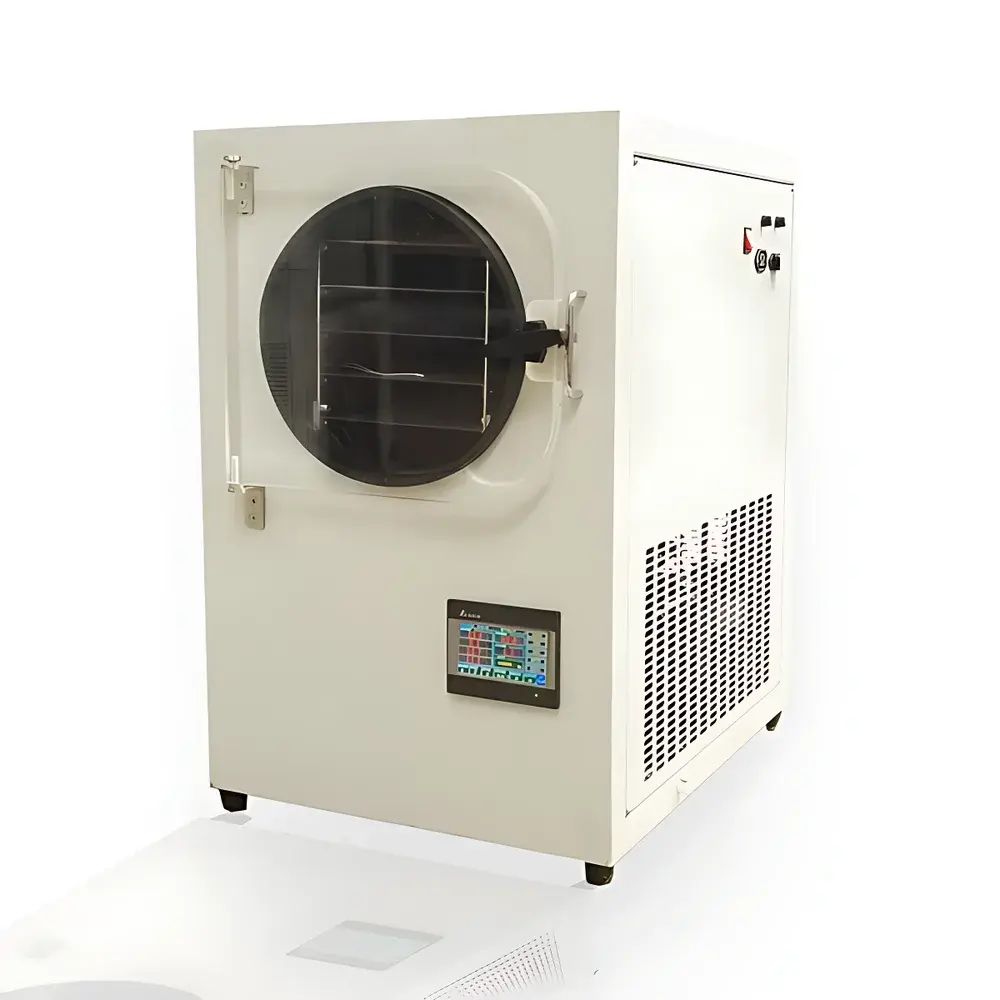
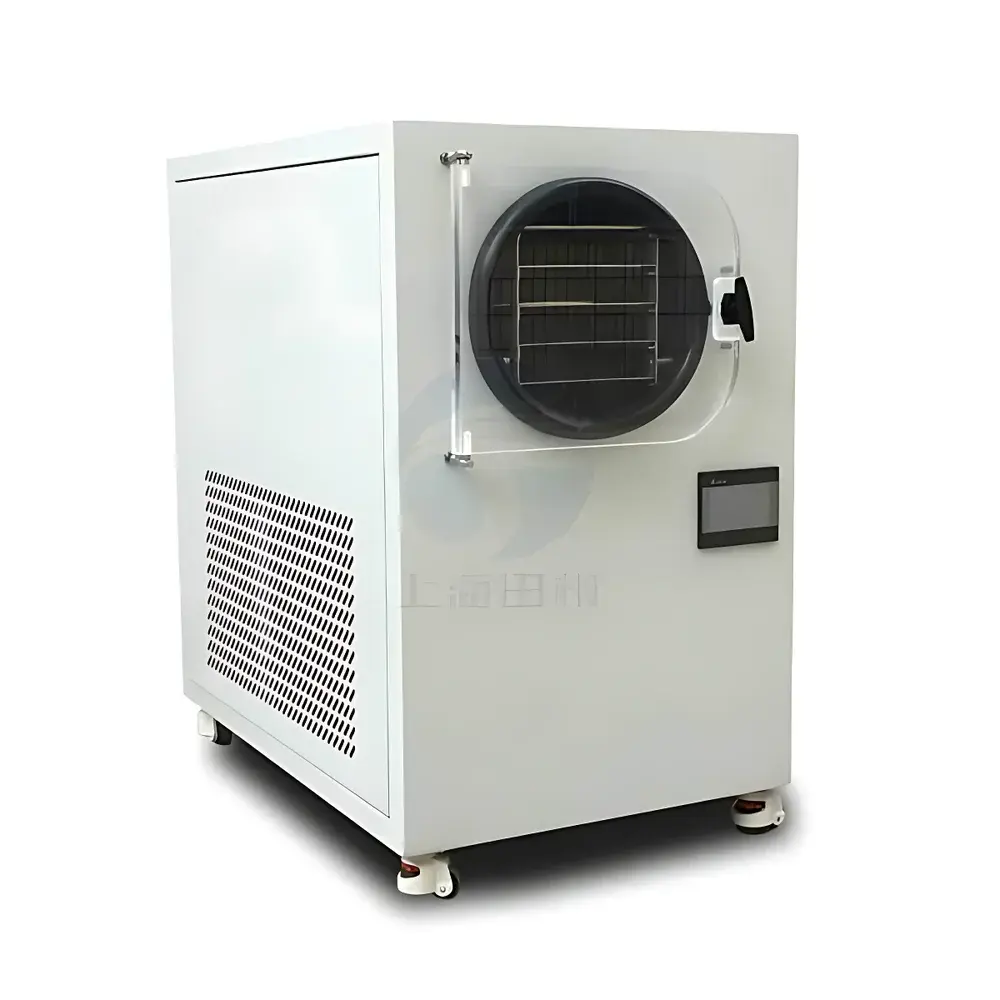
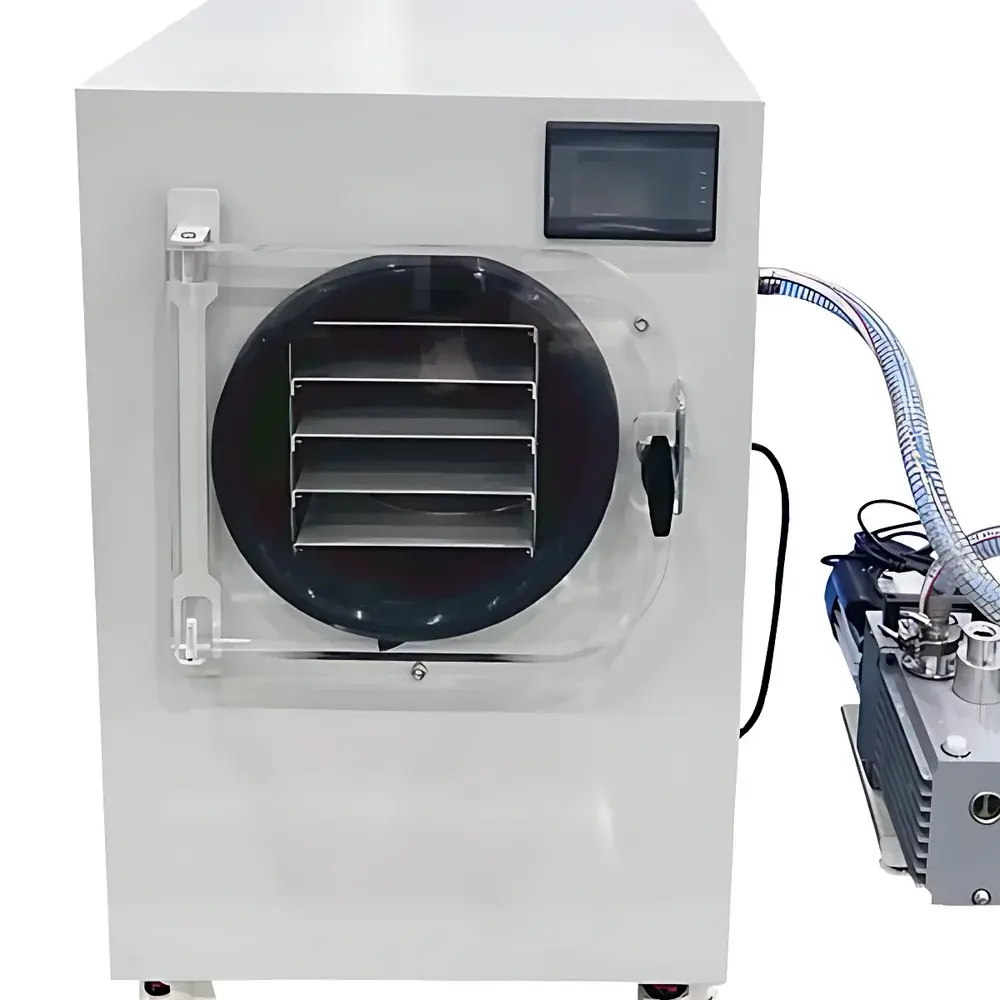
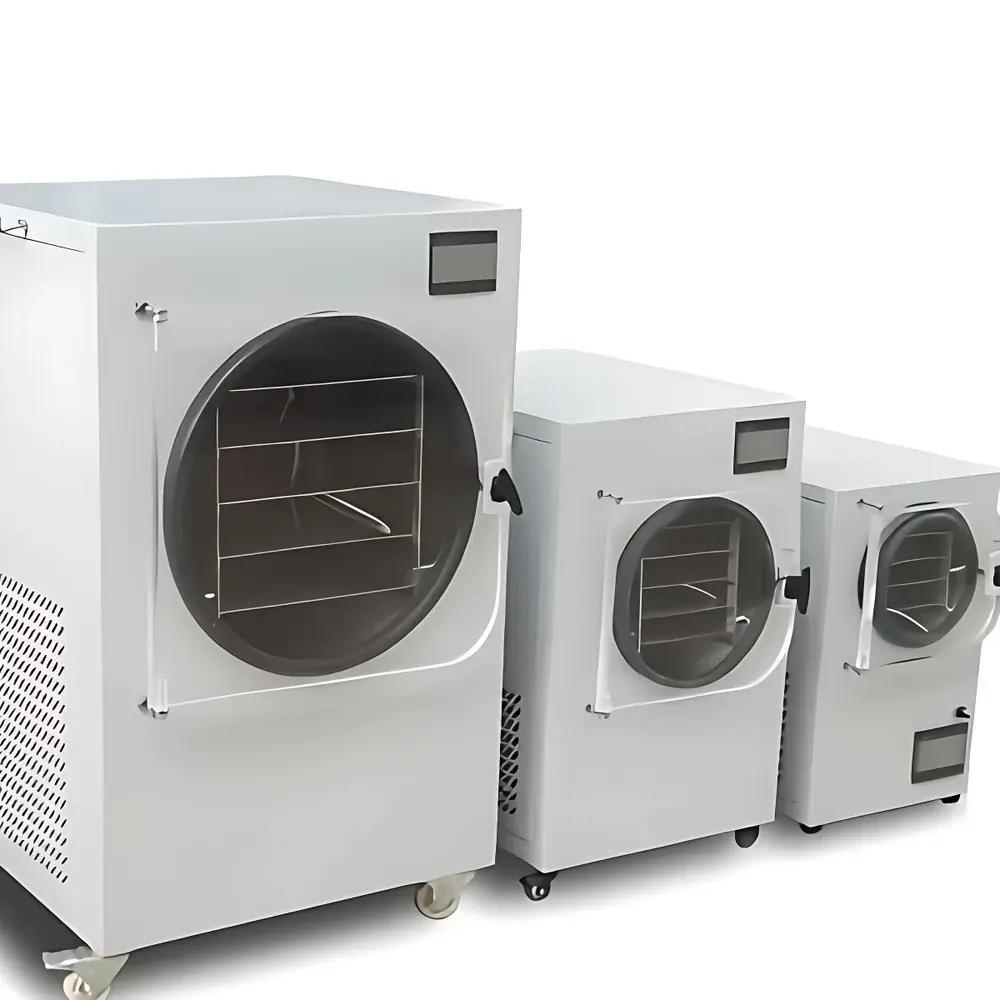
Tianfeng TF-HFD-4 Benchtop In-Situ Freeze Dryer
| Brand | Tianfeng |
|---|---|
| Origin | Shanghai, China |
| Manufacturer Type | Direct Manufacturer |
| Product Category | Domestic |
| Model | TF-HFD-4 (Lyophilizer for Durian Powder) |
| Instrument Type | Standard Shelf-Type Freeze Dryer |
| Application Scope | Pilot-Scale |
| Lyophilization Area | 0.4 m² |
| Ultimate Vacuum | ≤10 Pa |
| Condensate Capacity (24 h) | 4 kg |
| Cold Trap Temperature | ≤−45 °C |
| Main Unit Dimensions | 510 × 700 × 850 mm |
Overview
The Tianfeng TF-HFD-4 is a benchtop in-situ freeze dryer engineered for pilot-scale lyophilization under controlled vacuum and sub-zero conditions. It operates on the physical principle of sublimation—removing water from frozen samples by transitioning ice directly into vapor without passing through the liquid phase. This process preserves thermolabile compounds, maintains structural integrity, and delivers high reconstitution fidelity—critical for food powders (e.g., durian, fruit, herbs), biological extracts, botanicals, and nutraceutical formulations. Designed with integrated freezing, primary drying, and secondary drying stages, the TF-HFD-4 supports full-cycle lyophilization within a single chamber, eliminating manual transfer and minimizing contamination risk. Its compact footprint (0.51 × 0.70 × 0.85 m) and low power consumption make it suitable for university labs, R&D centers, small-batch food processing facilities, and GMP-aligned pilot production environments.
Key Features
- In-situ freezing and drying: Pre-freezing occurs directly on stainless steel shelves (SUS304), ensuring uniform thermal distribution and eliminating sample handling between freezing and drying steps.
- Transparent acrylic observation door: Enables real-time visual monitoring of ice sublimation, cake formation, and drying front progression without compromising vacuum integrity.
- Intelligent touchscreen interface: Supports fully automated cycle execution with one-touch startup, customizable ramp/hold profiles, and dynamic parameter adjustment during operation.
- High-efficiency cold trap: Achieves ≤−45 °C condensing temperature with ≥4 kg/24 h moisture capture capacity—optimized for moderate-load food and botanical matrices.
- Low-noise, high-reliability components: Critical subsystems—including vacuum pump interface, refrigeration compressor, and PID-controlled shelf heaters—are sourced from internationally certified suppliers to ensure long-term stability and repeatability.
- Energy-efficient architecture: Optimized heat exchange design and low-operating-current refrigeration circuit reduce overall power demand while maintaining thermal precision across all drying phases.
- Auto-defrost function with overtemperature protection: Prevents cold trap icing buildup and safeguards system integrity during extended operation or frequent cycling.
Sample Compatibility & Compliance
The TF-HFD-4 accommodates diverse sample formats—including bulk liquids, vials (up to 20 mL), trays, and irregular botanical pieces—within its 0.4 m² shelf area. It is routinely deployed for stabilizing heat-sensitive food ingredients (e.g., fruit pulps, vegetable concentrates, functional mushroom extracts), herbal decoctions, probiotic suspensions, and natural pigment solutions. While not validated for sterile pharmaceutical use per ISO 13408 or FDA 21 CFR Part 11, the system’s stainless steel wetted parts (SUS304), traceable temperature logging, and cycle parameter audit trail support GLP-aligned documentation practices. Users may configure cycles to align with common food industry references such as AOAC 985.29 (freeze-dried food moisture analysis) and ISO 2173 (fruit and vegetable products—determination of dry matter content).
Software & Data Management
The embedded control system records time-stamped data for shelf temperature, chamber pressure, cold trap temperature, and elapsed cycle time at user-defined intervals (default: 10 s). All datasets export in CSV format via USB port for offline analysis in Excel or third-party scientific software (e.g., OriginLab, MATLAB). Real-time graphs display temperature-pressure trajectories and drying rate curves during operation. Though the unit does not include network connectivity or remote access capability, its local data logging meets minimum requirements for internal quality review and batch record retention in non-regulated food and supplement development workflows.
Applications
- Development and scale-up of freeze-dried fruit powders (e.g., durian, mango, blueberry) with minimal nutrient degradation and color shift.
- Stabilization of enzyme-rich plant extracts and fermented biomass for shelf-stable functional food ingredients.
- Rapid prototyping of herbal formulations requiring low-residual moisture (<5%) and preserved volatile oil profiles.
- Preparation of reference standards and calibration materials for analytical laboratories performing HPLC or GC-MS analysis of dried botanicals.
- Teaching lyophilization fundamentals—including nucleation kinetics, mass transfer limitations, and collapse temperature determination—in undergraduate food science and bioprocessing courses.
FAQ
What is the maximum sample volume this unit can process per batch?
Based on 0.4 m² shelf area and typical loading density (10–15 mm depth), the TF-HFD-4 handles up to ~4–6 L of aqueous solution per cycle—equivalent to ~1.2–1.8 kg of frozen material.
Does the system include a vacuum pump?
No—the TF-HFD-4 requires an external vacuum pump (recommended ultimate vacuum ≤1 Pa; oil-free diaphragm or dual-stage rotary vane type) connected via standard KF-25 flange.
Can I program multi-step drying protocols?
Yes—users define up to 12 independent segments per cycle, each with specific shelf temperature, hold time, and pressure setpoint (via vacuum regulation valve control).
Is the cold trap defrosting process automated?
Yes—manual or scheduled auto-defrost modes are available; condenser heating is limited to ≤60 °C to prevent polymer gasket degradation.
What maintenance is required for long-term reliability?
Recommended quarterly tasks include vacuum pump oil replacement (if oil-lubricated), cold trap cleaning with ethanol, and verification of door seal integrity using helium leak detection or pressure-hold test.



