
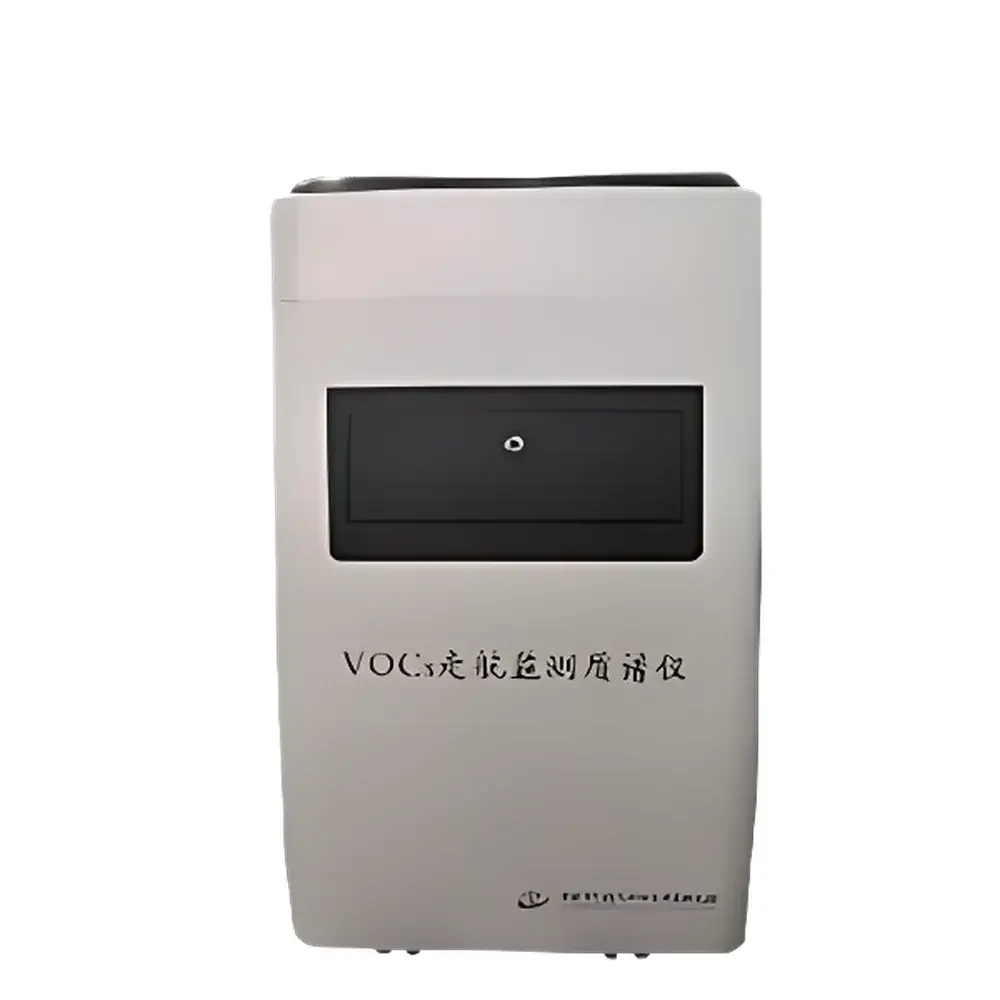
Tianhong TH-360 Mobile Ambient Air VOC Monitoring System (Proton Transfer Reaction Mass Spectrometer)
| Brand | Tianhong |
|---|---|
| Origin | Hubei, China |
| Manufacturer Type | Authorized Distributor |
| Country of Origin | China |
| Model | TH-360 Mobile Ambient Air VOC Monitoring System (PTR-MS) |
| Pricing | Upon Request |
| Detection Principle | Proton Transfer Reaction Mass Spectrometry (PTR-MS) |
| Ionization Sources | Dual-mode — H₃O⁺ chemical ionization and Electron Impact (EI) |
| Mass Range | 0.4–510 u |
| Target Analytes | Methanol, Formaldehyde, Formic Acid, Ammonia, Hydrogen Sulfide, and other C₁–C₂₀ volatile organic compounds & odorants |
| Sampling | Direct ambient air intake, no preconcentration membrane |
| Data Output | Real-time concentration quantification, georeferenced mapping, automated background subtraction, regulatory threshold comparison (HJ 1010–2018) |
| Compliance Reference | HJ 1010–2018 “Technical Requirements and Test Methods for Continuous Ambient Air VOC Monitoring Systems Using Gas Chromatography” |
Overview
The Tianhong TH-360 Mobile Ambient Air VOC Monitoring System is a field-deployable, real-time analytical platform engineered for high-temporal-resolution detection and quantification of volatile organic compounds (VOCs) and key inorganic odorants in ambient air. At its core, the system employs proton transfer reaction mass spectrometry (PTR-MS), a soft ionization technique that enables selective, sensitive, and interference-minimized detection of trace-level VOCs without chromatographic separation. PTR-MS operates by reacting ambient air molecules with hydronium ions (H₃O⁺) in a drift tube under controlled pressure and electric field conditions; analytes with proton affinity higher than water undergo efficient proton transfer, generating characteristic [M+H]⁺ ions detectable by a high-transmission quadrupole mass analyzer. This principle delivers sub-second response times, parts-per-trillion (pptv) detection limits for many compounds, and minimal fragmentation—preserving molecular identity. The TH-360 is purpose-built for both mobile survey operations (e.g., vehicle-mounted or drone-integrated deployment) and stationary long-term monitoring, supporting atmospheric chemistry research, source apportionment studies, and regulatory compliance verification.
Key Features
- Dual ionization capability: Switchable H₃O⁺ chemical ionization for quantitative, low-fragmentation VOC analysis and electron impact (EI) mode for structural confirmation and library matching of complex or unknown species.
- Extended mass range: 0.4–510 u enables detection of small inorganics (e.g., NH₃, H₂S, HCHO) alongside large semi-volatile organics (e.g., terpenes, oxygenated aromatics, and nitrogen-containing heterocycles).
- Direct ambient sampling architecture: No cryo-trapping, thermal desorption, or permeation membranes—eliminates carryover, reduces maintenance intervals, and ensures true real-time response (<1 s dwell time per mass).
- Automated background characterization: On-the-fly acquisition and subtraction of instrumental background spectra using zero-air purging cycles, distinguishing ambient signals from outgassing or surface contamination artifacts.
- Integrated geospatial engine: GPS-synchronized data logging enables automatic generation of concentration contour maps, plume trajectory modeling, and GIS-compatible output (KML, Shapefile) for rapid source localization.
- Regulatory alignment: Built-in algorithmic comparison against Chinese national standard HJ 1010–2018 thresholds, with configurable alert logic for exceedance events and audit-ready reporting templates.
Sample Compatibility & Compliance
The TH-360 is validated for direct analysis of unmodified ambient air across diverse environmental matrices—including urban boundary layers, industrial fence-line zones, residential neighborhoods, scenic areas, and petrochemical园区 perimeters. It meets the functional requirements defined in HJ 1010–2018 for continuous VOC monitoring systems, including stability testing, linearity verification (R² ≥ 0.995 over 3 orders of magnitude), and interferences assessment for common co-pollutants (e.g., O₃, NOₓ, humidity up to 95% RH). While not certified to ISO/IEC 17025 or EPA TO-15/TO-17 protocols out-of-the-box, its raw spectral data and metadata structure support post-acquisition validation workflows compliant with GLP and internal QA/QC frameworks. All firmware and calibration logs are timestamped and tamper-evident, facilitating 21 CFR Part 11–compatible electronic record retention when deployed with approved LIMS integration.
Software & Data Management
The TH-360 is operated via Tianhong’s proprietary VOCView™ software suite, running on Windows-based embedded control units. VOCView provides real-time spectral visualization, automated peak identification using NIST MS Search and custom-built ambient VOC libraries, and dynamic concentration inversion based on instrument-specific sensitivity factors and humidity-corrected reaction kinetics. All measurement sessions generate structured HDF5 files containing mass spectra, GPS coordinates, meteorological metadata (optional external sensor input), and calibration history. Export options include CSV (for Excel/Python analysis), NetCDF (for atmospheric modeling tools like WRF-Chem), and web-publishable HTML reports with embedded interactive maps. Data integrity is enforced through SHA-256 hashing of each acquisition block and optional AES-256 encryption for remote transmission.
Applications
- Rapid emission source identification during environmental complaint investigations or unplanned release events.
- Dynamic mapping of VOC spatial gradients across urban corridors, highway networks, and industrial clusters.
- Long-term trend analysis of photochemical precursors (e.g., isoprene, monoterpenes, aromatic hydrocarbons) in regional air quality networks.
- Odor impact assessment near wastewater treatment plants, livestock facilities, and composting sites—simultaneously quantifying NH₃, H₂S, dimethyl sulfide, and volatile fatty acids.
- Method development support for regulatory agencies validating alternative monitoring approaches to GC-MS/FID-based systems.
- Field calibration and intercomparison campaigns with reference-grade analyzers (e.g., TO-14/TO-15 canisters, PID sensors, FTIR open-path systems).
FAQ
Does the TH-360 require routine calibration with standard gas cylinders?
Yes—daily zero/span verification using certified N₂ zero air and multi-component VOC standard mixtures (e.g., EPA TO-14A) is recommended for quantitative applications. Calibration frequency may be extended to weekly under stable field conditions with documented drift monitoring.
Can the system distinguish isomeric compounds such as xylenes or butanols?
Not inherently via PTR-MS alone due to identical nominal masses and near-identical proton affinities; however, retention time coupling with optional inline GC pre-separation or use of EI mode for fragmentation pattern differentiation enables isomer resolution in hybrid configurations.
Is remote diagnostics and software update supported?
Yes—VOCView includes secure SSH-enabled remote access for technical support, firmware updates, and parameter reconfiguration, subject to customer-configured firewall policies and TLS 1.2+ encryption.
What power supply options are available for mobile deployment?
The system operates on 100–240 VAC, 50/60 Hz, and includes an integrated 24 VDC backup battery module (≥4 h runtime) compatible with standard vehicle auxiliary power systems.
How is data traceability ensured for regulatory submissions?
Each spectrum carries embedded digital signatures, instrument ID, operator ID (if logged), GPS-derived UTC timestamps, and full audit trail metadata—exportable in formats accepted by provincial ecological environment departments under China’s Environmental Monitoring Data Quality Management Regulations (MEP Order No. 39).
Related Products







