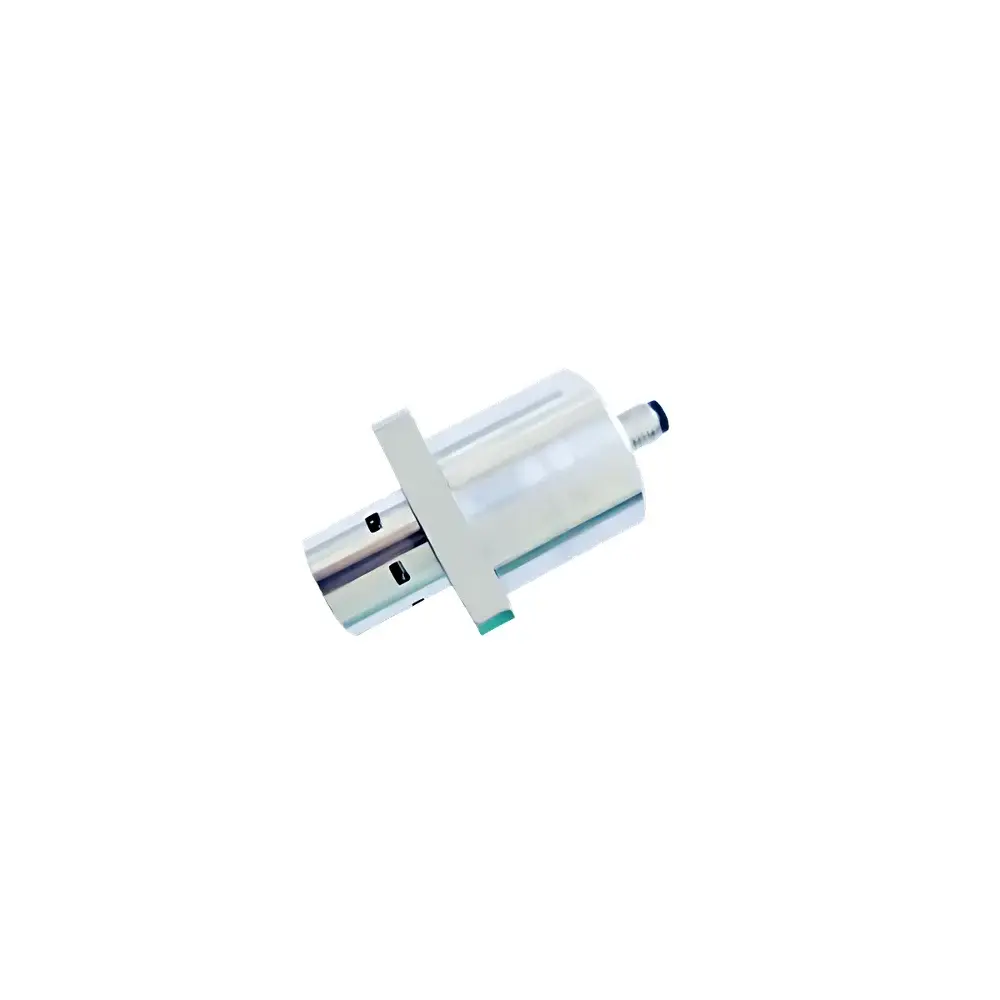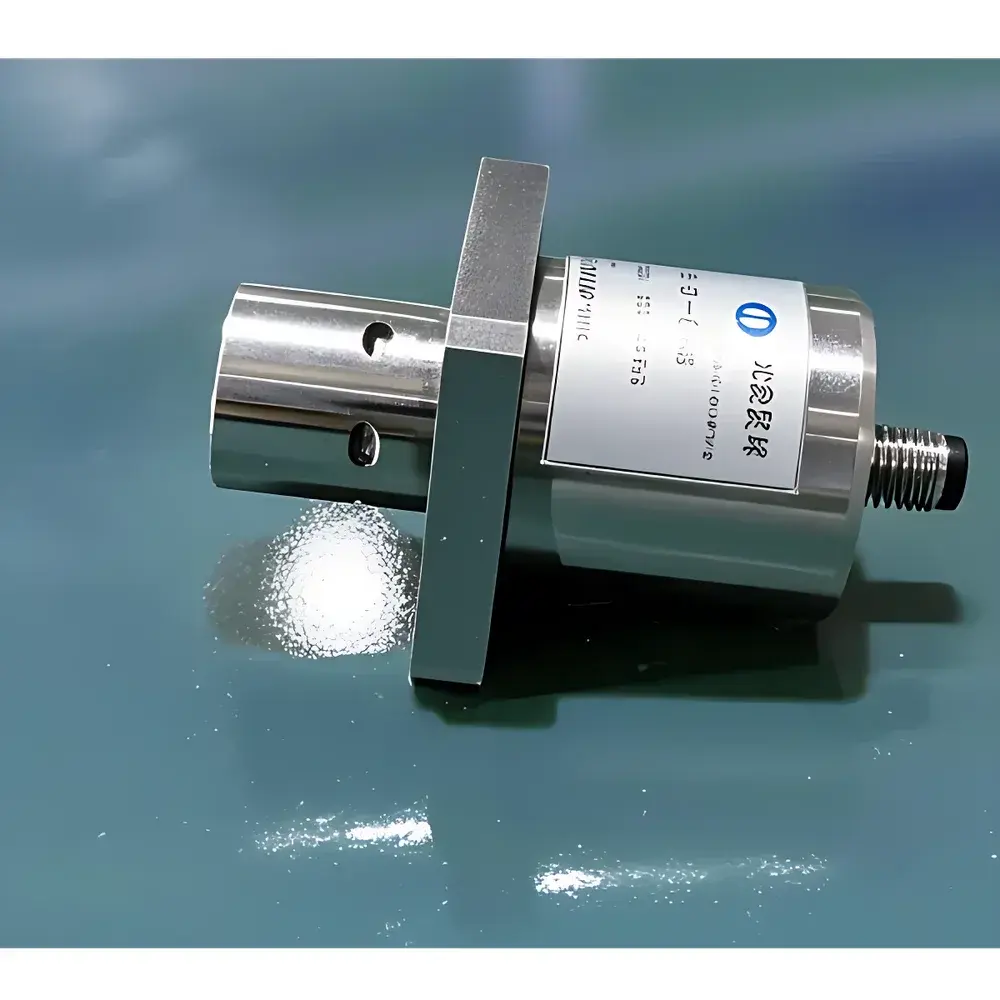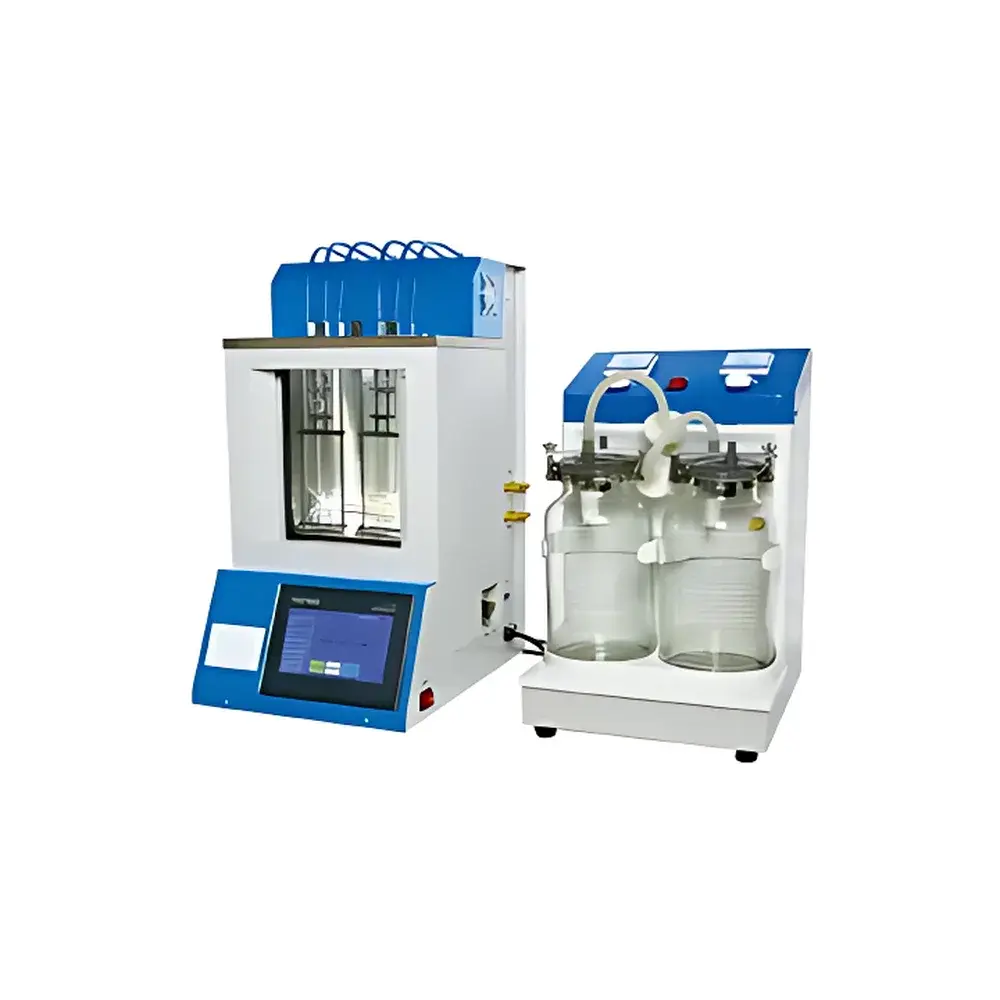
Timepower TP725 Fully Automated Kinematic Viscosity Tester
| Brand | Timepower |
|---|---|
| Origin | Beijing, China |
| Manufacturer Type | Manufacturer |
| Country of Origin | Domestic (China) |
| Model | TP725 |
| Pricing | Upon Request |
Overview
The Timepower TP725 Fully Automated Kinematic Viscosity Tester is an ASTM D445-23 and ISO 3104-compliant instrument engineered for precise, repeatable kinematic viscosity determination of transparent and opaque petroleum products—including base oils, lubricants, diesel fuels, transformer oils, and hydraulic fluids. It operates on the capillary viscometry principle, specifically implementing the Ubbelohde-type suspended-level viscometer method in strict accordance with GB/T 265–1988 (equivalent to ISO 3104). The system thermally stabilizes the test fluid within a precisely controlled oil bath, measures efflux time under gravity-driven laminar flow through a calibrated capillary, and computes kinematic viscosity (ν) in mm²/s using the relation ν = C × t, where C is the viscometer constant and t is the measured efflux time. Designed for routine QC laboratories and R&D facilities in power generation, petrochemical refining, customs inspection, and academic research, the TP725 eliminates manual timing, temperature drift, and operator-dependent error—delivering traceable, GLP-aligned results with full audit trail capability.
Key Features
- Dual independent testing channels: Simultaneous asynchronous analysis of two samples at identical or different setpoints, maximizing throughput without cross-contamination.
- High-stability temperature control: Oil bath maintained at user-defined setpoints from ambient to 100 °C with ±0.01 °C accuracy and 0.01 °C resolution—validated per ASTM E645 for thermal uniformity across immersion depth.
- Automated workflow sequence: Integrated peristaltic aspiration, gravity-driven efflux timing, automatic calculation, capillary rinsing with solvent, and hot-air drying—all executed without operator intervention.
- Optical detection architecture: Infrared liquid-level sensors provide immunity to ambient lighting variations; paired with U.S.-sourced dynamic optical detection modules for sub-millisecond timing resolution and zero false-trigger incidence.
- Dual-CPU embedded control: One processor manages real-time thermal regulation and fluid handling; the second handles data acquisition, algorithm execution, diagnostics, and HMI responsiveness—ensuring deterministic timing and fault isolation.
- Human-centered interface: Backlit LCD display with capacitive touch-sensitive keys; intuitive menu navigation supporting multi-language UI (English default); built-in real-time clock with battery-backed memory retaining date/time during power loss.
- Modular thermal extension: Optional integrated refrigeration unit enables sub-ambient operation down to 4 °C—critical for high-viscosity crudes or low-temperature pour point correlation studies.
Sample Compatibility & Compliance
The TP725 accommodates standard Ubbelohde viscometers (e.g., Cannon-Fenske Routine, SUS, or BS types) with calibration constants ranging from 0.001 to 10.000 mm²/s². It supports both transparent liquids (e.g., mineral oils, jet fuels) and mildly opaque samples (e.g., dyed lubricants), provided they meet ASTM D445’s clarity requirements for optical detection. All hardware and firmware comply with IEC 61000-6-3 (EMC emission standards) and IEC 61010-1 (safety for laboratory equipment). Data integrity meets FDA 21 CFR Part 11 requirements via electronic signatures, immutable audit logs, and role-based access control—enabling use in GMP-regulated environments such as transformer oil certification labs serving utilities under IEEE Std C57.106.
Software & Data Management
The embedded operating system stores up to 1,000 test records locally with full metadata: sample ID, operator ID, bath temperature, efflux times (t₁, t₂), calculated ν, uncertainty estimation per ISO/IEC 17025 Annex A.3, and timestamped event logs (e.g., “Rinse cycle initiated”, “Capillary dried”). USB export supports CSV and PDF report generation compatible with LIMS integration. Optional Ethernet module enables remote monitoring, firmware updates, and centralized data aggregation via secure TLS 1.2. All calculations apply temperature correction per ASTM D341 and include automatic outlier rejection using Grubbs’ test (α = 0.05).
Applications
- Transformer oil condition monitoring per IEC 60429 and ASTM D877—tracking viscosity increase as an early indicator of oxidation or contamination.
- Refinery QC for finished lubricant blends verifying conformance to SAE J300 or API licensing requirements.
- Marine fuel testing (ISO 8217) to ensure viscosity remains within injection-system operational limits.
- Research into polymer-thickened oils, where kinematic viscosity at 40 °C and 100 °C feeds into viscosity index (VI) calculation per ASTM D2270.
- Calibration lab verification of reference oils traceable to NIST SRM 2786 or equivalent national standards.
FAQ
What viscosity standards are supported for calibration verification?
The TP725 accepts certified reference materials compliant with ISO 12185, including NIST SRM 2786 (100 cSt), SRM 2787 (1000 cSt), and equivalent CRM oils from LGC, BAM, or Accustandard.
Can the instrument be validated for 21 CFR Part 11 compliance?
Yes—when configured with password-protected user roles, electronic signature prompts, and enabled audit trail logging, the TP725 satisfies predicate rule requirements for electronic records and signatures in regulated pharmaceutical and utility sectors.
Is manual capillary insertion required between runs?
No—the system retains viscometers in fixed-position holders; only sample vials require loading. Capillaries remain immersed and thermally equilibrated throughout multi-run sequences.
What maintenance intervals are recommended for long-term reliability?
Daily: Visual inspection of oil level and cleanliness of optical sensors. Quarterly: Calibration verification using CRM, thermal uniformity mapping of bath, and pump tubing replacement. Annually: Full metrological recalibration by authorized service center.
Does the TP725 support ASTM D7042 (HTHP viscometry)?
No—it is optimized exclusively for atmospheric-pressure capillary viscometry per ASTM D445 and ISO 3104. High-pressure or high-shear applications require rotational rheometry platforms.
Related Products