
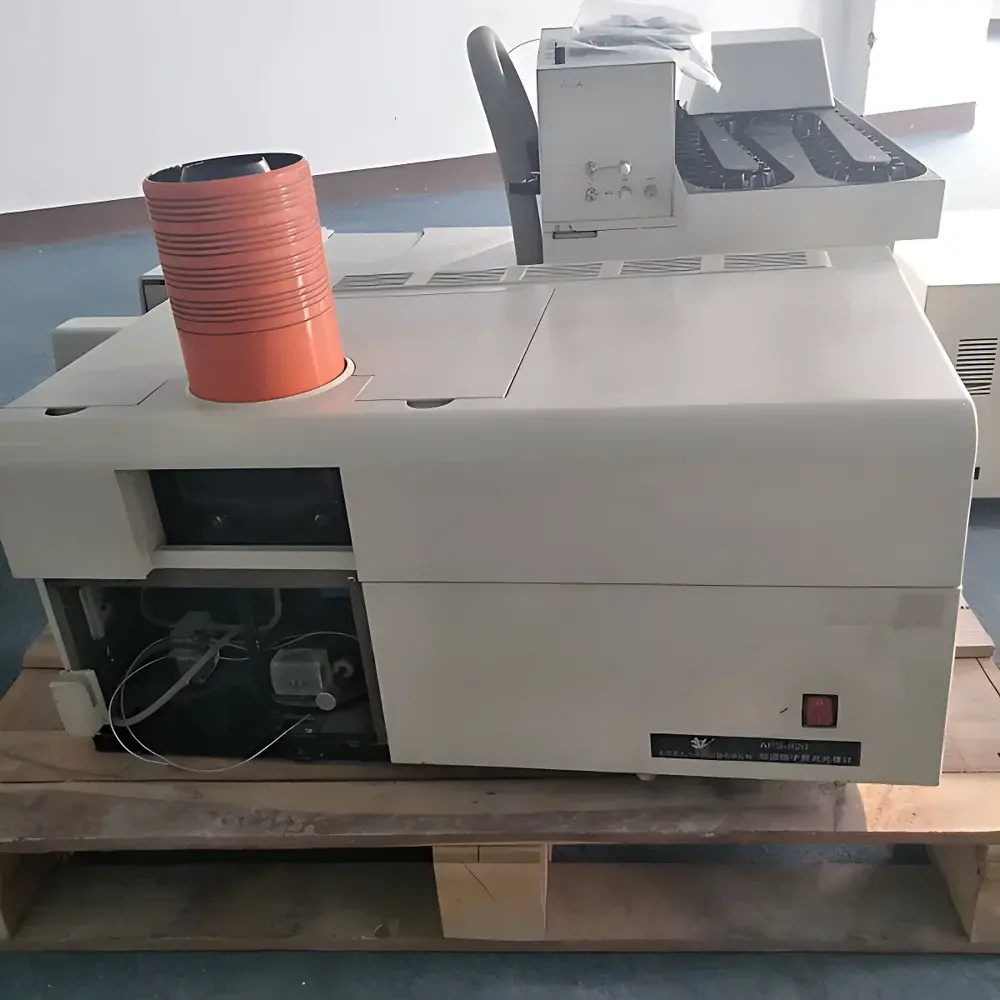
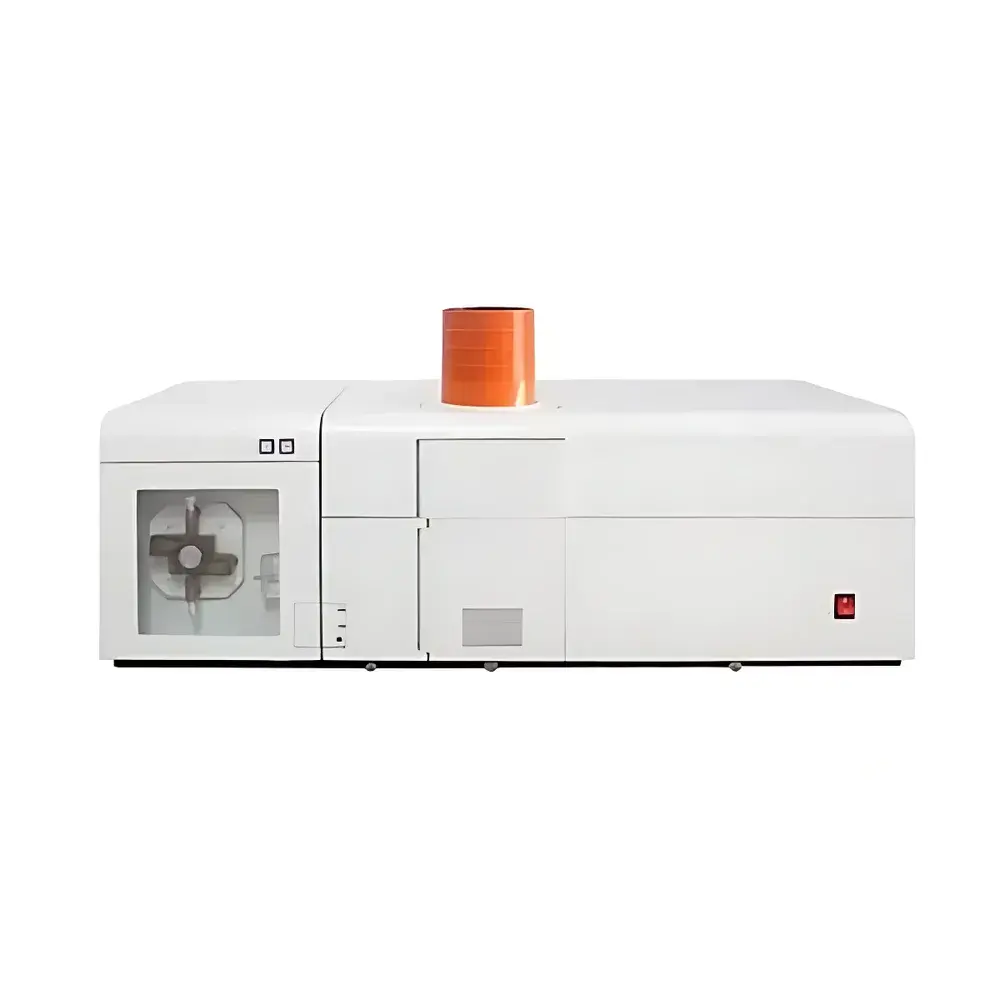
Titan Instruments AFS-820 Multi-Channel Atomic Fluorescence Spectrometer (Refurbished)
| Brand | Titan Instruments |
|---|---|
| Origin | Beijing, China |
| Model | AFS-820 |
| Instrument Type | Multi-channel Atomic Fluorescence Spectrometer |
| Sample Introduction | Single Sequential Injection Pump |
| Detectable Elements | As, Se, Pb, Bi, Sb, Te, Sn |
| Relative Standard Deviation (RSD) | < 1% |
| Linear Dynamic Range | > 3 orders of magnitude |
| Detection Limits | As, Se, Pb, Bi, Sb, Te, Sn < 0.01 µg/L |
Overview
The Titan Instruments AFS-820 is a refurbished multi-channel atomic fluorescence spectrometer engineered for trace-level quantification of hydride-forming elements in environmental, pharmaceutical, food safety, and geological laboratories. It operates on the principle of atomic fluorescence spectroscopy (AFS), where analyte atoms—generated in situ via hydride generation (HG) or cold vapor (CV) techniques—are excited by a high-intensity hollow cathode lamp (HCL) or electrodeless discharge lamp (EDL), and their characteristic fluorescence emission is measured at right angles to the excitation beam. This orthogonal optical geometry minimizes background scatter and enhances signal-to-noise ratio, enabling sub-part-per-trillion sensitivity. The AFS-820 is specifically optimized for routine analysis of arsenic (As), selenium (Se), lead (Pb), bismuth (Bi), antimony (Sb), tellurium (Te), and tin (Sn)—elements regulated under EPA Method 200.9, ISO 17294-2, and China’s GB/T 22105–2008 standards.
Key Features
- Multi-channel detection architecture supporting simultaneous or sequential measurement of up to seven elements without hardware reconfiguration
- Single sequential injection pump system ensuring precise, reproducible reagent and sample delivery with low carryover (< 0.05%) and high long-term stability
- Integrated quartz-trap atomizer with temperature-controlled hydride generation module for enhanced atomization efficiency and reduced interferences from transition metals
- Dual-channel monochromator with 0.4 nm spectral bandwidth and photomultiplier tube (PMT) detection, delivering high quantum efficiency across the UV–visible range (190–350 nm)
- Automated lamp alignment and intensity optimization routines reducing operator dependency and improving method transferability
- Ruggedized optical bench with vibration-dampened mounting and sealed purge chamber to maintain thermal and mechanical stability during extended runs
Sample Compatibility & Compliance
The AFS-820 accommodates liquid samples—including aqueous extracts, digests (e.g., HNO₃/HCl microwave-assisted), and filtered environmental matrices—without modification. It supports standard addition, internal standard (e.g., Ge or Rh), and matrix-matched calibration protocols required for regulatory reporting. The instrument meets essential performance criteria outlined in US EPA 200.9 (for As and Se in drinking water), ISO/IEC 17025:2017 (for laboratory competence), and GB/T 27404–2008 (Chinese laboratory quality control guidelines). Its documented RSD < 1% and detection limits < 0.01 µg/L for all target elements satisfy method detection limit (MDL) requirements for Class I environmental monitoring and QC release testing in API manufacturing per ICH Q2(R2).
Software & Data Management
The system runs Titan’s proprietary AFS Control Suite v3.2—a Windows-based application compliant with FDA 21 CFR Part 11 for electronic records and signatures. It provides full audit trail logging (user actions, parameter changes, calibration history), role-based access control (administrator/operator/auditor), and automated report generation in PDF/XLS formats. Raw data files are stored in vendor-neutral .csv and .afsd formats, facilitating integration with LIMS platforms via ODBC or HL7 interfaces. All calibration curves, QC checks (e.g., continuing calibration verification, CCV), and instrument performance verification (IPV) logs are timestamped and digitally signed to support GLP/GMP audits.
Applications
- Regulatory compliance testing of arsenic and selenium in drinking water, wastewater, and soil leachates per EPA and EU WFD directives
- Quantitative analysis of lead and antimony in consumer product leachates (e.g., toys, packaging) aligned with CPSIA and REACH Annex XVII
- Trace metal speciation support (e.g., As(III)/As(V)) when coupled with HPLC pre-separation modules
- Quality control of raw materials and intermediates in pharmaceutical synthesis, particularly for catalyst residue screening (e.g., Pd, Pt—via interference correction algorithms)
- High-throughput screening of selenium-enriched foods and dietary supplements against Codex Alimentarius STAN 206–1999 limits
FAQ
Is the AFS-820 compatible with modern LIMS environments?
Yes—the instrument supports standard data export protocols (ODBC, CSV, XML) and includes configurable field mapping for seamless ingestion into enterprise LIMS platforms.
What maintenance is required prior to deployment?
Each unit undergoes full functional validation: lamp energy profiling, detector gain calibration, HG efficiency verification using NIST SRM 1643e, and full-system leak testing. A 90-day post-installation technical support period is included.
Does the system support method validation documentation?
Yes—factory-generated IQ/OQ documentation, along with a complete validation protocol template aligned with ASTM E2656 and ISO/IEC 17025, is provided with each refurbished unit.
Can the AFS-820 be upgraded to support additional elements?
Hardware expansion is limited to the original seven-element configuration; however, software updates and lamp replacement (e.g., Cd, Zn EDLs) may extend elemental coverage subject to optical path compatibility and detection limit verification.






