
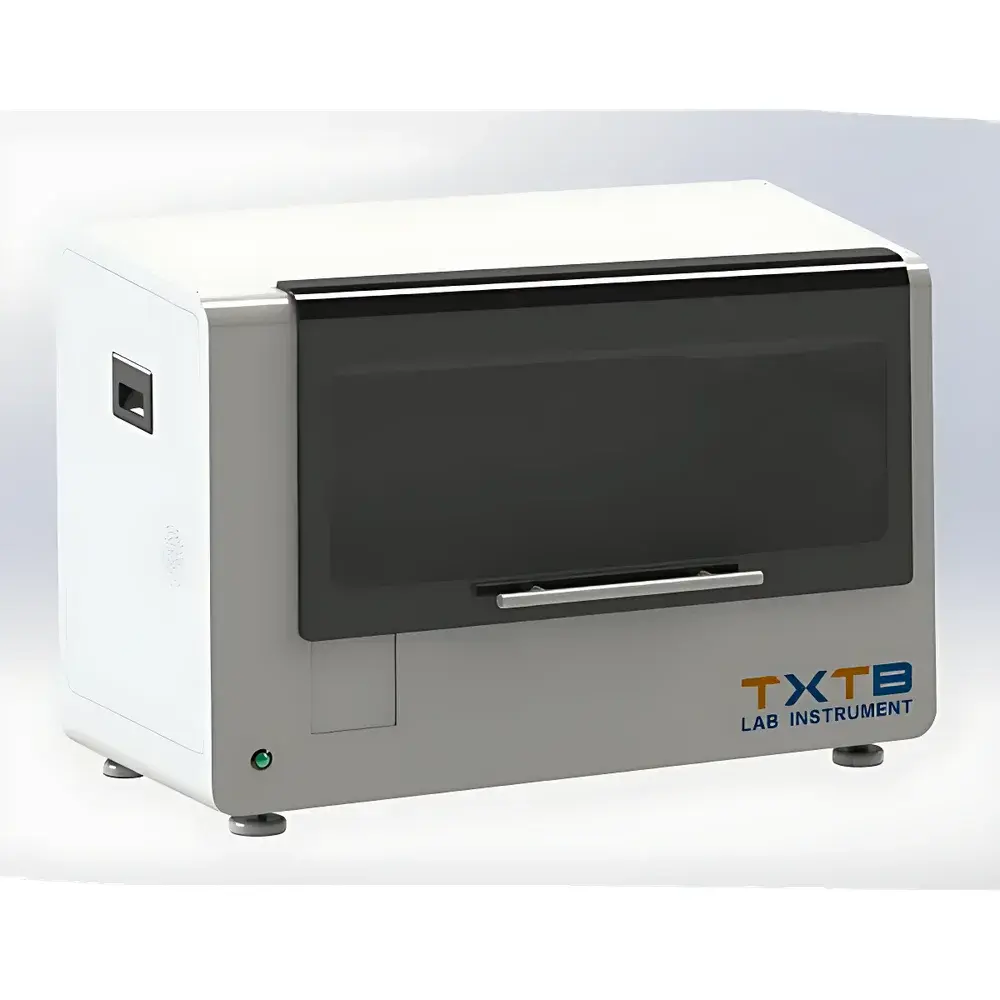
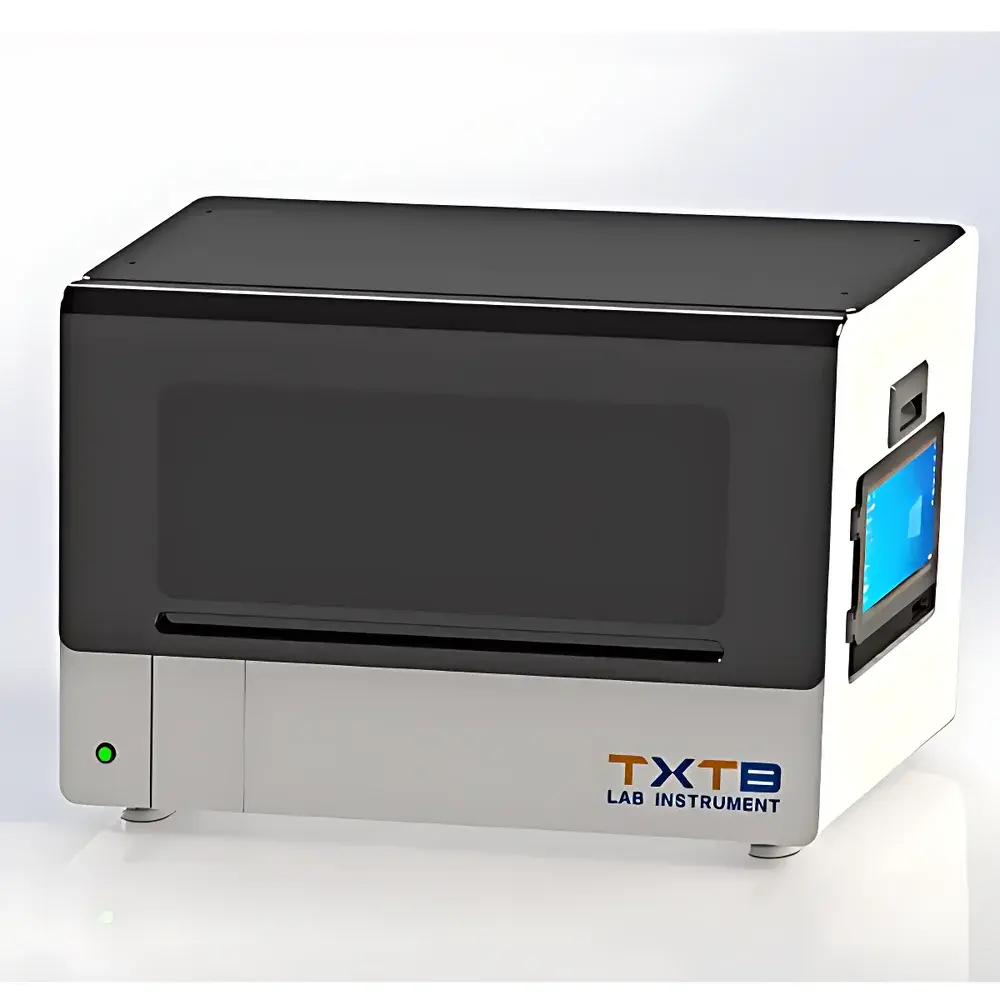
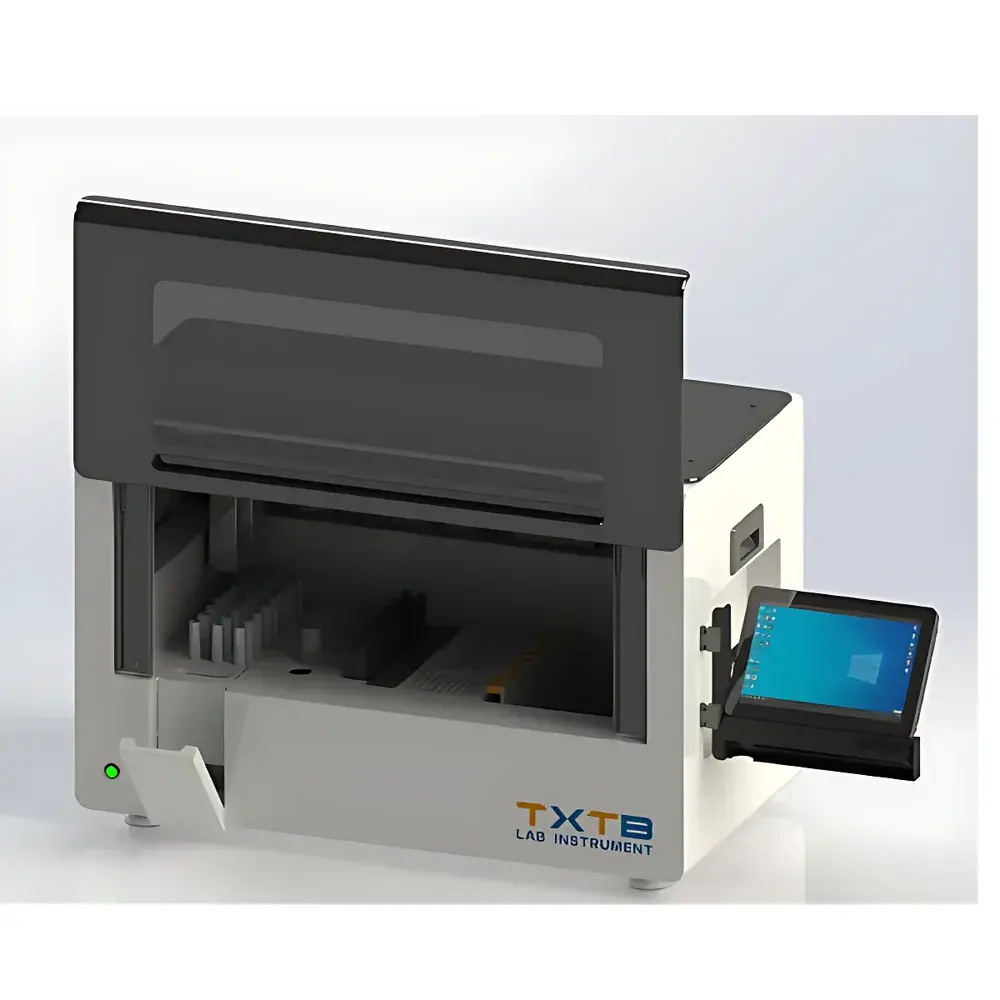
Tongxintianbo TX-GBR8 Automatic Rice Gel Consistency Analyzer
| Brand | Tongxintianbo |
|---|---|
| Origin | Beijing, China |
| Manufacturer Type | Authorized Distributor |
| Country of Manufacture | China |
| Model | TX-GBR8 |
| Power Supply | 220 V AC, 50 Hz |
| Throughput | 8 samples per run |
| Compliance | GB/T 17891–2018, NY/T 234—2016 |
Overview
The Tongxintianbo TX-GBR8 Automatic Rice Gel Consistency Analyzer is an engineered solution for objective, high-throughput assessment of rice gelatinization behavior in accordance with Chinese national standards GB/T 17891–2018 (Premium Quality Rice) and industry standard NY/T 234–2016 (Rice Gel Consistency Determination). It implements a fully automated, closed-loop workflow based on the classical alkali digestion–gel formation–cold-set expansion principle. In this method, milled rice flour is dispersed in potassium hydroxide solution, heated to induce starch gelatinization, then cooled under controlled conditions to allow gel network development. The final gel length—measured after vertical migration under standardized gravity and temperature—is quantified as gel consistency (GC), expressed in millimeters. This parameter correlates strongly with amylose content, cooking quality, and eating texture, making it indispensable for rice breeding programs, grain procurement, and quality assurance in milling facilities.
Key Features
- Fully integrated automation: sequential execution of reagent dispensing (0.2 mol/L KOH), sample transfer, precise thermal ramping (90 ± 0.5 °C for 8 min), controlled cooling (25 ± 0.3 °C for 20 min), vertical gel migration (25 °C water bath, 1 h), and digital image-based length measurement.
- Parallel processing capacity: simultaneous analysis of up to eight rice flour samples per batch, minimizing inter-run variability and maximizing laboratory throughput.
- Thermal precision architecture: dual-zone PID-controlled heating and cooling modules ensure reproducible gel formation kinetics and eliminate manual timing dependencies.
- Optical measurement subsystem: calibrated CCD imaging system with backlight illumination and sub-pixel edge detection algorithm delivers ±0.5 mm resolution in gel length quantification.
- Robust mechanical design: stainless-steel reaction carriers, corrosion-resistant fluidic pathways, and sealed reagent reservoirs support long-term operational stability in routine QC environments.
Sample Compatibility & Compliance
The TX-GBR8 accepts milled rice flour samples (100 mesh sieve, moisture content ≤14.5% w/w) prepared per GB/T 17891 Annex A. It accommodates both indica and japonica varieties, including hybrid and glutinous types, with validated performance across amylose ranges of 10–30%. All operational protocols—including reagent concentration, thermal profiles, and incubation durations—are aligned with GB/T 17891–2018 Clause 6.3 and NY/T 234–2016 Section 4. The instrument supports audit-ready documentation: each run logs timestamp, operator ID, sample IDs, thermal profiles, raw images, and final GC values in CSV and PDF formats compliant with basic GLP traceability requirements.
Software & Data Management
The embedded TX-GBR8 Control Suite (v3.2+) provides intuitive touchscreen operation, real-time thermal monitoring, and automatic pass/fail evaluation against user-defined specification limits (e.g., GC ≥ 60 mm for premium japonica). Data export supports ISO/IEC 17025-aligned workflows: results are timestamped, digitally signed, and stored with full audit trail (user actions, parameter changes, calibration events). Raw image archives and processed metrics can be exported to LIMS via secure FTP or USB 3.0 interface. While not FDA 21 CFR Part 11 certified out-of-the-box, the system architecture supports optional validation packages for regulated environments requiring electronic record integrity and role-based access control.
Applications
- Rice varietal screening in agricultural research stations and breeding programs.
- Grain intake inspection at rice mills and storage depots to enforce contractual quality clauses.
- Process optimization in parboiling and instant rice manufacturing where gel strength affects rehydration kinetics.
- Regulatory compliance testing for national grain quality grading systems (e.g., China’s “Grade 1” rice classification).
- Method validation and inter-laboratory comparison studies under ISO/IEC 17043 proficiency testing schemes.
FAQ
What rice sample preparation is required prior to analysis?
Rice kernels must be milled to flour using a standardized roller mill, sieved through a 100-mesh screen (150 µm), and conditioned to ≤14.5% moisture content per GB/T 17891 Annex A.
Does the instrument require external calibration standards?
No reference gels or physical length standards are needed; the optical measurement module is factory-calibrated using NIST-traceable dimensional targets and verified during startup self-test.
Can the TX-GBR8 be integrated into an existing LIMS?
Yes—CSV and PDF reports include machine-readable metadata (sample ID, run time, operator, GC value, pass/fail status); API-level integration is supported via optional middleware module.
Is maintenance limited to routine cleaning, or are consumables required?
Primary consumables include disposable reaction tubes (polypropylene, autoclavable) and KOH reagent; no moving parts require periodic lubrication or replacement under normal use.
How is result reproducibility ensured across different operators?
Automation eliminates subjective steps (e.g., manual pipetting, timing, visual gel reading); all thermal and mechanical sequences are firmware-controlled and logged, enabling full procedural traceability per ISO/IEC 17025 Clause 7.7.







