
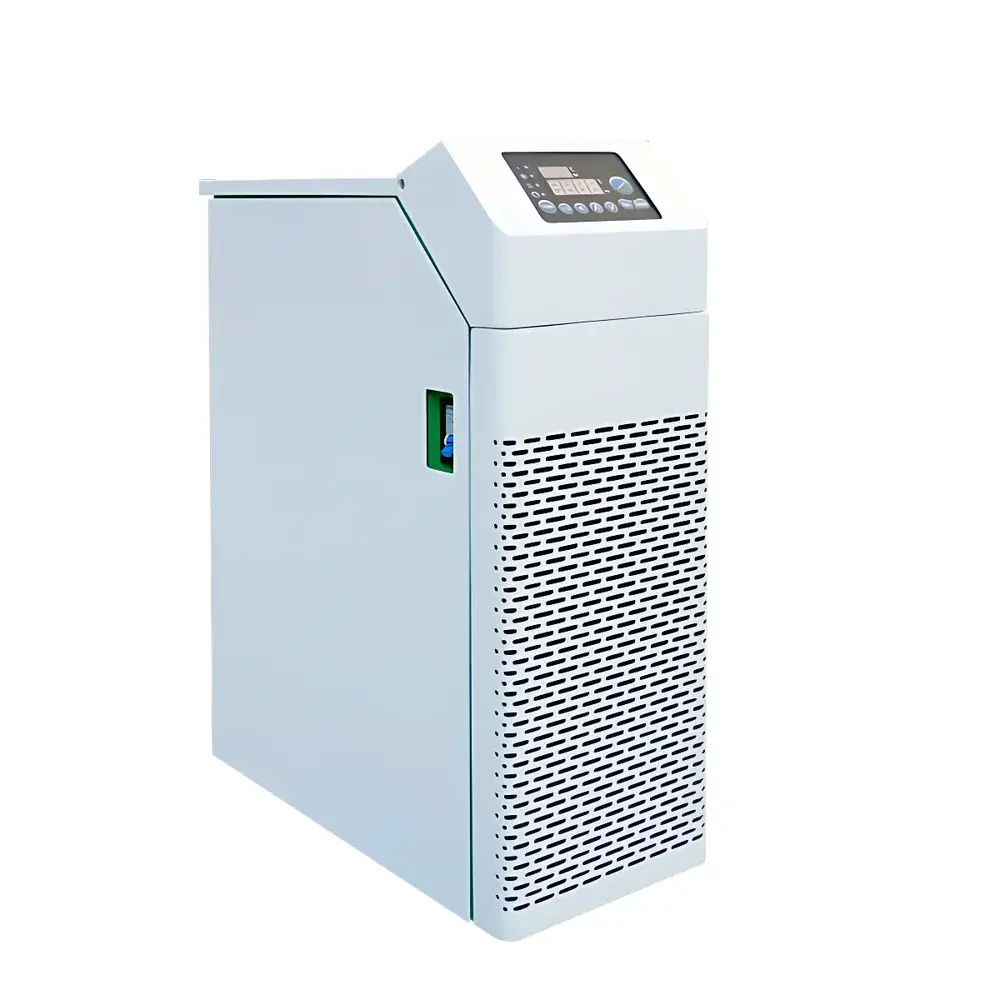
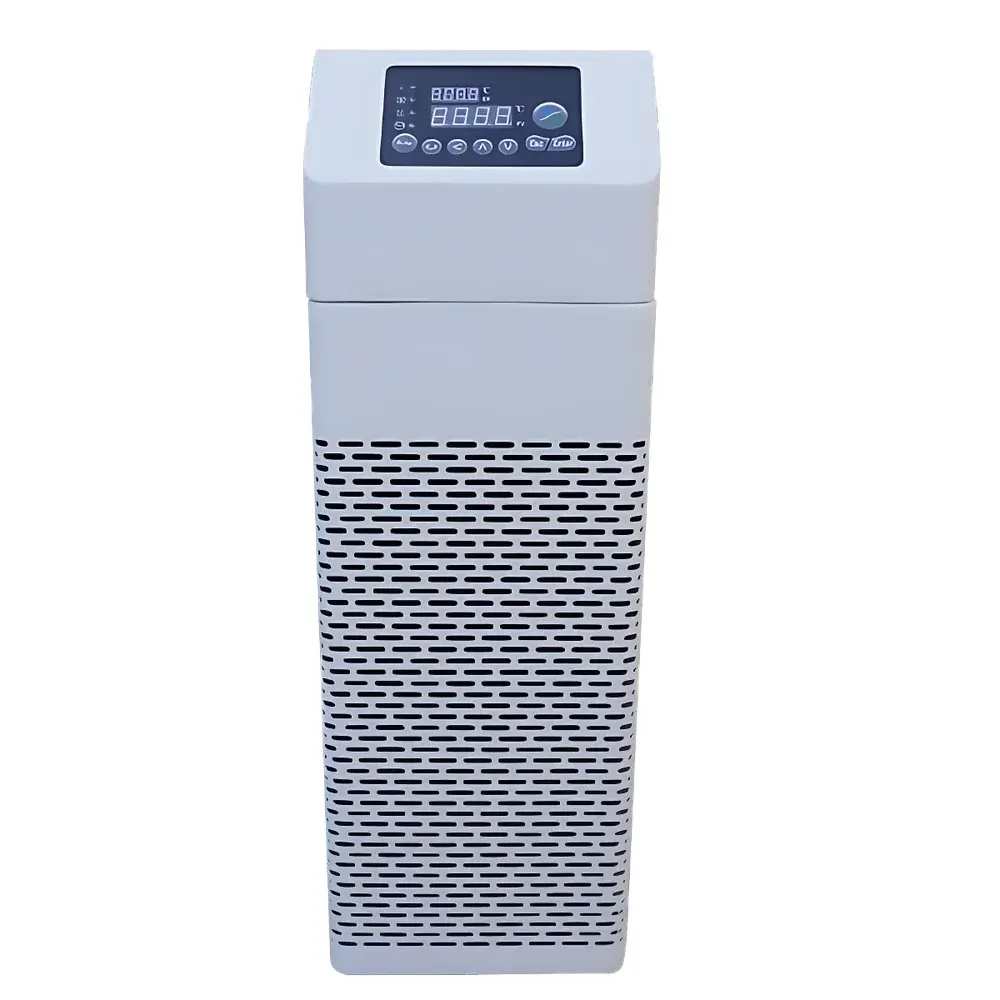
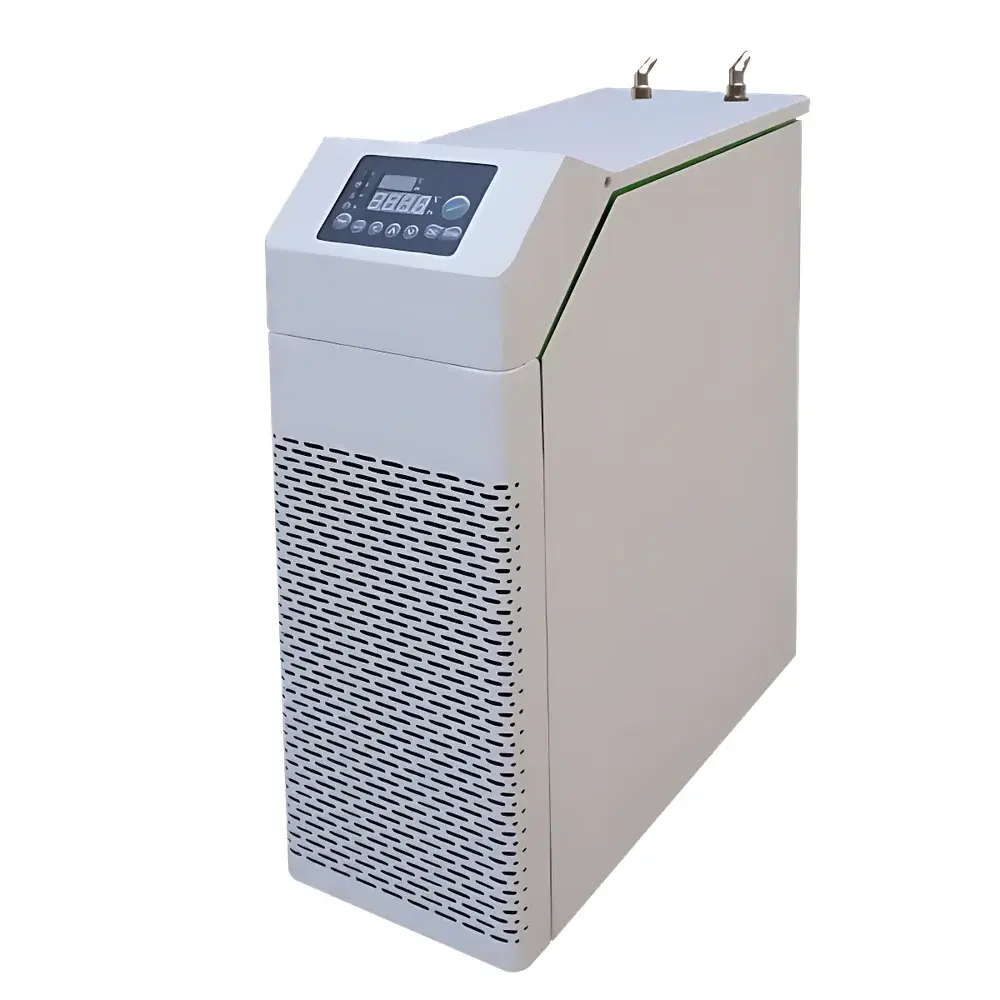
Tongzhou Weipu T1 Dedicated Circulating Chiller for Rotary Evaporators
| Brand | Tongzhou Weipu |
|---|---|
| Origin | Beijing, China |
| Manufacturer Type | Direct Manufacturer |
| Product Category | Domestic |
| Model | T1 Dedicated Circulating Chiller for Rotary Evaporators |
| Instrument Type | Integrated Unit |
| Cooling Method | Water-Cooled |
| Temperature Control Range | −20 °C to 95 °C |
| Refrigeration Capacity | 300 W to 1800 W |
| Temperature Stability | ±0.1 °C |
| Operating Principle | Phase-Change Refrigeration |
Overview
The Tongzhou Weipu T1 Dedicated Circulating Chiller is an integrated, benchtop-compatible refrigeration system engineered specifically to support rotary evaporators and other low-to-medium heat-load laboratory instruments. It operates on a closed-loop phase-change refrigeration cycle—utilizing an environmentally compliant refrigerant (R134a or equivalent, compliant with EU F-Gas Regulation No. 517/2014)—to deliver precise, stable thermal management across a wide operational range. Unlike general-purpose chillers, the T1 features application-optimized flow dynamics, pressure regulation, and thermal response characteristics calibrated for the dynamic heat rejection profile of rotary evaporation systems—particularly during solvent distillation under reduced pressure where condenser load fluctuates rapidly with bath temperature, vacuum level, and feed rate. Its compact footprint (designed for placement either on or beneath standard lab benches) and open-bath reservoir configuration further enable dual functionality: as a circulating chiller for external equipment, and—as a low-temperature constant-temperature bath—for immersion-based applications such as enzyme kinetics or cryo-sample conditioning.
Key Features
- Integrated design with sealed refrigeration circuit, eliminating need for external cooling towers or tap-water dependency
- Wide temperature control range from −20 °C to +95 °C, supporting both cryogenic condensation (e.g., acetone/dry ice-equivalent chilling) and high-boiling-point solvent recovery (e.g., ethylene glycol or DMSO)
- Refrigeration capacity scalable from 300 W to 1800 W at defined ΔT conditions—validated per ISO 5149-2:2014 for performance consistency under variable load
- High-stability temperature regulation with ±0.1 °C fluctuation over 24-hour continuous operation, achieved via PID-controlled compressor modulation and dual-sensor feedback (reservoir + outlet)
- Open stainless-steel reservoir (capacity: 8–12 L, model-dependent) enabling direct sample immersion, auxiliary bath use, or integration with external jacketed vessels
- CE-marked per Directive 2014/30/EU (EMC) and 2014/35/EU (LVD); designed for global voltage compatibility (100–240 VAC, 50/60 Hz) with automatic input sensing
- Eco-engineered refrigerant charge compliant with Montreal Protocol Annex A Group II and EU Regulation (EC) No. 1005/2009
Sample Compatibility & Compliance
The T1 chiller is compatible with all major rotary evaporator platforms—including Buchi, IKA, Heidolph, and Yamato—via standardized 10–16 mm quick-connect fittings and flow-rate adjustable output (0.5–4.0 L/min). Its thermal interface meets ASTM E2912-21 requirements for auxiliary cooling system integration in gravimetric and volumetric evaporation workflows. For regulated environments, the unit supports GLP-compliant operation through optional data logging (USB or RS485 interface) and audit-trail-ready firmware (available with firmware v2.3+). While not intrinsically rated for hazardous locations, its electrical architecture conforms to IEC 61010-1:2010 for safety in laboratory use, including protection against overtemperature, low-flow, and refrigerant leak detection via pressure transducer monitoring.
Software & Data Management
The T1 operates via an embedded microcontroller with local LCD interface (backlit, 4-button navigation) for setpoint entry, real-time temperature display, and alarm status. Optional digital connectivity includes USB-B port for CSV-formatted temperature/time log export and RS485 Modbus RTU protocol support for integration into centralized LabVantage or Siemens Desigo CCMS environments. Firmware updates are performed via FAT32-formatted USB drive; all operational parameters—including compressor cycles, sensor calibration offsets, and error history—are retained in non-volatile memory. Audit trail functionality (enabled via configuration flag) records user-initiated changes with timestamp and session ID, satisfying FDA 21 CFR Part 11 requirements when paired with validated electronic signature modules.
Applications
- Condenser cooling for rotary evaporation of volatile solvents (e.g., dichloromethane, ethanol, hexane) under vacuum
- Thermal stabilization of calorimeters, thermogravimetric analyzers (TGA), and differential scanning calorimeters (DSC)
- Cooling support for Kjeldahl digestion units, distillation assemblies, and UV-Vis spectrophotometer accessories
- Low-temperature reaction baths for controlled hydrolysis, polymerization initiation, or cold-trap operation in vacuum manifolds
- Heat sink for small-scale molecular pumps (<5×10⁻⁶ mbar operating range) and Peltier-cooled detectors
FAQ
What is the minimum flow rate required for stable operation with a rotary evaporator?
The T1 maintains stable temperature control at flow rates ≥0.5 L/min; however, optimal condensation efficiency is achieved between 1.5–3.0 L/min depending on condenser coil geometry and solvent vapor load.
Can the T1 be used with deionized water or glycol-water mixtures?
Yes—the reservoir and circulation path are constructed from 316 stainless steel and EPDM-sealed components, compatible with up to 30% propylene glycol solutions for sub-zero operation down to −20 °C.
Does the unit include remote start/stop capability?
Standard models feature dry-contact terminals (NO/NC) for external interlock with rotary evaporator power sequencing; optional 0–10 V analog control input available for proportional speed modulation.
How often does the refrigerant require servicing?
Under normal laboratory conditions and proper maintenance (annual filter inspection, biannual reservoir cleaning), the sealed refrigeration circuit requires no refrigerant recharge over a 10-year service life per ISO 5149-3:2020 lifecycle guidelines.



