
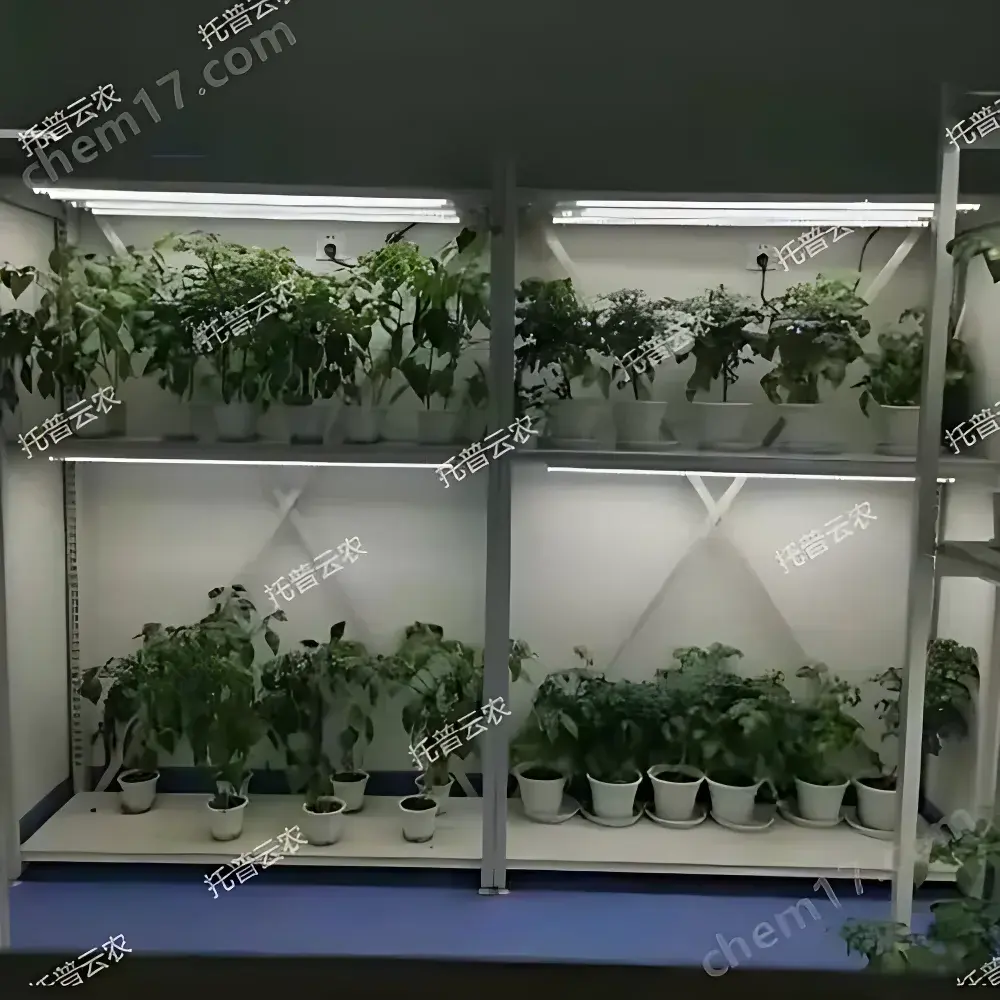
Top Cloud-agri Plant Pathology Research Chamber
| Brand | Top Cloud-agri |
|---|---|
| Origin | Zhejiang, China |
| Manufacturer Type | Direct Manufacturer |
| Country of Origin | China |
| Model | Plant Pathology Research Chamber |
| Price | Upon Request |
| Temperature Range | 15–40 °C |
| Humidity Range | 40–100 % RH |
| Light Intensity Range | 0–10,000 lux (standard) / 0–30,000 lux (optional high-output configuration) |
| CO₂ Control | Optional integrated gas regulation module |
| Remote Management | Cloud-based IoT platform with mobile app interface |
| Energy Efficiency | Multi-stage optimization including LED spectral tuning, adaptive fan control, and insulation-enhanced chamber architecture |
Overview
The Top Cloud-agri Plant Pathology Research Chamber is a purpose-engineered environmental control system designed specifically for controlled-stress experimentation in plant–pathogen interaction studies. It operates on the principle of reproducible, multi-parameter environmental modulation—integrating precise thermoregulation, dynamic humidity profiling, spectrally tunable photoperiodic control, and optional gaseous environment management (e.g., CO₂ concentration adjustment)—to replicate and isolate biotic and abiotic stressors associated with phytopathological development. Unlike general-purpose growth chambers, this unit incorporates structural and operational adaptations essential for pathogen inoculation protocols, including sealed access ports for sterile handling, condensation-resistant internal surfaces, and airflow patterns optimized to minimize cross-contamination between experimental zones. Its architecture supports both short-term symptom expression assays and long-duration resistance screening under GLP-aligned conditions.
Key Features
- Independent per-tier lighting control with selectable LED spectra (white, red/blue ratio-tunable, or full-spectrum options), enabling photomorphogenic differentiation across developmental stages during infection trials.
- Adjustable-height shelving system with modular support rails—compatible with standard tray sizes (e.g., 60 × 30 cm propagation trays) and customizable mounting for petri dishes, growth pouches, or hydroponic modules.
- Integrated dual-sensor humidity management: capacitive RH sensors coupled with dew-point referenced condensation suppression logic to maintain stable vapor pressure deficit (VPD) profiles critical for spore germination and lesion expansion kinetics.
- Optional CO₂ regulation subsystem (0–2,000 ppm range, ±20 ppm accuracy) with mass flow controller and NDIR monitoring—validated for use in stomatal conductance–pathogen penetration correlation studies.
- IoT-enabled cloud platform (TopCloud AgriLink™) delivering real-time telemetry, configurable alarm thresholds (e.g., temperature deviation > ±0.5 °C for >5 min), audit-trail logging compliant with ISO/IEC 17025 documentation requirements.
- Energy-optimized thermal envelope: vacuum-insulated sidewalls, low-emissivity interior cladding, and variable-speed EC fans reducing power consumption by up to 38% versus conventional compressor-driven systems (tested per IEC 60068-3-5).
Sample Compatibility & Compliance
The chamber accommodates a broad spectrum of host–pathogen model systems—including Arabidopsis thaliana, rice (Oryza sativa), tomato (Solanum lycopersicum), and wheat (Triticum aestivum)—under standardized phytosanitary containment (BSL-1 equivalent). All internal materials comply with ISO 8573-1 Class 4 compressed air purity standards for non-metallic components and meet RoHS Directive 2011/65/EU restrictions. The control firmware supports user-defined protocol templates aligned with ASTM D5517 (Standard Practice for Evaluating Fungal Growth on Building Materials) and EPPO PM 7/107 (Guidelines for Testing Resistance to Plant Pathogens). Data integrity mechanisms include timestamped parameter snapshots, SHA-256 hash-verified log exports, and role-based access controls satisfying FDA 21 CFR Part 11 electronic record requirements.
Software & Data Management
The embedded Linux-based controller runs TopCloud AgriLink™ v3.2 firmware, supporting local touchscreen operation and remote synchronization via TLS 1.2–secured MQTT endpoints. Experimental logs are stored in SQLite3 databases with automatic daily backup to encrypted cloud storage (AES-256). The desktop analytics suite (AgriPath Analytics Desktop) enables time-series overlay of environmental parameters against phenotypic scoring metrics (e.g., disease severity index, lesion count/mm²), with export compatibility for R, Python (pandas), and JMP statistical environments. Audit trails include operator ID, session start/end timestamps, parameter modification history, and firmware update verification hashes.
Applications
- Host–pathogen co-cultivation under defined microclimates to quantify infection efficiency across temperature–humidity interaction gradients.
- Evaluation of pre-emptive defense priming agents (e.g., β-aminobutyric acid, harpin proteins) under controlled light–stress regimes.
- High-throughput screening of resistant germplasm lines using standardized inoculation timing and environmental ramping protocols.
- Development and validation of digital disease phenotyping pipelines integrating RGB and multispectral imaging within chamber-mounted camera rigs.
- Regulatory dossier preparation for biopesticide registration requiring GLP-compliant environmental traceability per OECD 150 and EPPO 1/199 guidelines.
FAQ
Can the chamber support simultaneous experiments with different light spectra on separate shelves?
Yes—each shelf zone features independent LED driver circuits with programmable intensity and spectral output, allowing concurrent trials under distinct photobiological conditions.
Is third-party calibration certification available for temperature and humidity sensors?
Yes—NIST-traceable calibration certificates (per ISO/IEC 17025) can be provided upon request, including as-found/as-left data and uncertainty budgets.
Does the system support integration with external imaging or robotic phenotyping hardware?
Yes—the chamber includes RS-485 Modbus RTU and Ethernet TCP/IP interfaces for synchronized triggering of external devices; mechanical mounting brackets and cable routing grommets are pre-installed.
What level of cybersecurity protection is implemented in the cloud platform?
All communications use mutual TLS authentication; user accounts enforce MFA; data at rest is encrypted via AES-256; and the platform undergoes annual penetration testing per OWASP ASVS Level 2.
Are custom chamber dimensions or door configurations available?
Yes—engineering services support OEM modifications including double-door antechamber integration, reinforced floor loading capacity (up to 250 kg/m²), and UL-listed electrical configurations for North American laboratories.



