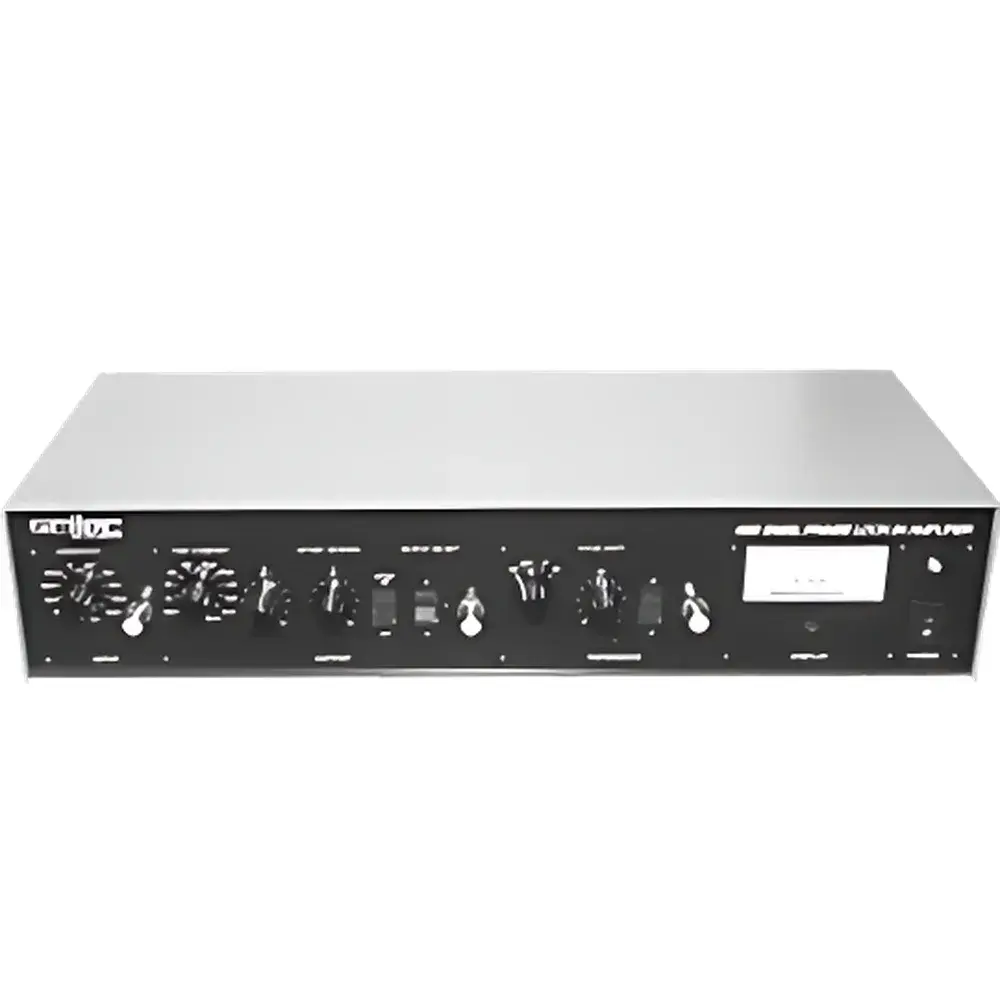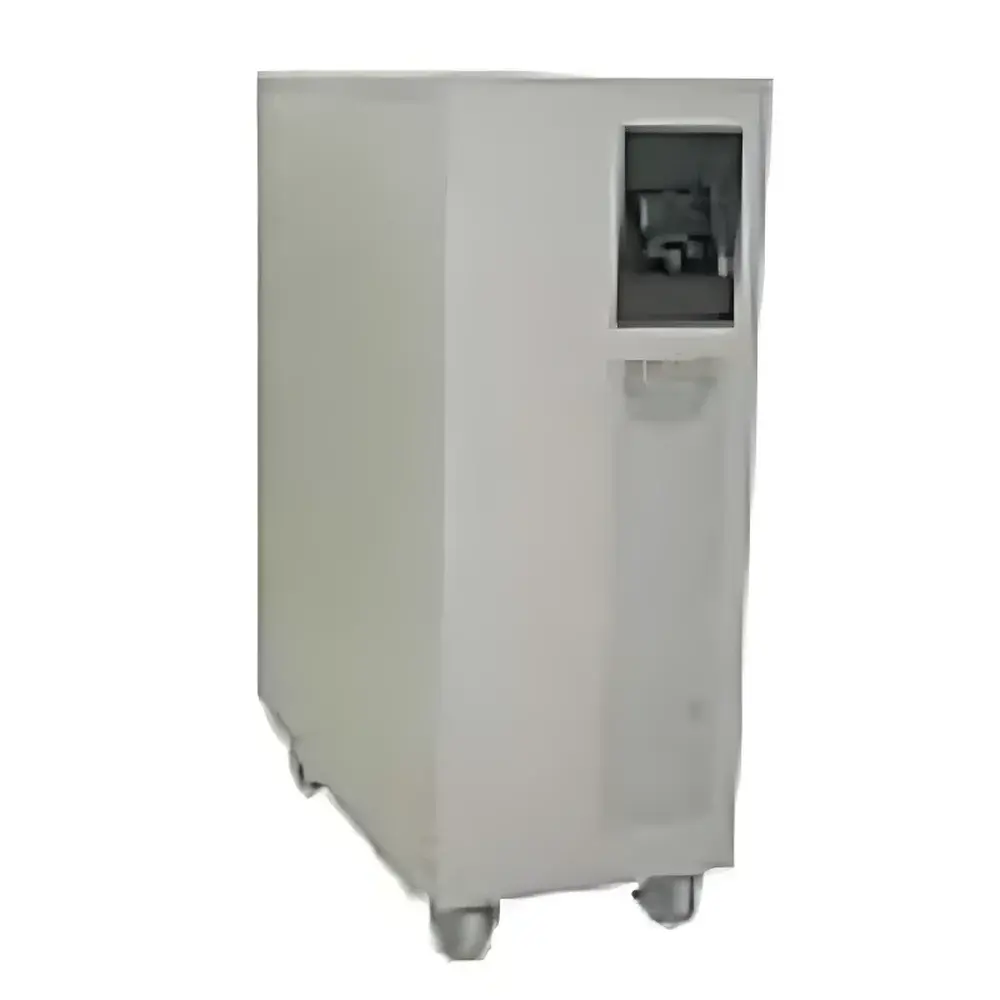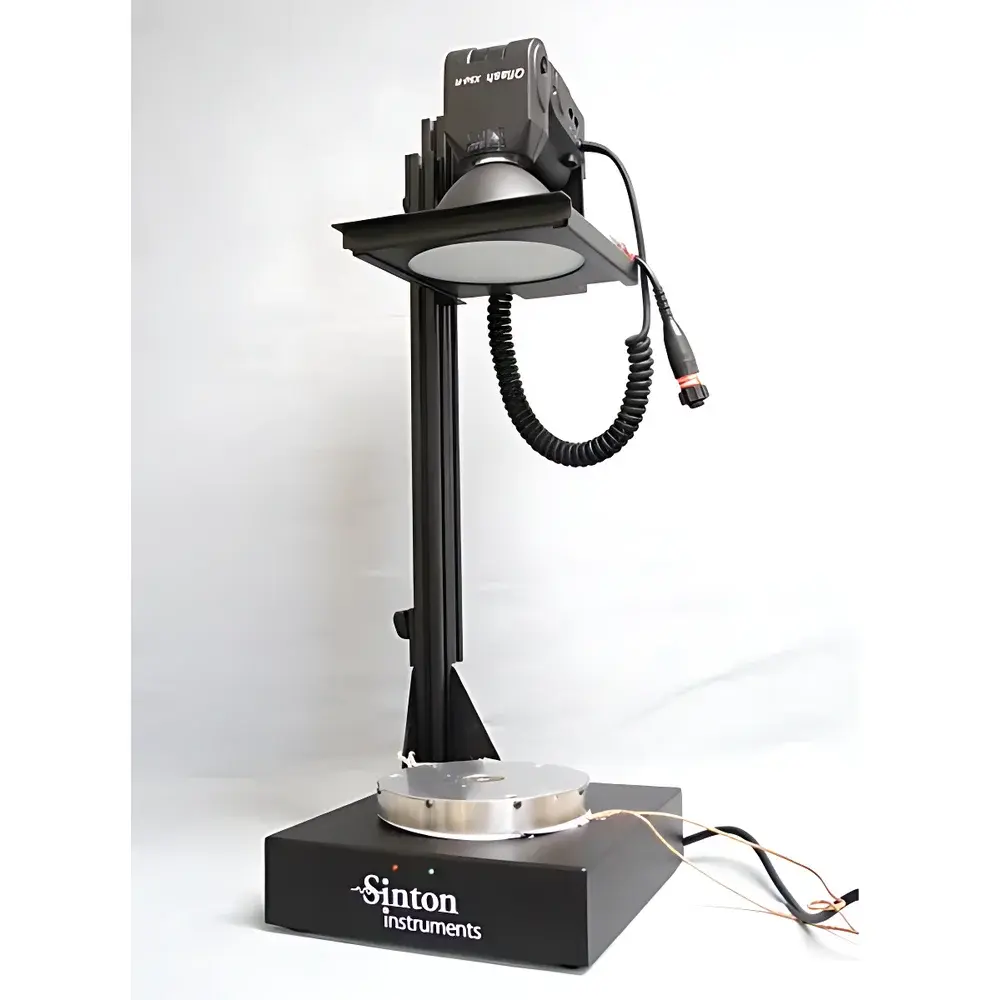
Sinton Instruments WCT-120PL Quasi-Steady-State Photoconductance and Photoluminescence Carrier Lifetime Tester
| Brand | Sinton Instruments |
|---|---|
| Origin | USA |
| Model | WCT-120PL |
| Measurement Principle | Quasi-Steady-State Photoconductance (QSSPC) & Contactless Photoluminescence (PL) |
| Compliance | ASTM F1534, ISO 17987 (applicable to silicon wafer characterization), GLP-aligned data traceability |
Overview
The Sinton Instruments WCT-120PL is a dual-mode, contactless carrier lifetime measurement system engineered for high-precision characterization of crystalline silicon wafers in R&D and production environments. It implements two physically complementary techniques: Quasi-Steady-State Photoconductance (QSSPC) and steady-state photoluminescence (PL), both operating under calibrated, non-destructive, room-temperature conditions. QSSPC quantifies minority-carrier recombination lifetime by measuring photoconductance decay under controlled, quasi-steady illumination—enabling direct extraction of effective lifetime (τeff) across a broad carrier density range (1013–1016 cm−3). Simultaneously, the integrated PL module captures spatially resolved luminescence intensity and spectral decay kinetics, providing carrier lifetime maps with micron-scale resolution and sensitivity to surface passivation quality, bulk defects, and metal contamination. Unlike transient PCD systems, the WCT-120PL requires no electrical contacts or sample metallization, eliminating process-induced artifacts and enabling inline metrology at multiple fabrication stages.
Key Features
- Dual-mode operation: Seamless switching between QSSPC and contactless PL modes without hardware reconfiguration
- Calibrated absolute lifetime output: Traceable to NIST-traceable reference wafers; supports τeff reporting per ASTM F1534 Annex A3
- Carrier-density-resolved lifetime analysis: Generates τ(Δn) curves over >3 orders of magnitude in excess carrier density
- Integrated spectral acquisition: PL mode includes thermoelectrically cooled InGaAs detector (900–1700 nm) with <1.5 nm optical resolution
- Automated wafer handling compatibility: Designed for integration with standard 150 mm / 200 mm wafer loaders and factory automation protocols (SECS/GEM)
- Robust architecture: Vibration-isolated optical bench, temperature-stabilized excitation source (808 nm laser diode), and EMI-shielded electronics for clean signal acquisition
Sample Compatibility & Compliance
The WCT-120PL accepts bare, textured, or passivated silicon wafers from 100 mm to 200 mm diameter, including Czochralski (CZ), float-zone (FZ), and epitaxial substrates. It accommodates thicknesses from 100 µm to 1000 µm and surface reflectivities from 5% (anti-reflective coated) to 40% (textured). All measurements comply with industry-standard test methods: QSSPC mode adheres to ASTM F1534 “Standard Test Method for Measuring Minority-Carrier Lifetime of Silicon Wafers” and aligns with ISO 17987 Annex B for photovoltaic material qualification. PL data acquisition meets IEC 62788-5-2 requirements for luminescence-based defect detection. System software maintains full audit trails compliant with FDA 21 CFR Part 11 and GLP/GMP documentation standards—including user access logs, calibration history, and raw-data versioning.
Software & Data Management
The instrument is controlled via Sinton’s proprietary LifetimeStudio™ v4.x software, a Windows-based application supporting both local and networked deployment. It provides real-time visualization of τ(Δn) curves, PL intensity maps, and comparative overlay of QSSPC/PL-derived lifetimes on a single coordinate grid. Data export conforms to HDF5 and CSV formats with embedded metadata (wafer ID, measurement timestamp, ambient T/RH, calibration coefficients). Batch processing workflows enable automated analysis of multi-wafer lots, with statistical summaries (mean τeff, σ, min/max) and SPC chart generation. Software validation packages—including IQ/OQ documentation, electronic signature support, and change control logs—are available for regulated manufacturing environments.
Applications
- Raw silicon feedstock qualification: Discrimination of oxygen precipitate density and interstitial iron concentration via lifetime degradation kinetics
- In-line process monitoring: Detection of metallic contamination (Fe, Cr, Cu) after wet etch, diffusion, or metallization steps using lifetime quenching signatures
- Passivation layer evaluation: Quantification of surface recombination velocity (SRV) from symmetric τeff vs. Δn curves before/after SiNx:H or AlOx deposition
- Emitter optimization: Correlation of implied open-circuit voltage (iVOC) with QSSPC-derived τeff to guide phosphorus/boron diffusion profiles
- Substrate doping assessment: Iterative inversion of QSSPC + PL datasets to extract bulk doping concentration (NA – ND) and defect density distributions
- Fabrication fault isolation: Identification of localized shunts or edge recombination via PL image segmentation and lifetime gradient mapping
FAQ
Does the WCT-120PL require sample contact or electrode deposition?
No—both QSSPC and PL modes are fully contactless and non-invasive, preserving wafer integrity for subsequent processing.
Can it measure lifetime on textured or saw-damaged wafers?
Yes—the optical design compensates for surface scattering; measurement uncertainty remains within ±5% for standard pyramid textures (5–10 µm height).
Is calibration traceable to national standards?
Yes—factory calibration uses NIST-traceable lifetime reference wafers certified per ASTM F1534 Appendix X2.
What is the minimum measurable lifetime?
The system reliably resolves τeff ≥ 0.1 µs with <10% relative standard deviation at Δn = 1×1014 cm−3.
How does PL mode complement QSSPC for process troubleshooting?
PL provides spatial resolution (≤50 µm) and defect-specific spectral signatures; QSSPC delivers quantitative, carrier-density-dependent recombination kinetics—enabling root-cause attribution across bulk, interface, and surface domains.