
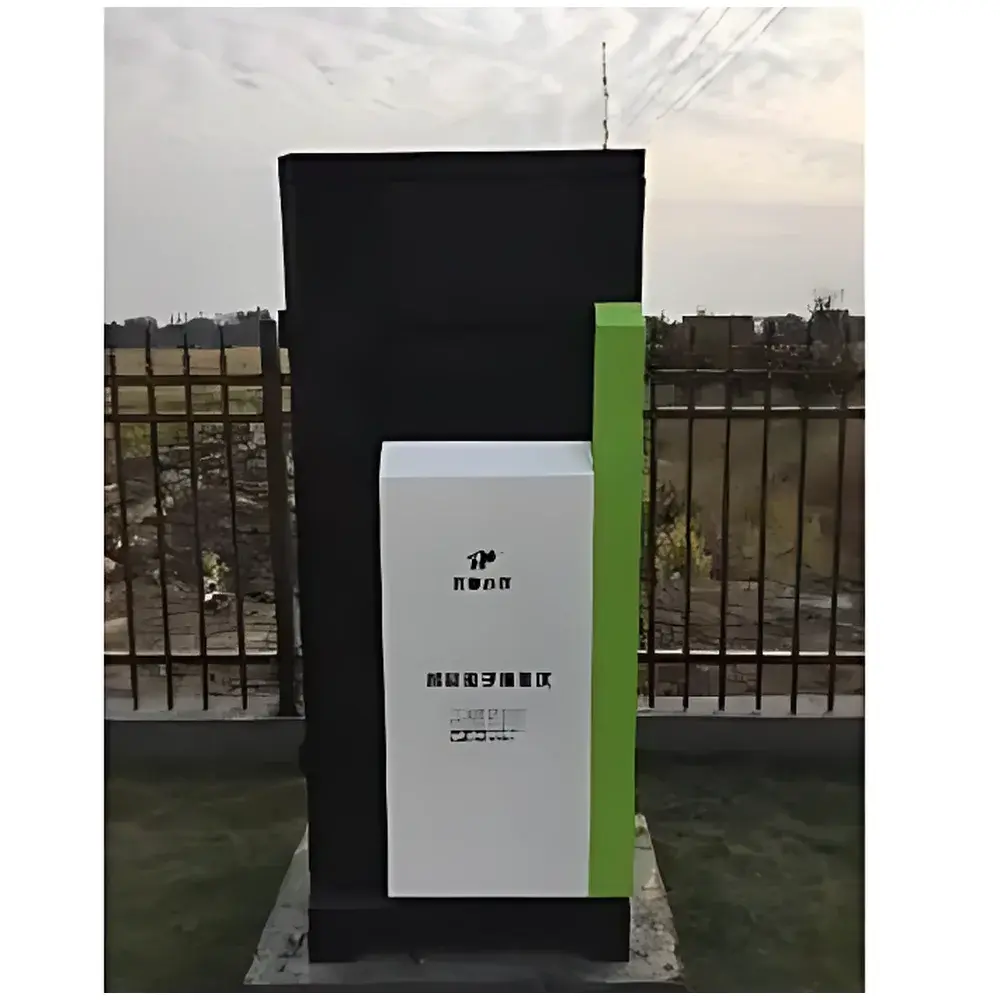
Top Cloud-agri TPSQ-BZ Intelligent Spore Trap System
| Brand | Top Cloud-agri |
|---|---|
| Origin | Zhejiang, China |
| Manufacturer Type | OEM/ODM Manufacturer |
| Country of Origin | China |
| Model | TPSQ-BZ |
| Power Supply | AC 220V±10% or DC 12V (solar-compatible: 300W panel + battery) |
| Max. Power Consumption | 65 W |
| Standby Power (fan on) | 20 W |
| Standby Power (fan off) | 2 W |
| Camera Resolution | 5 MP |
| Optical Magnification | 20× |
| Display | 10.4-inch TFT LCD |
| Dimensions (H×W×D) | 1850 × 760 × 660 mm |
| Operating Temperature | −30 °C to +70 °C |
| Operating Humidity | ≤98 % RH |
| Air Sampling Flow Rate | 120 L/min |
| Sampling Duration Range | 60–1200 min |
| Capture Area per Slide | 50 mm × 8 mm |
| Image Capture Frequency | 1–100 images per cycle |
| Slide Tape Runtime | 365 days (3 images/day) |
| GPS Module | Integrated for geolocation and anti-displacement monitoring |
| Auto-Focus & Depth Fusion | Yes |
| Environmental Monitoring | Onboard temperature/humidity sensors |
| Data Transmission | 3G wireless uplink to cloud platform |
| Barcode Tracking | Yes |
| Precision Positioning & Limit Switching | Yes |
Overview
The Top Cloud-agri TPSQ-BZ Intelligent Spore Trap System is an automated, field-deployable aerobiological monitoring instrument engineered for continuous, unattended capture, imaging, and preliminary classification of airborne fungal spores in agricultural and phytosanitary environments. It operates on the principle of volumetric air sampling—drawing ambient air at a calibrated flow rate (120 L/min) across a moving adhesive slide tape, where viable and inert spores are deposited. Captured specimens are then imaged in situ using a high-resolution 5-megapixel camera with 20× optical magnification and computational depth-fusion algorithms, enabling stereoscopic visualization of morphological features critical for taxonomic identification. Designed for year-round outdoor deployment in extreme climates (−30 °C to +70 °C), the system integrates environmental sensing, GPS-based georeferencing, and embedded logic for adaptive sampling scheduling—ensuring data integrity, traceability, and operational resilience without on-site intervention.
Key Features
- 24/7 autonomous operation with fully programmable sampling cycles—including start time (24-hour format), duration (60–1200 minutes), and image count per cycle (1–100)—enabling alignment with diurnal spore release patterns.
- Intelligent image curation: onboard image quality assessment selects only in-focus, high-contrast frames for upload, minimizing bandwidth usage and cloud storage overhead.
- Barcode-enabled slide tape tracking ensures full chain-of-custody from installation to analysis; each tape segment is uniquely identifiable for audit-ready traceability.
- Integrated environmental monitoring (temperature, relative humidity) and real-time diagnostics feed into adaptive control logic—e.g., pausing sampling during condensation risk or high particulate load.
- GPS module provides precise geolocation and tamper detection: automatic alerts trigger upon unauthorized physical displacement, supporting regulatory compliance in distributed monitoring networks.
- Low-power architecture supports dual-mode operation: grid-connected (AC 220 V ±10%) or off-grid solar-battery configuration (12 V DC, compatible with 300 W PV array and deep-cycle battery).
- On-device 10.4-inch interactive display enables local status review, manual capture initiation, and firmware updates—reducing dependency on remote access during connectivity outages.
Sample Compatibility & Compliance
The TPSQ-BZ is optimized for capturing airborne propagules of economically significant phytopathogens—including Puccinia, Blumeria, Alternaria, Cladosporium, and Fusarium spp.—on standardized 50 mm × 8 mm adhesive tapes. Its sampling geometry and airflow dynamics conform to principles outlined in ISO 21501-4 (aerosol particle sizing) and ASTM D7520 (spore trap performance evaluation). While not certified to GLP or FDA 21 CFR Part 11 out-of-the-box, the system’s audit trail capabilities—including timestamped image metadata, GPS coordinates, environmental logs, and user-accessible change history—support integration into GxP-aligned workflows when deployed with validated cloud software and documented SOPs.
Software & Data Management
Data transmission occurs via secure 3G cellular uplink to a TLS-encrypted cloud platform. Each uploaded image carries embedded EXIF metadata (acquisition time, GPS location, sensor readings, focus confidence score). The cloud interface supports role-based access control, manual annotation, batch tagging by morphology or suspected genus, and export of structured CSV reports compliant with FAO Plant Protection Reporting Standards. Optional API integration allows ingestion into national early-warning systems (e.g., EPPO QS, USDA APHIS Pest Forecasting Frameworks). All raw images and logs are retained for ≥18 months, with configurable auto-purge policies aligned with national phytosanitary record retention mandates.
Applications
- Real-time regional surveillance of rust, powdery mildew, and smut epidemics across cereal, fruit, and vegetable production zones.
- Validation of fungicide application timing by correlating spore load peaks with weather-driven infection models (e.g., Mills’ rules, Smith’s model).
- Long-term phenological studies on spore seasonality under climate variability—leveraging 365-day uninterrupted runtime and thermal-stable optics.
- Supporting quarantine inspections at ports and border checkpoints through rapid, geo-tagged spore documentation.
- Integration into smart irrigation or precision spraying systems via MQTT or RESTful webhooks for closed-loop disease mitigation.
FAQ
How does the system ensure image clarity across varying environmental conditions?
The TPSQ-BZ employs active autofocus with contrast-detection algorithms and multi-frame depth fusion—capturing multiple focal planes and computationally synthesizing a single extended-depth-of-field image. This eliminates reliance on fixed-focus optics prone to thermal drift.
Can the slide tape be replaced remotely?
No—physical replacement is required—but the system monitors tape consumption in real time and sends proactive notifications (SMS/email/cloud alert) when remaining capacity falls below 72 hours, allowing scheduled maintenance.
Is the 3G module compatible with global carriers?
The embedded module supports quad-band UMTS (850/900/1900/2100 MHz) and is pre-configured for major Chinese carriers; international SIM compatibility requires carrier-specific APN configuration and regulatory approval per jurisdiction.
What level of taxonomic identification is possible from uploaded images?
The system delivers high-fidelity morphological imagery suitable for expert-level visual identification or AI-assisted classification (when paired with third-party ML models trained on validated spore libraries); it does not perform automated species-level ID natively.
Does the device meet IP rating requirements for outdoor agricultural use?
Yes—the enclosure conforms to IP65 standards (dust-tight and protected against low-pressure water jets), verified per IEC 60529, ensuring reliability in rain, dust storms, and high-humidity orchard or field settings.






