
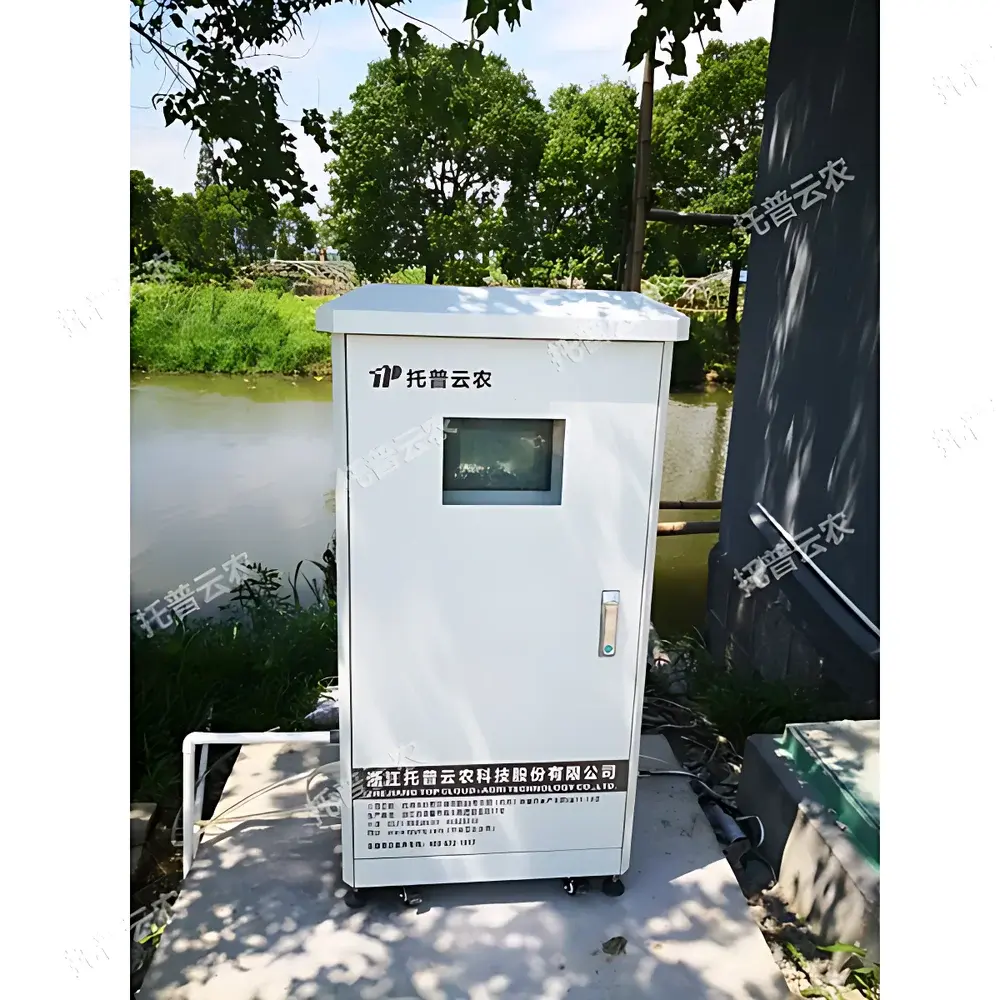
Top Cloud-agri TPSZ-III Series Online Automatic Water Quality Monitoring System
| Brand | Top Cloud-agri |
|---|---|
| Model | TPSZ-III Series |
| Origin | Zhejiang, China |
| Manufacturer Type | Direct Manufacturer |
| Product Origin | Domestic (China) |
| Pricing | Available Upon Request |
Overview
The Top Cloud-agri TPSZ-III Series Online Automatic Water Quality Monitoring System is an integrated, field-deployable instrumentation platform engineered for continuous, real-time measurement of critical physicochemical parameters in natural and engineered water bodies. Based on multi-sensor fusion architecture and coulometric/electrochemical/optical transduction principles, the system delivers stable, long-term operation in diverse aquatic environments—including reservoirs, irrigation canals, aquaculture ponds, and municipal water distribution networks. Unlike discrete lab-based analysis or manual grab sampling, this system implements continuous in-situ monitoring—enabling detection of transient events such as algal blooms, organic loading spikes, or thermal stratification shifts with sub-hour temporal resolution. Its modular design supports scalable sensor configurations while maintaining compliance with foundational data integrity expectations for environmental surveillance programs.
Key Features
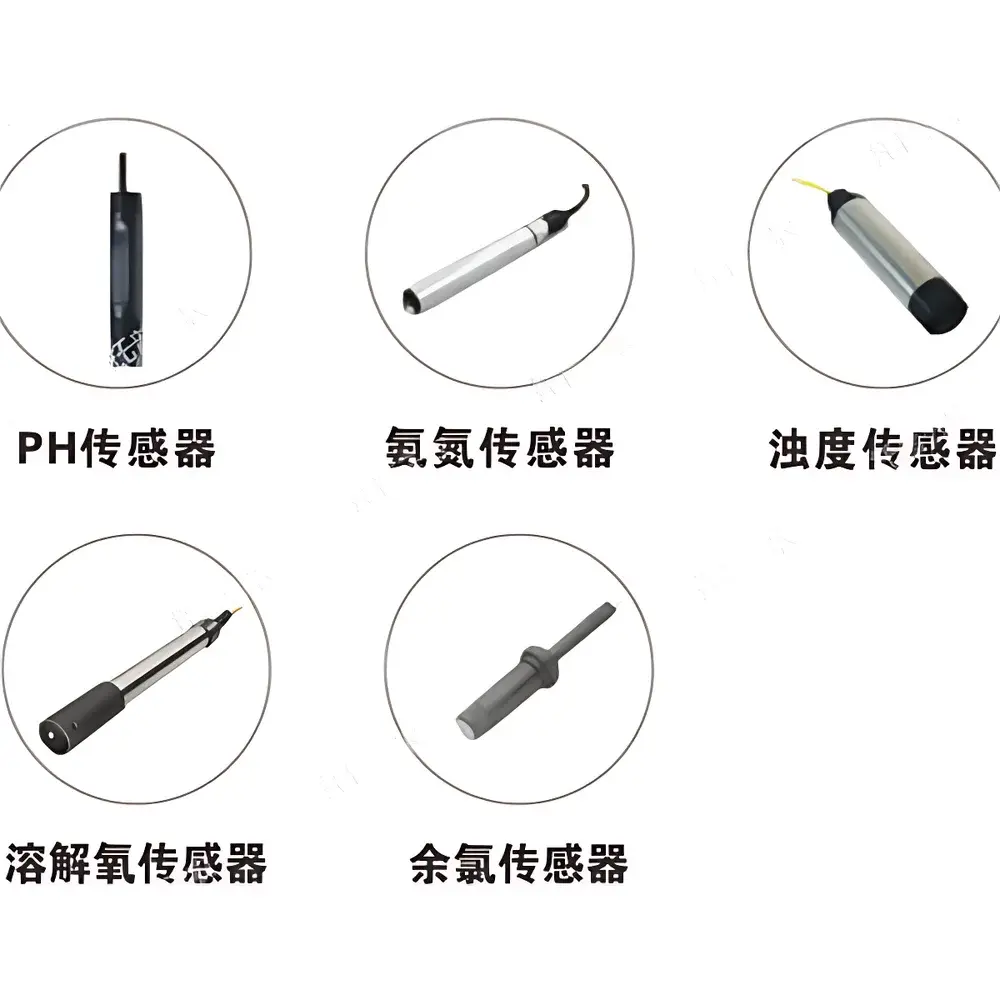
- Multi-parameter sensing capability: Simultaneous real-time acquisition of dissolved oxygen (DO), turbidity, pH, electrical conductivity (EC), and water temperature using calibrated industrial-grade probes.
- Low-power embedded architecture: Optimized for solar-battery hybrid operation; includes overvoltage protection, ESD-hardened circuitry, and watchdog timer functionality to ensure operational continuity under variable ambient conditions.
- Local data resilience: Integrated microSD card slot supporting FAT32-formatted cards up to 128 GB, enabling autonomous logging at user-defined intervals (1 min to 24 h) without network dependency.
- Robust wireless telemetry: Dual-mode cellular connectivity (LTE Cat-1 / 2G fallback) with automatic reconnection logic and configurable data transmission frequency (e.g., every 5 min, hourly, or event-triggered).
- Configurable threshold-based alerting: On-device and cloud-level alarm rules support multi-level severity classification (warning, critical, emergency), with notification delivery via SMS, email, and in-app push alerts.
- Self-diagnostics and remote firmware updates: Built-in sensor health diagnostics (e.g., electrode impedance check, optical path contamination flag) and secure OTA update capability via TLS-encrypted channel.
Sample Compatibility & Compliance
The TPSZ-III system is validated for use in freshwater systems with total dissolved solids (TDS) ≤ 5,000 mg/L and suspended solids < 100 mg/L. Sensor housings meet IP68 ingress protection rating for permanent submersion up to 5 m depth. While not certified to ISO/IEC 17025 for accredited testing, the system adheres to measurement traceability practices aligned with ASTM D1129 (Standard Terminology Relating to Water), ASTM D3370 (Standard Practices for Sampling Water), and China’s HJ/T 96–2003 (Technical Specifications for Online Monitoring Instruments of Water Quality). Data logs include timestamps synchronized via NTP, supporting basic audit trail requirements for internal quality assurance and regulatory reporting workflows.
Software & Data Management
The system operates with a browser-accessible cloud management platform hosted on secure AWS infrastructure. Platform features include role-based access control (RBAC), customizable dashboard widgets, automated daily summary reports, and export in CSV, Excel (.xlsx), and PDF formats. All data transmissions comply with TLS 1.2+ encryption; user authentication employs OAuth 2.0 with optional two-factor verification. Audit logs record all configuration changes, alarm acknowledgments, and data export actions—supporting GLP-aligned documentation needs. Historical datasets are retained for ≥ 18 months by default, with optional archival extension. The platform provides RESTful API endpoints for integration into third-party SCADA, GIS, or farm management software (e.g., FarmOS, Aquabyte).
Applications
- Aquaculture pond management: DO and temperature trending informs aeration scheduling; ammonia-nitrogen proxy estimation (via pH/temperature correlation models) aids feeding optimization.
- Irrigation water quality assurance: EC and turbidity monitoring detects sediment runoff or salinity intrusion in open-channel delivery systems.
- Reservoir and lake eutrophication surveillance: Long-term pH and DO diurnal cycle analysis identifies hypolimnetic anoxia onset and photosynthetic activity patterns.
- Municipal water source early warning: Rapid turbidity spikes serve as proxies for watershed disturbance events (e.g., stormwater inflow, landslides).
- Research-grade environmental time-series studies: High-frequency data enables spectral analysis, anomaly detection modeling, and calibration validation against reference laboratory measurements.
FAQ
What power supply options are supported?
The TPSZ-III accepts 12 V DC input and is compatible with 20–50 W solar panels paired with 12 V/24 Ah lithium-iron-phosphate (LiFePO₄) batteries for off-grid deployment.
Can additional sensors be added post-purchase?
Yes—the system features expandable analog (0–5 V, 4–20 mA) and digital (RS-485 Modbus RTU) interfaces, allowing integration of third-party sensors including nitrate, ORP, and chlorophyll-a fluorometers.
Is raw sensor data accessible via API?
Yes—authenticated users may retrieve time-stamped parameter values, sensor status flags, and diagnostic metrics through documented REST endpoints with JSON response format.
How frequently is firmware updated?
Major firmware releases occur biannually; security patches and minor enhancements are issued quarterly, with version history and release notes published in the customer portal.
Does the system support edge computing capabilities?
Basic edge logic is available—including configurable moving-average smoothing, spike rejection filters, and local alarm triggering—reducing bandwidth usage and enabling offline decision support.
Related Products







