
Top Cloud-agri TZS-pHW-4G Multi-parameter Soil Sensor for Moisture, Temperature, EC, and pH
| Brand | Top Cloud-agri |
|---|---|
| Origin | Zhejiang, China |
| Manufacturer Type | Manufacturer |
| Country of Origin | Domestic (China) |
| Model | TZS-pHW-4G |
| Instrument Type | Soil Moisture/Tension Analyzer |
| Communication | 5G/4G Cellular |
| Data Storage | 30,000 entries in internal Flash + expandable microSD (4 GB standard, unlimited with card) |
| Power Supply | 7.4 V / 2.8 Ah Li-ion battery (with low-voltage warning & charge protection) |
| external DC input | 8.4 V ≥1000 mA |
| Operating Current | 10 mA (standby), variable under active sensing |
| GPS | Integrated high-sensitivity module with automatic geotagging |
| Sensor Expansion | Up to 32 channels via IP67-rated daisy-chain hub |
| Display | Backlit Chinese LCD showing real-time values, timestamps, storage status, and system diagnostics |
| Sampling Interval | Configurable from 5 minutes to 99 hours |
| Audio Feedback | Mandarin voice prompts and threshold-triggered alarm announcements |
| Software Platform | Web- and mobile-accessible cloud management system (C/S architecture), supporting data visualization, export (CSV, PDF), reporting, audit-ready history, and OTA firmware updates |
| Soil Temperature Sensor | Range –40 to +100 °C, accuracy ±0.5 °C, resolution 0.1 °C, probe length ≥25 cm |
| Soil Electrical Conductivity (EC) Sensor | Solid-state electrode, range 0–23 mS/cm, accuracy ±2%, resolution 0.01 mS/cm |
| Soil Volumetric Water Content (VWC) Sensor | Range 0–100 %VWC, response time ≤2 s, resolution 0.1 %VWC, relative error ≤3%, standard cable 1.5 m (customizable up to 1000 m) |
| Soil pH Sensor | Range 0–14, accuracy ±0.5 pH units |
Overview
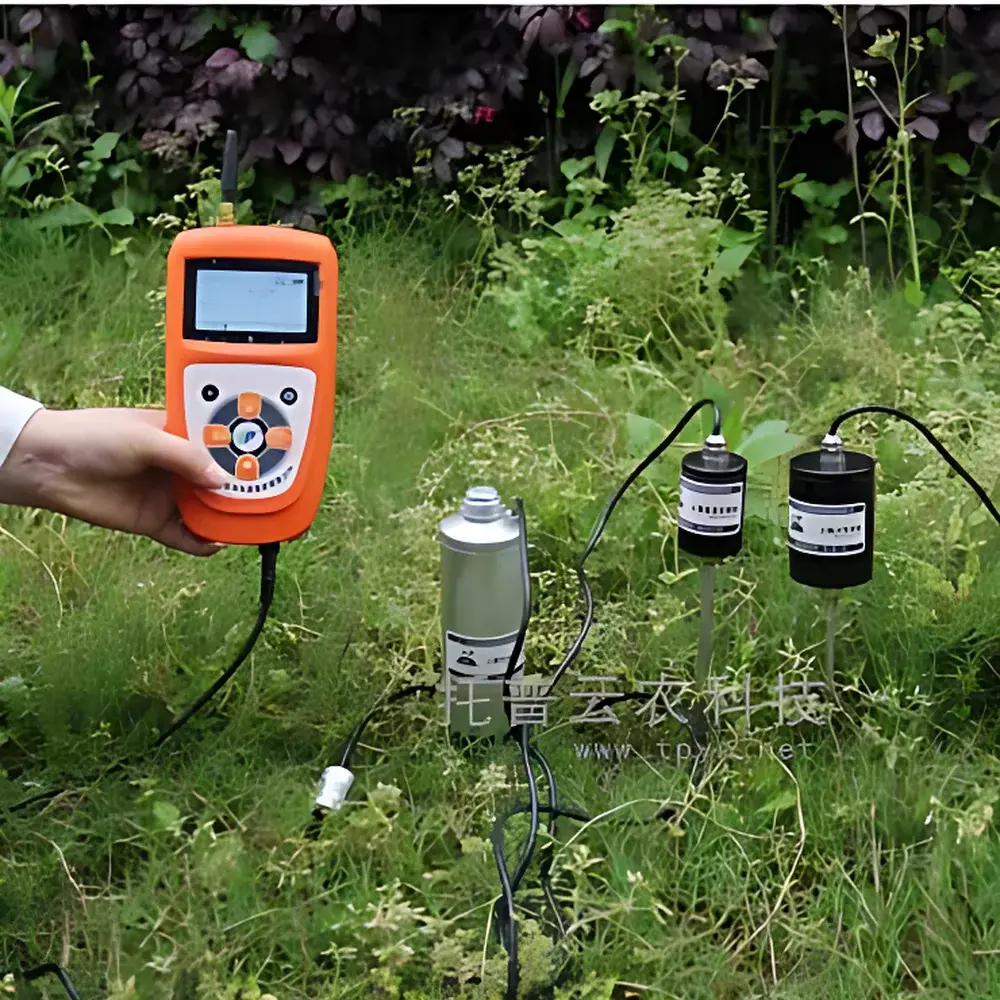
The Top Cloud-agri TZS-pHW-4G is a field-deployable, multi-parameter soil sensor platform engineered for continuous, simultaneous monitoring of four critical edaphic variables: volumetric water content (VWC), soil temperature, electrical conductivity (EC), and pH. Unlike single-parameter probes or laboratory-based extraction methods, the TZS-pHW-4G employs integrated solid-state sensing elements—capacitive dielectric for VWC, platinum resistance thermometer (PT1000-class) for temperature, galvanic EC electrodes with temperature compensation, and combination glass-reference pH electrodes—operating in situ without soil disturbance. Its design adheres to principles of long-term environmental observability: measurements are performed directly in the soil matrix at user-defined depths, minimizing hysteresis and sampling bias. The instrument is calibrated per ISO 11277 (soil physical analysis) and aligned with ASTM D511 (water-soluble salt determination) and ASTM D2720 (pH of soil suspensions) methodologies, enabling data comparability across research networks and regulatory monitoring programs.
Key Features
- Real-time cellular telemetry via embedded 5G/4G modem, transmitting timestamped, geotagged sensor data to secure cloud infrastructure without manual retrieval.
- Dual-mode power architecture: rechargeable 7.4 V / 2.8 Ah lithium-ion battery (with state-of-charge monitoring and over-discharge protection) plus optional 8.4 V DC auxiliary input for permanent installations.
- IP67-rated modular expansion hub supports up to 32 heterogeneous sensors—including tensiometers, nitrate ion-selective electrodes, and CO₂ diffusion probes—without cross-channel interference or recalibration.
- On-device 30,000-entry non-volatile Flash memory complemented by removable microSD card (4 GB standard; capacity scalable to 512 GB), ensuring redundancy and offline operation during network outages.
- Integrated GPS module logs WGS84 coordinates at each acquisition cycle, enabling spatial interpolation, GIS layer integration, and compliance with FAO’s World Soil Information System (WoSIS) metadata standards.
- Configurable audio feedback in Mandarin: voice-enabled threshold alerts, scheduled status reports, and fault diagnostics—critical for remote deployments where visual interface access is limited.
- Industrial-grade LCD with backlight delivers full-system diagnostics: battery voltage, signal strength, memory utilization, sensor health indicators, and real-time parameter values—all accessible without external software.
Sample Compatibility & Compliance
The TZS-pHW-4G is validated for use across mineral soils (sand, loam, clay), organic substrates (peat, compost), and anthropogenic media (green roof substrates, landfill covers). Its solid-state EC and pH probes eliminate liquid junction drift and clogging risks associated with traditional gel-filled electrodes, extending service life in high-salinity or acidic environments (pH < 4.0). All sensors meet IEC 60529 (IP67 ingress protection) and operate within the temperature range specified by ISO 22028-1 for archival stability of electronic logging devices. Data integrity complies with GLP requirements: each record includes cryptographic hash, acquisition timestamp (NTP-synchronized), sensor serial number, calibration epoch, and operator ID (if assigned). Firmware enforces write-once logging—preventing post-acquisition modification—and maintains full audit trails for FDA 21 CFR Part 11–aligned deployments.
Software & Data Management
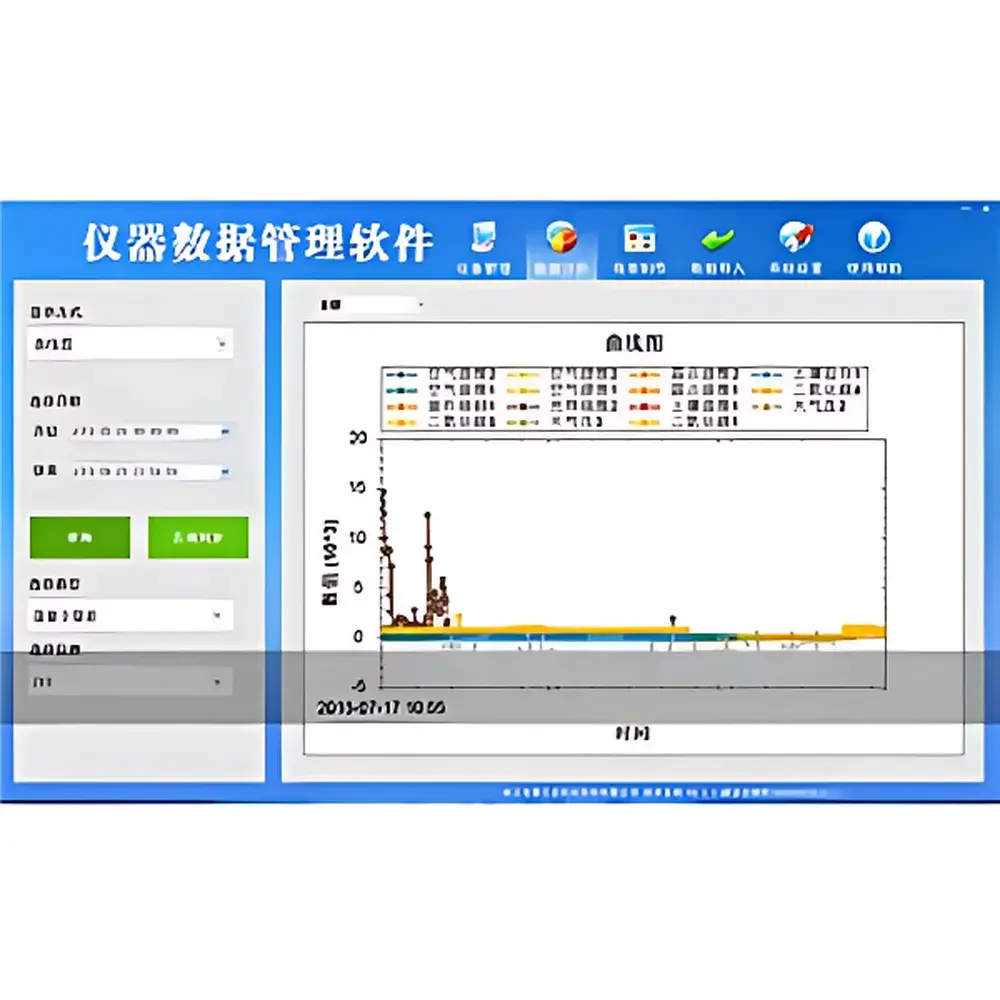
The proprietary cloud platform operates as a C/S hybrid system, accessible via responsive web interface (Chrome, Edge, Safari) and native iOS/Android applications. It ingests time-series data streams from heterogeneous sensor networks—not only TZS-pHW-4G units but also legacy loggers and third-party IoT gateways—normalizing units, applying temperature compensation algorithms (e.g., EC correction per ISO 11265), and flagging outliers using Tukey’s fences (IQR-based). Visualization tools include synchronized multi-axis time plots, spatial heatmaps (Kriging interpolation), and statistical summaries (mean, SD, CV, percentiles). Export formats support scientific reproducibility: CSV (UTF-8, RFC 4180 compliant), PDF reports with embedded metadata, and NetCDF4 for model coupling. Role-based access control (RBAC), SSO integration, and automated daily backups to geo-redundant AWS S3 buckets ensure operational continuity and regulatory readiness.
Applications
- Irrigation scheduling in precision agriculture: VWC-EC-pH co-monitoring enables dynamic adjustment of fertigation recipes based on real-time root-zone salinity and nutrient availability indices.
- Soil health assessment in long-term ecological research (LTER): decadal trends in pH buffering capacity, thermal diffusivity, and solute transport inferred from synchronized multi-layer profiles.
- Landfill and brownfield remediation: detection of leachate plume migration via anomalous EC/pH gradients coupled with thermal anomalies indicating exothermic biodegradation.
- Green infrastructure performance validation: quantifying infiltration rates, evapotranspiration deficits, and substrate acidification in bioswales and vegetated roofs.
- Educational field studies: portable configuration supports undergraduate soil physics labs, with downloadable datasets suitable for regression modeling and uncertainty propagation exercises.
FAQ
What calibration protocols are supported for field recalibration?
Factory calibration certificates are provided for all sensors. Field verification uses NIST-traceable reference solutions: pH 4.01/7.00/10.01 buffers, KCl standards for EC (1.413 mS/cm @ 25 °C), and certified moisture standards (e.g., gravimetrically prepared sand-clay matrices). Auto-compensation for temperature drift is embedded in firmware.
Can the device operate unattended for more than one year?
Yes—under typical sampling intervals (30–60 min) and moderate ambient temperatures (–10 to +40 °C), battery life exceeds 12 months. Solar charging kits (12 V, 10 W) are available as accessories for extended deployments.
Is raw sensor output accessible for custom algorithm development?
Yes. The cloud API provides RESTful endpoints delivering unprocessed ADC counts, compensated values, and diagnostic flags. SDKs for Python and MATLAB enable direct integration into hydrological models (e.g., HYDRUS, SWAT).
How is data security enforced during transmission and storage?
All 4G/5G transmissions use TLS 1.3 encryption. At-rest data is encrypted AES-256. Platform authentication follows OAuth 2.0; session tokens expire after 24 hours of inactivity. SOC 2 Type II compliance documentation is available under NDA.
Does the system support integration with SCADA or industrial IoT platforms?
Yes—Modbus TCP and MQTT v3.1.1 protocols are natively supported. Prebuilt connectors exist for Ignition SCADA, ThingsBoard, and Azure IoT Hub, including payload mapping templates and certificate-based mutual TLS authentication.
Related Products







