
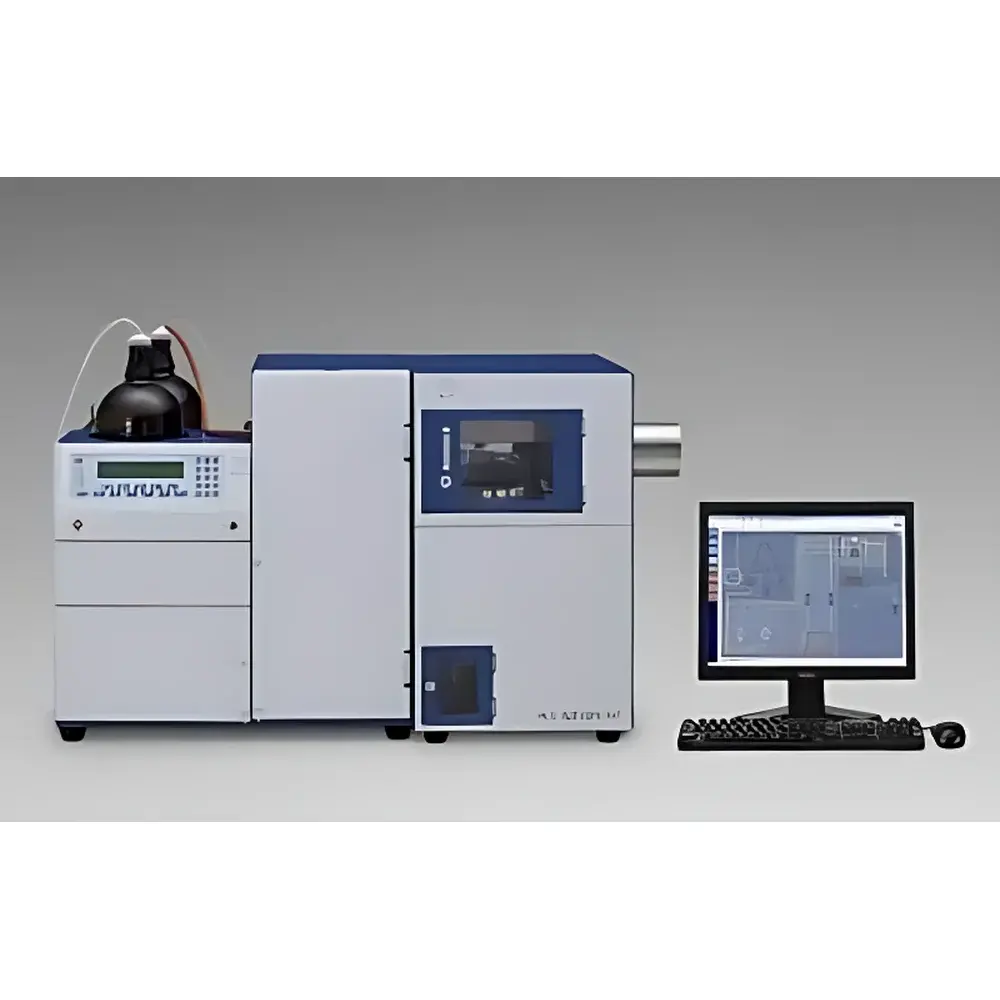
TOSOH HLC-8321GPC/HT High-Temperature Gel Permeation Chromatograph
| Brand | TOSOH |
|---|---|
| Origin | Japan |
| Model | HLC-8321GPC/HT |
| Instrument Type | High-Temperature GPC System |
| Pump Flow Range | 0.01–2.00 mL/min |
| Pump Pressure Range | 0–15 MPa |
| RI Detector Drift | <3×10⁻⁷ RIU/h |
| RI Detector Cell Volume | 10 µL |
| UV Detector Wavelength Range | 195–350 nm |
| UV Detector Noise | <1.5×10⁻⁸ AU |
| Column Oven Temperature Range | 40–220 °C |
Overview
The TOSOH HLC-8321GPC/HT is a high-temperature gel permeation chromatography (GPC) system engineered for the precise molecular weight distribution (MWD) analysis of thermally stable and high-melting synthetic polymers. Unlike conventional GPC systems limited to ≤80 °C, this instrument operates reliably at column oven temperatures up to 220 °C—enabling full solubilization and separation of engineering thermoplastics such as polyphenylene sulfide (PPS), polyetherimide (PEI), polyether ether ketone (PEEK), and ultra-high-molecular-weight polyethylene (UHMWPE). The system employs size-exclusion chromatography (SEC) principles in high-boiling, high-polarity solvents—including o-dichlorobenzene (ODCB), trichlorobenzene (TCB), and 1,2,4-trichlorobenzene—under strictly controlled thermal and hydraulic conditions. Its modular architecture integrates a high-pressure, low-pulsation solvent delivery module, dual-temperature-controlled column compartment, and parallel detection using both differential refractometry (RI) and ultraviolet (UV) absorbance—ensuring orthogonal validation of elution profiles and enhanced detection sensitivity for aromatic or chromophore-containing polymers.
Key Features
- Extended thermal operating range: Column oven temperature control from 40 °C to 220 °C with ±0.1 °C stability, validated per ASTM D5296 and ISO 16014-4 for high-temperature SEC applications.
- Dual-channel, dual-flow-path RI detector featuring active optical cell temperature regulation and integrated rapid-heating elements—reducing system equilibration time to under 3 hours when ramping to 145 °C in ODCB.
- Low-drift RI detection: Baseline drift 60 min).
- High-fidelity UV detection: Fixed-wavelength photodiode array with 195–350 nm spectral coverage and noise level <1.5×10⁻⁸ AU supports structural corroboration for conjugated or substituted polymers.
- Integrated safety architecture: Motorized column oven and autosampler doors feature hardware-enforced interlock mechanisms; localized exhaust port on autosampler minimizes operator exposure to hot solvent vapors.
- High-pressure gradient-capable pump delivering 0.01–2.00 mL/min flow with pressure tolerance up to 15 MPa—compatible with narrow-bore, high-resolution SEC columns (e.g., TSKgel SuperMultipore HZ-H series).
Sample Compatibility & Compliance
The HLC-8321GPC/HT is validated for use with thermally robust synthetic polymers requiring dissolution above 130 °C, including but not limited to PPS, PEEK, polybenzimidazole (PBI), liquid crystal polymers (LCPs), and crosslinked polyolefin elastomers. It supports method development aligned with ISO 16014 (Parts 1–4), ASTM D5296, and USP for SEC-based molecular characterization. All fluidic pathways are constructed from high-purity stainless steel and chemically resistant sapphire components to withstand aggressive high-temperature solvents. The system design conforms to IEC 61010-1 for laboratory equipment safety and includes audit-ready event logging for GLP/GMP environments.
Software & Data Management
Controlled via TOSOH’s EcoSEC GPC software (v5.x or later), the system supports fully automated method sequencing, real-time chromatogram overlay, multi-detector peak deconvolution, and universal calibration using narrow-standard polystyrene references. Raw data files comply with AIA/ANDI format standards and are exportable to third-party analysis platforms (e.g., Polymer Char GPC Software, Cirrus). Audit trail functionality meets FDA 21 CFR Part 11 requirements, including electronic signatures, user access tiers, and immutable record retention for regulatory submissions.
Applications
- Molecular weight distribution profiling of high-performance thermoplastics during R&D and QC release testing.
- Branching analysis of linear low-density polyethylene (LLDPE) and ethylene–octene copolymers using triple-detection configurations.
- Thermal degradation monitoring of polymer batches subjected to extrusion or molding processes.
- Quality control of specialty resins used in aerospace composites, medical device housings, and semiconductor packaging materials.
- Support of ISO/IEC 17025-accredited testing laboratories requiring traceable, temperature-stabilized SEC protocols.
FAQ
What solvents are compatible with the HLC-8321GPC/HT at 220 °C?
ODCB, TCB, and 1,2,4-trichlorobenzene are routinely used; solvent compatibility must be verified against pump seals and detector cell materials per TOSOH’s chemical resistance guide.
Can the system perform triple detection (RI + UV + viscometry)?
Yes—when configured with an optional online viscometer (e.g., TOSOH Viscotek TDAmax), the platform supports absolute molar mass determination without calibration standards.
Is the RI detector temperature-controlled independently from the column oven?
Yes—the RI cell maintains its own setpoint temperature (±0.05 °C) via dedicated Peltier regulation, decoupled from column oven thermal management.
Does the software support ASTM D6474-compliant branching calculations?
EcoSEC GPC v5.3+ includes built-in algorithms for long-chain branching (LCB) index derivation using universal calibration and intrinsic viscosity correlation.
What is the minimum detectable concentration for polystyrene standards at 220 °C?
With optimized injection volume (50–100 µL) and RI detection, typical LOD is ~0.05 mg/mL in ODCB for narrow PS standards.





