
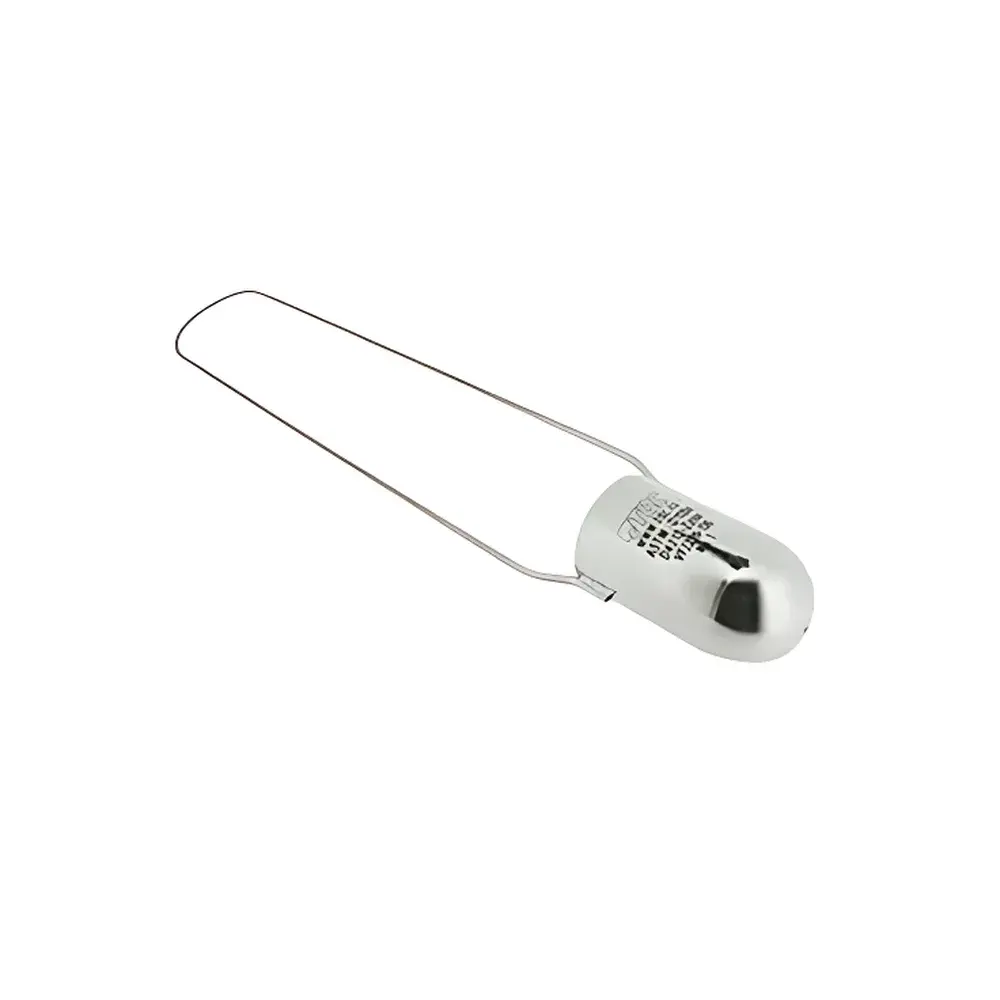
TQC Sheen Efflux Viscometer Cup Series (VF2226–VF2230)
| Origin | Netherlands |
|---|---|
| Manufacturer Type | Authorized Distributor |
| Origin Category | Imported |
| Model | VF2226 / VF2227 / VF2228 / VF2229 / VF2230 |
| Viscosity Range | mPa·s (converted from efflux time in seconds) |
| Orifice Diameter | 2.0 mm (VF2226), 2.7 mm (VF2227), 3.8 mm (VF2228), 4.3 mm (VF2229), 5.3 mm (VF2230) |
| Compliance | ISO 1522:2005, NBN T22-105, BS 3900-E5 |
Overview
The TQC Sheen Efflux Viscometer Cup Series (models VF2226–VF2230) is a set of precision-engineered gravity-driven flow cups designed for rapid, field-deployable kinematic viscosity assessment of low- to medium-viscosity liquids. Based on the fundamental principle of efflux time measurement—where the time required for a fixed volume of liquid to drain through a calibrated orifice under gravity is recorded—the instrument delivers repeatable, operator-independent results aligned with standardized flow behavior. Unlike rotational or vibrational viscometers, efflux cups operate without electronics or moving parts, making them ideal for routine quality control in production environments where robustness, portability, and minimal maintenance are critical. The measured efflux time (in seconds) is directly correlated to kinematic viscosity (mm²/s, equivalent to centistokes, cSt) via empirical calibration charts or digital conversion tools traceable to ISO 1522:2005.
Key Features
- Five standardized orifice sizes (2.0–5.3 mm) enabling coverage across a broad dynamic range—from thin solvents and resins (VF2226) to heavy emulsions and polymer-modified coatings (VF2230)
- Ergonomic extended handle design facilitating full immersion into bulk containers without operator contact with sample surfaces, minimizing contamination risk and improving repeatability
- Smooth-walled, conical cup geometry with precisely machined, burr-free orifices—eliminating dead zones or crevices that trap residue and compromise cleaning efficiency
- Individual laser-engraved serial number on each cup for full traceability, supporting audit-ready documentation in GLP- and GMP-regulated settings
- Manufactured under ISO 9001-certified quality management systems, with dimensional verification performed using calibrated coordinate measuring machines (CMM) and orifice diameter validated via optical interferometry
Sample Compatibility & Compliance
The VF2226–VF2230 series is validated for use with Newtonian and near-Newtonian fluids commonly encountered in coatings, inks, adhesives, lubricants, and resin formulations. Non-Newtonian samples may yield time-dependent efflux values; such cases require adherence to standardized conditioning protocols (e.g., pre-shearing per ASTM D1200). All models conform to ISO 1522:2005 (“Paints and varnishes — Determination of flow time using flow cups”), as well as national standards including BS 3900-E5 (UK) and NBN T22-105 (Belgium). Cups are supplied with certified calibration certificates referencing NIST-traceable reference oils, and optional temperature-controlled bath compatibility (±0.1 °C) ensures compliance with ISO 2555 test conditions when ambient thermal drift exceeds ±2 °C.
Software & Data Management
While the efflux cup itself is a passive mechanical device, TQC provides companion digital tools—including the TQC ViscoCalc™ desktop application and mobile-compatible conversion tables—for automated kinematic viscosity calculation, unit conversion (s → mm²/s → cP, assuming known density), and batch reporting. Data export supports CSV and PDF formats, with metadata fields for operator ID, ambient temperature, sample lot number, and calibration certificate ID. For regulated environments, the software suite supports 21 CFR Part 11-compliant user access controls, electronic signatures, and immutable audit trails—ensuring data integrity during internal audits or regulatory inspections.
Applications
- Routine QC checks on incoming raw materials (e.g., solvent blends, acrylic monomers) prior to formulation
- In-process monitoring of paint and ink viscosity during dispersion, let-down, and filtration stages
- Final product release testing in coating manufacturing lines, aligned with customer-specified efflux time windows (e.g., “ZF-2227 @ 25 °C: 22–28 s”)
- Field service verification of coating consistency during on-site application or rework operations
- Teaching laboratories demonstrating fundamental rheological concepts—Poiseuille flow, Hagen–Poiseuille law derivation, and the relationship between kinematic and dynamic viscosity
FAQ
What is the recommended cleaning procedure between measurements?
Rinse thoroughly with a compatible solvent (e.g., acetone for organic systems, deionized water for aqueous emulsions), followed by forced-air drying. Avoid abrasive brushes; use lint-free swabs for orifice inspection.
Can efflux time be used to calculate dynamic viscosity directly?
No—efflux time yields kinematic viscosity (mm²/s). Dynamic viscosity (mPa·s) requires multiplication by fluid density (g/cm³) at test temperature; density must be measured separately using a pycnometer or digital densimeter.
How often should calibration verification be performed?
Daily verification with certified reference oil is recommended for production-critical applications; annual recalibration by an accredited lab (ISO/IEC 17025) is advised for traceability maintenance.
Is temperature control mandatory?
Yes—viscosity is highly temperature-sensitive. ISO 1522 specifies 23 ± 0.5 °C or 25 ± 0.5 °C. Deviations >±0.5 °C introduce non-linear error exceeding ±5% in efflux time.
Do these cups comply with FDA requirements for pharmaceutical excipient testing?
While not specifically validated for USP , the cups meet dimensional and procedural requirements of ISO 1522 and may be incorporated into validated methods under ICH Q5E, provided full method qualification (precision, accuracy, robustness) is documented.



