
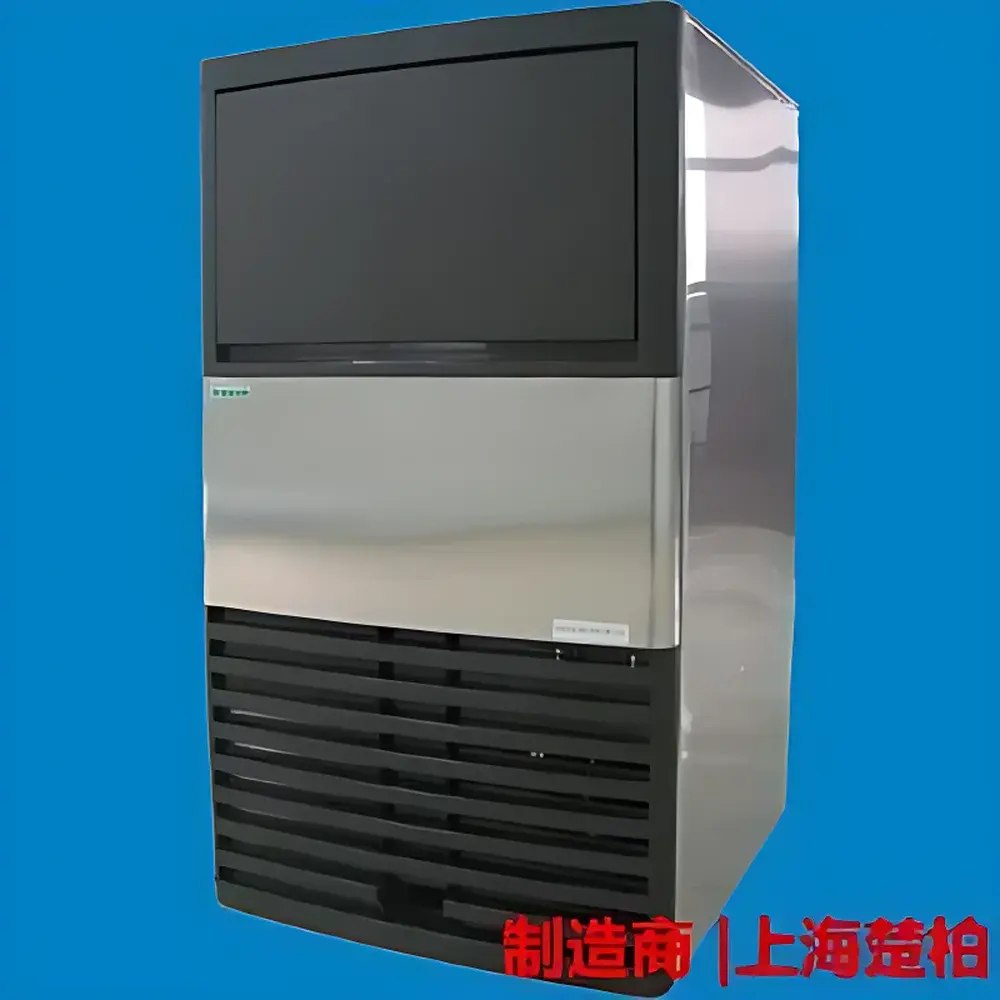
Truelab IM125 Laboratory Flake Ice Maker
| Brand | Truelab |
|---|---|
| Model | IM125 |
| Type | Laboratory Flake Ice Machine |
| Ice Production Capacity | 125 kg/24 h |
| Storage Capacity | 50 kg |
| Cooling Method | Air-Cooled |
| Power Consumption | 450 W |
| Input Voltage/Frequency | 220 V / 50 Hz |
| Protection Class | Class I |
| Dimensions (W×D×H) | 670 × 690 × 1050 mm |
| Water Consumption | 100 kg per cycle |
| Ice Formation Method | Dual-Screw Extrusion |
Overview
The Truelab IM125 Laboratory Flake Ice Maker is an air-cooled, microprocessor-controlled ice generation system engineered for consistent, on-demand production of fine, irregular flake ice—optimized for laboratory-scale thermal management applications. Unlike cubed or nugget ice, flake ice possesses high surface-area-to-volume ratio and low density, enabling rapid heat transfer and uniform temperature distribution in sample cooling baths, cold-chain validation studies, enzymatic reaction quenching, and cryopreservation staging. The unit operates on the dual-screw extrusion principle: water is frozen onto a refrigerated drum surface, then scraped off by precision-ground stainless-steel augers into thin, dry, snow-like flakes (typical particle size range: 1–3 mm thickness, irregular planar geometry). This mechanical freezing method eliminates reliance on ambient humidity control or complex brine circulation, delivering stable output under variable lab environmental conditions (10–32 °C ambient, ≤80% RH).
Key Features
- Stainless steel + ABS composite enclosure with polyurethane rigid foam insulation (≥35 mm thickness) for thermal efficiency and corrosion resistance in humid laboratory environments.
- Dual-screw extrusion mechanism with hardened alloy ice-cutting blades ensures continuous flake formation, automatic ice–water separation, and minimal residual moisture (<5% surface water content).
- Microcontroller-based automation managing full cycle sequence: water intake → drum freezing → flake scraping → conveyance → storage bin filling — with real-time status feedback via LED indicators.
- Integrated safety protocols including automatic shutdown on low-water detection, full-bin sensor activation, condenser overtemperature alarm (>65 °C), and refrigerant charge monitoring (via evaporator pressure differential sensing).
- Self-recovery function resumes operation upon restoration of water supply and power, retaining last operational state without manual reset.
- Class I electrical protection compliant with IEC 61010-1 for laboratory equipment; CE-marked for EMC and low-voltage directive compliance.
Sample Compatibility & Compliance
The IM125 is designed for use with deionized, reverse-osmosis, or distilled water (conductivity <5 µS/cm recommended) to prevent mineral buildup on the freezing drum and maintain long-term ice purity. Flake ice produced meets ASTM D4178-22 specifications for laboratory-grade cooling media in analytical sample preparation. The unit supports GLP-aligned workflows through non-volatile event logging (power interruption, bin full, water fault) stored in onboard memory for audit trail review. While not FDA 21 CFR Part 11–certified as a standalone system, its deterministic control logic and hardware-enforced interlocks satisfy baseline requirements for instrument qualification under ISO/IEC 17025:2017 Clause 6.4.2 (equipment verification).
Software & Data Management
The IM125 utilizes embedded firmware (v3.2.x) with no external software dependency. Operational data—including cumulative ice output (kg), total runtime (h), fault event timestamps, and compressor cycle count—is retained in EEPROM memory with battery-backed retention (>10 years). No cloud connectivity or remote access capability is implemented, preserving network isolation per institutional IT security policies. Event logs can be manually exported via USB interface using proprietary diagnostic utility (Windows 10/11 compatible, provided on delivery CD). Firmware updates require physical connection and authenticated credentials issued by Truelab Technical Support.
Applications
- Cold bath preparation for enzymatic assays, PCR setup, and electrophoresis buffer chilling.
- Short-term stabilization of tissue biopsies, blood samples, and microbial cultures prior to freezing or transport.
- Thermal mass buffering in stability chambers during qualification mapping (IQ/OQ).
- Controlled-rate cooling support for lyophilization pre-freezing steps where uniform surface contact is critical.
- Non-contact cooling of sensitive optical components, semiconductor wafers, or NMR probe assemblies requiring rapid, non-condensing thermal dissipation.
FAQ
What water quality is required for optimal performance and longevity?
Deionized or RO water with conductivity below 5 µS/cm is strongly recommended. Tap water may cause scale accumulation on the freezing drum, reducing heat transfer efficiency and requiring more frequent descaling (every 3–6 months under continuous use).
Can the IM125 operate continuously for 24/7 duty cycles?
Yes—the unit is rated for continuous operation at ambient temperatures up to 32 °C. Compressor duty cycle is managed via adaptive fan speed control and evaporator temperature modulation to prevent overheating.
Is the flake ice suitable for direct contact with biological samples?
Flake ice from the IM125 is microbiologically inert when produced from purified water and handled under clean bench conditions. It is not sterile unless terminally autoclaved post-production; users requiring sterile ice must implement secondary sterilization protocols.
How often does the unit require maintenance?
Routine maintenance includes monthly visual inspection of air intake grilles, quarterly cleaning of condenser coils with compressed air, and annual replacement of the water inlet filter cartridge (part #IM-FIL-01). Descale treatment is advised every 200 operating hours if feed water conductivity exceeds 10 µS/cm.
Does the IM125 comply with energy efficiency standards for laboratory equipment?
It meets China’s GB 12021.2-2015 Class B energy efficiency rating for ice makers and exceeds EU Ecodesign Directive (EU) 2019/2023 minimum seasonal energy performance ratio (SEPR) requirements for air-cooled flake ice systems under laboratory load profiles.



