
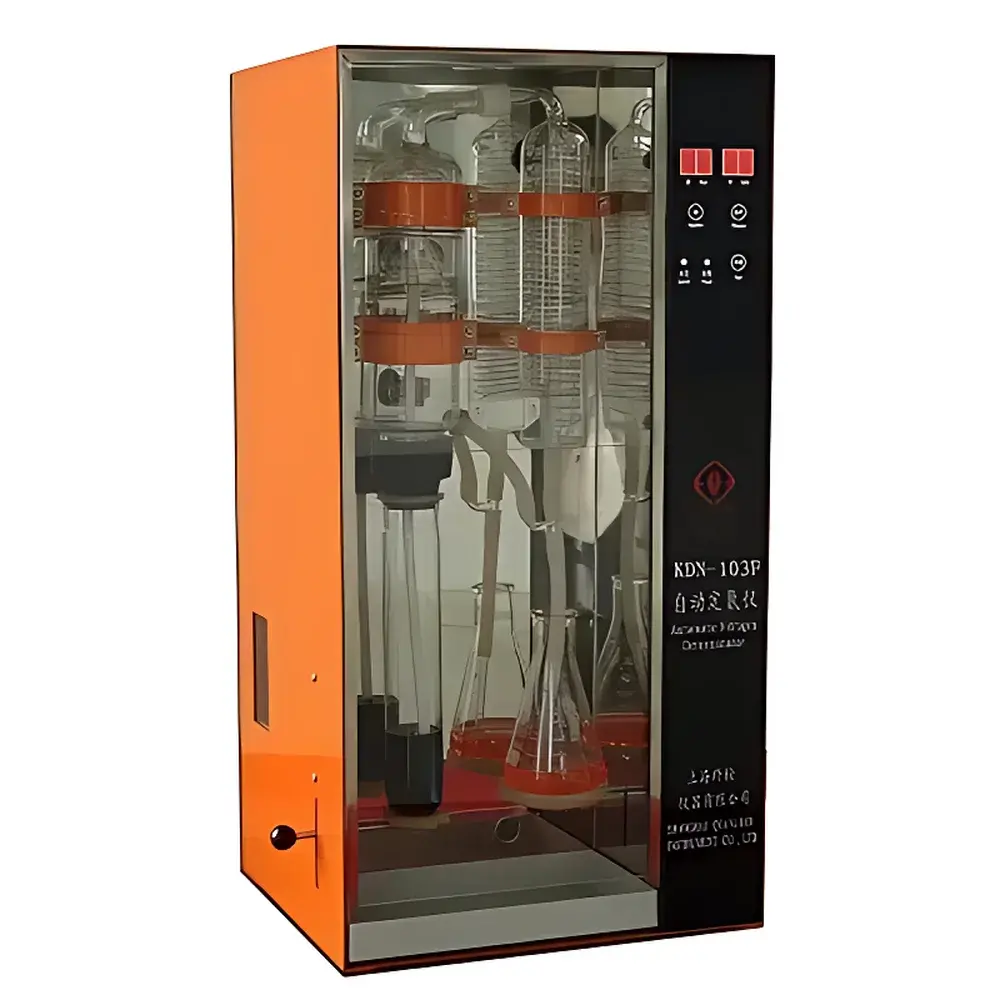
Truelab SZC-C / SZC-D Six-Position Soxhlet Fat Analyzer
| Brand | Truelab |
|---|---|
| Origin | Shanghai, China |
| Model | SZC-C / SZC-D |
| Extraction Chamber Volume | 100 mL |
| Receiver Flask Volume | 500 mL |
| Temperature Range | 0–200 °C |
| Temperature Control Accuracy | ±0.1 °C |
| Number of Channels | 6 |
| Power | 300 W |
| Voltage | 220 V ±10%, 50–60 Hz |
| Dimensions | 590 × 390 × 625 mm |
| Weight | 25 kg |
| Sealing Material | PTFE |
| Heating Method | Fully Enclosed Aluminum Alloy Heating Plate |
| Solvent Recovery Rate | ≥80% |
| Fat Recovery Rate | ≥99% (at reflux rate of 120 drops/min, coolant water ≤30 °C) |
| Precision | Relative deviation ≤3%, Parallel deviation ≤0.3% |
| Applicable Fat Content Range | ≥0.5% (food, feed, oilseeds, edible oils, and related products) |
Overview
The Truelab SZC-C and SZC-D Six-Position Soxhlet Fat Analyzers are fully automated benchtop instruments engineered for precise, reproducible determination of crude fat content in solid and semi-solid matrices using the classical Soxhlet extraction principle. Based on continuous solvent reflux and gravimetric quantification, these analyzers comply with internationally recognized standard methods—including AOAC 920.39, ISO 6496, GB/T 5009.6, and USDA Handbook 74—used across food safety laboratories, agricultural research centers, feed quality control facilities, and regulatory testing institutions. The system integrates controlled solvent immersion, cyclic percolation through sample thimbles, condensation, and closed-loop solvent recovery into a single, self-contained platform. Unlike open-bath or manual setups, the SZC series employs a fully enclosed aluminum alloy heating plate with digital PID temperature regulation, eliminating hot-spot formation and ensuring uniform thermal distribution across all six extraction channels. This architecture supports method robustness under GLP and GMP-aligned workflows, particularly where trace solvent exposure, operator safety, and batch consistency are critical.
Key Features
- Six independent extraction channels enable parallel processing of up to six samples per run—significantly increasing throughput without compromising inter-channel precision.
- Digital temperature control with ±0.1 °C stability over 0–200 °C range allows optimization for diverse solvents (e.g., petroleum ether, diethyl ether, hexane), accommodating both low-boiling and high-boiling extraction media.
- PTFE-sealed joints and vapor-tight condenser assemblies ensure >99% solvent recovery efficiency at standardized reflux conditions (120 drops/min, cooling water ≤30 °C), minimizing hazardous waste generation and operational costs.
- Non-contact solid-state circuitry eliminates mechanical relays and exposed terminals—enhancing electrical safety and long-term reliability in humid or solvent-rich lab environments.
- SZC-D variant includes programmable timer with audible alarm, enabling unattended operation and precise endpoint control; SZC-C offers identical core functionality without timed alerting.
- Compact footprint (590 × 390 × 625 mm) and lightweight design (25 kg) facilitate integration into regulated QC labs, teaching laboratories, and mobile testing units.
Sample Compatibility & Compliance
The instrument is validated for use with representative matrices including cereal grains, baked goods, dairy powders, animal feed pellets, oilseed meals (soybean, rapeseed), and refined vegetable oils. Sample preparation follows standard protocols: drying, homogenization, and loading into pre-weighed, ashless cellulose thimbles (standard size: 25 × 80 mm). All wetted components—including extraction chambers (100 mL capacity), receiver flasks (500 mL borosilicate glass), and condensers—are chemically resistant and autoclavable. The system meets CE marking requirements for electrical safety (EN 61010-1) and complies with OSHA 29 CFR 1910.1200 (Hazard Communication) when operated with appropriate fume hood ventilation. Documentation packages support audit readiness for ISO/IEC 17025 accreditation and FDA 21 CFR Part 11–compatible data integrity frameworks when paired with validated LIMS integration.
Software & Data Management
While the SZC-C/SZC-D operates as a stand-alone hardware platform without embedded software, its analog-digital hybrid interface provides real-time temperature readout via LED display and supports external logging via 4–20 mA or RS-485 output (optional adapter). Users may integrate instrument runtime data—including start/stop timestamps, setpoint tracking, and alarm events—into laboratory information management systems (LIMS) or electronic lab notebooks (ELN) using standard Modbus RTU protocol. All calibration records, maintenance logs, and performance verification reports (e.g., temperature uniformity mapping, solvent recovery validation) are maintained manually per ISO/IEC 17025 Clause 7.7 and can be archived electronically with appropriate metadata controls.
Applications
- Regulatory compliance testing for crude fat in infant formula (Codex Alimentarius STAN 72-1981) and dietary supplements (USP <467> residual solvents).
- Quality assurance of compound feeds in aquaculture and livestock production (EN ISO 6496:2010).
- Routine analysis of oil content in oilseed breeding programs and seed certification labs.
- Method development and validation studies supporting AOAC Official Method 2012.01 (rapid fat extraction).
- Educational instruction in food chemistry, analytical chemistry, and agricultural engineering curricula.
FAQ
What solvents are compatible with the SZC-C/D analyzers?
Petroleum ether (bp 40–60 °C), diethyl ether (bp 34.6 °C), and n-hexane (bp 69 °C) are routinely used. Solvent selection must align with sample matrix, regulatory requirements, and local safety regulations.
Is the instrument suitable for volatile or thermolabile samples?
Yes—precise low-temperature control (down to ambient +2 °C) and adjustable reflux rate allow gentle extraction of heat-sensitive lipids without oxidative degradation.
How often does the PTFE sealing require replacement?
Under normal usage (≤5 cycles/week), PTFE gaskets maintain integrity for ≥12 months; visual inspection before each run is recommended.
Can the system be validated for 21 CFR Part 11 compliance?
The base unit is not inherently Part 11–compliant, but when interfaced with validated third-party data acquisition software and access-controlled network infrastructure, full electronic record and signature capability can be achieved.
What maintenance is required beyond routine cleaning?
Annual verification of temperature sensor accuracy (traceable to NIST standards) and condenser cooling efficiency (measured via drop-rate calibration) is advised for accredited labs.



