
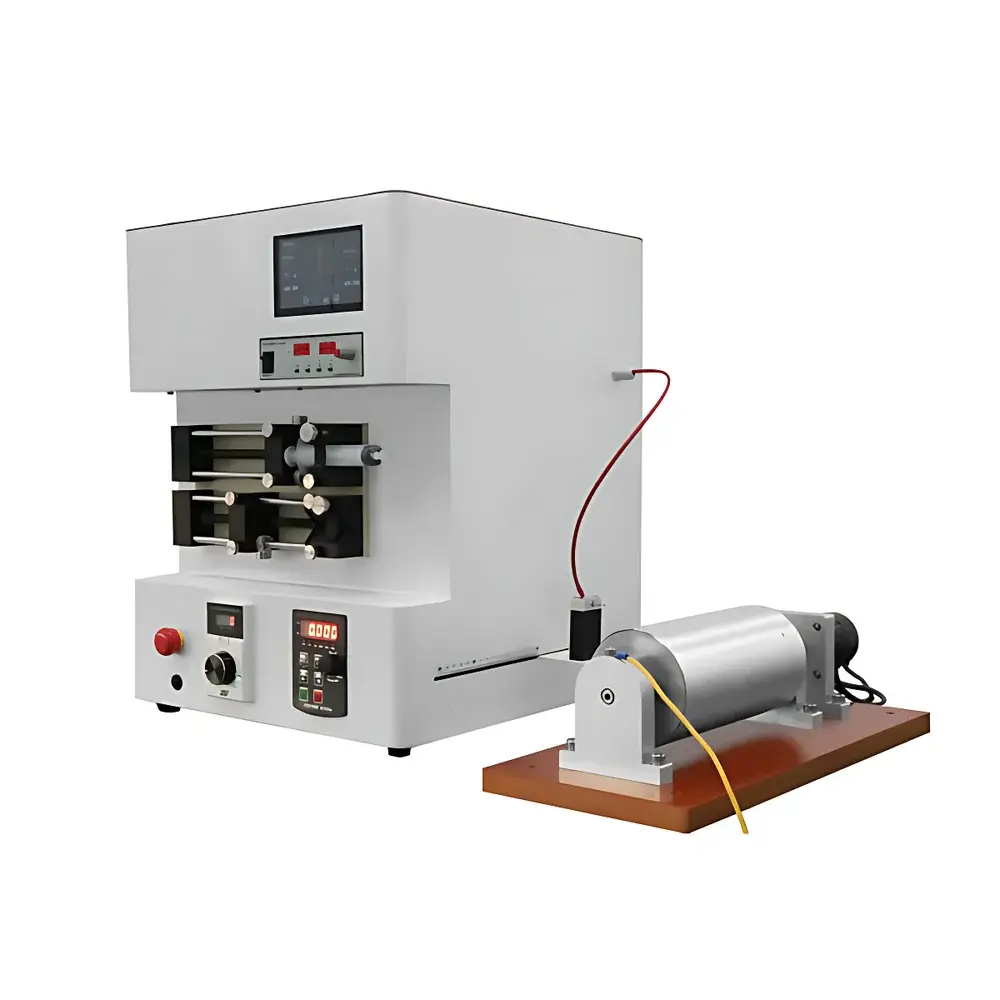
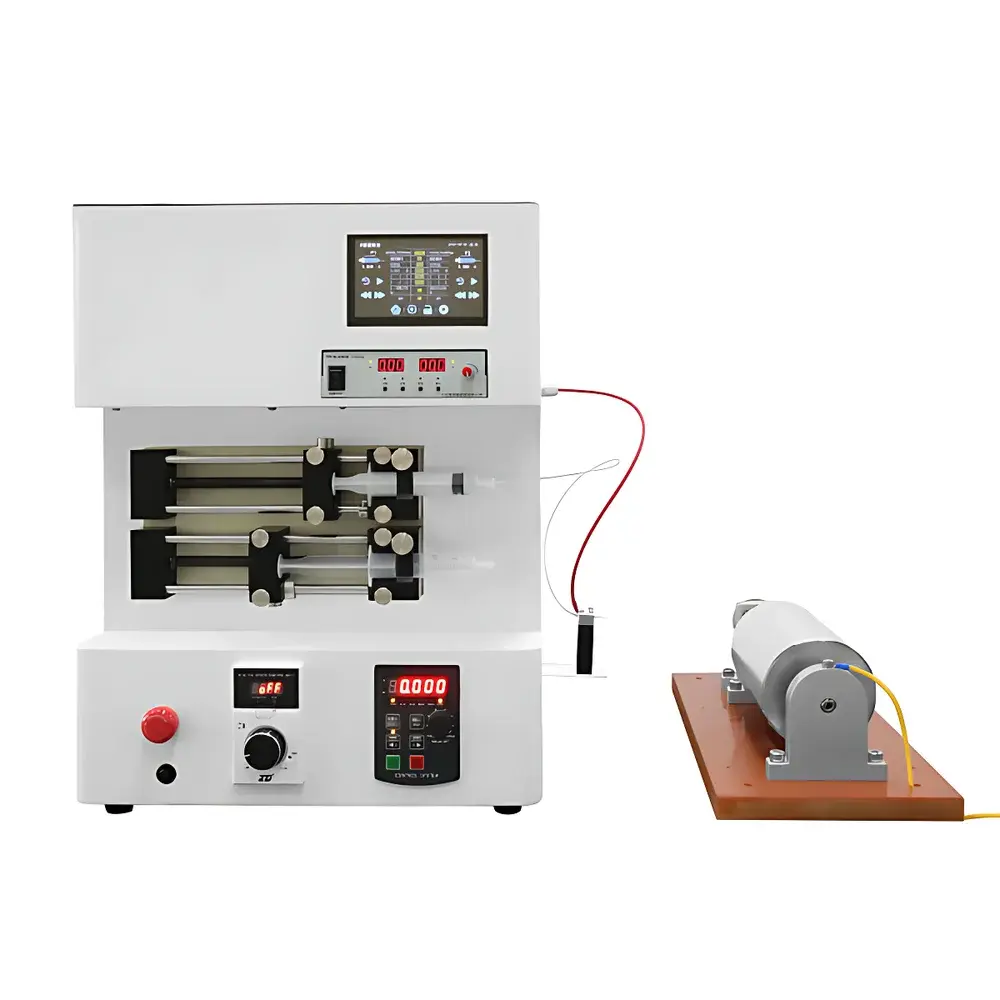
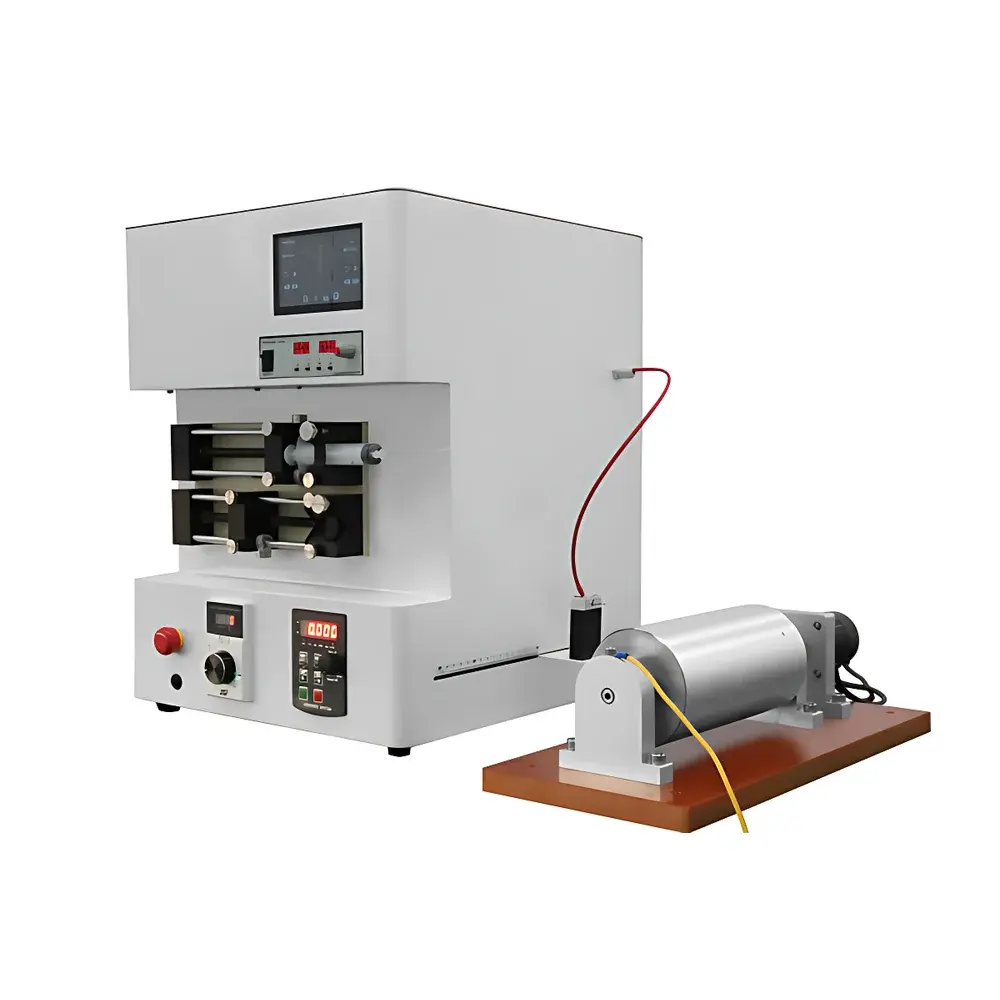
Truelab TES-1 Desktop Electrospinning System
| Brand | Truelab |
|---|---|
| Origin | Shanghai, China |
| Manufacturer Type | Authorized Distributor |
| Country of Origin | China |
| Model | TES-1 |
| Price Range | USD 2,800 – 7,000 |
| High-Voltage Power Supply | 0–+30 kV (adjustable), optional −30 kV |
| Dual-Channel Syringe Pump | 100 µL/h – 7.62 L/h, supports 1–60 mL syringes |
| Needle Traverse Range | 0–150 mm |
| Needle Speed | 0–1000 ±1 mm/min |
| Collector Rotation Speed | 120–3000 ±20 rpm (bidirectional) |
| Standard Collector | Balanced Rotating Drum (Φ100 × L200 mm) |
| Overall Dimensions (w/o collector) | 471 × 455 × 518 mm |
| Weight (w/o collector) | 25 kg |
| Safety Features | Emergency Stop, Grounding Protection, Overvoltage/Overcurrent/Arc-Fault Protection |
| Power Supply | 220 V, 50 Hz |
| Rated Power | 60 W |
Overview
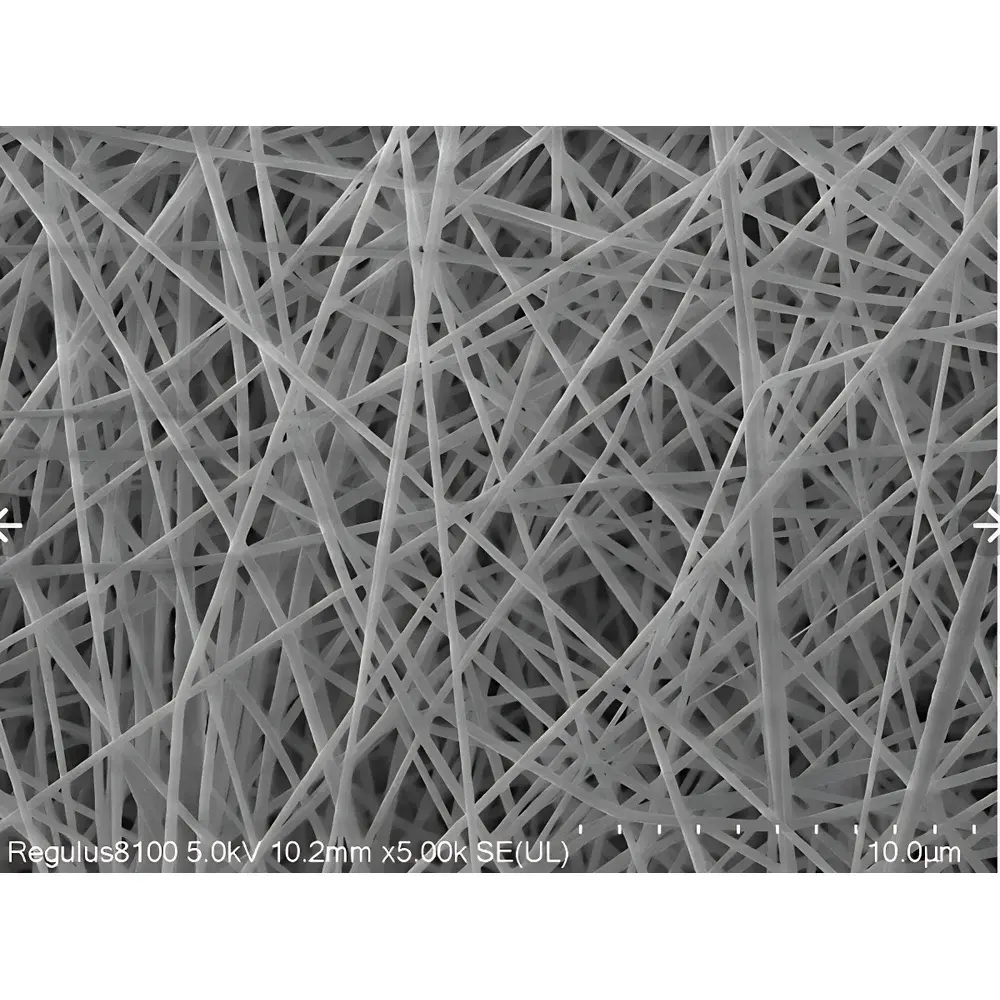
The Truelab TES-1 Desktop Electrospinning System is an integrated, compact laboratory-scale instrument engineered for precision electrohydrodynamic fiber fabrication. It operates on the principle of electrospinning—applying a high-voltage electric field (up to +30 kV) between a conductive polymer solution feed (via syringe pump) and a grounded or biased collector—to induce jet formation, solvent evaporation, and solidification of nanofibers with diameters ranging from ~50 nm to several micrometers. Designed specifically for constrained lab environments—including fume hoods—the TES-1 decouples the collector module from the main chassis, enabling flexible integration with custom or standard collector geometries without mechanical or electrical interference. Its modular architecture supports both conventional single-nozzle and advanced configurations including coaxial, multi-needle, and conjugate spinning—making it suitable for R&D in polymer science, biomedical scaffolds, filtration membranes, battery separators, and functional nanocomposites.
Key Features
- Compact footprint (471 × 455 × 518 mm) compatible with standard laboratory benches and Class I/II fume hoods.
- Integrated high-voltage power supply (0–+30 kV, continuously adjustable) with full safety interlocks: overvoltage, overcurrent, and arc-fault protection; O-ring terminal design ensures secure HV connection during extended operation.
- Dual-channel, high-precision syringe pump with independent flow control (100 µL/h – 7.62 L/h); chemically resistant PFA tubing isolates the pump mechanism from HV exposure, extending service life and ensuring long-term calibration stability.
- Motorized needle traverse stage (0–150 mm travel, ±1 mm/min resolution) with engraved scale and programmable motion profile—optimized for uniform fiber deposition across flat, curved, or rotating substrates.
- Bidirectional rotary collector controller (120–3000 ±20 rpm) with smooth analog speed regulation and real-time direction reversal—critical for aligned nanofiber orientation and stress-controlled mat formation.
- Emergency stop circuit halts all motion axes, resets HV output to zero, and initiates immediate system grounding—compliant with IEC 61000-6-2 and EN 60204-1 safety directives.
Sample Compatibility & Compliance
The TES-1 accommodates a broad spectrum of polymer solutions (e.g., PVP, PVA, PLGA, PAN, PVDF, chitosan) and solvent systems (DMF, chloroform, HFIP, TFE). Its open-collector architecture allows direct mounting of third-party or user-fabricated collectors—including planar plates, rotating drums (standard Φ100 × 200 mm, dynamically balanced), cylindrical rods, disk electrodes, water baths, roll-to-roll conveyors, and nanoyarn winders. All electrical interfaces conform to IEC 61000-4-5 surge immunity standards. Grounding integrity is verified per IEEE Std 1100, and the system’s electromagnetic emissions meet CISPR 11 Group 1 Class B limits. While not certified for GMP manufacturing, its operational logs, parameter traceability, and hardware-level safety controls support GLP-aligned documentation workflows and internal audit readiness.
Software & Data Management
The TES-1 features an embedded touchscreen HMI (Human-Machine Interface) running a deterministic real-time control kernel. All critical parameters—including voltage setpoint, dual-pump flow rates, traverse position/speed, and rotation speed—are logged at 1 Hz with UTC timestamps and stored locally on encrypted internal flash memory (≥10,000 experiment records). Data export is supported via USB 2.0 in CSV format for post-processing in MATLAB, Python (Pandas), or statistical analysis platforms. Optional RS-485 Modbus RTU interface enables integration into centralized lab automation networks (e.g., LabVantage, STARLIMS) and supports basic FDA 21 CFR Part 11 compliance when paired with institutional identity management and electronic signature protocols.
Applications
- Development of biodegradable tissue engineering scaffolds with controlled porosity and fiber alignment.
- Preparation of high-surface-area filtration media for aerosol capture and liquid-phase contaminant removal.
- Fabrication of piezoelectric nanofiber mats (e.g., PVDF-based) for energy harvesting and self-powered sensing.
- Production of drug-loaded nanofiber patches for transdermal or wound-healing delivery systems.
- Investigation of polymer blend phase separation dynamics under electrostatic stretching.
- Rapid prototyping of battery electrode architectures using conductive nanofiber current collectors.
FAQ
Can the TES-1 be used for coaxial electrospinning?
Yes—the dual-channel syringe pump and mechanically isolated nozzle mount support coaxial needle assemblies; separate control of core and shell solution flow rates is fully programmable.
Is negative high voltage available as standard?
No—+30 kV is standard; −30 kV is available as an optional add-on module with dedicated polarity-switching circuitry and insulated output path.
What is the maximum recommended working distance between nozzle and collector?
While adjustable manually, optimal fiber morphology and deposition efficiency are typically achieved at 10–20 cm; distances beyond 25 cm may require recalibration of voltage and flow parameters due to field dispersion effects.
Does the system include validation documentation for ISO/IEC 17025 labs?
The TES-1 ships with a factory calibration certificate (traceable to NIM, China) and mechanical/electrical test reports; full ISO/IEC 17025 accreditation requires site-specific verification by an accredited body.
Can the collector rotation speed be synchronized with needle traverse motion?
Not natively—the two subsystems operate independently via separate controllers; synchronization requires external PLC-level coordination through the optional Modbus interface.





