
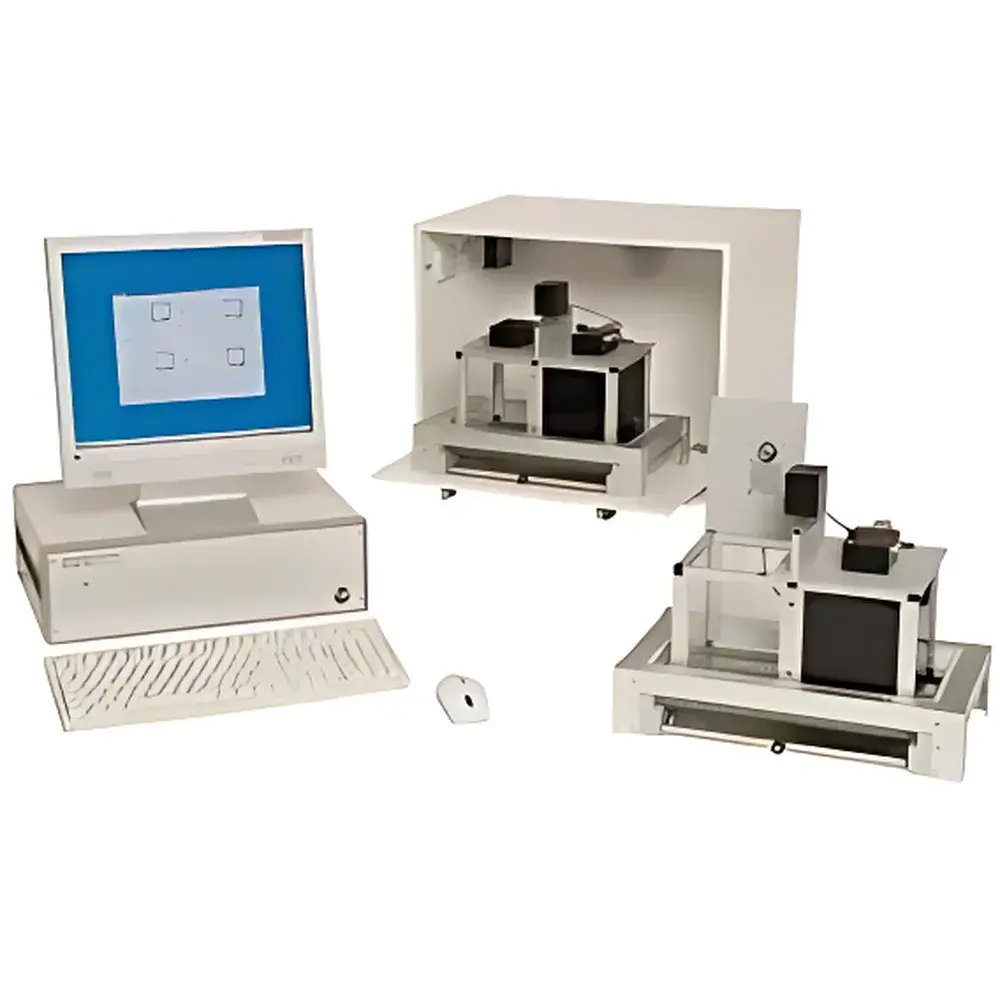
TSE Systems Active Avoidance / Passive Avoidance System
| Brand | TSE Systems |
|---|---|
| Origin | Germany |
| Model | Active Avoidance / Passive Avoidance |
| Application Scope | Rodent (rat/mouse) behavioral conditioning |
| Stimulus Modalities | Electrical foot shock, pneumatic air puff, auditory tones (up to 20 kHz), visual light cues |
| Detection Method | Adjustable infrared beam break array |
| Software Platform | Windows-based TSE Behavioral Suite with real-time parameter logging and GLP-compliant audit trail |
| Compliance | Designed for ISO/IEC 17025-aligned laboratory environments |
| Max Concurrent Test Chambers | 4 |
Overview
The TSE Systems Active Avoidance / Passive Avoidance System is a fully computer-controlled, modular behavioral conditioning platform engineered for precise investigation of associative learning, fear memory acquisition, retention, and extinction in rodents. Based on classical Pavlovian and instrumental conditioning paradigms, the system implements two core experimental protocols: active avoidance—where the subject must execute a defined motor response (e.g., crossing a chamber divider) within a specified time window to prevent an aversive stimulus—and passive avoidance—where the subject suppresses a natural exploratory behavior (e.g., entering a dark compartment) following prior exposure to punishment. The system employs a dual-chamber or multi-compartment design with programmable inter-trial intervals, stimulus onset/offset timing, and real-time position tracking via a configurable infrared photobeam grid. Its architecture supports both discrete-trial and continuous-session formats, enabling longitudinal studies across multiple training days under standardized, reproducible conditions.
Key Features
- Fully automated operation with synchronized control of aversive stimuli (electrical foot shock, calibrated pneumatic air puff, broadband auditory tones up to 20 kHz, and LED-based visual cues)
- Modular chamber configuration supporting rat-, mouse-, and hybrid-sized subjects; optional divider types include electrified grids, non-electrified partitions, and transparent acrylic barriers
- Adjustable IR beam frame with user-defined spacing (1–5 cm increments) to accommodate species-specific locomotor patterns and ensure high-resolution spatial tracking
- Simultaneous operation of up to four independent test chambers, each with dedicated stimulus delivery and detection logic
- Integrated audio playback module supporting WAV file import for complex auditory discrimination tasks and contextual cueing
- Expandable hardware interface for integration with ancillary systems including video tracking (EthoVision-compatible), physiological telemetry, and optogenetic stimulation controllers
- Optional add-on modules for learned helplessness testing (chronic unpredictable stress + shuttle box adaptation) and step-through/step-down passive avoidance conversion kits
Sample Compatibility & Compliance
The system is validated for use with Sprague-Dawley and Wistar rats (200–500 g), C57BL/6 and BALB/c mice (18–35 g), and transgenic rodent models exhibiting altered anxiety- or cognition-related phenotypes. All electrical stimuli comply with IACUC-recommended current density limits (≤0.3 mA for mice, ≤0.5 mA for rats) and feature ramped onset/offset profiles to minimize tissue artifact. Mechanical and acoustic stimuli are calibrated per ASTM E1996-22 standards for animal welfare assessment. The platform adheres to EU Directive 2010/63/EU and NIH Guide for Care and Use of Laboratory Animals requirements. Data capture meets GLP/GCP documentation standards, with timestamped event logs, operator ID tagging, and version-controlled protocol files.
Software & Data Management
The TSE Behavioral Suite runs natively on Windows 10/11 (64-bit) and provides a graphical experiment builder for defining trial structure, stimulus contingencies, and contingency rules (e.g., “shock delivered only if beam break occurs after tone onset but before 5 s”). Real-time visualization includes live chamber occupancy maps, cumulative response curves, and latency heatmaps. Export formats include CSV (for SPSS, R, Python pandas), HDF5 (for MATLAB), and XML (for LIMS integration). Audit trails record all parameter modifications, session starts/stops, and user logins—fully compliant with FDA 21 CFR Part 11 when deployed with electronic signature validation and role-based access controls. Raw beam-break timestamps are stored at 10 ms resolution for post-hoc kinematic reconstruction.
Applications
- Neuropharmacological screening of anxiolytics, antidepressants, and cognitive enhancers using latency-to-avoidance and error-rate metrics
- Genetic model characterization in Alzheimer’s, PTSD, and depression research (e.g., APP/PS1, CRF-overexpressing, or BDNF-knockdown strains)
- Investigation of hippocampal-prefrontal-amygdala circuit function through lesion, chemogenetic, or pharmacological disconnection studies
- Evaluation of neurodevelopmental deficits following prenatal stress, maternal immune activation, or early-life adversity
- Validation of non-invasive biomarkers (e.g., pupillometry, heart rate variability) as correlates of conditioned fear expression
- Training platform for translational behavioral neuroscience courses and certified IACUC technician education programs
FAQ
What species and strain types are validated for use with this system?
The system is factory-calibrated and documented for Sprague-Dawley rats, Wistar rats, C57BL/6J mice, and BALB/c mice. Custom beam spacing and shock intensity tables are provided for 12 additional common inbred and outbred strains.
Can the system be integrated with third-party video tracking software?
Yes—via TCP/IP socket interface or shared memory buffer, the system exports synchronized frame-accurate event triggers (stimulus onset, chamber entry, shock delivery) compatible with EthoVision XT, Noldus, and DeepLabCut pipelines.
Is source code or API access available for custom protocol development?
TSE provides a documented COM-based SDK and Python wrapper library (tse_baselib) under NDA for academic and commercial partners requiring bespoke behavioral paradigms.
How is data integrity ensured during long-term multi-day experiments?
All sessions generate SHA-256 checksummed binary archives containing raw timestamps, stimulus metadata, and operator annotations—automatically backed up to network storage with daily verification scripts.
Does the system support automated cleaning cycles between subjects?
While not built-in, the platform exposes GPIO ports to trigger external UV-C sterilization units or compressed-air purge systems via programmable relay outputs.



