
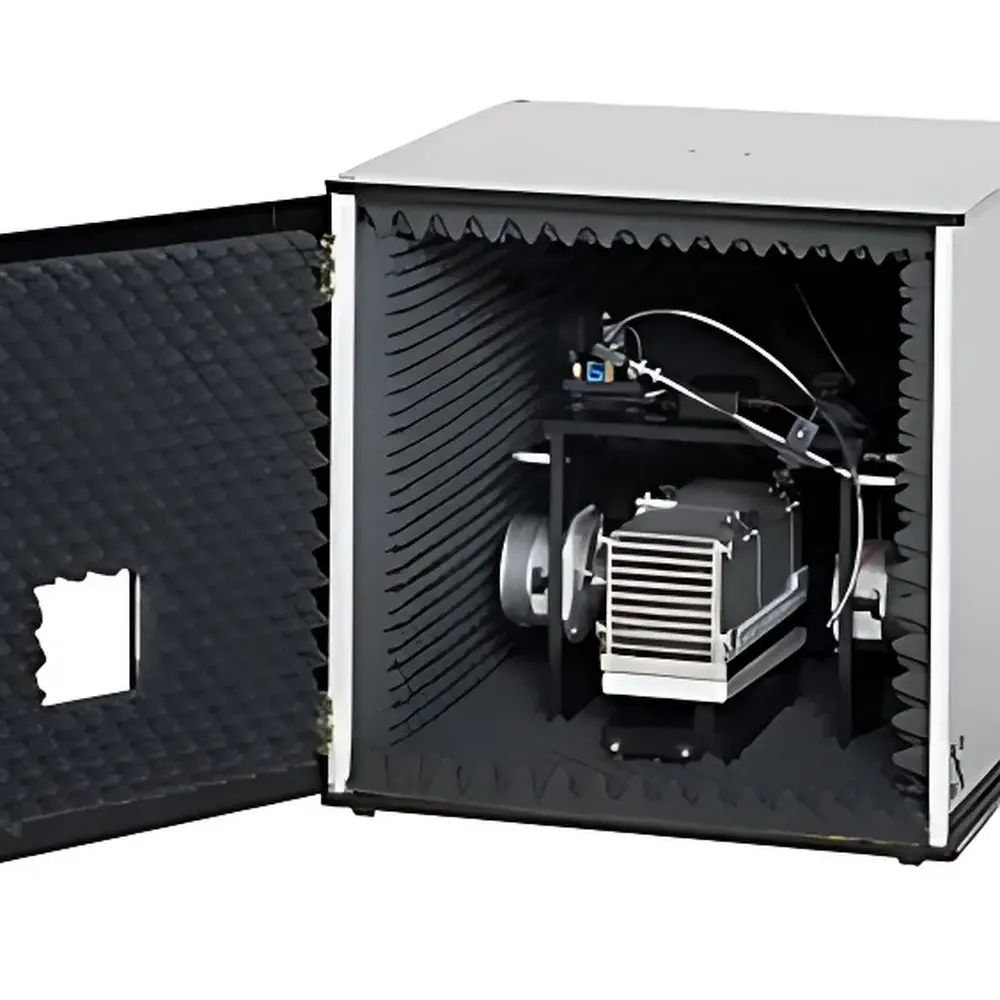
TSE Systems Startle Response System for Rodent Sensorimotor Gating Research
| Brand | TSE Systems |
|---|---|
| Origin | Germany |
| Model | Startle Response |
| Application | Acoustic and Tactile Startle Reflex & Prepulse Inhibition (PPI) Testing in Mice and Rats |
| Compliance | Designed for GLP-compliant behavioral phenotyping |
| Software | Windows-based TSE Startle Suite with FDA 21 CFR Part 11–ready audit trail option |
| Sensor Resolution | Sub-millisecond latency detection |
| Sound Generation | Dual high-fidelity speakers, 20 Hz–20 kHz bandwidth, calibrated output up to 130 dB SPL (A-weighted) |
| Enclosure | Acoustically shielded chamber (≥65 dB attenuation, ISO 3744 compliant) |
Overview
The TSE Systems Startle Response System is a fully computer-controlled platform engineered for quantitative measurement of the acoustic and tactile startle reflex—and its modulation via prepulse inhibition (PPI)—in laboratory rodents. Grounded in established neurobehavioral paradigms, the system implements the core principles of sensorimotor gating assessment: a brief, intense stimulus (e.g., 110–120 dB broadband noise burst) elicits a stereotyped whole-body flinch response, quantified via high-sensitivity force transduction; when preceded by a sub-threshold prepulse (e.g., 70–85 dB tone, 20–100 ms prior), the magnitude of the startle response is significantly attenuated—a phenomenon termed PPI. This inhibition reflects integrity of cortico-striato-pallido-thalamic circuitry and is widely used as an endophenotype in translational models of schizophrenia, autism spectrum disorder, Huntington’s disease, and sensorimotor processing deficits. The system operates under controlled environmental conditions within a certified acoustic isolation cabinet, ensuring minimal ambient interference and high inter-session reproducibility.
Key Features
- Modular, species-specific restraint tubes (mouse- and rat-compatible) mounted on precision load-cell platforms with <1 ms temporal resolution for latency and amplitude capture
- Dual calibrated loudspeakers delivering spectrally flat, phase-coherent acoustic stimuli across 20 Hz–20 kHz, traceable to NIST-traceable sound pressure calibrators
- Programmable stimulus generator supporting complex trial structures: variable prepulse intensity/duration/lead interval, randomized inter-trial intervals (ITIs), and multi-level habituation protocols
- Optional pneumatic air-puff module for calibrated tactile startle induction—integrated into the same timing architecture with ≤0.5 ms jitter
- Real-time waveform acquisition and post-hoc peak amplitude, onset latency, and response duration analysis per trial
- Hardware synchronization via TTL triggers for integration with electrophysiology (e.g., EEG/EMG), optogenetics, or video tracking systems
Sample Compatibility & Compliance
The system supports C57BL/6, BALB/c, Sprague-Dawley, and Wistar strains across standard age ranges (6–24 weeks). Restraint geometry and platform sensitivity are empirically validated for body mass–dependent signal-to-noise optimization. All acoustic calibration procedures follow ISO 3382-2 and ANSI S3.6 standards. Data acquisition and storage comply with ALF (Animal Laboratory Framework) metadata conventions. Optional 21 CFR Part 11 compliance package includes electronic signatures, role-based access control, and immutable audit trails—validated for use in preclinical contract research organizations (CROs) operating under GLP or ICH-GCP guidelines.
Software & Data Management
The TSE Startle Suite (v5.2+) runs natively on Windows 10/11 x64 and provides a protocol-driven interface for defining stimulus sequences, randomization rules, and session parameters. Raw force-time waveforms are stored in HDF5 format with embedded metadata (animal ID, date/time, operator, hardware configuration). Batch analysis tools compute %PPI [(Startle Alone − Prepulse + Startle) / Startle Alone × 100], habituation slopes, and inter-animal coefficient of variation (CV%). Export options include CSV, MATLAB .mat, and standardized Neurodata Without Borders (NWB) schema for cross-platform interoperability. Automated QC flags outliers based on amplitude variance >2 SD or latency drift >5 ms across blocks.
Applications
- Pharmacological screening of antipsychotics, anxiolytics, and NMDA receptor modulators on PPI deficits
- Genetic model validation (e.g., DISC1, neuregulin-1, or COMT knockouts) for sensorimotor gating endophenotypes
- Longitudinal assessment of aging-related decline in inhibitory control
- Combined paradigms: fear-potentiated startle (FPS) using contextual conditioning chambers; light-enhanced startle for anxiety-related modulation studies
- Multi-modal validation: concurrent EMG recording of orbicularis oculi activity or fMRI-compatible versions for circuit-level mapping
FAQ
What species and strain sizes are supported?
Standard configurations accommodate mice (18–35 g) and rats (200–500 g); custom tube diameters and platform sensitivities are available upon request.
Can the system be integrated with existing electrophysiology or imaging setups?
Yes—TTL input/output ports support hardware-level synchronization with DAQ systems (e.g., National Instruments), patch-clamp amplifiers, or MRI-compatible stimulus controllers.
Is calibration documentation provided for regulatory submissions?
Each system ships with a factory calibration certificate (traceable to PTB, Germany), annual recalibration service contracts, and SOP templates aligned with OECD TG 426 and FDA guidance on behavioral endpoints.
Does the software support automated outlier detection during acquisition?
Yes—real-time amplitude and latency thresholds can be configured; trials exceeding user-defined limits trigger visual alerts and optional auto-rejection flags in the raw data log.
What training and technical support options are available?
TSE offers on-site installation, protocol optimization workshops, and remote troubleshooting via secure TeamViewer sessions with certified application scientists holding PhDs in behavioral neuroscience.






