
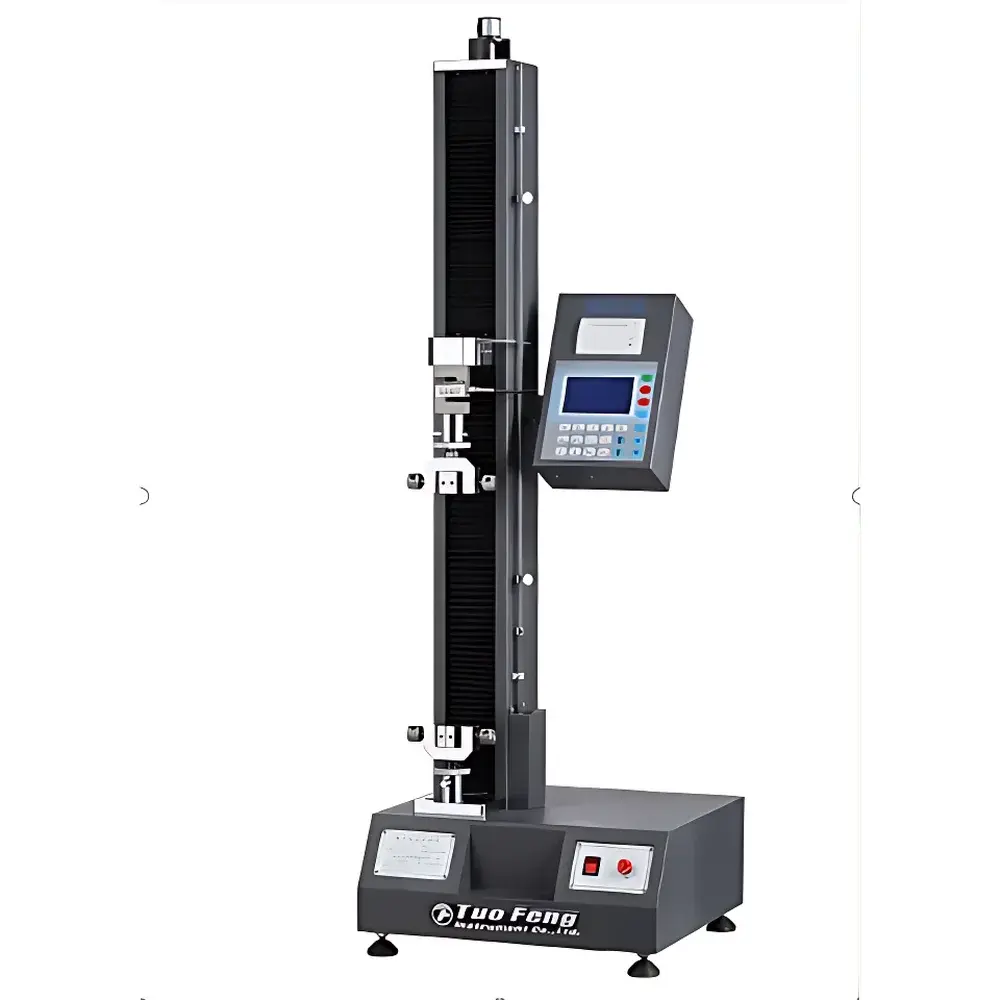
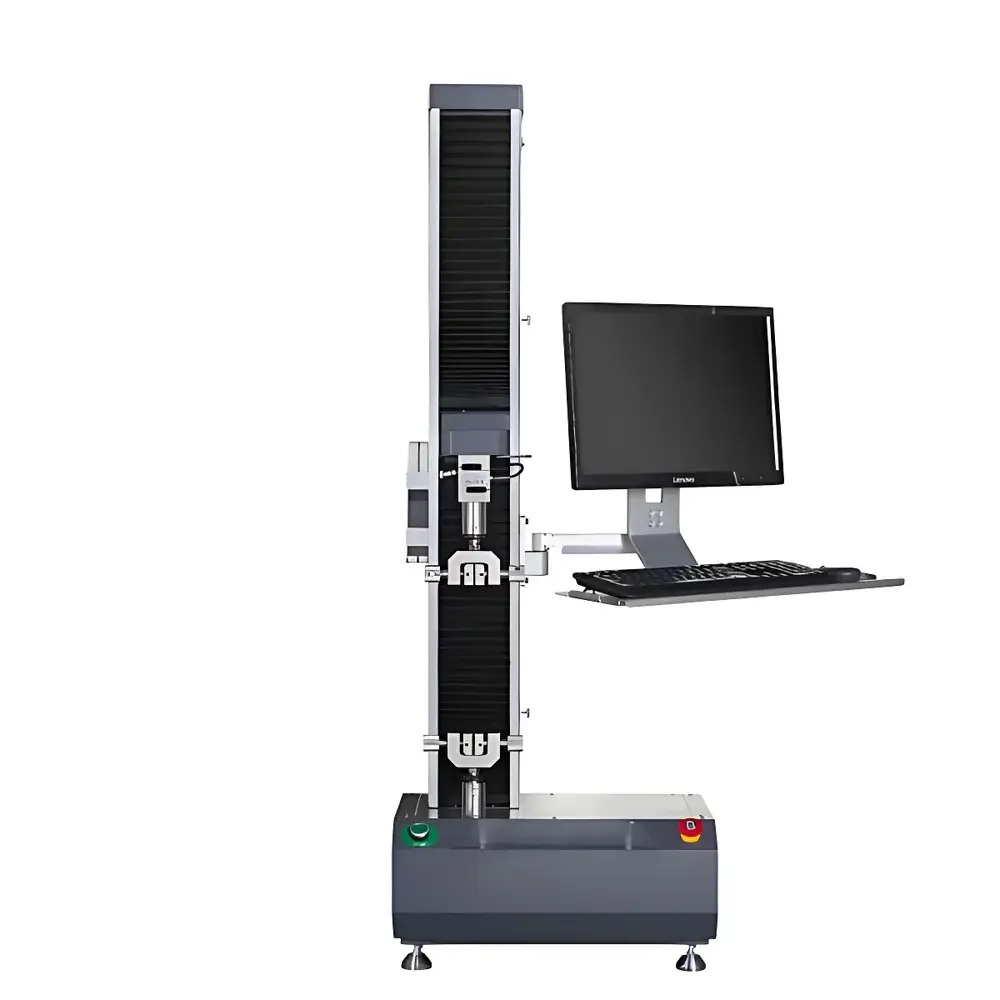
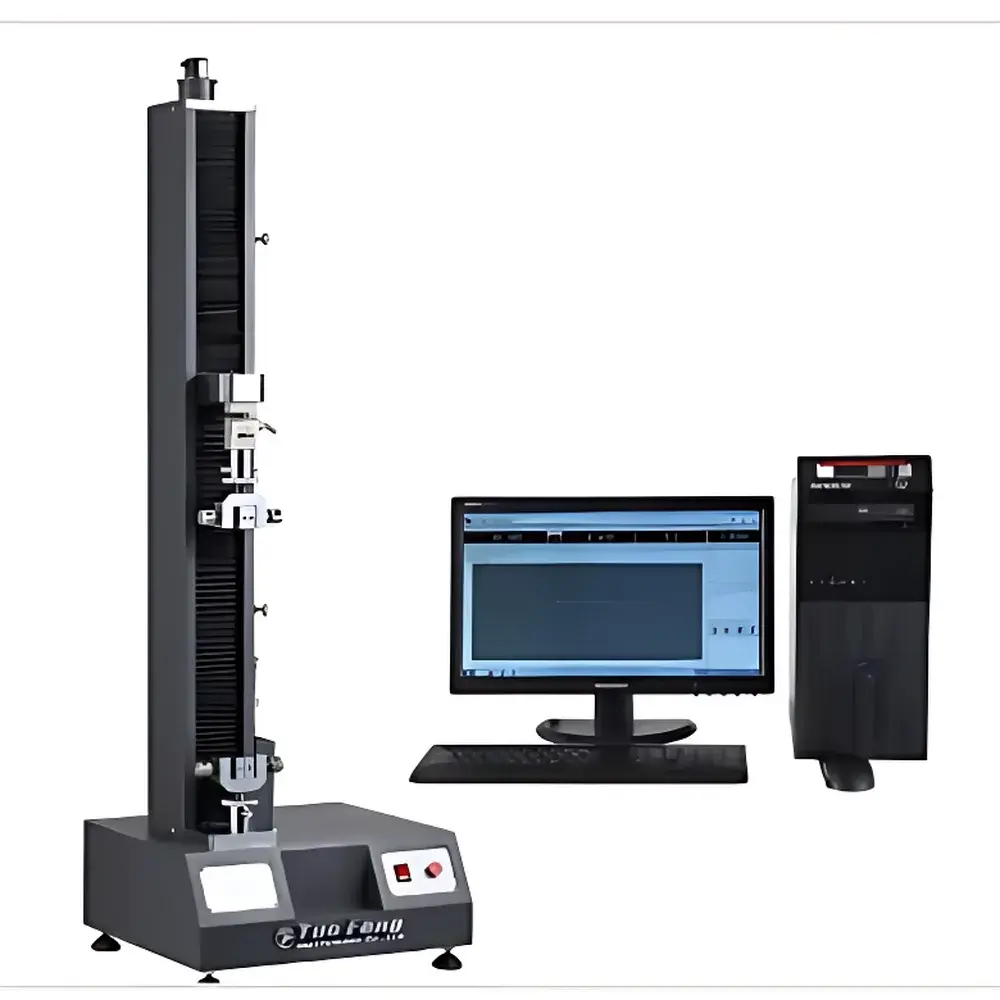
Tuofeng TFL-25 Digital Electronic Tensile Testing Machine
| Brand | Tuofeng |
|---|---|
| Origin | Shanghai, China |
| Manufacturer Type | Direct Manufacturer |
| Model | TFL-25 |
| Maximum Test Load | 5 kN |
| Force Measurement Range | 0.4%–100% of Full Scale (FS) |
| Force Accuracy | ±0.5% of reading |
| Crosshead Travel | 700 mm |
| Displacement Resolution | ±0.5% of reading |
| Compliance Standards | GB, ISO 6892, ASTM E8/E21, DIN 50125, JIS Z2241 |
Overview
The Tuofeng TFL-25 Digital Electronic Tensile Testing Machine is a precision-engineered universal testing system designed for static mechanical property evaluation of solid materials under uniaxial tension and compression. Based on servo-controlled electromechanical actuation and high-fidelity load cell transduction, it operates on the fundamental principle of controlled displacement-driven force measurement—compliant with standardized tensile test methodologies defined in ISO 6892-1, ASTM E8/E21, and GB/T 228.1. The machine delivers repeatable, traceable mechanical data including ultimate tensile strength (UTS), yield strength (Rp0.2), elongation at break, modulus of elasticity, and fracture toughness indicators—critical for QC/QA validation, R&D material characterization, and regulatory documentation in manufacturing environments.
Key Features
- Servo-motor-driven crosshead with smooth, backlash-free motion control across a wide speed range (0.01–500 mm/min), enabling both quasi-static and high-speed tensile protocols.
- High-stiffness dual-column frame (460 × 460 × 1500 mm) with precision-ground guide rails ensures minimal deflection and optimal alignment during high-load testing up to 5 kN.
- Integrated load cell calibrated to ±0.5% accuracy over 0.4–100% FS, with 1/300,000 internal resolution and no range switching—maintaining consistent sensitivity across full capacity.
- Optical encoder-based displacement measurement system with ±0.5% linearity, synchronized with real-time load acquisition at ≥1 kHz sampling rate.
- Multi-level safety architecture: electronic limit switches, emergency stop circuitry, overload cutoff (>110% FS), and programmable soft limits prevent hardware damage and operator risk.
- Intuitive crosshead control interface supporting jog, preset height recall, and auto-return functions—reducing setup time and operator dependency.
Sample Compatibility & Compliance
The TFL-25 accommodates a broad spectrum of specimen geometries and material classes—including metallic wires (diameters ≥0.1 mm), thin foils (thickness ≤2 mm), polymer films, elastomeric strips, textile yarns, paperboard substrates, adhesive bonds, and composite laminates. Standardized grips (pneumatic, wedge, vise, or custom fixtures) ensure uniform stress distribution and minimize slippage artifacts. All test procedures adhere to internationally recognized standards: ISO 6892-1 (metallic materials), ASTM D638/D882 (plastics), ASTM D903 (peel/adhesion), ISO 1184 (paper tensile), and GB/T 228.1 (Chinese national standard). The system supports GLP-compliant audit trails when configured with optional user access controls and electronic signature modules per FDA 21 CFR Part 11 requirements.
Software & Data Management
The embedded Windows-based testing software (compatible with Windows 10/11, x64) provides full configurability for method-driven testing. Users define test profiles using load-controlled (constant force ramp), displacement-controlled (constant strain rate), or time-controlled modes—with real-time switching between force–time, force–displacement, stress–strain, and extension–time plots. All curves are mathematically derived from raw sensor data without interpolation. Software features include multi-curve overlay comparison, statistical reporting (mean, min, max, CV%), automatic calculation of mechanical parameters (e.g., Young’s modulus via linear regression of initial slope), unit conversion (N/kN/lbf, mm/in, MPa/psi), and multilingual UI support (English, Simplified/Traditional Chinese). Data export is native to CSV, XLSX, and PDF formats; all raw datasets retain timestamped metadata for traceability. Firmware and application updates are provided free-of-charge for the instrument’s operational lifetime.
Applications
This system serves as a core analytical tool across industries requiring mechanical integrity verification: wire and cable manufacturers assessing conductor tensile endurance; medical device firms validating suture breaking strength per ISO 10993-12; packaging labs measuring seal peel resistance (ASTM F88); automotive suppliers certifying gasket compressibility and recovery; academic research groups quantifying nanocomposite reinforcement efficiency; and quality departments performing incoming inspection of fasteners, springs, and elastomeric seals. Its modular design allows integration with environmental chambers (−70°C to +250°C), video extensometers, and acoustic emission sensors for advanced failure analysis workflows.
FAQ
What is the maximum specimen length that can be tested with the standard 700 mm travel?
Standard configuration supports gauge lengths up to 500 mm; extended travel options (up to 1200 mm) are available upon request for long-fiber or flexible polymer testing.
Does the system meet ISO/IEC 17025 calibration requirements?
Yes—the load cell and displacement encoder are supplied with NIST-traceable calibration certificates; periodic recalibration services conform to ISO/IEC 17025-accredited laboratories.
Can the software generate reports compliant with FDA 21 CFR Part 11?
When deployed with optional audit trail logging, role-based authentication, and electronic signature modules, the system meets foundational Part 11 requirements for regulated pharmaceutical and biotech applications.
Is third-party verification of force accuracy included with delivery?
Each unit ships with factory calibration data and a certificate of conformance; optional on-site verification by an accredited metrology provider is available at time of installation.
What maintenance intervals are recommended for long-term repeatability?
Biannual verification of load cell linearity and encoder resolution is advised; routine cleaning of lead screws and lubrication of guide rails every 6 months ensures mechanical longevity and measurement stability.
Related Products



