
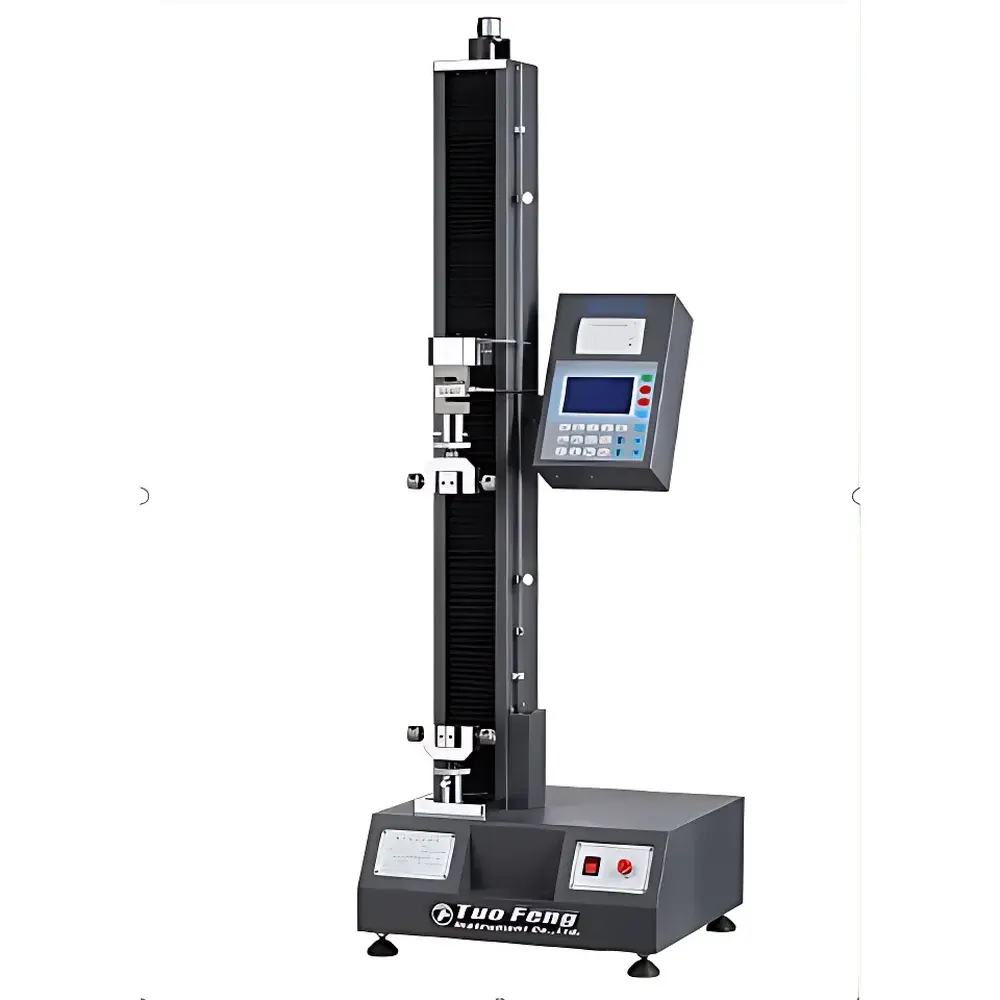
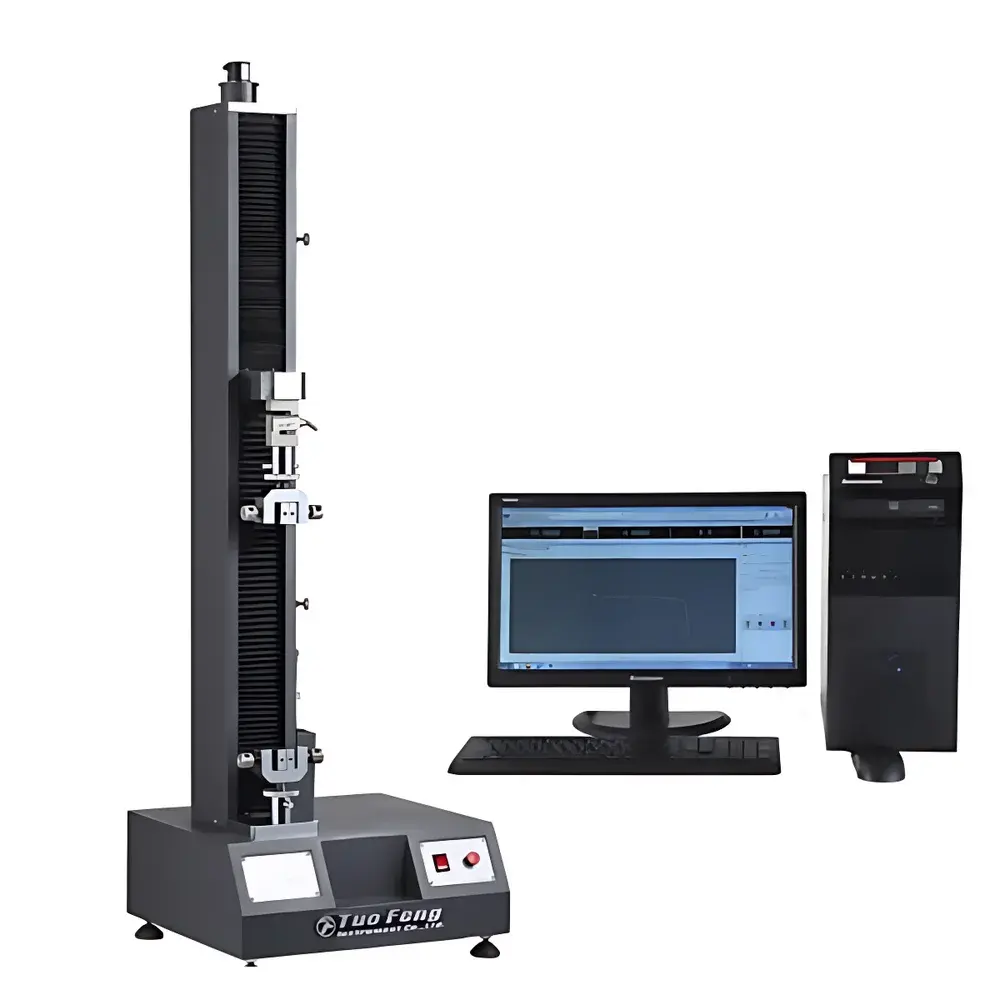
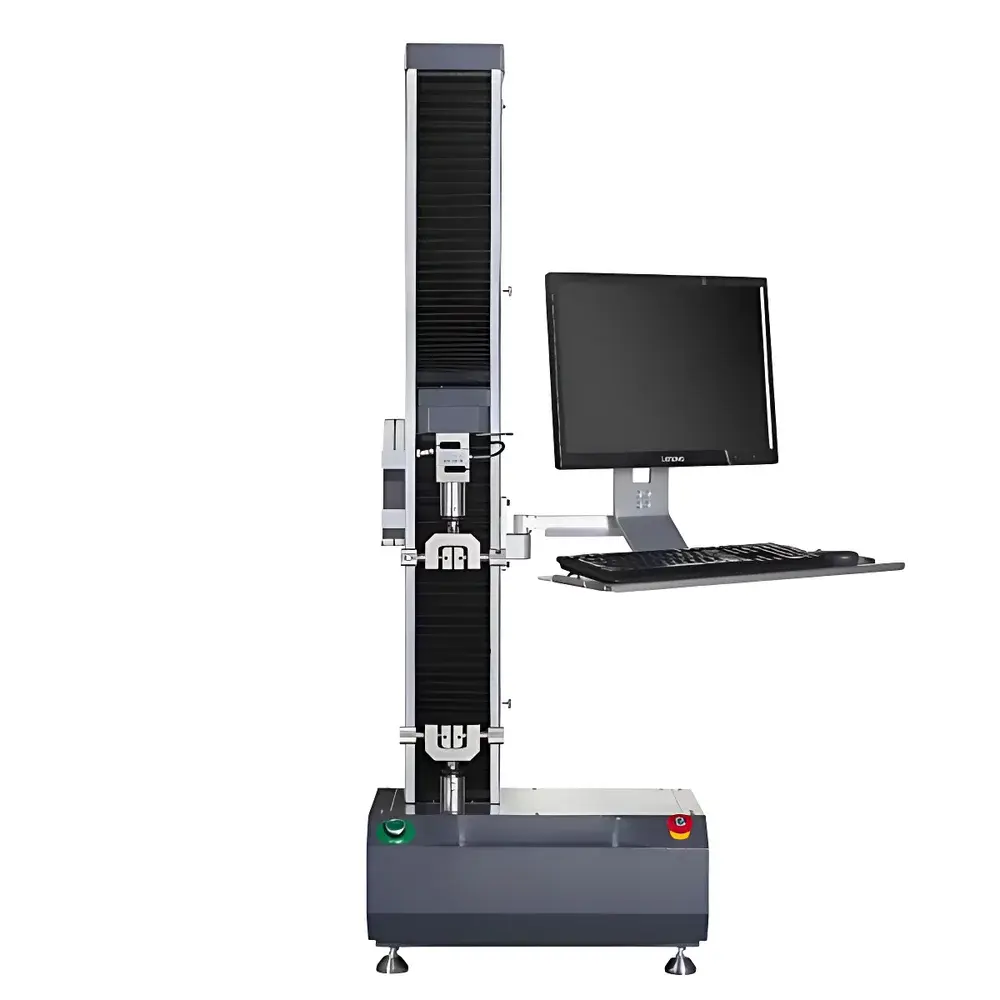
Tuofeng TFL-29S High-Precision Electronic Tensile Testing Machine
| Brand | Tuofeng |
|---|---|
| Origin | Shanghai, China |
| Manufacturer Type | Direct Manufacturer |
| Model | TFL-29S |
| Maximum Test Load | 5 kN |
| Force Measurement Range | 0.4%–100% of Full Scale (FS) |
| Force Accuracy | ±0.5% of reading |
| Crosshead Travel | 700 mm |
| Displacement Resolution | ±0.5% of reading |
| Control Mode | PC-based closed-loop servo control |
| Compliance Standards | ASTM E4, ASTM D638, ISO 6892-1, GB/T 228.1, JIS Z2241, DIN 50125 |
Overview
The Tuofeng TFL-29S High-Precision Electronic Tensile Testing Machine is a microprocessor-controlled, electromechanical universal testing system engineered for static mechanical property characterization under uniaxial tension and compression. It operates on a precision ball-screw-driven crosshead actuation architecture with integrated load cell feedback and high-resolution optical encoder-based displacement sensing. Designed in accordance with international metrological traceability principles, the system delivers repeatable force measurement across its full 5 kN capacity—calibrated to ISO/IEC 17025-accredited reference standards—and maintains linearity and hysteresis performance compliant with ISO 7500-1 Class 0.5 requirements. Its rigid dual-column frame minimizes deflection during high-load testing, while the servo-motorized drive ensures smooth, low-noise motion across the full speed range (0.01–500 mm/min), enabling precise strain-rate control essential for material compliance validation per ASTM E8/E21 and ISO 6892-1.
Key Features
- Class 0.5 force measurement accuracy (±0.5% of reading) over 0.4–100% FS, certified per ISO 7500-1
- High-stability 5 kN load cell with digital temperature compensation and overload protection (110% FS automatic cutoff)
- 700 mm standard crosshead travel—expandable upon request—with electronic limit switches and emergency stop circuitry
- Optical encoder-based displacement measurement with ±0.5% accuracy and resolution down to 0.001 mm
- Three-speed programmable crosshead movement (fast/medium/slow) with manual jog and auto-return functionality
- Modular fixture interface supporting standardized grips (pneumatic, wedge, vise, peel, shear) and custom-designed fixtures for specialized specimens
- Robust cast-iron base and reinforced steel columns ensure minimal frame compliance (<0.1 mm/kN)
- 220 V / 50 Hz / 400 W single-phase power input; compact footprint (460 × 460 × 1500 mm); net weight ≈ 120 kg
Sample Compatibility & Compliance
The TFL-29S accommodates a broad spectrum of specimen geometries and material classes—including metallic wires and foils (diameters ≥0.1 mm), polymer films and elastomers (thickness 0.02–5 mm), textile yarns and nonwovens, paperboard and corrugated substrates, adhesive tapes and laminates, and biomedical packaging films. Specimen clamping is optimized for minimal slippage and stress concentration via adjustable jaw faces and pneumatic or mechanical actuation options. The system supports full compliance testing workflows aligned with ASTM D638 (plastics), ASTM D882 (thin films), ISO 527-2, ISO 1798 (foams), GB/T 228.1 (metals), JIS Z2241, and DIN 53455. All hardware and firmware configurations meet general-purpose laboratory safety standards (IEC 61000-6-2/6-4, EN 61326-1), and mechanical calibration certificates are provided with each unit.
Software & Data Management
The embedded Windows-based test software (compatible with Windows 10/11 x64) provides full GLP-compliant data acquisition and reporting. It supports multiple control modes—including constant rate of extension (CRE), constant load ramping, position hold, and cyclic loading—and enables real-time plotting of up to four synchronized curves: load vs. time, load vs. displacement, stress vs. strain, and displacement vs. time. Raw data is recorded at ≥100 Hz sampling rate and stored in ASCII-compatible .csv format with embedded metadata (operator ID, timestamp, standard ID, calibration epoch). Audit trails log all user actions, parameter changes, and calibration events—fully traceable for FDA 21 CFR Part 11 readiness when configured with electronic signatures. Reporting modules generate customizable PDF/Excel outputs containing tensile strength, yield point, modulus, elongation at break, tear resistance, peel adhesion, and bonding strength—all automatically calculated using user-input cross-sectional area and gauge length. Software updates are delivered remotely and installed without hardware modification.
Applications
This system serves quality control laboratories in wire & cable manufacturing, medical device packaging validation, automotive interior materials certification, flexible electronics substrate qualification, and food-grade film compliance testing. Typical use cases include: verification of ASTM D3032-compliant polyethylene shrink film tensile properties; peel strength assessment of pressure-sensitive adhesives per ASTM D903; tensile modulus determination of carbon fiber prepreg samples per ASTM D3039; elongation-to-failure evaluation of surgical suture monofilaments (ISO 10993-12); and bond integrity testing of laminated pharmaceutical blister packs (USP ). Its modular design allows seamless integration into automated test lines via RS-232, USB, or Ethernet interfaces.
FAQ
What standards does the TFL-29S support out-of-the-box?
The system includes preloaded test methods for ASTM D638, ASTM D882, ISO 6892-1, GB/T 228.1, JIS Z2241, and DIN 53455. Custom method templates can be created via the software’s script editor.
Is third-party calibration documentation included?
Yes—each unit ships with a factory calibration certificate traceable to NIM (China National Institute of Metrology) and includes uncertainty budgets per ISO/IEC 17025 requirements.
Can the system perform compression or flexural tests?
Yes—when equipped with optional compression platens or three-point bend fixtures, the TFL-29S meets ASTM E9 (compression) and ASTM D790 (flexure) specifications.
What is the recommended maintenance interval?
Load cell and encoder verification is advised every 12 months or after 10,000 cycles; routine lubrication of the ball screw is required every 6 months.
Does the software support multi-user role-based access control?
Yes—administrator, operator, and reviewer profiles can be defined with granular permissions for test execution, data export, and calibration management.



