
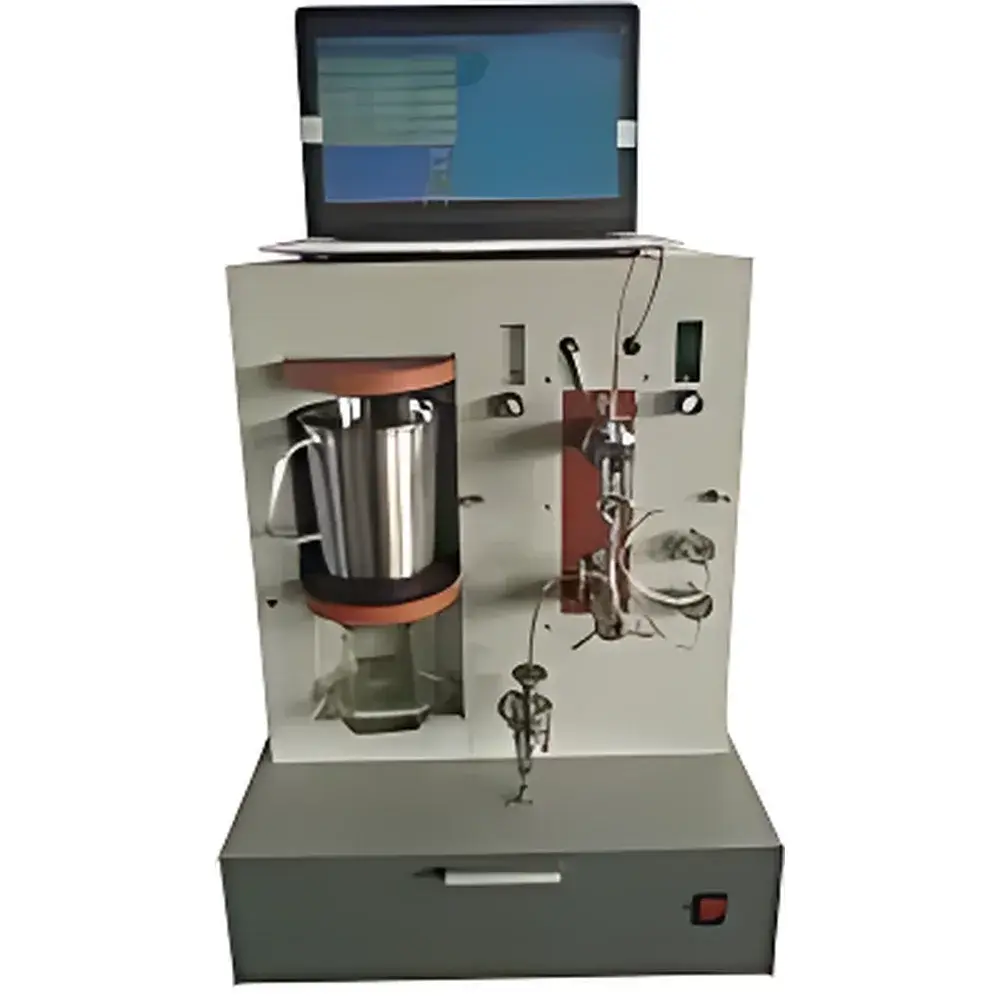
Xufeng XF-3241 Jet Fuel Thermal Oxidation Tester (JFTOT)
| Brand | Xufeng |
|---|---|
| Origin | Shanghai, China |
| Model | XF-3241 |
| Temperature Control Range | 20–380 °C |
| Temperature Stability | ±1 °C (20–380 °C) |
| Fuel Flow Rate | 3.0 ± 0.3 mL/min |
| Sample Volume | 600 mL |
| Test Duration | 150 ± 2 min |
| Nitrogen Pressure Regulation Range | 0–3.45 MPa |
| Fuel System Pressure | 3.45 ± 0.345 MPa |
| Differential Pressure Measurement Range | 0–340 mmHg |
| Differential Pressure Accuracy | Class 0.3 |
| Differential Pressure Resolution | 0.1 mmHg |
| Cooling Water Flow Rate | 38 ± 8 L/h |
| Cooling Water Pressure | 0.1–0.4 MPa |
| Power Supply | AC 220 V ± 10% |
| Dimensions (Bath) | 500 × 190 × 424 mm (L × W × D) |
| Overall Dimensions | 550 × 450 × 600 mm (L × W × H) |
| Compliance | ASTM D3241, GB/T 9169 |
Overview
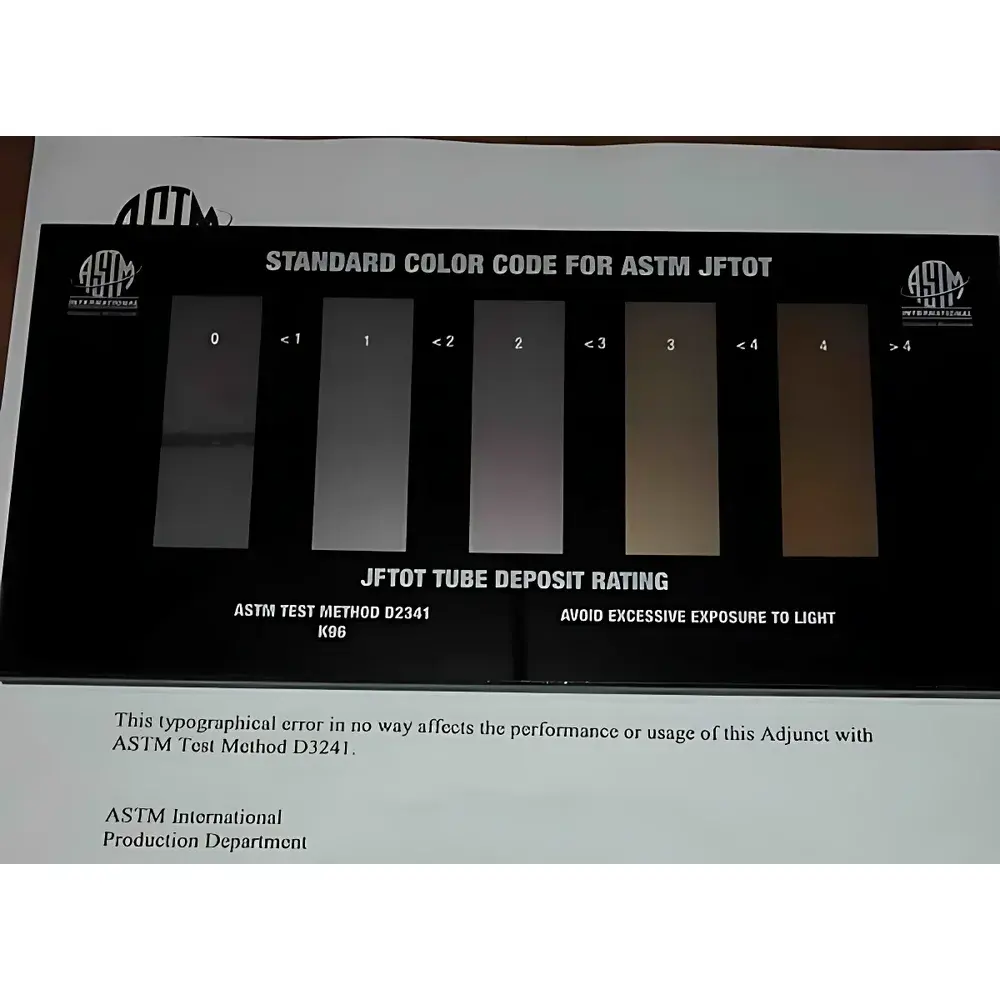
The Xufeng XF-3241 Jet Fuel Thermal Oxidation Tester (JFTOT) is a precision-engineered instrument designed to evaluate the dynamic thermal oxidative stability of aviation turbine fuels under controlled high-temperature, high-pressure, and continuous-flow conditions. It implements the standardized JFTOT (Jet Fuel Thermal Oxidation Tester) method—specifically aligned with ASTM D3241 and GB/T 9169—to simulate the formation of insoluble deposits and degradation products that occur during fuel passage through heated aircraft fuel system components, such as heat exchangers and fuel nozzles. The core measurement principle involves passing a defined volume of jet fuel (600 mL) at a regulated flow rate (3.0 ± 0.3 mL/min) through a precisely temperature-controlled stainless-steel test tube (200–370 °C), followed by filtration through a sintered stainless-steel fritted disc filter. Oxidative degradation manifests as surface deposits on the heated tube wall and particulate matter captured by the filter; quantification is achieved via real-time differential pressure monitoring across the filter and visual assessment of tube deposit color rating per ASTM D3241 Annex A1. This dual-parameter evaluation provides a robust, reproducible index of fuel resistance to thermal oxidation under realistic operational stress.
Key Features
- High-precision temperature control system with ±1 °C stability across the full 20–380 °C operating range, ensuring strict adherence to ASTM D3241 thermal profiles.
- Dual independent pressure regulation: nitrogen purge pressure (0–3.45 MPa) for inert atmosphere maintenance and fuel system pressure (3.45 ± 0.345 MPa) for consistent flow dynamics.
- Integrated differential pressure transducer with 0.1 mmHg resolution and Class 0.3 accuracy, enabling sensitive detection of early-stage filter clogging.
- Touchscreen HMI interface with intuitive workflow navigation, real-time parameter visualization, and automated test sequencing—including pre-heating, stabilization, flow initiation, and post-test cooldown phases.
- Self-diagnostic architecture with audible/visual fault alerts for critical subsystems (e.g., temperature deviation, pressure loss, flow interruption, cooling water failure).
- Compact benchtop footprint (550 × 450 × 600 mm) with modular thermal bath design (500 × 190 × 424 mm), optimized for laboratory space efficiency without compromising thermal mass or uniformity.
- Compliance-ready hardware architecture: all critical control and measurement circuits utilize industrial-grade imported components to ensure long-term metrological integrity and mean time between failures (MTBF) exceeding 10,000 hours.
Sample Compatibility & Compliance
The XF-3241 is validated for use with all specification-grade aviation turbine fuels, including Jet A, Jet A-1, JP-5, and JP-8, as well as synthetic hydrocarbon blends (e.g., Fischer–Tropsch, HEFA-SPK) compliant with ASTM D7566 Annexes. It strictly conforms to the procedural requirements of ASTM D3241 (Standard Test Method for Thermal Oxidation Stability of Aviation Turbine Fuels) and its Chinese national equivalent, GB/T 9169 (Determination of Thermal Oxidation Stability of Jet Fuels — JFTOT Method). All pressure, temperature, flow, and timing parameters are traceably calibrated against NIST-traceable references. The system supports GLP-compliant operation: test logs—including timestamps, setpoints, actual readings, operator ID, and alarm events—are stored in non-volatile memory and exportable via USB. While not inherently 21 CFR Part 11–compliant, the instrument’s architecture allows integration into validated LIMS environments when paired with qualified electronic signature and audit trail software layers.
Software & Data Management
The embedded firmware provides full test lifecycle management: method selection (standard JFTOT or user-defined variants), parameter validation prior to run initiation, real-time graphical display of differential pressure vs. time and tube temperature vs. time, and automatic pass/fail determination based on user-configurable thresholds (e.g., ΔP > 25 mmHg or tube rating > 3). Raw data files (CSV format) include second-by-second acquisition of all sensor outputs, enabling post-hoc statistical analysis (e.g., linear regression of pressure rise slope, time-to-threshold). Integrated thermal printer outputs hardcopy reports containing test ID, sample ID, date/time, operator, key parameters, final ΔP, tube rating, and pass/fail status—all formatted to match internal QA documentation templates. Data export supports seamless import into Excel, MATLAB, or laboratory informatics platforms for trend analysis across fuel batches or refinery campaigns.
Applications
- Refinery quality assurance: screening newly produced jet fuels for thermal stability prior to release.
- Fuel additive evaluation: quantifying the efficacy of antioxidant packages (e.g., hindered phenols, amine-based stabilizers) under accelerated oxidative stress.
- Blending studies: assessing compatibility and stability impacts when introducing bio-derived components into conventional jet fuel streams.
- Specification conformance testing: routine verification against ASTM D1655 and DEF STAN 91-91 requirements for thermal oxidative stability.
- Research & development: mechanistic studies on deposit formation kinetics, metal-catalyzed oxidation pathways, and fouling mitigation strategies.
- Contract laboratory services: accredited testing for third-party certification and regulatory submission dossiers.
FAQ
What standards does the XF-3241 explicitly support?
ASTM D3241 and GB/T 9169. Full compliance includes prescribed temperature ramp profiles, flow rates, pressure setpoints, sample volume, and evaluation criteria (ΔP and tube rating).
Is calibration documentation provided with the instrument?
Yes—each unit ships with a factory calibration certificate covering temperature, pressure, flow, and differential pressure sensors, traceable to national standards.
Can the instrument operate unattended for the full 150-minute test cycle?
Yes. Once initiated, the system executes the complete sequence autonomously, including thermal stabilization, flow initiation, real-time monitoring, and automatic shutdown with data retention.
What maintenance is required between tests?
Post-test cleaning of the test tube and filter assembly using approved solvents (e.g., naphtha, ASTM D235); replacement of the sintered stainless-steel filter is recommended after every 10–15 tests or upon visible degradation.
Does the system support multi-user access control?
The base firmware supports operator ID entry per test; role-based access control and electronic signatures require integration with external LIMS or validated software add-ons.





