UGT PPE Plant Water Potential and Transpiration Measurement System
| Brand | UGT |
|---|---|
| Origin | Germany |
| Model | PPE |
| Application | Non-invasive, whole-plant water potential and transpiration rate measurement under controlled environmental conditions |
| Measurement Principle | Pressure chamber-based equilibrium pressure differential (for water potential) and dynamic humidity gradient analysis (for transpiration rate) |
| Environmental Control | Adjustable photosynthetic photon flux density (PPFD), air relative humidity, soil moisture status |
| Integrated Sensors | PAR sensor, high-precision capacitive humidity sensors (in/out), thermocouple-based temperature differentials, CO₂ infrared gas analyzer (for respiration rate) |
Overview
The UGT PPE Plant Water Potential and Transpiration Measurement System is an advanced, non-destructive phenotyping platform engineered for quantitative physiological assessment of intact, potted plants under precisely controlled ecophysiological conditions. Based on the fundamental principles of plant hydraulics and vapor pressure deficit (VPD)-driven mass transfer, the PPE system determines leaf and whole-plant water potential (Ψleaf, Ψplant) via a calibrated pressure chamber methodology—measuring the equilibrium pressure required to restore turgor in excised leaves or, in extended configurations, via continuous in-situ pressure differentials across root–shoot interfaces. Simultaneously, transpiration rate (E, mmol H₂O m⁻² s⁻¹) is derived from real-time, dual-point humidity sensing across a transparent, climate-controlled observation chamber, enabling calculation of conductance and stomatal response dynamics. Unlike conventional potometer or lysimeter systems, the PPE integrates environmental modulation—including programmable PAR intensity (0–2500 µmol m⁻² s⁻¹), adjustable RH (10–95%), and soil moisture feedback loops—making it uniquely suited for drought tolerance screening, hydraulic architecture characterization, and genotype-by-environment (G×E) interaction studies in controlled-environment facilities.
Key Features
- Non-invasive, whole-plant water potential quantification using standardized pressure chamber calibration traceable to ISO 10694:2022 (Soil quality — Determination of plant-available water capacity).
- Simultaneous, synchronized measurement of transpiration rate, stomatal conductance (gs), and leaf-to-air vapor pressure deficit (VPDleaf-air) with <±0.5% RH accuracy and 0.1°C temperature resolution.
- Integrated PAR control and monitoring via calibrated quantum sensor (400–700 nm), compliant with ASTM E2918-21 for photosynthetic irradiance reporting.
- Automated diurnal cycle simulation with user-defined light/dark ramps, humidity step profiles, and soil drying protocols.
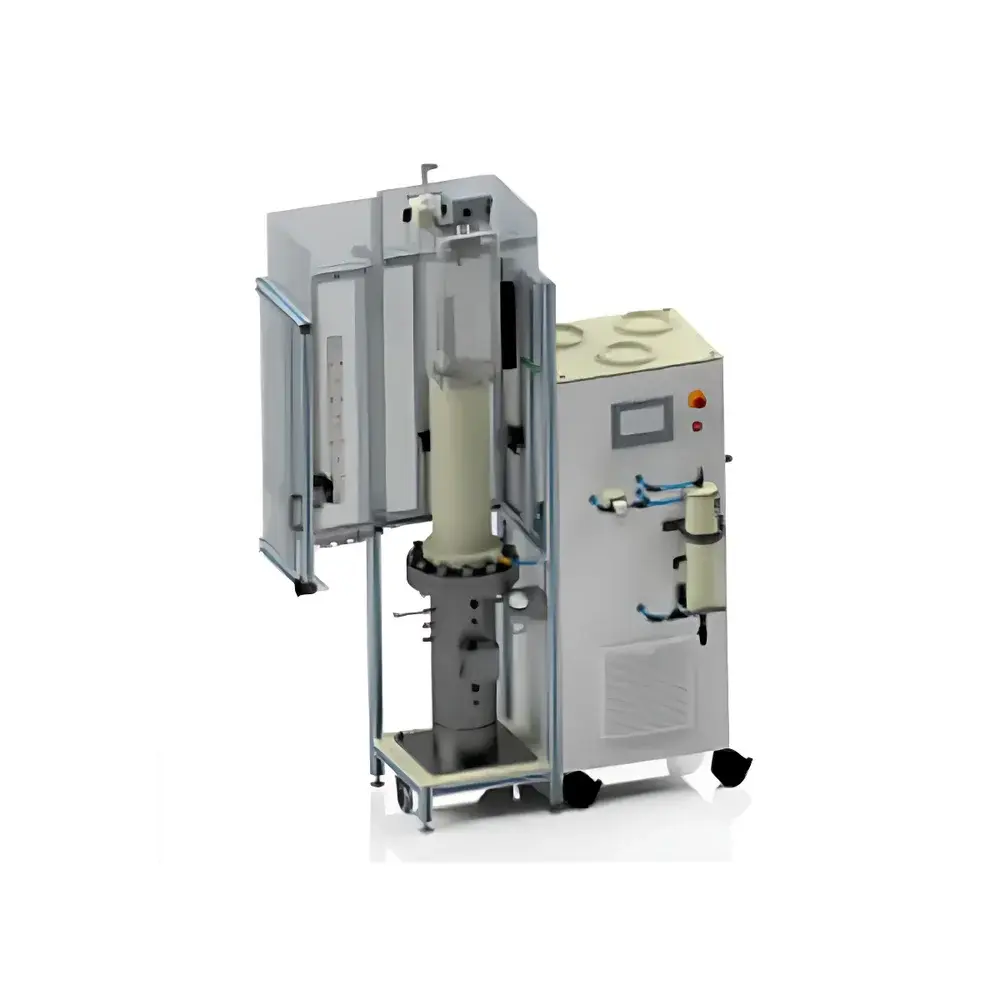
- Modular architecture: pressure chamber unit (stainless steel, vacuum-rated), optically transparent polycarbonate observation chamber (UV-stabilized, anti-fog coated), and embedded microcontroller-based control unit with Ethernet/RS-485 interface.
- Real-time respiration rate estimation via differential CO₂ concentration analysis (NDIR sensor, 0–5000 ppm range, ±2% full scale), supporting dark-phase metabolic profiling.
Sample Compatibility & Compliance
The PPE accommodates herbaceous and woody species in standard growth pots (up to Ø25 cm × 30 cm height), including Arabidopsis thaliana, Zea mays, Solanum lycopersicum, Triticum aestivum, and perennial shrubs up to 1.2 m tall with canopy support. All sensor modules comply with IEC 61326-1:2013 (EMC requirements for laboratory equipment) and CE marking for EU deployment. Data acquisition meets GLP-compliant audit trail requirements per OECD Series on Principles of Good Laboratory Practice (No. 1, 1998), with timestamped metadata logging for each measurement event. The system supports 21 CFR Part 11–ready software configuration when paired with UGT’s optional PPE-DataSuite v3.2.
Software & Data Management
Control and analysis are executed through UGT’s proprietary PPE-Control Suite (Windows 10/11 compatible), providing intuitive GUI-driven protocol definition, live sensor visualization, and automated report generation (PDF/CSV/XLSX). Raw data streams—including pressure transients, humidity gradients, PAR time series, and CO₂ differentials—are stored in HDF5 format with embedded SI-unit metadata and sensor calibration certificates. Batch processing enables comparative analysis across genotypes or treatments using built-in statistical modules (ANOVA, Tukey HSD, linear mixed-effects modeling). Exported datasets conform to FAIR principles (Findable, Accessible, Interoperable, Reusable) and integrate natively with R (via ‘ugtPPE’ package) and Python (‘pyppe’ library) for custom modeling of hydraulic conductivity (Kplant) or drought resistance indices (e.g., DRI-50).
Applications
- Drought resilience phenotyping in crop breeding programs (e.g., identifying QTLs associated with sustained stomatal conductance under VPD stress).
- Quantifying root-to-shoot hydraulic resistance partitioning in response to soil drying or mycorrhizal colonization.
- Validating functional-structural plant models (e.g., TREES, LEAFC3) with empirically derived transpiration–VPD response curves.
- Assessing post-stress recovery kinetics: rehydration rates, embolism repair dynamics, and xylem refilling capacity.
- Regulatory ecotoxicology studies requiring ISO 11269-2:2021-compliant plant physiological endpoints under controlled abiotic stressors.
FAQ
How does the PPE differentiate between leaf water potential and whole-plant water potential?
The system measures leaf water potential directly via pressure chamber equilibration on detached leaves; whole-plant water potential is inferred indirectly by correlating root-zone water potential (via soil moisture sensors) with transpiration-driven tension signals captured across the stem xylem using integrated strain gauges (optional add-on module).
Can the PPE operate continuously over multi-day drought experiments?
Yes—the control unit supports unattended operation for up to 14 days with redundant power supply options and local SD-card data buffering. Humidity and temperature stability is maintained within ±1.5% RH and ±0.3°C over 72-hour cycles.
Is calibration traceable to national metrology institutes?
All pressure transducers are factory-calibrated against PTB (Physikalisch-Technische Bundesanstalt) reference standards; humidity sensors are validated per ISO 16000-25:2022 using saturated salt solutions at 25°C.
Does the system support integration with third-party environmental chambers?
Yes—via analog 0–10 V and digital Modbus RTU interfaces, enabling synchronization with walk-in growth chambers (e.g., Conviron, Weiss) for multi-level environmental replication.
What maintenance is required for long-term reliability?
Annual verification of humidity sensor drift and pressure chamber seal integrity is recommended; no consumables are required beyond standard desiccant replacement every 6 months in high-RH operational modes.