
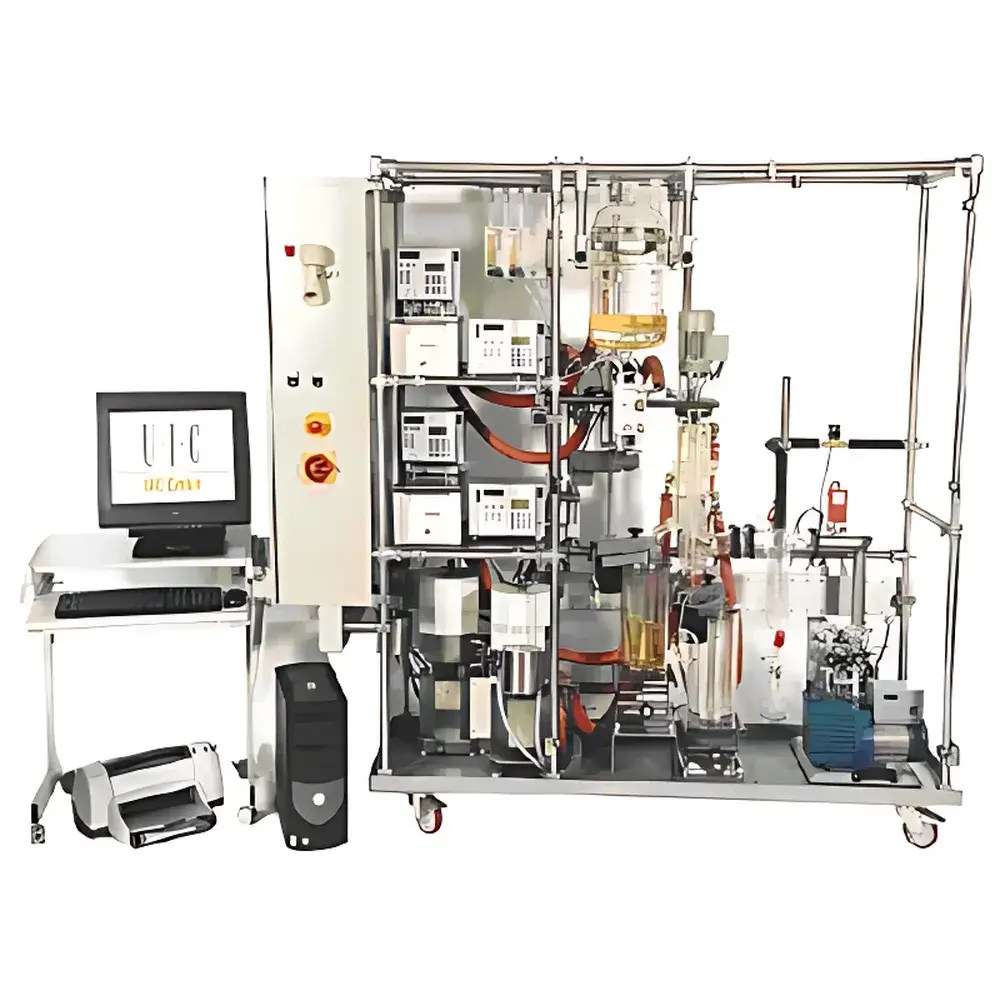
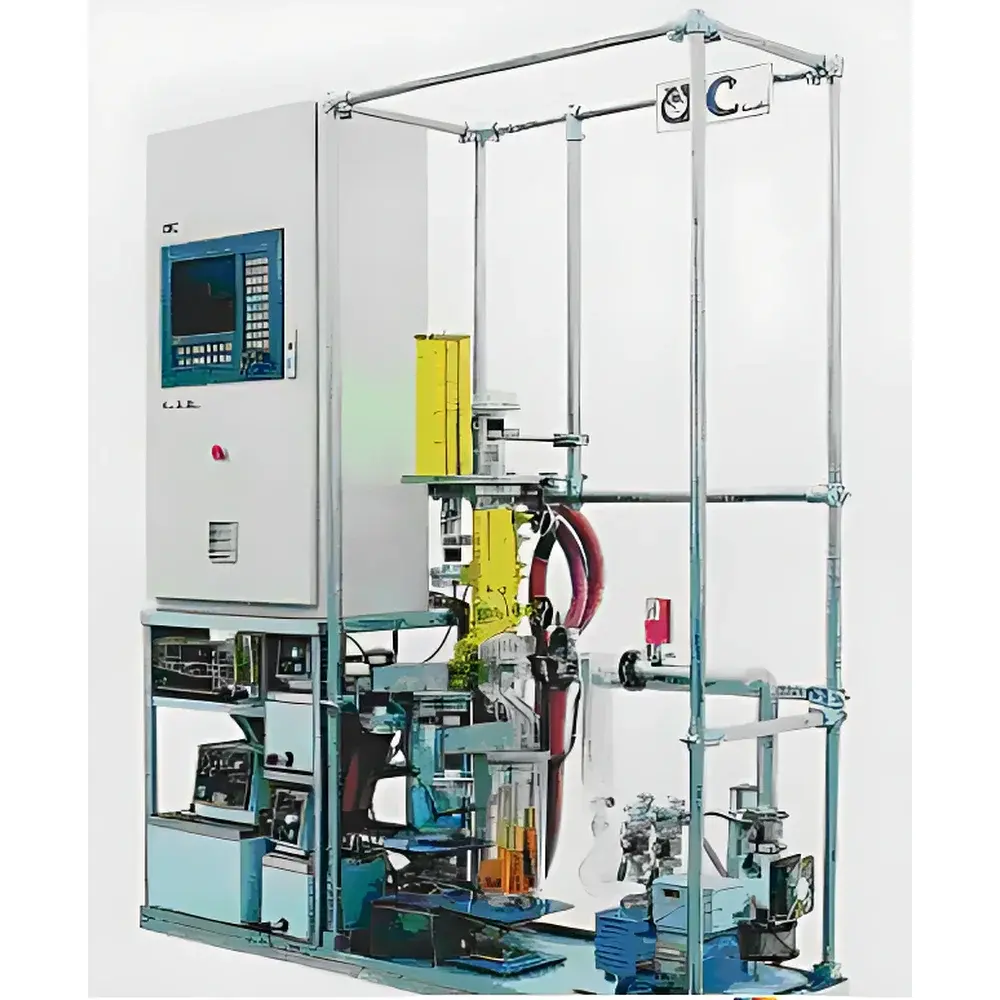
UIC KDL 5 CADi Automated Short-Path (Molecular) Distillation System
| Brand | UIC GmbH |
|---|---|
| Origin | Germany |
| Model | KDL 5 CADi |
| Feed Rate | 0.5–1.5 kg/h |
| Effective Evaporation Area | 0.05 m² |
| Evaporator Internal Diameter | 120 mm |
| Condenser Area | 0.85 m² |
| Collecting Vessels | 3 |
| Maximum Evaporation Temperature | 350 °C |
| Minimum Operating Pressure | 0.001 mbar |
| Construction Material | Borosilicate Glass 3.3 |
| Film Formation | Self-Cleaning Roller-Type Wiper System |
| Heating Method | Thermostatic Oil Bath |
Overview
The UIC KDL 5 CADi is a fully automated short-path molecular distillation system engineered for high-precision thermal separation of thermally sensitive, high-boiling-point, or vacuum-labile compounds under ultra-high vacuum conditions. Based on the fundamental principles of molecular distillation—where separation occurs via differential mean free path rather than boiling point differences—the KDL 5 CADi operates at pressures as low as 0.001 mbar, enabling efficient fractionation of substances with molecular weights exceeding 500 Da without significant thermal degradation. Its core architecture integrates a vertically oriented borosilicate glass 3.3 evaporator (120 mm internal diameter), a large-area condenser (0.85 m²), and a precisely controlled self-cleaning roller-type wiper system that ensures uniform, thin-film formation across the 0.05 m² effective evaporation surface. Designed for reproducible, unattended operation, the system bridges laboratory-scale process development with pilot-scale feasibility studies in fine chemicals, pharmaceutical intermediates, natural product isolation, and petrochemical residue characterization.
Key Features
- Full automation via integrated PLC and CADi software interface—enables mouse-and-keyboard operation with real-time parameter monitoring and remote control capability
- Borosilicate glass 3.3 construction throughout the main distillation path—ensures chemical inertness, thermal stability up to 350 °C, and full visual process observation
- Self-cleaning roller-type wiper system—maintains consistent film thickness and prevents fouling during prolonged operation with viscous or polymerizing feedstocks
- Thermostatically regulated oil bath heating—provides stable, gradient-free temperature distribution along the evaporator wall
- Three independently controllable collection vessels—supports sequential multi-fraction collection based on time, temperature, or pressure thresholds
- Ultra-high vacuum compatibility—equipped with vacuum-tight glass-metal seals and optimized vapor path geometry to sustain ≤0.001 mbar operating pressure
Sample Compatibility & Compliance
The KDL 5 CADi accommodates feed materials ranging from highly viscous residues (e.g., vacuum bottom fractions, deasphalted oils) to heat-sensitive bioactives (e.g., tocopherols, phospholipids, CBD isolates). Feed rate flexibility (0.5–1.5 kg/h) allows method optimization for both screening and extended batch processing. All wetted parts comply with DIN ISO 3585 specifications for borosilicate glass 3.3. The system supports GLP-compliant documentation workflows when paired with validated CADi software configurations—including electronic audit trails, user access levels, and timestamped parameter logging aligned with FDA 21 CFR Part 11 requirements. It is routinely employed in ASTM D7504-21 (Standard Test Method for Molecular Distillation of Petroleum Products) and ISO 12967 (Petroleum Products — Determination of Volatile Matter in Bituminous Materials) compliant laboratories.
Software & Data Management
The CADi software platform provides a Windows-based graphical interface for comprehensive system orchestration. Users define up to five interdependent distillation parameters—including evaporator temperature, condenser temperature, feed flow rate, vacuum level, and collection timing—and initiate fully autonomous runs. Real-time data acquisition records all critical variables at configurable intervals (default: 1 Hz), exporting structured CSV or XML files for integration into LIMS or statistical process control environments. Software validation packages are available for GMP-regulated users, covering IQ/OQ protocols, calibration traceability (NIST-traceable temperature and pressure sensors), and electronic signature functionality per ALCOA+ principles.
Applications
- Characterization of crude oil vacuum residues and heavy fuel oil fractions for asphaltene content and hydrocarbon class distribution
- Purification of polyunsaturated fatty acid ethyl esters (PUFA-EE), fish oil concentrates, and omega-3 isolates
- Refinement of silicone oils, synthetic lubricants, and high-molecular-weight polymers
- Isolation of natural antioxidants (e.g., squalene, coenzyme Q10) from botanical extracts
- Removal of residual solvents, monomers, and catalysts from specialty polymer synthesis batches
- Stability testing of thermally labile APIs under accelerated distillation stress conditions
FAQ
What vacuum level is required to achieve true molecular distillation behavior?
True molecular distillation requires a mean free path greater than the distance between evaporator and condenser surfaces. For the KDL 5 CADi’s 65 mm nominal path length, this necessitates sustained operating pressure ≤0.001 mbar, achievable using dual-stage vacuum systems (rotary vane + diffusion or turbomolecular pump).
Can the system handle feedstocks with suspended solids or high viscosity?
Yes—the self-cleaning roller wiper system enables stable film formation even with viscosities up to 50,000 cP at processing temperature; however, pre-filtration below 50 µm is recommended for feeds containing particulates to prevent wiper jamming.
Is the CADi software compatible with LabView or third-party SCADA platforms?
The system supports OPC UA server integration, permitting bidirectional communication with LabView, Siemens WinCC, or other industrial automation frameworks for centralized process monitoring and control.
What maintenance intervals are recommended for long-term reliability?
Daily visual inspection of glass joints and wiper alignment; quarterly recalibration of temperature/pressure transducers; annual replacement of vacuum elastomer seals and wiper blades—full service documentation is included with each instrument shipment.
Does UIC provide application support for method development?
Yes—UIC’s Application Laboratory offers remote and on-site method optimization services, including feedstock screening, parameter mapping (DoE), and fraction analysis support using complementary GC-MS or GPC instrumentation.



