
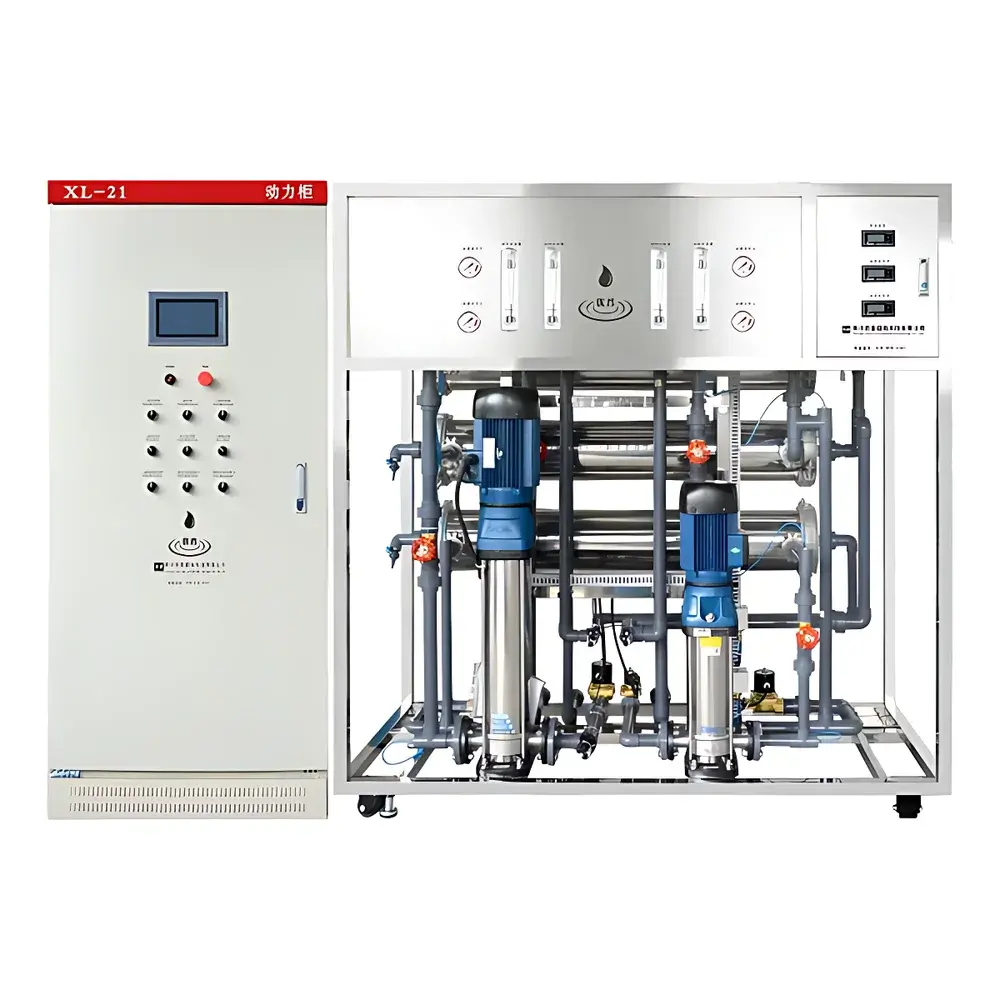
ULUPURE ULPZY-2xT Centralized Medical Grade Water Purification System
| Brand | ULUPURE |
|---|---|
| Origin | Sichuan, China |
| Manufacturer Type | Direct Manufacturer |
| Country of Origin | China |
| Model | ULPZY-2xT |
| Water Grade Output | Type I Ultra-Pure Water (GB/T 6682–2008) |
| Rated Flow Rates | 8–20 m³/h (configurable variants: 2×4T, 2×6T, 2×8T, 2×10T) |
| Power Consumption | 25–50 kW |
| Footprint | 50–100 m² |
| Compliance | GB/T 6682–2008, WS 310–2016, WS 507–2016, GB 28234–2020, CJ 94–2005, GB/T 1756–2018 |
Overview
The ULUPURE ULPZY-2xT Centralized Medical Grade Water Purification System is an integrated, multi-loop water treatment platform engineered for large-scale healthcare institutions. It employs a cascaded purification architecture—comprising pretreatment (multi-media filtration, activated carbon adsorption, softening), primary reverse osmosis (RO), electrodeionization (EDI), and terminal ultrafiltration/UV sterilization—to generate segregated water streams meeting distinct clinical and regulatory requirements. Unlike point-of-use systems, this centralized design delivers Type I ultra-pure water (resistivity ≥18.2 MΩ·cm at 25 °C, TOC ≤5 ppb, bacteria ≤0.1 CFU/mL), sterile rinse water (WS 310–2016), endoscope-grade water (WS 507–2016), acidified/alkalized electrolyzed water (GB 28234–2020), softened feedwater (GB/T 1756–2018), and potable purified water (CJ 94–2005) from a single source. The system operates on the principle of distributed quality assurance: water is purified to the highest specification upstream, then branched, pressure-regulated, and monitored in real time to meet site-specific endpoints—eliminating redundancy, minimizing variability, and enabling full traceability across clinical workflows.
Key Features
- PLC-based automation with HMI touchscreen interface enabling fully unattended operation, including auto-recovery from power interruption, low-pressure shutdown, high-conductivity alarm, and leak detection with isolation valve actuation.
- 316L stainless steel (ASTM A270) distribution piping network compliant with ASME BPE and ISO 20367 3D hygienic design standards; dual-loop circulation with periodic forward/reverse flushing and thermal or chemical (peracetic acid/H₂O₂) sanitization cycles.
- Integrated variable-frequency drive (VFD) pumps and dynamic energy optimization algorithms reduce average power draw by up to 35% versus fixed-speed equivalents; consumables usage reduced by >60% through extended membrane life and regenerable EDI modules.
- Real-time monitoring of inlet water quality (TDS, turbidity, chlorine), RO permeate conductivity, EDI effluent resistivity, UV transmittance (254 nm), and loop-end microbial load via calibrated inline sensors (ISO 14644-1 Class 7 cleanroom-grade calibration traceability).
- Networked remote supervision capability supporting SNMP v3 and Modbus TCP protocols; compatible with hospital-wide BMS integration and audit-ready event logging per FDA 21 CFR Part 11 requirements.
Sample Compatibility & Compliance
The ULPZY-2xT system is validated for continuous production of seven clinically defined water types, each aligned with national and international medical water standards. Its modular architecture allows simultaneous delivery of: (1) Type I analytical water (GB/T 6682–2008, ISO 3696 Class 1); (2) Sterile rinse water for surgical instrument reprocessing (WS 310–2016); (3) Endoscope reprocessing water (WS 507–2016); (4) Acidic/alkaline electrolyzed water (GB 28234–2020); (5) Softened boiler feedwater (GB/T 1756–2018); (6) Potable purified water (CJ 94–2005); and (7) Hemodialysis-grade water (AAMI/ISO 13959:2014 compliance achievable with optional secondary RO + ultrafiltration add-on). All materials in contact with water—including gaskets, valves, and sensors—meet USP Class VI biocompatibility and EP 3.1.9 extractables testing criteria. System validation documentation includes IQ/OQ/PQ protocols aligned with GMP Annex 1 and WHO TRS 970.
Software & Data Management
The embedded control software provides full lifecycle data governance: automatic timestamped logging of all process parameters (pressure, flow, conductivity, UV intensity, temperature), alarm history with root-cause tagging, and user-access-controlled audit trails. Data export supports CSV and PDF formats with digital signature capability. Optional cloud gateway enables encrypted TLS 1.2 transmission to central hospital data lakes or third-party LIMS platforms. All electronic records comply with ALCOA+ principles (Attributable, Legible, Contemporaneous, Original, Accurate, Complete, Consistent, Enduring, Available) and support GLP/GMP inspection readiness. Remote firmware updates are digitally signed and require dual-administrator approval.
Applications
This system serves as the central water utility for comprehensive hospital infrastructure: hemodialysis units (dialysate preparation and circuit rinsing), operating theaters (surgical hand antisepsis and instrument final rinse), central sterile supply departments (CSSD) (endoscope and laparoscopic instrument final rinse), clinical laboratories (reagent preparation, HPLC mobile phase, cell culture media), pathology departments (histology slide washing and staining), endoscopy centers (channel irrigation), dental clinics (high-speed handpiece coolant), pharmacy compounding units (large-volume parenteral formulation), maternity wards (neonatal equipment rinsing), and staff dining facilities (potable purified water dispensing). Its scalability supports hospitals with 400–2000+ beds, with footprint-optimized configurations minimizing mechanical room spatial demand.
FAQ
What water quality standards does the ULPZY-2xT system meet?
It is validated to produce water conforming to GB/T 6682–2008 (Type I), WS 310–2016, WS 507–2016, GB 28234–2020, CJ 94–2005, and GB/T 1756–2018.
Can the system integrate with existing hospital building management systems (BMS)?
Yes—it supports Modbus TCP and SNMP v3 protocols for seamless integration with third-party BMS platforms.
Is the distribution piping compliant with international hygienic design standards?
All wetted piping is fabricated from electropolished 316L stainless steel per ASME BPE and ISO 20367 3D specifications, including zero-dead-leg welds and orbital welding certification.
How is microbiological control maintained throughout the distribution network?
Through continuous recirculation, periodic thermal (≥80 °C) or chemical sanitization, inline 254 nm UV irradiation, and 0.1 µm absolute-rated terminal filters at critical use points.
Does the system support regulatory audit requirements such as FDA 21 CFR Part 11?
Yes—electronic records include user authentication, immutable audit trails, electronic signatures, and secure data export functionality meeting Part 11 compliance criteria.



