
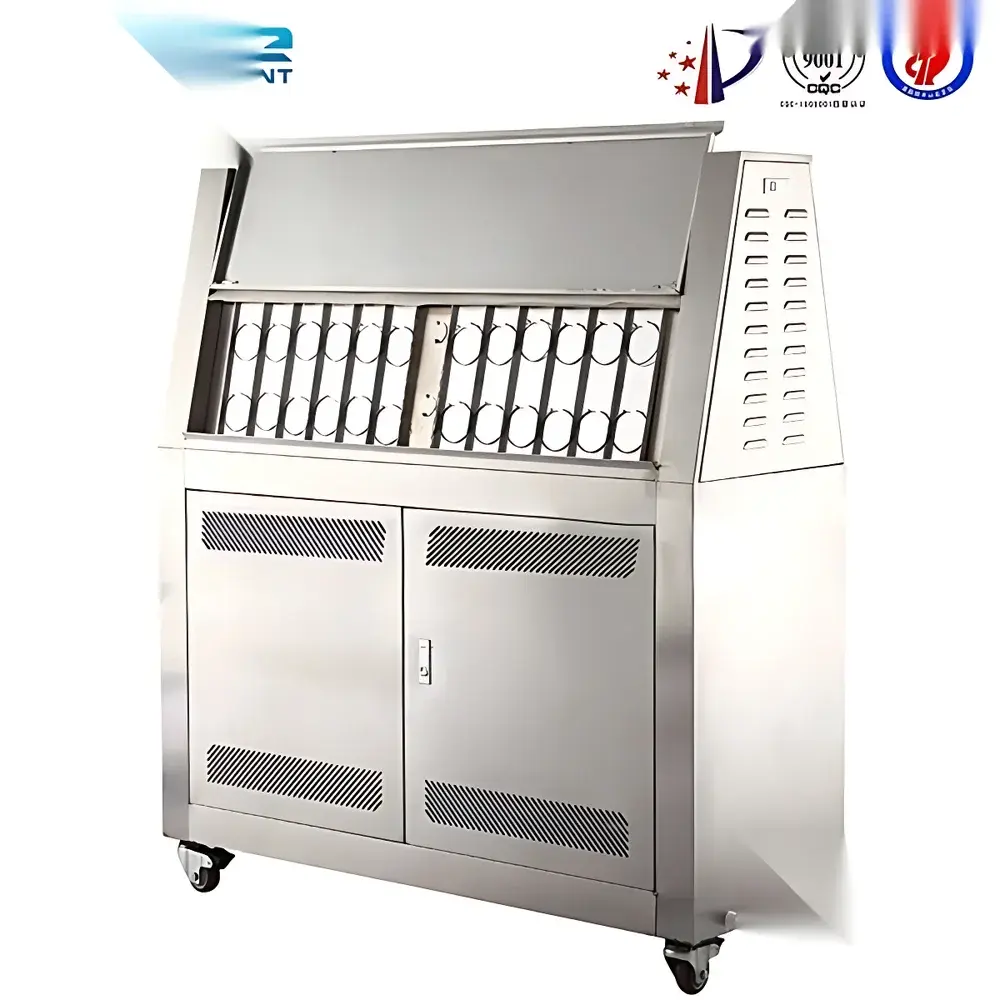
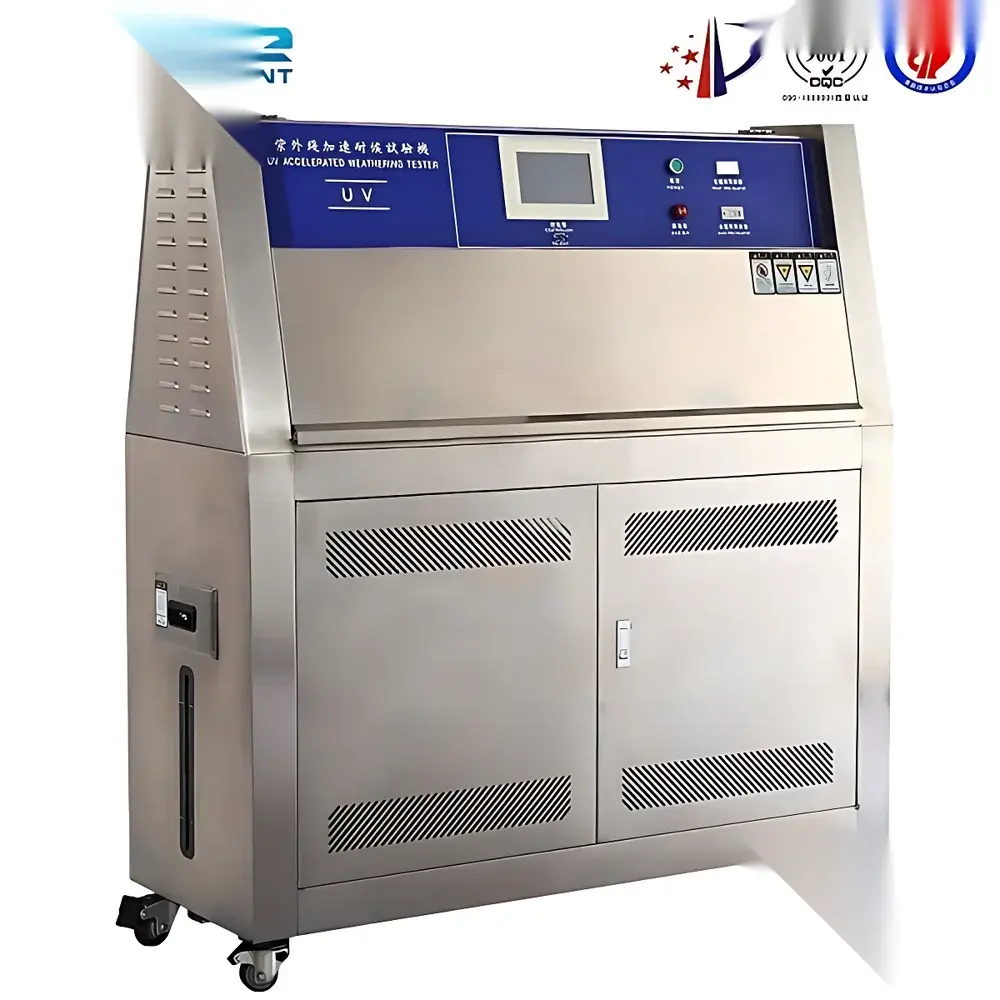
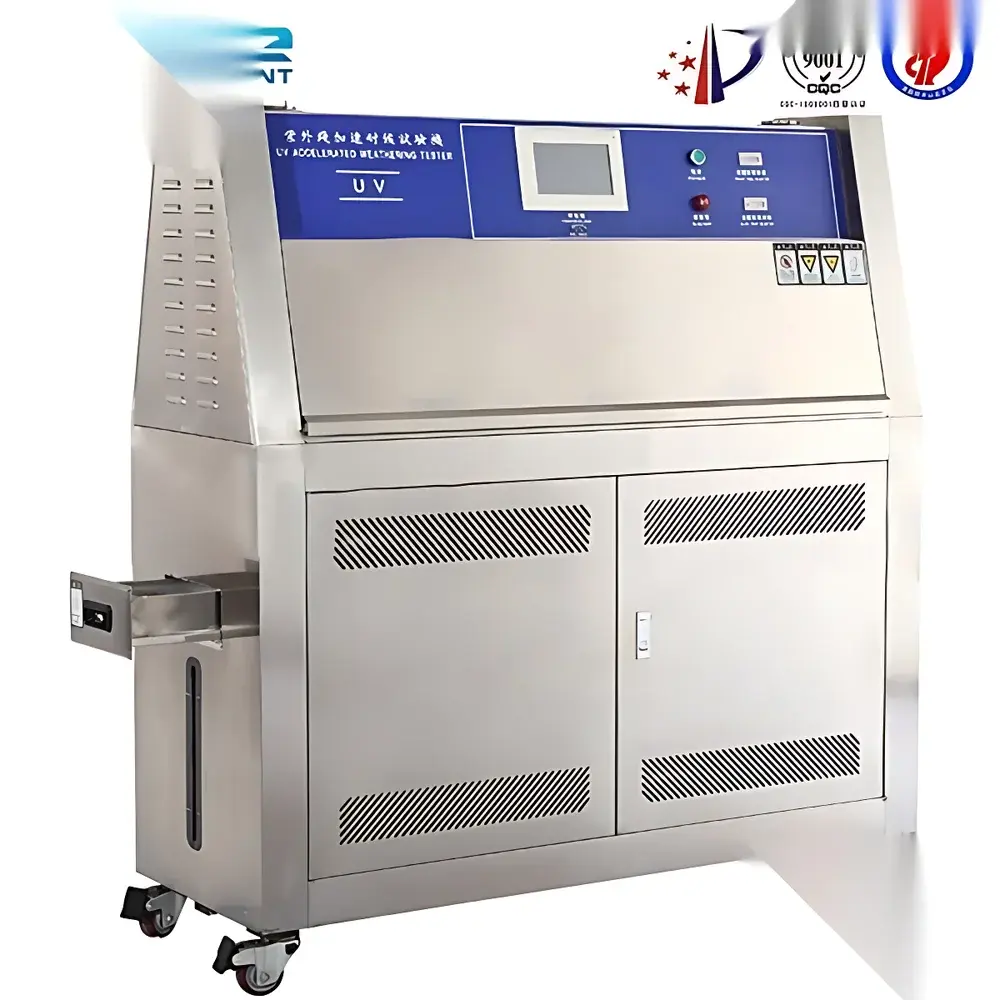
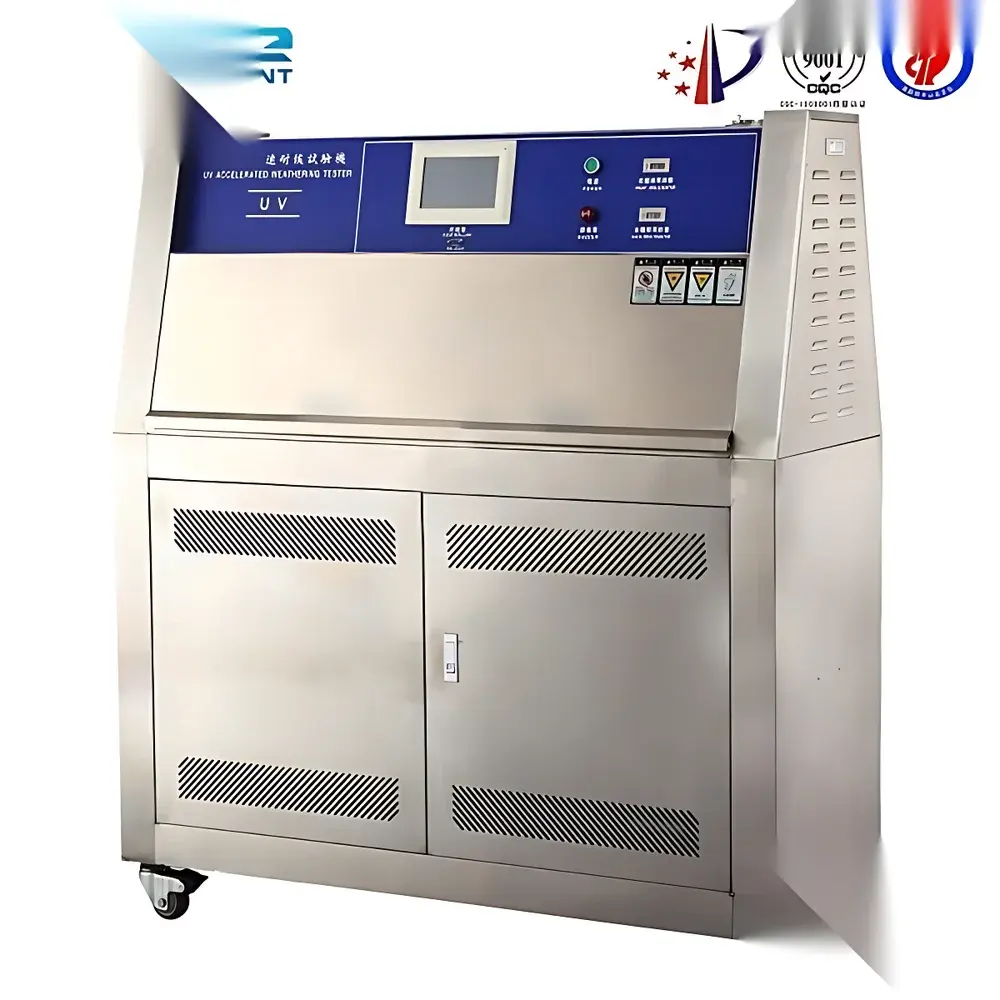
UV Accelerated Weathering Tester with Fluorescent UV Lamps and Condensation Cycle
| Brand | Other Brands |
|---|---|
| Origin | Imported |
| Manufacturer Type | Authorized Distributor |
| Price Range | USD 2,500–3,200 (FOB) |
| UV Lamp Type | UVA-340 or UVB-313 |
| Temperature Range | 40–70 °C (controllable) |
| Humidity Control | Condensation cycle only (no active RH control) |
| Sample Capacity | Standard 48-position rack (75 mm × 150 mm specimens) |
| Compliance | ASTM G154, ISO 4892-3, JIS D0205, GB/T 14522 |
| Optional Features | Water Spray System, Black Panel Thermometer, Programmable Controller (LCD + USB data logging) |
Overview
The UV Accelerated Weathering Tester is a controlled-environment exposure chamber engineered to simulate the photochemical degradation effects of solar ultraviolet radiation and moisture cycling on polymeric, coating, automotive, and architectural materials. Unlike broad-spectrum xenon arc testers, this instrument employs fluorescent UV lamps—specifically UVA-340 (closely matching terrestrial UV spectrum down to 295 nm) or UVB-313 (for aggressive, accelerated screening)—to deliver reproducible, high-intensity UV irradiance. Degradation mechanisms are intensified through synchronized condensation cycles: at programmed intervals, ambient-temperature water vapor condenses on specimen surfaces, mimicking nocturnal dew formation. This dual-stress protocol—UV irradiation followed by thermal-humidity cycling—accelerates failure modes such as polymer chain scission, chromophore bleaching, surface oxidation, and hydrolytic embrittlement. Typical test durations range from 200 to 2,000 hours, correlating empirically to 6–36 months of outdoor exposure in subtropical or mid-latitude climates.
Key Features
- Fluorescent UV lamp array with standardized spectral output (UVA-340 or UVB-313), compliant with ASTM G154 Class I and II irradiance requirements
- Condensation humidity system: non-pressurized water reservoir with gravity-fed condensate formation on specimen surfaces during dark cycles
- Integrated water spray function (optional): delivers calibrated deionized water pulses to simulate rain-induced thermal shock and surface leaching
- Digital programmable controller with LCD interface, supporting multi-step test profiles (e.g., 4h UV @ 60 °C / 4h condensation @ 50 °C)
- Black panel thermometer (BPT) mounted inside chamber for accurate specimen surface temperature monitoring (ASTM G151-compliant)
- Stainless steel 304 interior chamber with removable specimen racks; corrosion-resistant hardware and sealed UV-transparent quartz lamp sleeves
- Over-temperature and dry-run protection circuits; automatic lamp shutoff upon door opening
Sample Compatibility & Compliance
The tester accommodates flat-panel specimens up to 75 mm × 150 mm × 10 mm thickness, including paints, plastics, textiles, adhesives, roofing membranes, and automotive exterior trim. Specimen holders are designed for uniform irradiance distribution (±5% across active area per ISO 4892-3 Annex B). The system meets core international standards for UV exposure testing: ASTM G154 (Standard Practice for Operating Fluorescent Ultraviolet (UV) Lamp Apparatus for Exposure of Non-Metallic Materials), ISO 4892-3 (Plastics — Methods of exposure to laboratory light sources — Part 3: Fluorescent UV lamps), JIS D0205 (Automotive parts weathering), and GB/T 14522 (Chinese national standard for mechanical properties after UV exposure). It supports GLP-aligned documentation when paired with optional USB data logging and timestamped irradiance calibration records.
Software & Data Management
While the base model features a standalone microprocessor controller, optional firmware upgrades enable USB export of time-stamped operational logs—including lamp on/off status, chamber temperature, BPT readings, and cycle phase transitions. All exported CSV files include ISO 8601 timestamps and are compatible with LIMS integration. For regulated environments (e.g., automotive Tier-1 suppliers or ISO 9001-certified labs), the controller supports manual audit trail generation: operators log test ID, specimen lot number, lamp batch code, and calibration date prior to run initiation. No built-in network connectivity or FDA 21 CFR Part 11 compliance is provided; these require third-party validation packages.
Applications
This instrument is routinely deployed in R&D laboratories and QC departments for comparative durability assessment across material families. Common use cases include: evaluating UV stabilizer package efficacy in polyolefins and PVC formulations; benchmarking gloss retention and color shift (ΔE*ab per CIE 1976) in automotive clearcoats; validating weather resistance claims for exterior signage films; assessing hydrolytic stability of polyurethane sealants under cyclic wet/dry conditions; and qualifying new pigment systems for architectural coatings per AAMA 2605 specifications. Data generated supports root-cause analysis of field failures and informs predictive lifetime modeling using Arrhenius-type acceleration factors.
FAQ
What UV lamp types are supported, and how do they differ?
UVA-340 lamps replicate solar UV down to 295 nm and are recommended for realistic outdoor simulation. UVB-313 lamps emit shorter wavelengths (down to 280 nm) and induce faster degradation—suitable for quality control screening but not direct outdoor correlation.
Is relative humidity actively controlled?
No. Humidity is introduced exclusively via condensation cycles; no humidifier or RH sensor is included. This aligns with ASTM G154’s defined methodology.
Can the unit operate unattended for extended periods?
Yes, provided the water reservoir is refilled pre-test and the chamber is installed in a ventilated, dust-free environment with stable power supply and proper drainage.
How often must UV lamps be replaced?
Lamp output decays over time; replacement is required every 1,600–2,000 hours of operation or per manufacturer’s irradiance calibration schedule (typically verified monthly with a calibrated UV radiometer).
Is personal protective equipment mandatory during operation?
Yes. Direct exposure to UV radiation poses acute photokeratitis and skin erythema risks. Operators must wear ANSI Z87.1-compliant UV-blocking safety goggles and nitrile gloves; access doors incorporate interlocked lamp shutoff.



