
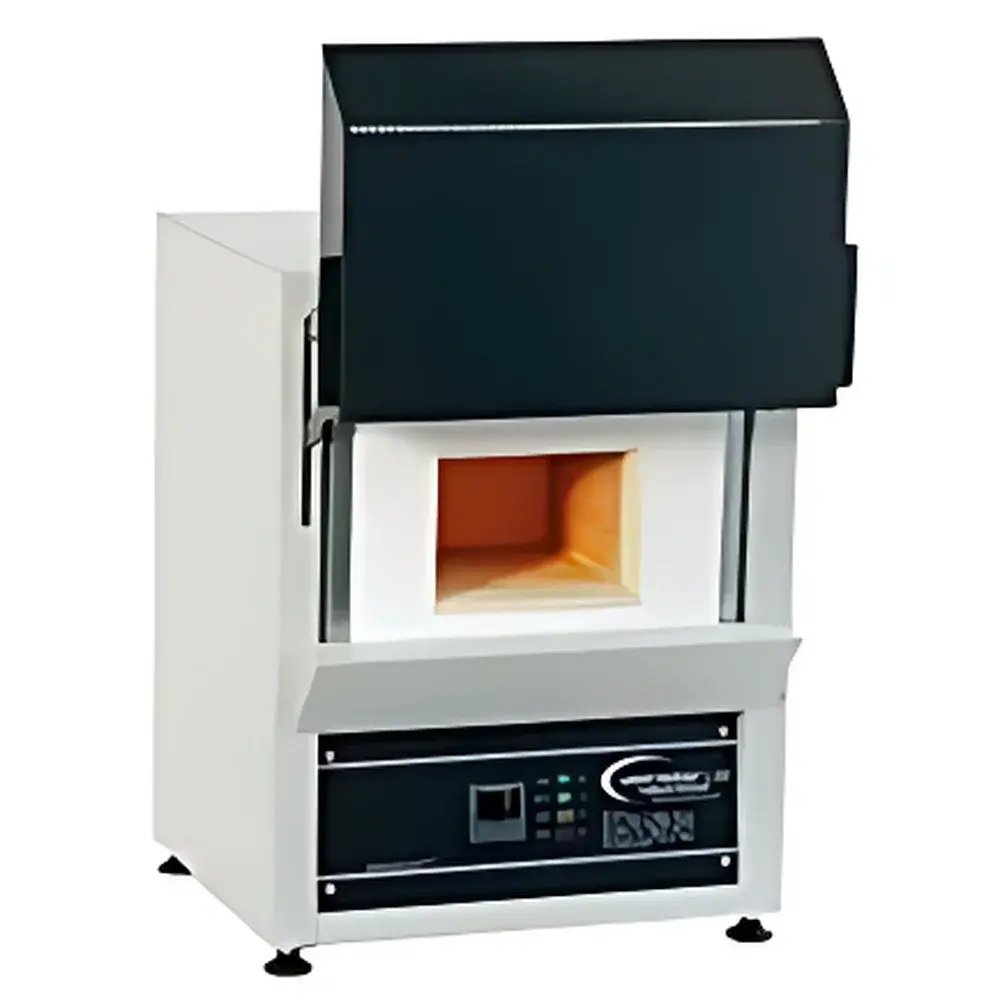
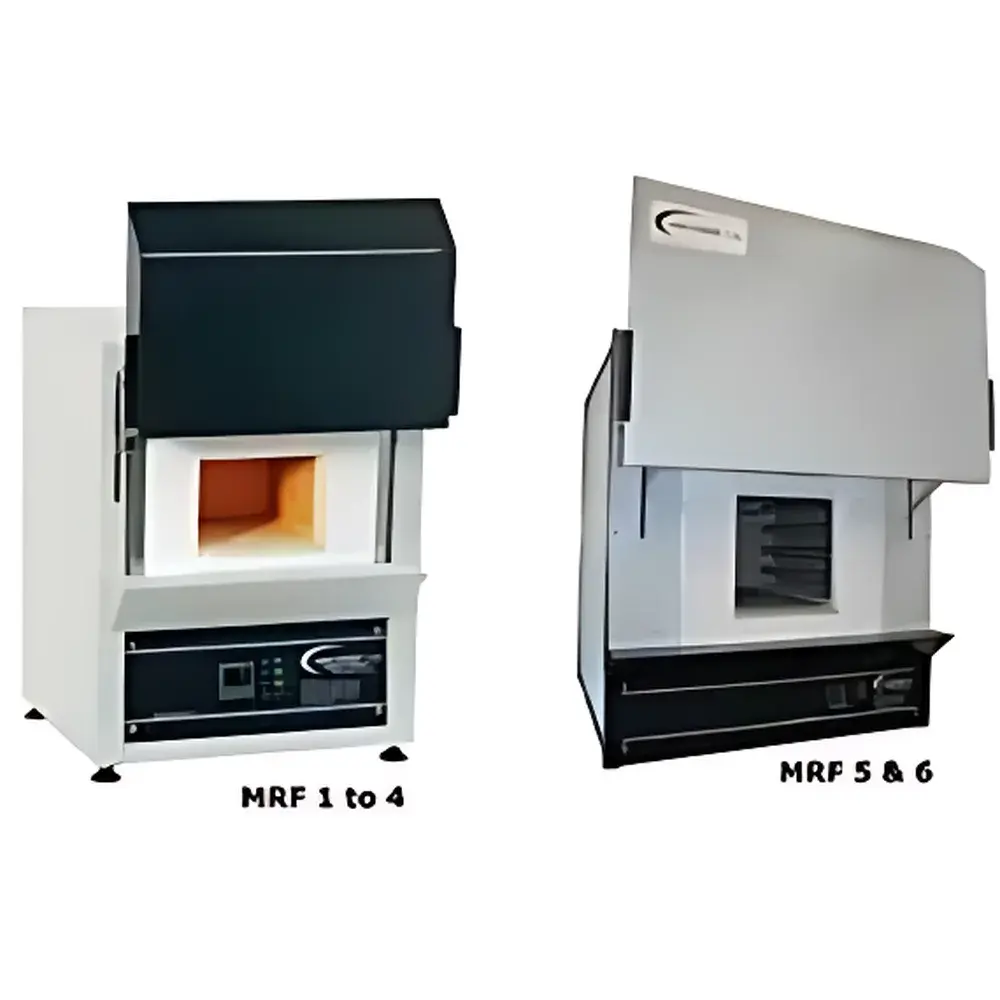
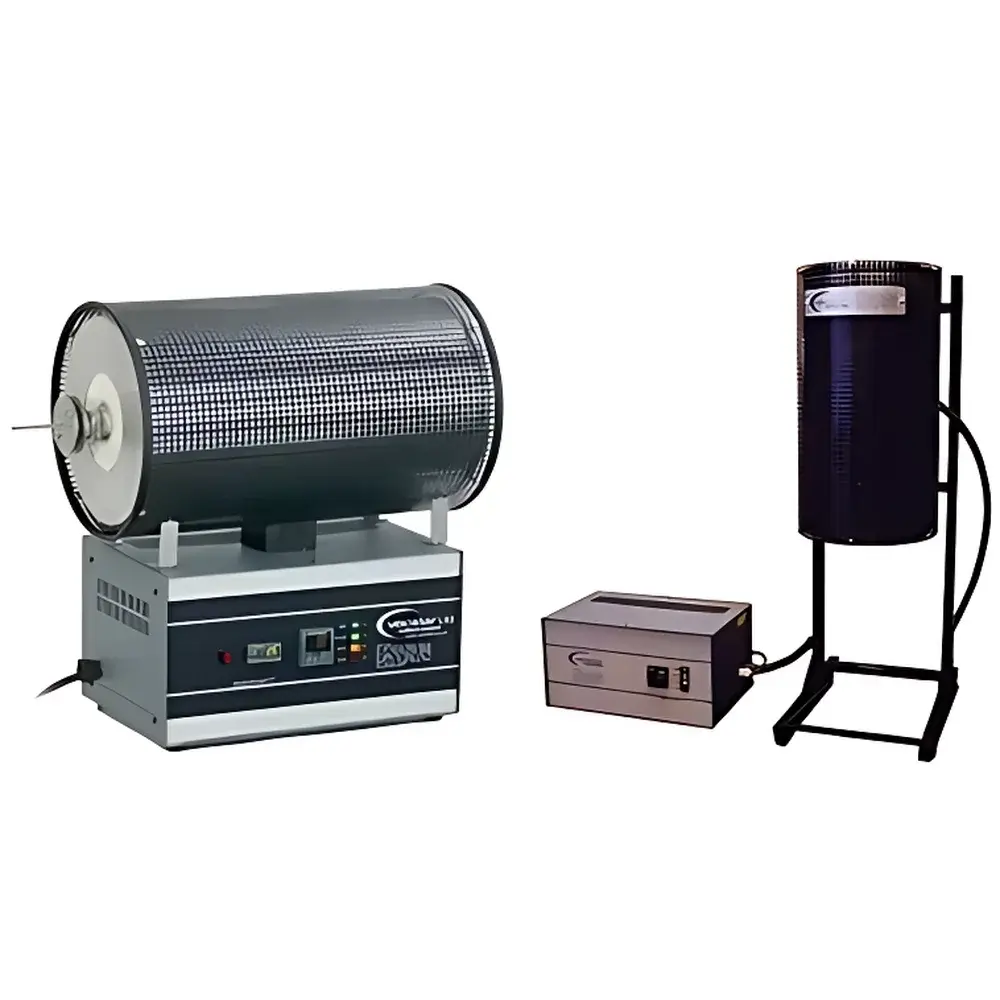
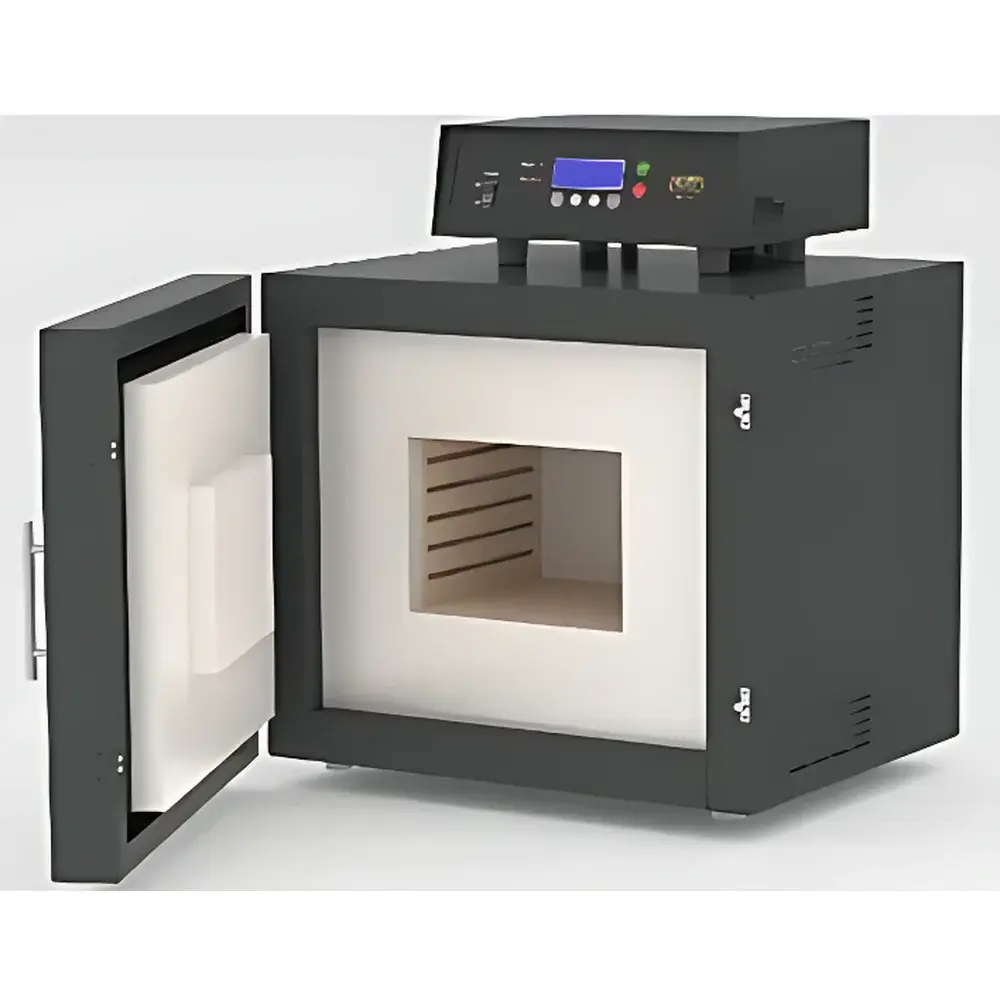
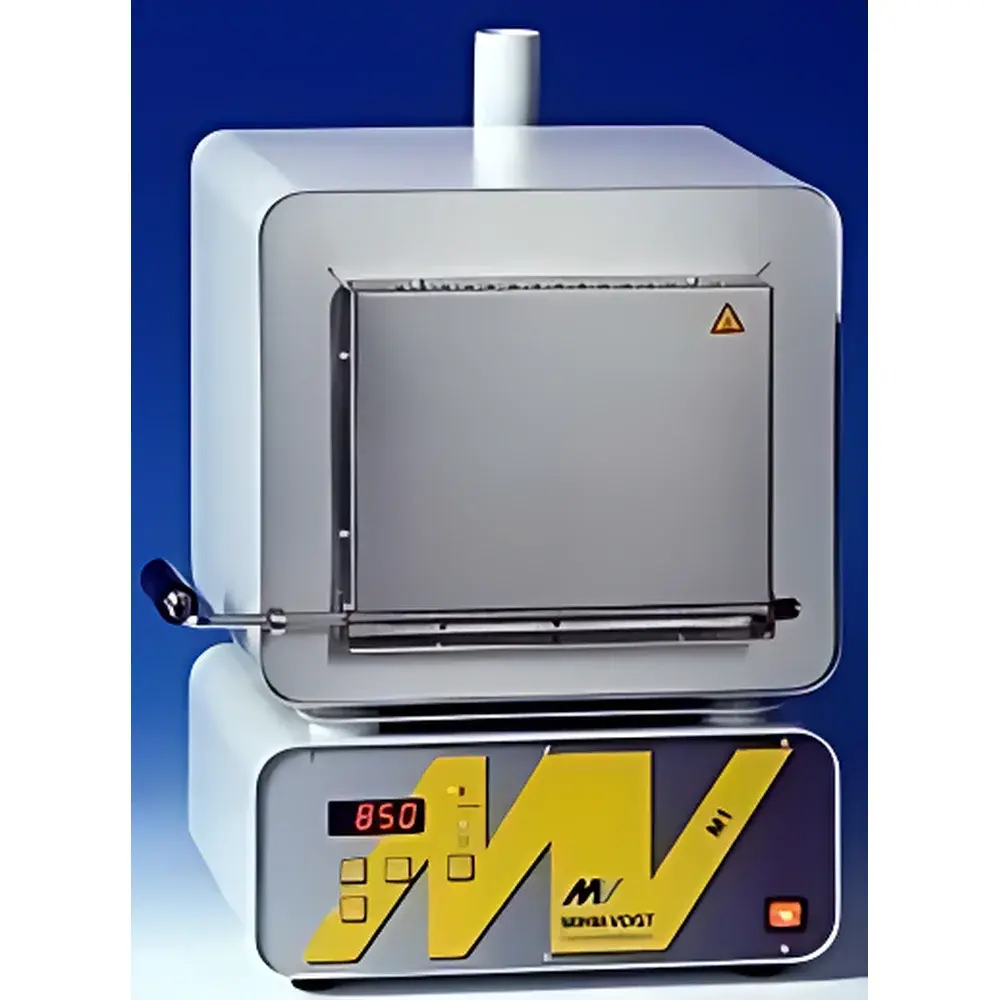
Vecstar EF2 Series 1100 °C Benchtop Muffle Furnace
| Brand | Vecstar |
|---|---|
| Origin | United Kingdom |
| Equipment Type | Box-Type Muffle Furnace |
| Maximum Operating Temperature | 1100 °C |
| Continuous Operating Temperature | 1050 °C |
| Internal Dimensions (W×D×H) | 120 mm × 180 mm × 180 mm |
| Volume | 3.9 L |
| Temperature Uniformity | ±5 °C at 1100 °C |
| Control Accuracy | ±0.3 °C |
| Heating Method | Kanthal A1 Resistance Wire Wound on High-Purity Alumina Ceramic Chamber |
| Power Supply | Single-Phase, 230 V AC |
| Rated Power | 5.5–11.5 kW |
| Thermal Insulation | Dual-Layer Low-Heat-Mass Ceramic Fiber + Refractory Brick |
| Exhaust System | Integrated Aluminum Chimney with Optional Flow Control |
| Safety Features | Door-Interlocked SSR Power Cut-off, Independent Over-Temperature Protection (R-Type Thermocouple), UL/CE-Compliant Enclosure |
Overview
The Vecstar EF2 Series 1100 °C Benchtop Muffle Furnace is a precision-engineered, UK-manufactured thermal processing instrument designed for laboratories requiring reliable, repeatable high-temperature operation in controlled inert or ambient atmospheres. Based on classical resistive heating architecture, the EF2 employs Kanthal A1 alloy resistance wire wound uniformly around a monolithic high-purity alumina ceramic chamber—ensuring exceptional thermal stability, minimal thermal lag, and long-term dimensional integrity of the hot zone. Unlike conventional refractory-lined furnaces, this design eliminates cold spots and minimizes thermal stress-induced cracking. The furnace operates within a defined thermal envelope: maximum intermittent temperature of 1100 °C and continuous service up to 1050 °C, making it suitable for ashing, calcination, sintering preforms, heat treatment of ceramics, and standardized thermal testing per ASTM E1113, ISO 8501-3, and USP . Its compact footprint and vertical lift door configuration support ergonomic benchtop integration in QA/QC labs, materials research facilities, and university teaching environments.
Key Features
- Monolithic alumina ceramic chamber with embedded Kanthal A1 heating elements—engineered for >5,000 cycles at rated temperature without degradation in uniformity or surface finish.
- Vertical-lift safety door with mechanical interlock: automatically de-energizes all heating circuits upon door opening, complying with IEC 61000-6-2 and EN 60519-2 electrical safety directives.
- Dual-layer thermal insulation system comprising low-density ceramic fiber blanket (≤0.12 W/m·K conductivity) and dense refractory brick backing—maintains external cabinet surface temperature below 45 °C at full load, even after 8 hours of continuous operation.
- Programmable digital temperature controller (optional models: single-setpoint PID, 16-segment ramp-soak, or Ethernet-enabled with Modbus TCP) featuring R-type thermocouple input and auto-tuning capability.
- Integrated aluminum exhaust chimney with adjustable damper—designed to evacuate volatile combustion by-products during ashing or organic removal without compromising internal pressure stability.
- Corrosion-resistant powder-coated steel enclosure with reinforced corners and vibration-damped feet—certified to IP20 ingress protection and RoHS-compliant material specifications.
Sample Compatibility & Compliance
The EF2 accommodates standard crucibles (alumina, platinum, silicon carbide) and flat-bottomed ceramic boats up to 110 mm × 170 mm × 45 mm. Its sealed muffle design isolates samples from direct flame or heating element contact, eliminating contamination risks associated with gas-fired units. All models are supplied with factory calibration documentation traceable to UKAS-accredited standards and conform to CE marking requirements under the EU Machinery Directive 2006/42/EC and Electromagnetic Compatibility Directive 2014/30/EU. For GLP/GMP-regulated environments, optional audit-trail-capable controllers support 21 CFR Part 11-compliant electronic records when paired with validated software platforms.
Software & Data Management
While the base model includes analog metering and manual setpoint control, Vecstar offers three tiers of digital instrumentation: (1) Basic PID controller with local display and RS-232 output; (2) Advanced programmable unit with USB data logging (CSV export), real-time graphing, and password-protected parameter locking; (3) Network-ready version supporting OPC UA connectivity, remote monitoring via web browser, and seamless integration into LIMS or MES systems. All firmware versions include built-in diagnostic routines, heater resistance trending, and thermocouple break detection—enabling predictive maintenance and reducing unplanned downtime.
Applications
- Residue analysis and total ash determination per AOAC 942.05 and EPA Method 2540F.
- Thermal gravimetric pre-conditioning of catalyst supports and battery electrode materials prior to BET surface area measurement.
- Debinding of metal injection molded (MIM) green parts under controlled air flow.
- Calibration verification of thermocouples and RTDs using fixed-point reference materials (e.g., Al, Zn, Sn).
- Pre-firing of dental porcelain and orthopedic bioceramic substrates under non-oxidizing conditions.
- Standardized heat resistance testing of fire-retardant textiles and polymer composites per ISO 5657 and ASTM D635.
FAQ
What is the recommended maintenance schedule for the EF2 furnace?
Vecstar recommends quarterly visual inspection of the ceramic chamber for microfractures, annual verification of thermocouple calibration against NIST-traceable references, and biannual cleaning of the chimney duct using compressed air—no solvents required.
Can the EF2 operate under inert gas purge?
Yes—the muffle chamber features two 6-mm BSP threaded ports (inlet/outlet) compatible with standard gas regulators and flow meters; maximum recommended purge rate is 0.5 L/min to preserve thermal uniformity.
Is third-party validation support available for IQ/OQ protocols?
Vecstar provides fully editable IQ/OQ templates aligned with Annex 15 and ASTM E2500-07, plus on-site qualification assistance through certified partners in the EU, US, and APAC regions.
Does the furnace meet environmental disposal regulations at end-of-life?
All structural components—including ceramic fiber insulation—are classified as non-hazardous waste under EU Waste Framework Directive 2008/98/EC; Vecstar offers take-back recycling programs in accordance with WEEE Directive 2012/19/EU.



