
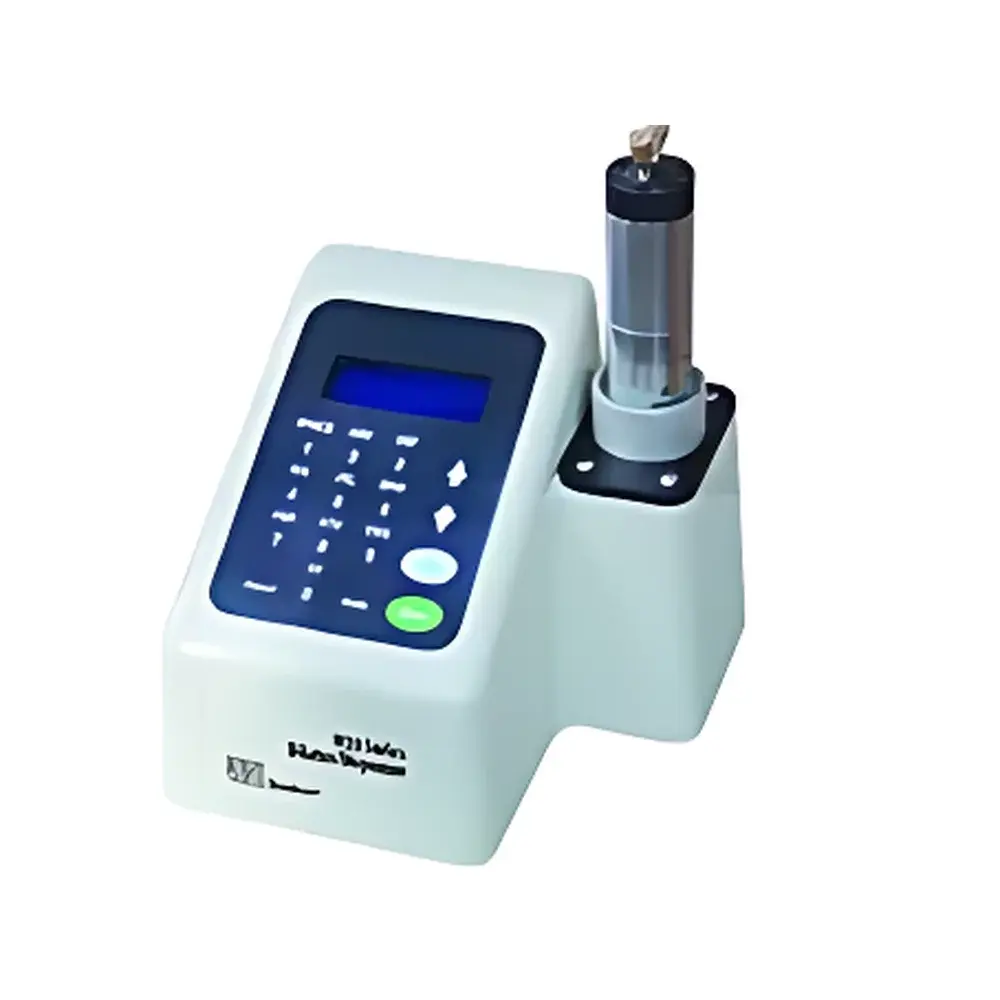
VICI Cheminert M Series Liquid Dilution and Dispensing System
| Brand | VICI |
|---|---|
| Origin | USA |
| Model | VICI Cheminert M |
| Flow Range (M10) | 10 nL – 10 mL |
| Flow Range (M50) | 50 µL – 50 mL |
| Pump Type | Syringe-free, bidirectional, anodized displacement pump |
| Valve Configuration | Multi-position fluid path selection valve |
| Program Storage | Up to 100 user-defined methods |
| Physical Design | Compact benchtop footprint |
| Compliance Context | Designed for GLP-compliant liquid handling in regulated analytical laboratories |
Overview
The VICI Cheminert M Series Liquid Dilution and Dispensing System is a precision-engineered, syringe-free liquid handling platform designed for accurate, repeatable, and traceable dilution and preparation of analytical standards, calibration solutions, and sample matrices. Unlike conventional positive-displacement or peristaltic systems, the Cheminert M employs an anodized titanium displacement pump architecture—engineered for chemical inertness, long-term stability, and minimal carryover across aggressive solvents (e.g., concentrated acids, organic bases, and halogenated media). Its core operating principle relies on volumetric displacement with real-time position feedback, enabling sub-microliter resolution and high reproducibility without mechanical wear associated with syringe plunger actuation. The system is purpose-built for laboratories performing routine dilution tasks in environmental monitoring, elemental analysis (ICP-OES/MS), atomic absorption spectroscopy (AA), chromatographic sample preparation (GC, HPLC, IC), and genomic assay development—where accuracy, method traceability, and solvent compatibility are non-negotiable.
Key Features
- Syringe-free bidirectional displacement pump with chemically inert anodized titanium wetted surfaces—eliminates syringe replacement, priming, and seal degradation.
- Two calibrated flow configurations: M10 model (10 nL–10 mL per step) and M50 model (50 µL–50 mL per step), each validated across its full dynamic range per ISO 8655-5 guidelines.
- Integrated multi-position fluid path selection valve supports up to six independent solvent or reagent lines—enabling sequential or parallel dispensing without manual tubing swaps.
- Intuitive touchscreen interface with embedded calculation engine: users enter only final volume and dilution ratio; the system auto-computes and executes aspiration/dispense volumes with audit-trail logging.
- On-device visual and audible endpoint indication via integrated probe sensor—confirms completion of each aspiration or dispense phase with <100 ms response latency.
- Non-volatile memory stores up to 100 fully parameterized methods—including volume steps, rinse cycles, valve positions, dwell times, and pause points—accessible via alphanumeric naming.
- Compact footprint (W × D × H: 240 × 320 × 280 mm) optimized for fume hood integration or shared benchtop environments without compromising accessibility or serviceability.
Sample Compatibility & Compliance
The Cheminert M Series maintains compatibility with aqueous buffers, methanol, acetonitrile, hydrochloric acid (up to 6 M), nitric acid (up to 2 M), ammonium hydroxide (up to 28%), and dimethyl sulfoxide (DMSO). All fluidic pathways—including pump chamber, valve rotor, and probe tips—are constructed from electropolished 316 stainless steel, PTFE, or perfluoroelastomer (FFKM) seals, ensuring compliance with ASTM D4327 (ion chromatography reagent purity) and USP extractables testing requirements. The system supports 21 CFR Part 11-compliant operation when paired with validated LIMS or ELN software—enabling electronic signatures, role-based access control, and immutable audit trails for all method executions and parameter changes. It is routinely deployed in ISO/IEC 17025-accredited environmental testing labs for preparation of EPA Method 200.8 and 6020B calibration standards.
Software & Data Management
The onboard firmware provides native support for CSV export of run logs—including timestamp, method ID, actual vs. target volumes, valve position history, and error codes—via USB or RS-232. Optional Ethernet connectivity enables remote monitoring and integration into laboratory-wide automation frameworks (e.g., via Modbus TCP or custom REST API wrappers). All stored methods retain full metadata: operator ID, creation/modification dates, version history, and validation status flags. When operated under GLP or GMP conditions, the system supports mandatory documentation requirements including instrument qualification records (IQ/OQ/PQ), periodic performance verification (PPV) templates, and deviation tracking logs aligned with Annex 11 principles.
Applications
- Preparation of multi-level calibration curves for ICP-MS quantitation of trace metals in wastewater and soil digests.
- Serial dilution of certified reference materials (CRMs) for AA spectroscopy validation per ASTM E2910.
- Automated reconstitution and dilution of lyophilized genomic standards prior to qPCR or NGS library prep.
- High-precision spiking of internal standards into environmental extracts for GC-MS analysis (e.g., EPA 8270).
- Reagent replenishment across microtiter plates (96-/384-well) during automated immunoassay workflows.
- Low-volume titrant delivery in potentiometric or photometric titration protocols requiring ≤5 µL increments.
- Batched dilution of stock solutions for HPLC mobile phase gradient optimization studies.
FAQ
What is the minimum dispense volume achievable with the M10 model?
The M10 model achieves reliable, repeatable dispensing down to 10 nanoliters, verified using gravimetric measurement per ISO 8655-6 with Class A analytical balances.
Can the system handle viscous solvents such as glycerol or ethylene glycol?
Yes—the displacement pump’s torque-controlled actuation accommodates viscosities up to 1,000 cP at 25 °C; optional heated probe modules maintain consistent flow for temperature-sensitive media.
Is method transfer between M10 and M50 instruments supported?
Method files are binary-compatible across both models; however, volume parameters are automatically scaled upon import to prevent out-of-range execution.
How is carryover minimized during multi-solvent runs?
The system executes programmable post-aspiration and pre-dispense rinse cycles using dedicated wash solvent channels, with customizable rinse volume and dwell time per step.
Does the Cheminert M meet regulatory requirements for pharmaceutical QC labs?
When deployed with documented IQ/OQ/PQ protocols and integrated into a validated data management ecosystem, it satisfies FDA expectations for automated liquid handlers under CGMP §211.68 and EU GMP Annex 11.
Related Products







