
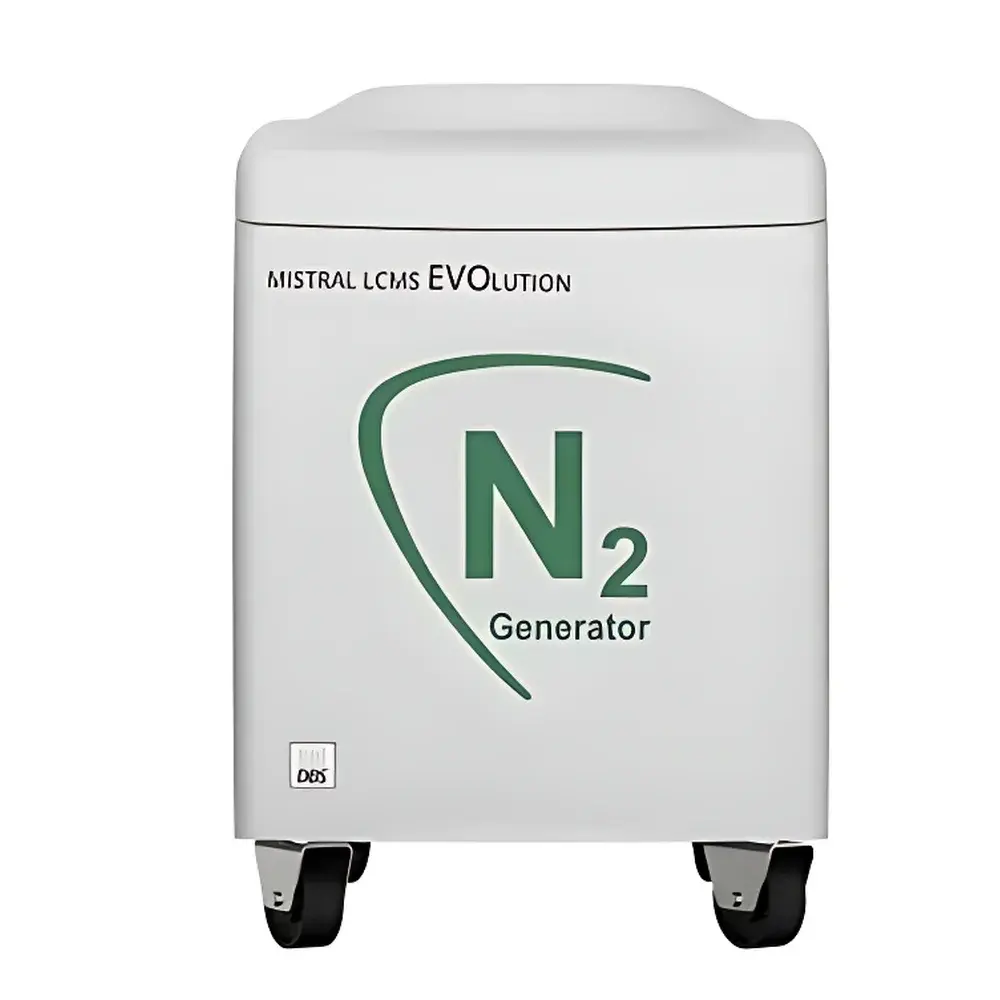
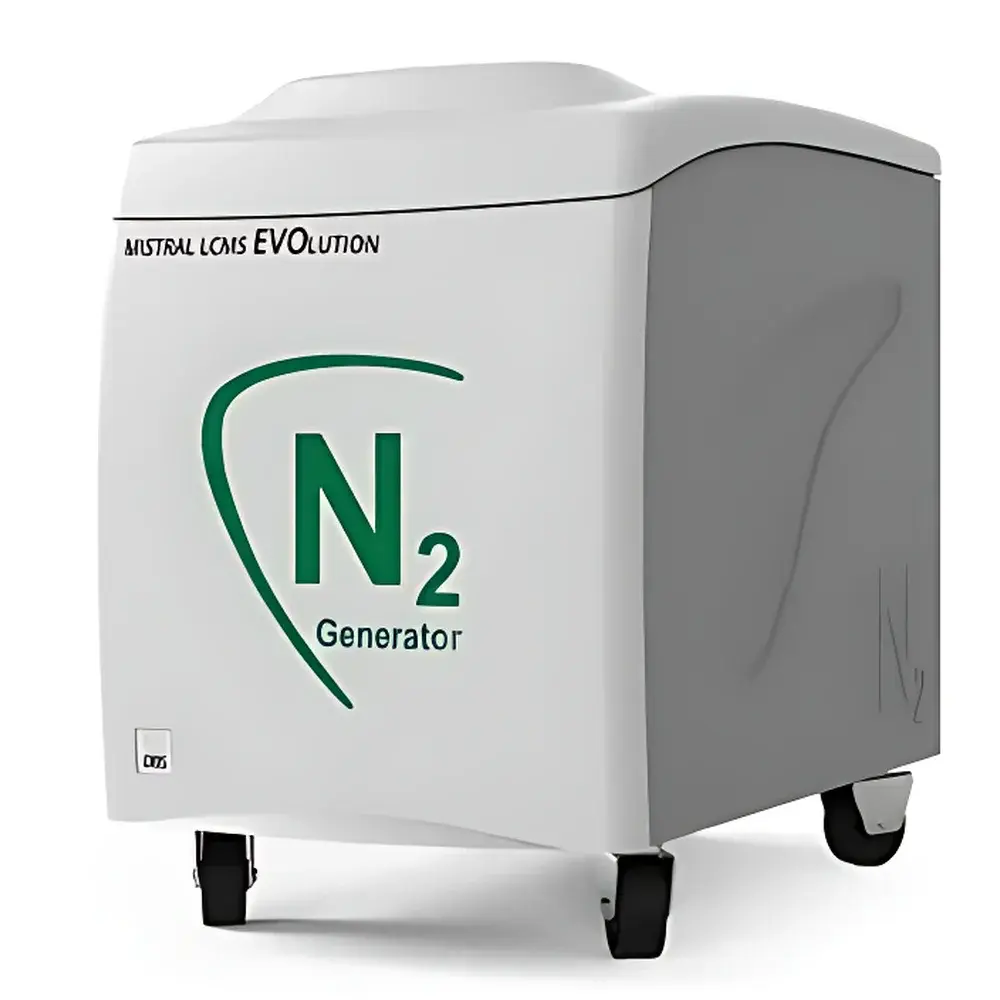
VICI Mistral Evolution PSA Nitrogen Generator
| Brand | VICI |
|---|---|
| Origin | USA |
| Model | Mistral Evolution |
| Nitrogen Generation Principle | Pressure Swing Adsorption (PSA) |
| Output Flow Rate | 10–40 NL/min |
| Output Pressure | 8 bar(g) |
| Nitrogen Purity | 98.0–99.5% |
| Dew Point | –50 °C |
| Compliance | Designed for LC/MS OEM integration |
| Form Factor | Benchtop, under-bench installable with casters |
| Control Interface | Integrated LCD display (pressure, flow, temperature, system status) |
| Auto-restart on power recovery | Yes |
| Optional integrated oil-free low-noise air compressor | Available |
| Dual-gas configuration (N₂ + compressed air) | Supported |
Overview
The VICI Mistral Evolution PSA Nitrogen Generator is an engineered solution designed to deliver consistent, high-purity nitrogen gas for analytical instrumentation—particularly liquid chromatography–mass spectrometry (LC/MS) systems from leading OEMs including Agilent Technologies (Microwave Plasma–LC/MS platforms) and AB Sciex (triple quadrupole and QTOF mass spectrometers). Utilizing pressure swing adsorption (PSA) technology, the generator separates nitrogen from compressed ambient air via selective adsorption of oxygen, carbon dioxide, moisture, and trace hydrocarbons on carbon molecular sieve (CMS) beds. This principle enables stable, continuous nitrogen output without cryogenic or membrane-based limitations in purity consistency or flow scalability. The system operates within a defined pressure range up to 8 bar(g), ensuring compatibility with electrospray ionization (ESI), atmospheric pressure chemical ionization (APCI), and other high-pressure LC/MS interface requirements. Its modular architecture supports seamless integration into laboratory gas infrastructure—either as a standalone unit or coupled with an optional oil-free, low-noise air compressor—eliminating dependency on bulk gas cylinders and associated logistical, safety, and purity risks.
Key Features
- PSA-based nitrogen generation delivering 98.0–99.5% N₂ purity with <–50 °C dew point—meeting LC/MS-grade specifications for carrier, nebulizer, and collision gases
- Adjustable output flow range of 10–40 NL/min at constant pressure, calibrated per ISO 8573-1 Class 2:2:2 for particulate, water, and oil content
- Integrated LCD touchscreen interface displaying real-time operational parameters: outlet pressure, mass flow rate, internal temperature, CMS bed status, and alarm history
- Benchtop or under-bench installation design with industrial-grade casters for mobility and space optimization in regulated lab environments
- Automatic power recovery sequence: resumes pre-shutdown operating setpoints upon grid restoration—critical for unattended overnight LC/MS runs
- OEM-configurable dual-output variants available, supplying both instrument-grade nitrogen and clean, oil-free compressed air from a single chassis
- No routine consumables beyond scheduled CMS replacement (typical service interval ≥ 20,000 hours); no membranes, catalysts, or desiccants requiring frequent regeneration
Sample Compatibility & Compliance
The Mistral Evolution is validated for use with high-sensitivity mass spectrometric detection systems where hydrocarbon contamination, moisture ingress, or pressure instability directly impact signal-to-noise ratio, mass accuracy, and long-term calibration stability. It conforms to ASTM D6349–22 for gaseous nitrogen quality assessment and aligns with ISO 8573-1:2010 Class 2 specifications for compressed air purity—ensuring compatibility with LC/MS manufacturer gas inlet requirements. While not a medical device, its construction adheres to UL 61010-1 and CE marking directives for laboratory equipment safety. The system supports GLP/GMP-aligned operation through configurable event logging (via optional RS-232/RS-485 or Ethernet interface), enabling audit-ready records of pressure excursions, flow deviations, and maintenance cycles.
Software & Data Management
The Mistral Evolution operates autonomously via embedded firmware with no external PC dependency. All operational data—including flow, pressure, temperature, runtime hours, and CMS cycle count—are stored locally in non-volatile memory with timestamped entries. Optional communication modules support Modbus RTU or TCP protocols for integration into centralized facility monitoring systems (e.g., LabVantage, Siemens Desigo, or custom SCADA). Event logs comply with ALCOA+ principles (Attributable, Legible, Contemporaneous, Original, Accurate, Complete, Consistent, Enduring, Available) when exported via USB or serial dump. No FDA 21 CFR Part 11 electronic signature functionality is built-in; however, third-party LIMS interfaces may apply role-based access control and electronic audit trails externally.
Applications
- LC/MS nitrogen supply for ESI and APCI sources—nebulizing, drying, and curtain gases
- Gas chromatography–mass spectrometry (GC/MS) auxiliary gas applications requiring stable, hydrocarbon-free N₂
- Sample preparation workflows including nitrogen blow-down concentrators and inert atmosphere glove boxes
- Calibration gas dilution systems requiring precise, metered N₂ flow under controlled backpressure
- Research laboratories transitioning from cylinder-based gas delivery to on-demand, sustainable nitrogen generation
FAQ
What is the recommended maintenance schedule for the carbon molecular sieve (CMS) beds?
CMS beds require replacement after approximately 20,000 operational hours or when purity drops below 98.0% at rated flow—typically verified during annual preventive maintenance.
Can the Mistral Evolution be used with existing lab air compressors?
Yes—the unit accepts standard clean, dry, oil-free compressed air input (ISO 8573-1 Class 1:2:2 or better) at 8–10 bar(g); integration kits include pressure regulators, coalescing filters, and dew point sensors.
Does the generator support remote monitoring or alarms?
Via optional digital I/O or Modbus interface, users can configure dry-contact alarms for low flow, high temperature, or CMS saturation—and route signals to building management systems.
Is nitrogen purity affected by ambient temperature or altitude?
The PSA process is thermally stabilized; however, inlet air temperature must remain between 5–35 °C and absolute pressure ≥ 0.85 bar(a) for rated performance—derating applies above 1500 m elevation.
How does the system ensure hydrocarbon-free output?
Pre-filtration includes activated carbon and coalescing stages upstream of CMS beds; combined with PSA selectivity, total hydrocarbon content remains <0.1 ppmv (measured by GC-FID per ASTM D6349).



