WaveCam Video-Based Vibration Analysis System
| Brand | Auniontech |
|---|---|
| Model | WaveCam |
| Origin | Imported |
| Manufacturer Type | Authorized Distributor |
Overview
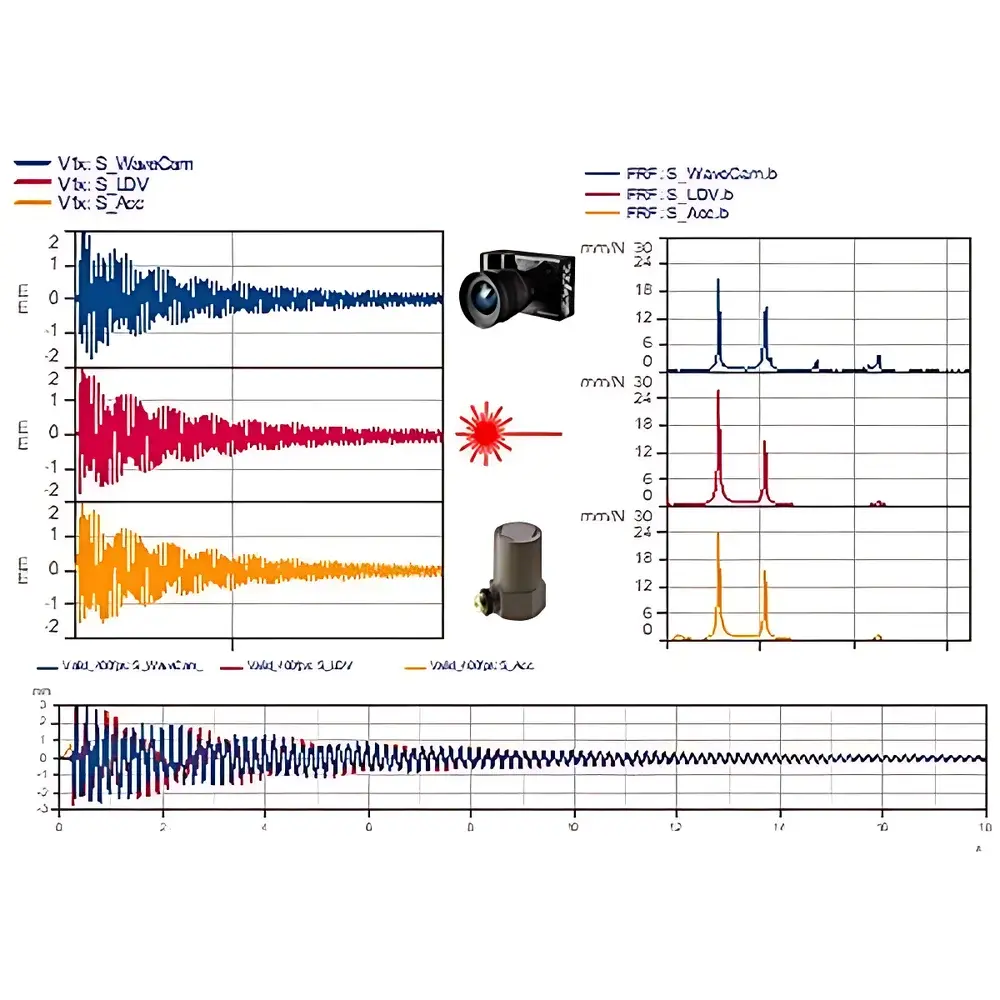
The WaveCam Video-Based Vibration Analysis System is an optical metrology platform engineered for non-contact, full-field vibration characterization using standard digital video capture devices. Unlike point-wise transducers such as accelerometers or laser Doppler vibrometers (LDVs), WaveCam transforms every pixel in a recorded video sequence into an independent displacement sensor—enabling simultaneous measurement of tens of thousands of spatial points across a surface. Its core methodology leverages advanced optical flow estimation augmented by domain-specific artificial intelligence models trained to resolve subpixel motion with high temporal fidelity. The system operates on the principle of intensity-based motion tracking: minute changes in pixel intensity patterns across successive frames are modeled and inverted to reconstruct out-of-plane and in-plane displacement fields at each location. This approach eliminates physical coupling constraints, surface preparation requirements, mass-loading effects, and wiring complexity inherent in traditional modal testing setups. WaveCam is particularly suited for applications where dense spatial sampling, geometric flexibility, or rapid deployment is critical—including transient event capture, rotating machinery analysis, and large-scale structural health monitoring.
Key Features
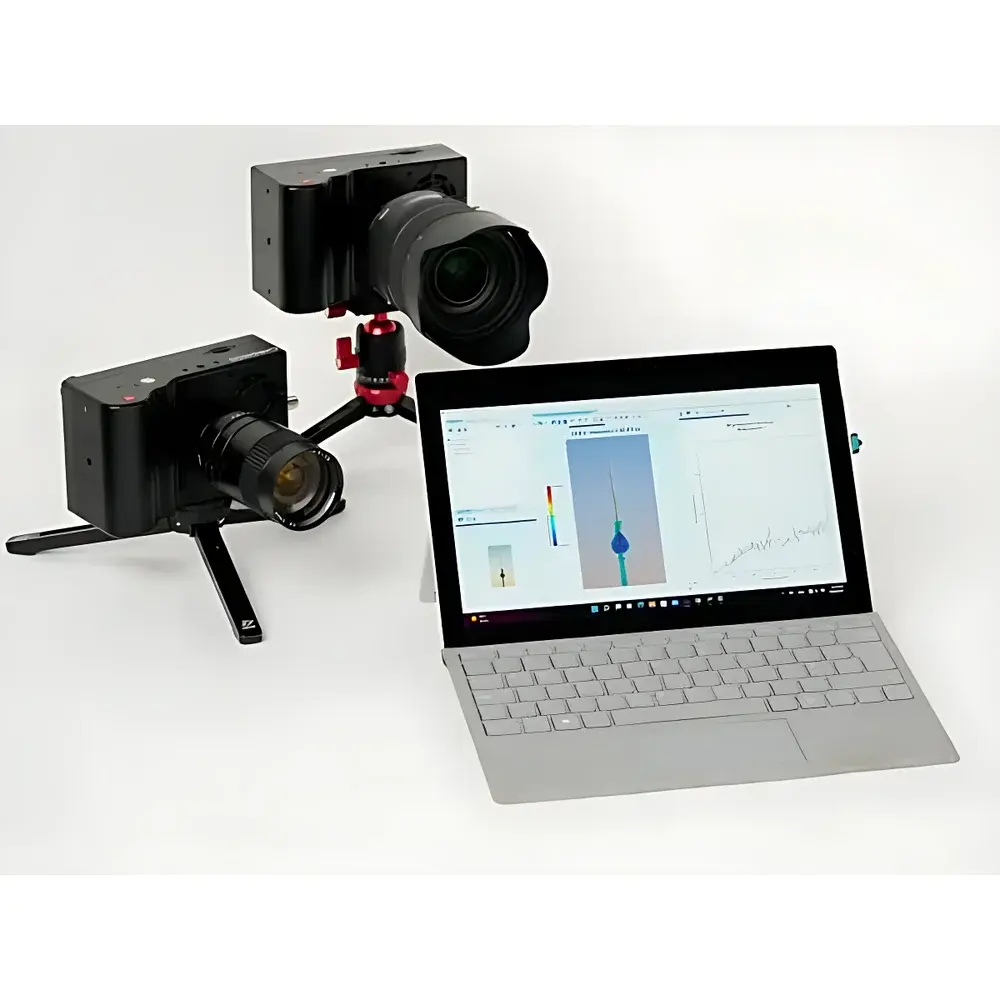
- Fully camera-agnostic architecture—supports smartphones, industrial CMOS cameras, and high-speed systems (e.g., Chronos 1.4) without hardware modification
- Subpixel displacement resolution achieved via iterative Lucas–Kanade optical flow refinement and deep learning–assisted motion vector correction
- Native support for time-domain waveform extraction and FFT-based spectral analysis per selected region or individual pixel
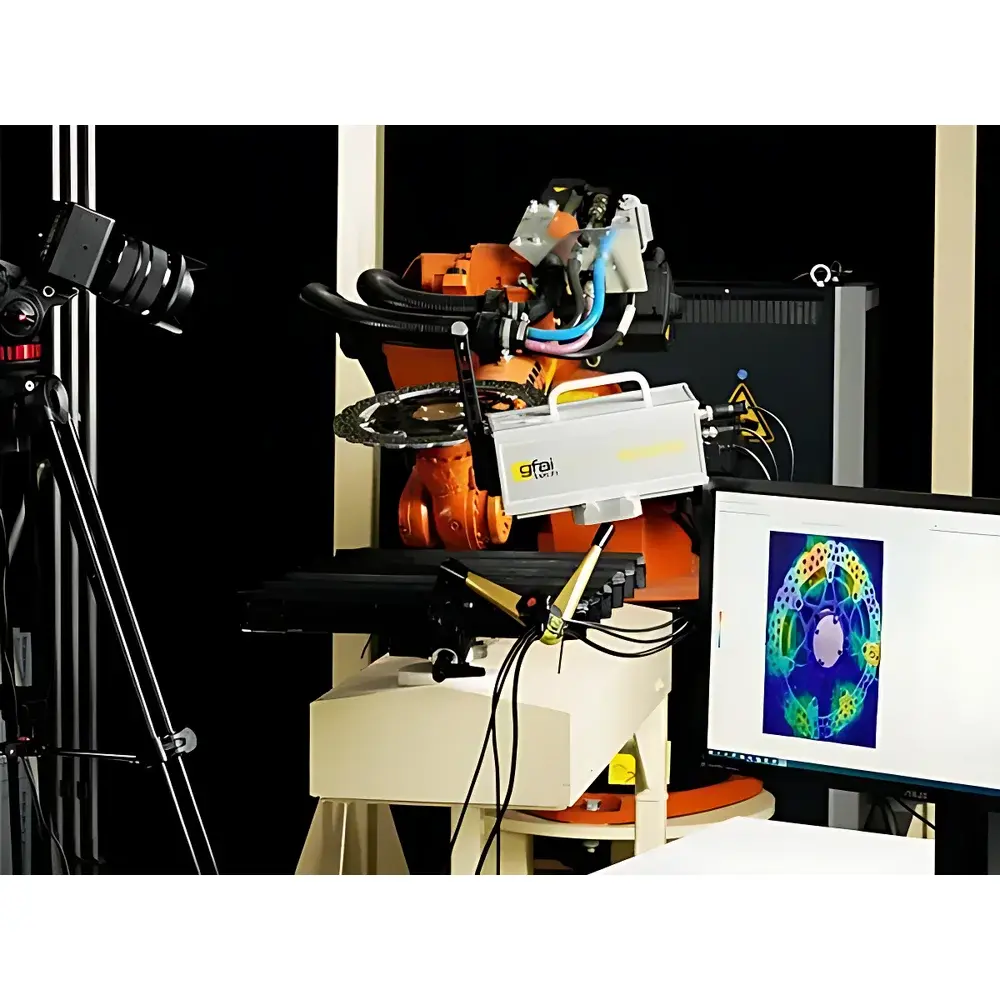
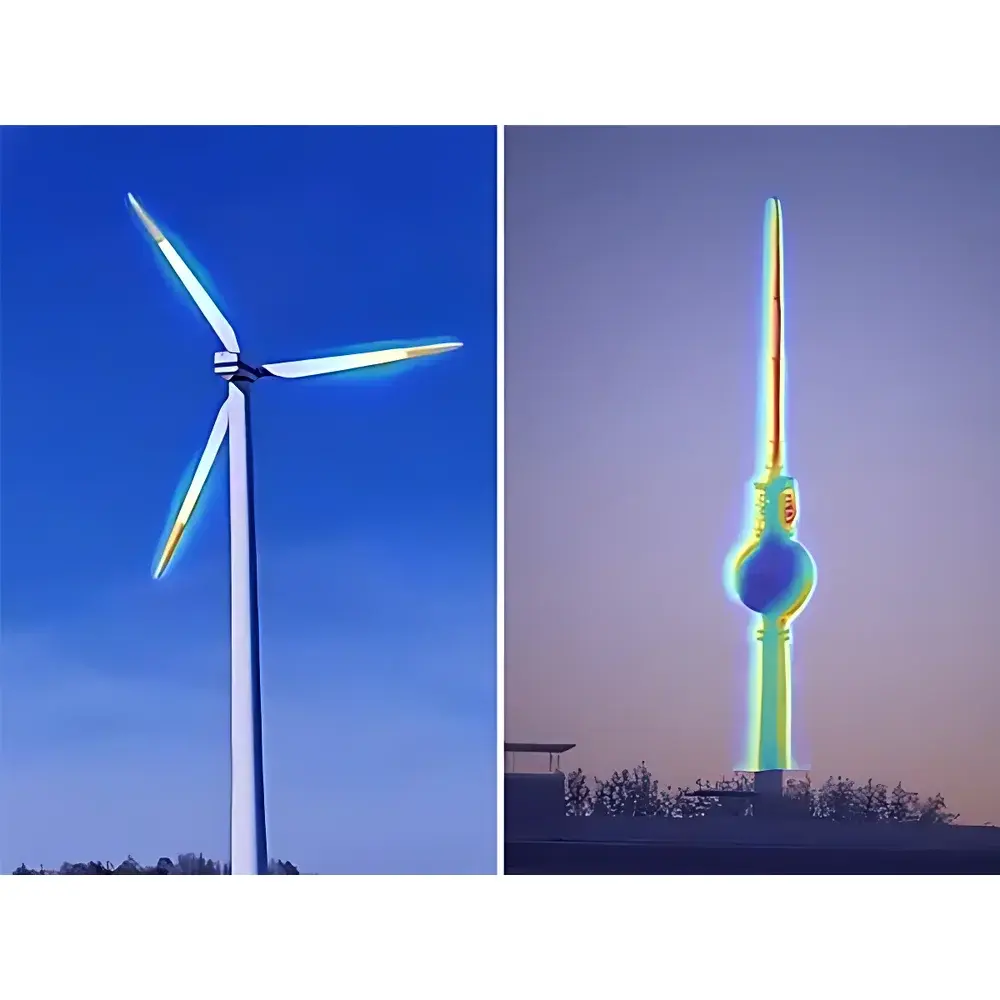
- Real-time visualization of operating deflection shapes (ODS) across user-defined frequency bands
- Export of displacement time histories, amplitude spectra, phase maps, and animated mode shape overlays in industry-standard formats (CSV, MATLAB .mat, HDF5)
- Annual software license includes algorithm updates, GUI enhancements, and compatibility patches for newly released camera SDKs and OS versions
- No proprietary hardware dependencies—eliminates recurring sensor calibration cycles and channel count limitations
Sample Compatibility & Compliance
WaveCam imposes no material or surface finish restrictions: measurements are valid on matte, textured, painted, or thermally sprayed surfaces without retroreflective targets or speckle patterns. For optimal contrast stability under dynamic illumination, users are advised to employ flicker-free LED or halogen lighting synchronized to camera frame rate. The system has undergone cross-validation per ASTM E2534–22 (Standard Guide for Vibration Testing Using Digital Image Correlation) and ISO 18431-4:2021 (Mechanical vibration and shock—Signal processing—Part 4: Structural dynamics). All exported datasets include embedded metadata compliant with FAIR principles (Findable, Accessible, Interoperable, Reusable), supporting traceability in GLP and GMP-regulated environments. While WaveCam itself does not require FDA 21 CFR Part 11 compliance, its audit trail functionality—including timestamped parameter logs, user session records, and version-controlled processing pipelines—meets baseline requirements for regulated R&D documentation.
Software & Data Management
The WaveCam software suite features a modular architecture built on Qt/C++ with Python scripting hooks for custom post-processing workflows. Raw video ingestion supports lossless codecs (e.g., UT Video, Lagarith) and hardware-accelerated decoding via NVIDIA NVDEC or Intel Quick Sync. Processing pipelines execute in-memory to avoid disk I/O bottlenecks; RAM usage scales linearly with spatial resolution and frame count. Built-in video trimming tools enable precise ROI selection prior to analysis, reducing computational load without sacrificing data integrity. All analysis parameters—including ROI definition, reference frame selection, filtering cutoffs, and FFT windowing functions—are stored in human-readable JSON configuration files. Export modules generate time-synchronized reports containing statistical summaries (RMS, peak-to-peak, kurtosis), coherence plots, and annotated ODS animations compatible with PowerPoint and Adobe After Effects. Software maintenance is included in the annual license—no separate fees apply for bug fixes, performance optimizations, or new feature rollouts.
Applications
- Operating Deflection Shape (ODS) analysis for mechanical assemblies, PCBs, and MEMS devices
- Non-destructive detection of resonant frequencies and damping ratios in composite laminates and additively manufactured parts
- Root cause analysis of vibration-induced fatigue failures in automotive powertrain components
- Transient impact response characterization in aerospace airframe panels and turbine blades
- Predictive maintenance screening of rotating equipment (bearings, gears, couplings) using broadband spectral anomaly detection
- Validation of finite element model boundary conditions and modal assurance criteria (MAC)
FAQ
What minimum frame rate is required to capture a target vibration frequency?
According to the Nyquist–Shannon sampling theorem, the camera must operate at ≥2×fmax. For example, resolving 500 Hz requires ≥1000 fps. Mobile phones (up to 960 fps in slow-motion mode) are suitable for low-frequency diagnostics below 400 Hz, provided motion blur is minimized via controlled lighting.
Is surface preparation necessary?
No. WaveCam relies on natural surface texture for contrast-based tracking. Flat, specular surfaces may require light diffusion or matte spray—but this is rare and application-dependent.
How does WaveCam handle out-of-plane vs. in-plane motion?
Monocular setups assume dominant out-of-plane displacement. For full 3D vector field reconstruction, stereo camera configurations or multi-angle acquisitions are recommended and supported via synchronized trigger input.
Can WaveCam integrate with existing test infrastructure?
Yes. Hardware synchronization via TTL triggers enables phase-coherent acquisition with shakers, DAQ systems, or acoustic emission sensors. API access allows embedding WaveCam analysis into LabVIEW, Python, or MATLAB automated test sequences.