Wiley KnowItAll NMR Spectral Databases
| Brand | Wiley |
|---|---|
| Origin | USA |
| Model | KnowItAll NMR Databases |
| Total Spectra | >932,000 (¹³C: 561,000 |
| ¹H | 269,000 |
| XNMR | 102,000) |
| Database Count | 25+ |
| Compliance | ASTM E1447, ISO/IEC 17025-aligned spectral validation protocols |
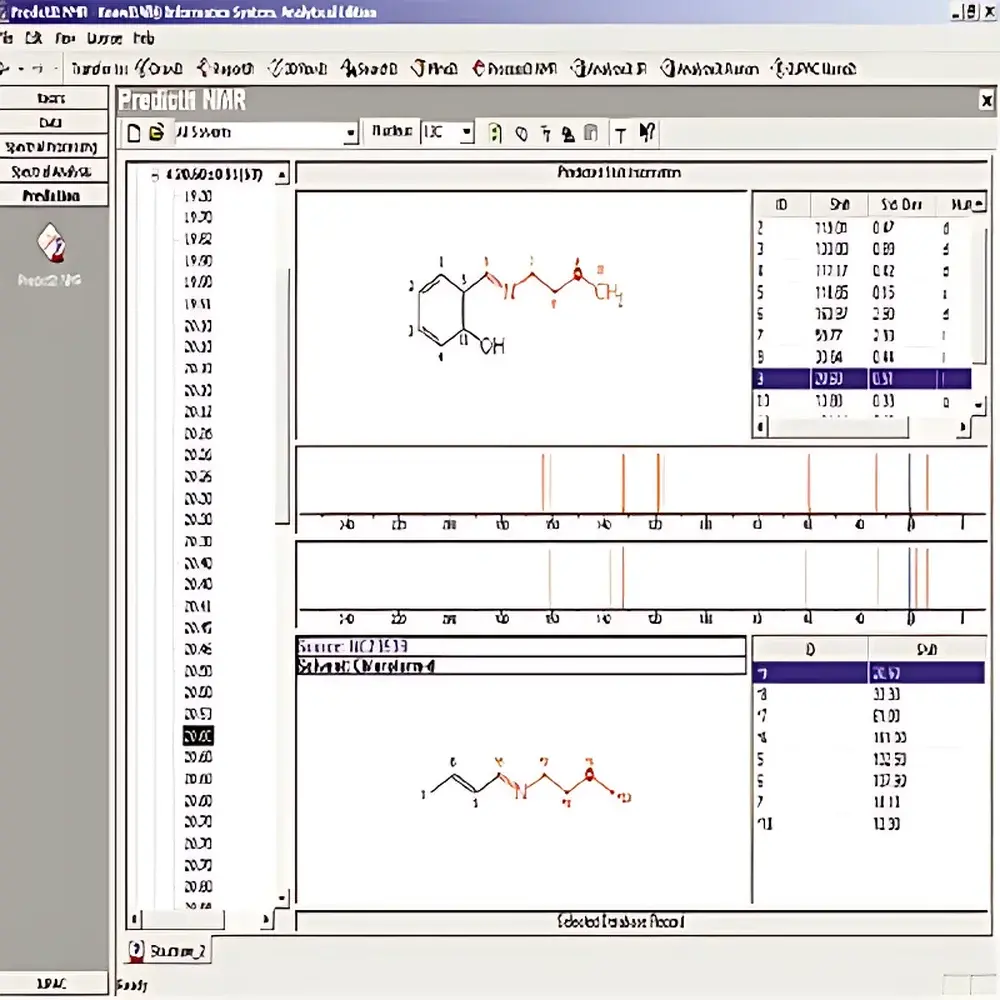
| Software Integration | KnowItAll ID Expert, KnowItAll Analytical Edition |
| Data Sources | Sadtler (Wiley), Wolfgang Robien, AIST SDBS, Sigma-Aldrich |
| Spectral Types | Experimental ¹H, ¹³C, ¹⁵N, ¹⁷O, ¹⁹F, ²⁹Si, ³¹P, ¹¹B NMR |
Overview
The Wiley KnowItAll NMR Spectral Databases constitute a rigorously curated, experimentally validated collection of nuclear magnetic resonance (NMR) reference spectra, engineered for high-confidence spectral identification, structural elucidation, and predictive modeling in analytical laboratories. Built upon the foundational Sadtler database—acquired and continuously enhanced by Wiley—the libraries integrate spectra acquired under standardized acquisition parameters, including field strength (9–800 MHz), solvent conditions, temperature control, and pulse sequence fidelity. Each spectrum is accompanied by peer-reviewed structural assignments, IUPAC-compliant nomenclature, CAS Registry Numbers, and associated physicochemical data (e.g., melting point, boiling point, density). The databases support both empirical matching (search-by-spectrum) and computational prediction workflows, serving as a primary reference resource compliant with method validation frameworks outlined in USP , ICH Q5, and ASTM E1447 for spectral library qualification.
Key Features
- Comprehensive spectral coverage: >932,000 experimentally acquired NMR spectra across 25 specialized sub-libraries—including organic, inorganic, polymer, metabolite, flavor & fragrance, toxicant (NIOSH Pocket Guide), and natural product domains.
- Multinuclear capability: Native support for ¹H, ¹³C, ¹⁵N, ¹⁷O, ¹⁹F, ²⁹Si, ³¹P, and ¹¹B NMR, with discrete indexing optimized for chemical shift range, coupling constant resolution, and relaxation behavior.
- Structural annotation integrity: Every entry includes 2D structural diagrams (MOL files), stereochemical descriptors (R/S, E/Z), tautomeric forms, and protonation state flags—validated against authoritative sources including ChemDraw-certified structures and PubChem cross-references.
- Instrument-agnostic import: Direct ingestion of processed FID or ASCII-format spectra from Bruker TopSpin, JEOL Delta, Varian VnmrJ, and Thermo Fisher NMR software via standardized JCAMP-DX v5.01 and AnIML-compliant parsers.
- Traceable provenance: Full metadata lineage for each spectrum—including instrument model, probe type, shimming protocol, number of transients, line broadening, zero-filling factor, and post-processing filters—enabling GLP/GMP audit readiness.
Sample Compatibility & Compliance
The databases are agnostic to sample matrix but optimized for small-molecule analysis (200:1), peak assignment consistency checks against quantum-chemical DFT-shift predictions (B3LYP/6-31G* level), and manual expert review by ACS-certified spectroscopists. Cross-library redundancy (e.g., overlapping compounds in Sadtler Organic and Sigma-Aldrich libraries) enables inter-database consistency scoring—a critical requirement for FDA 21 CFR Part 11–compliant analytical method transfers.
Software & Data Management
Native integration with KnowItAll ID Expert enables one-click spectral search using correlation-based algorithms (e.g., modified Pearson correlation, Euclidean distance in normalized chemical shift space) with adjustable tolerance for solvent artifact masking and baseline correction. For predictive applications, KnowItAll Analytical Edition provides integrated NMR prediction engines based on incremental substituent effect models and neural network–trained shift estimators trained on >500,000 experimental references. All search histories, match scores, and annotated reports are stored in encrypted SQLite databases with full audit trail logging—including user ID, timestamp, spectral hash, and confidence metric (Match Factor ≥900 = high-confidence identification). Export formats include PDF (ISO 19005-1 compliant), CSV (with IUPAC SMILES strings), and CML for LIMS interoperability.
Applications
- Pharmaceutical QC/QA: Identity testing of APIs and excipients per USP monographs; impurity profiling in forced degradation studies.
- Academic research: Assignment of novel natural product scaffolds; validation of synthetic route outcomes; conformational analysis via NOE/ROESY correlation mapping.
- Forensic chemistry: Rapid identification of controlled substances and designer drugs in seized material extracts.
- Materials science: Characterization of polymer end-groups, crosslinking density, and copolymer composition via quantitative ¹³C NMR integration.
- Metabolomics: Annotation of unknown features in LC-NMR hyphenated workflows using retention time–shift correlation matrices.
- Flavor & fragrance R&D: Structural confirmation of chiral terpenoids and lactones via ¹H–¹³C HSQC and HMBC correlations.
FAQ
Is this a subscription-based service or perpetual license?
The KnowItAll NMR Spectral Library is licensed on a perpetual basis with optional annual maintenance (includes database updates, spectral additions, and technical support).
Can I use these databases with third-party software such as MestReNova or ACD/Labs?
Yes—spectra are provided in JCAMP-DX v5.01 format and can be imported into any NMR processing platform supporting open spectral exchange standards.
How frequently are new spectra added to the libraries?
Wiley releases quarterly database updates (Q1, Q2, Q3, Q4), typically adding 8,000–12,000 newly curated spectra per release, prioritized by regulatory relevance and citation frequency in peer-reviewed literature.
Are predicted spectra included, or only experimental data?
The core libraries contain exclusively experimentally acquired spectra. Predictive functionality requires KnowItAll Analytical Edition, which generates theoretical shifts using physics-informed machine learning models trained solely on experimental ground truth.
Does the package include spectral simulation tools for pulse sequence design?
No—this offering focuses on reference spectral data and identification/prediction. Pulse sequence simulation and dynamic NMR modeling require separate computational modules (e.g., Spinach, SIMPSON).