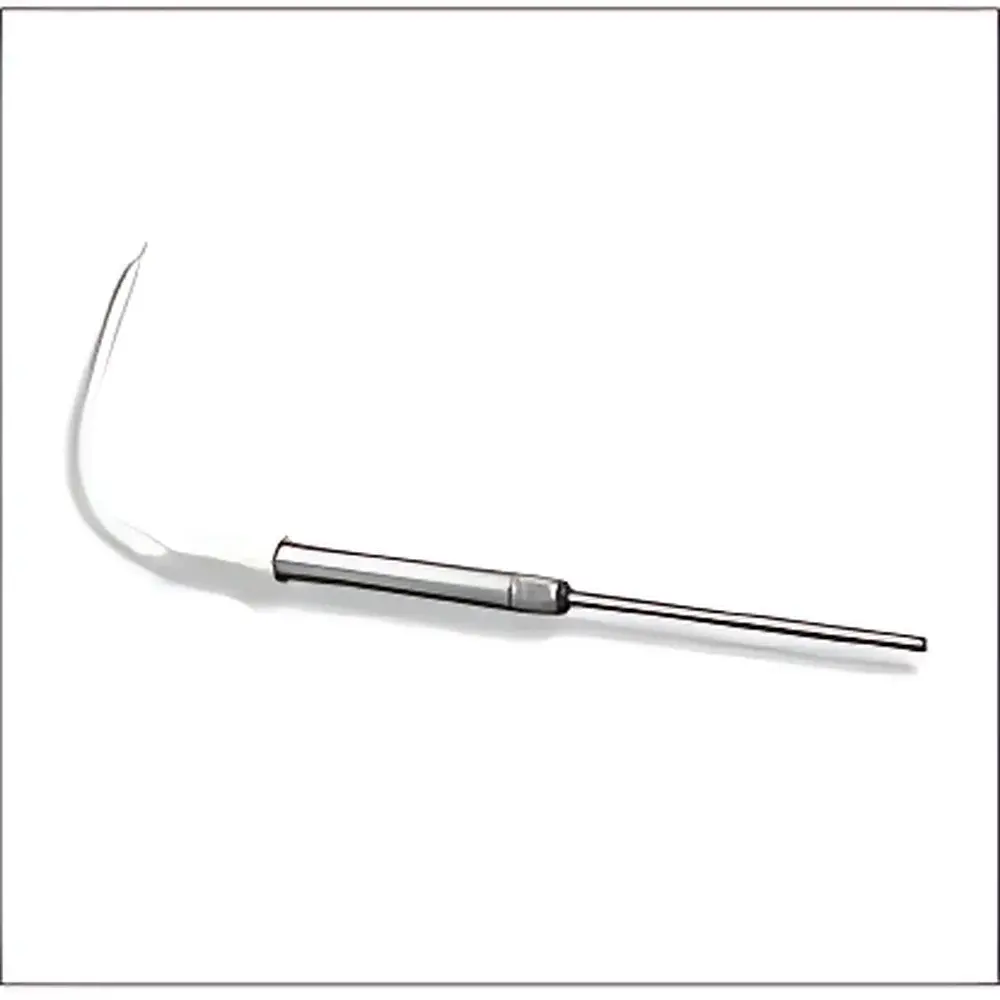
World Precision Instruments ISO-NOP Nitric Oxide Microsensor
| Origin | USA |
|---|---|
| Manufacturer Type | Authorized Distributor |
| Origin Category | Imported |
| Model | ISO-NOP |
| Pricing | Available Upon Request |
Overview
The World Precision Instruments ISO-NOP is a high-sensitivity, amperometric microsensor engineered for real-time, quantitative detection of nitric oxide (NO) in biological and physiological environments. Based on selective electrochemical oxidation at a platinum working electrode, the sensor operates via a Clark-type principle modified with a proprietary gas-permeable membrane that permits selective diffusion of NO while rejecting interferents such as O₂, NO₂⁻, NO₃⁻, H₂O₂, ascorbic acid, dopamine, and catecholamines. The 2 mm stainless-steel shaft provides mechanical robustness for repeated insertion into cell cultures, tissue slices, organ baths, and suspension systems—enabling stable measurements under dynamic physiological conditions. Its miniaturized geometry minimizes tissue damage and sampling volume disruption, making it suitable for localized extracellular NO monitoring in both in vitro and ex vivo preparations.
Key Features
- 2 mm rigid stainless-steel probe body with integrated Pt/Ir sensing tip and integrated Ag/AgCl reference electrode
- NO-selective polymer membrane (WPI #5436) applied to the distal sensing surface—replaceable and field-serviceable
- Internal filling electrolyte (WPI #7325) ensures stable baseline and reproducible calibration response
- Sub-nanomolar detection limit for NO (≤100 pM typical in optimized buffer conditions)
- Linear dynamic range spanning 0.1 nM to 10 µM NO concentration
- Response time (t₉₀) < 5 seconds in aqueous media at 37°C
- No cross-reactivity with common biological redox species, including nitrite (NO₂⁻), nitrate (NO₃⁻), superoxide (O₂⁻), or peroxynitrite (ONOO⁻)
Sample Compatibility & Compliance
The ISO-NOP is validated for use in sterile cell culture media (e.g., DMEM, RPMI-1640), physiological saline (Krebs-Henseleit, Tyrode’s), brain slice superfusates, isolated vessel myography chambers, and whole-blood anticoagulated samples. It complies with ISO 13485 design control principles for medical device accessories and meets functional requirements outlined in ASTM F2911–13 (Standard Guide for In Vitro Biocompatibility Assessment of Medical Device Materials). While not a Class II medical device itself, its output data supports GLP-compliant pharmacological studies involving endothelial NO release, neuronal NO signaling, and macrophage iNOS activity assays. Calibration traceability follows NIST-traceable NO donor standards (e.g., DEA/NO, SNAP), and sensor output is compatible with FDA 21 CFR Part 11–compliant data acquisition systems when paired with WPI’s DAM500 or VMC-1000 signal conditioners.
Software & Data Management
ISO-NOP sensors interface directly with WPI’s LabScribe3 software suite, which supports real-time current-to-concentration conversion using user-defined calibration slopes (nA/nM). The software enables automatic drift correction, multi-channel synchronization (up to 16 sensors), timestamped event annotation, and export to CSV, MATLAB (.mat), or HDF5 formats. All raw amperometric traces are stored with full metadata—including sensor ID, calibration date, temperature, and electrolyte lot number—to satisfy audit requirements for regulatory submissions. Optional integration with third-party platforms (e.g., Spike2, AcqKnowledge) is supported via analog voltage output (±10 V, 0–100 nA full scale) or digital USB communication.
Applications
- Real-time monitoring of endothelial NO release in isolated aortic rings during acetylcholine challenge
- Quantification of neuronal NO dynamics in hippocampal slices during LTP induction
- In situ detection of iNOS-derived NO in activated RAW264.7 macrophages
- Pharmacokinetic profiling of NO-donor drugs (e.g., nitroglycerin, sodium nitroprusside) in perfused organs
- Validation of NO-scavenging efficacy of novel antioxidants or hemoglobin-based oxygen carriers
- Adaptation for nitrite/nitrate quantification via enzymatic reduction (using nitrate reductase + nitrite reductase protocols)
FAQ
What is the recommended storage protocol for the ISO-NOP sensor between experiments?
Store upright in dark, dry conditions at room temperature; never immerse in water or buffer. Replace the protective cap and keep the membrane surface covered with WPI #5436 storage gel (Cat. #7325-SG) to prevent desiccation.
Can the ISO-NOP be used in whole blood or plasma without interference from hemoglobin?
Yes—its membrane selectivity and rapid response kinetics minimize hemoglobin-mediated quenching artifacts; however, we recommend calibration in matched hematocrit-adjusted medium prior to in vivo microdialysis applications.
Is the ISO-NOP compatible with stereotaxic implantation in rodent brain tissue?
Yes—the 2 mm diameter and tapered tip allow precise intracerebral placement; users should confirm sterility via ethanol wipe and UV exposure pre-insertion, and avoid contact with bone fragments during surgery.
How often must the internal electrolyte be replenished?
Refill every 72 hours during continuous operation or before each new experimental session; overfilling may cause leakage and membrane delamination.
Does WPI provide ISO-NOP calibration services or certified reference materials?
WPI supplies NIST-traceable NO donor standards (DEA/NO, DETA/NO) and offers on-site calibration validation support for GMP-regulated labs upon request.