
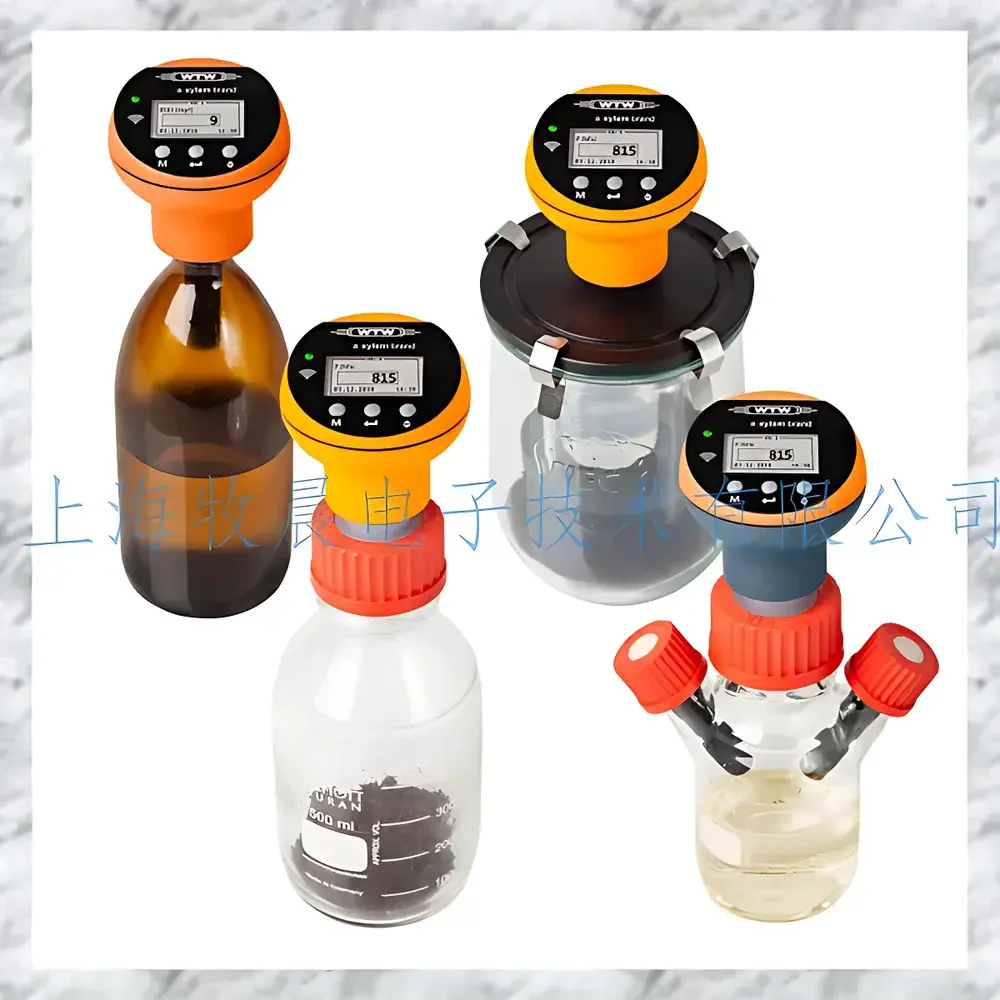
WTW OxiTop®-IDS B6/B6M/B6M2.5 Soil Respiration Measurement System
| Brand | WTW |
|---|---|
| Origin | Germany |
| Model | OxiTop®-IDS B6/B6M/B6M2.5 |
| Measurement Principle | Pressure Differential Method |
| Application | Soil Respiration, Biodegradability Testing, BOD Analysis (Lab-Based) |
| Compliance | DIN EN ISO 16072:2011-09 |
| Sample Volumes | 500 mL / 1.0 L / 2.5 L (B6M2.5) |
| Pressure Range | –500 to 1350 hPa (up to 1500 hPa with OxiTop®-IDS/B sensor head) |
| Data Logging Interval | 0.5 h to 180 days |
| CO₂ Absorbent Included | Yes |
| Nitrification Inhibitor Included | Yes (B6/B6M/AN series) |
| Stirring Base | IS 6 / IS 12 / IS 6-Var / IS 12-Var |
| Required Controller | Multi 3620 IDS Set WL or Multi 3630 IDS Set WL (except OxiTop®-IDS Set 6/12, which operates autonomously) |
Overview
The WTW OxiTop®-IDS B6/B6M/B6M2.5 is a fully automated, pressure-differential-based soil respiration measurement system engineered for precise, long-term monitoring of microbial oxygen consumption and CO₂ evolution in heterogeneous solid-phase environmental samples. Operating on the fundamental principle of sealed-culture manometry, the system quantifies changes in headspace pressure resulting from aerobic metabolic activity—where O₂ depletion and CO₂ absorption (via NaOH or KOH pellets) generate a net negative pressure proportional to respiratory rate. This method eliminates manual titration, electrode drift, and gas chromatography dependencies, delivering high reproducibility under standardized conditions compliant with DIN EN ISO 16072:2011-09, the internationally recognized protocol for determining aerobic biodegradation in soils and composts. The system supports both static and stirred incubation modes, enabling differentiation between diffusion-limited and metabolism-limited respiration kinetics—critical for assessing bioavailability, toxicity thresholds, and amendment efficacy in ecological risk assessment and regulatory testing.
Key Features
- Autonomous pressure-differential sensing with integrated OxiTop®-IDS sensor heads rated for –500 to 1500 hPa, ensuring stability across wide temperature and moisture gradients typical of soil incubations.
- Modular vessel configuration: B6 (6 × 510 mL amber glass bottles) for low-activity soils; B6M (6 × 510 mL, enhanced stirring) for medium-to-high respiratory rates; B6M2.5 (6 × 2.5 L vessels) optimized for AT4-compliant biodegradability testing per CEN/TS 16608.
- Stirring bases (IS 6/IS 12/IS 6-Var/IS 12-Var) with programmable rotation speed and intermittent agitation protocols to prevent oxygen stratification without disturbing soil structure.
- Pre-calibrated CO₂ absorbent cartridges and optional nitrification inhibitors (e.g., allylthiourea) included to suppress NH₄⁺ oxidation—ensuring measured O₂ demand reflects solely carbonaceous substrate degradation.
- Self-contained data logging with configurable intervals (0.5 h to 180 days), onboard memory retention for 1–7 days, and seamless export via USB or IDS interface to Multi 3620/3630 controllers supporting GLP-compliant audit trails.
Sample Compatibility & Compliance
The OxiTop®-IDS platform accommodates diverse soil matrices—including agricultural topsoil, contaminated sediments, compost amendments, and landfill leachate-treated substrates—without requiring homogenization or filtration. Vessel options support standardized sample-to-headspace ratios (e.g., 1:1 for B6M2.5 per ISO 16072 Annex A) and enable direct integration with OECD 301F, ISO 14851, and ASTM D5338 protocols. All configurations meet traceability requirements under ISO/IEC 17025 for accredited environmental laboratories. When paired with Multi 3630 IDS controllers, the system satisfies FDA 21 CFR Part 11 criteria for electronic records and signatures, including user authentication, immutable timestamps, and change history logs—essential for regulatory submissions to EPA, ECHA, or national environmental agencies.
Software & Data Management
Data acquisition and analysis are managed through WTW’s IDS software suite, compatible with Multi 3620 and 3630 IDS controllers. The interface provides real-time pressure curve visualization, automatic calculation of cumulative O₂ consumption (mg O₂/kg dry weight/day), and first-order kinetic modeling of respiration decay. Export formats include CSV, Excel, and PDF reports compliant with GLP documentation standards. Audit trail functionality records all parameter modifications, calibration events, and user logins—supporting full compliance with ISO 17025 clause 7.7 and EU Regulation (EC) No 765/2008. Remote firmware updates and sensor diagnostics ensure long-term operational integrity without field service intervention.
Applications
- Soil health assessment: Quantifying basal and substrate-induced respiration (SIR) to evaluate organic matter quality and microbial biomass.
- Bioremediation monitoring: Tracking hydrocarbon or pesticide mineralization rates in spiked soils over 28–180 day incubations.
- Toxicity screening: Determining EC₅₀ values for agrochemicals using ISO 11269-2 endpoints based on respiratory inhibition.
- Compost stability testing: Validating AT4 values (aerobic transformation test) for green waste and sewage sludge according to German TAbfV and EU End-of-Waste criteria.
- BOD₅ and extended BOD analysis: Adapting the same pressure-differential methodology for wastewater and effluent solids using AN6/AN12 vessel sets.
FAQ
Does the OxiTop®-IDS require external gas supply or vacuum pumps?
No—operation relies solely on ambient air equilibration and chemical CO₂ absorption; no compressed gases or vacuum infrastructure is needed.
Can the system differentiate between nitrification and carbonaceous BOD?
Yes—when used with nitrification inhibitors (included), it isolates carbonaceous oxygen demand; omission allows total BOD estimation per ISO 9562.
Is calibration traceable to national standards?
Yes—sensor heads are factory-calibrated against NIST-traceable pressure references, with certificate of calibration provided.
What is the maximum incubation duration supported?
Up to 180 days with 0.5-hour logging intervals; onboard memory retains 7 days of raw data, synchronized automatically upon controller connection.
Are replacement CO₂ absorbents and stir bars available as consumables?
Yes—WTW supplies certified NaOH/KOH absorbent cartridges (Cat. No. 1001202), PTFE-coated stir bars (Cat. No. 1001203), and silicone rubber sleeves for vessel sealing (Cat. No. 1001204).







