
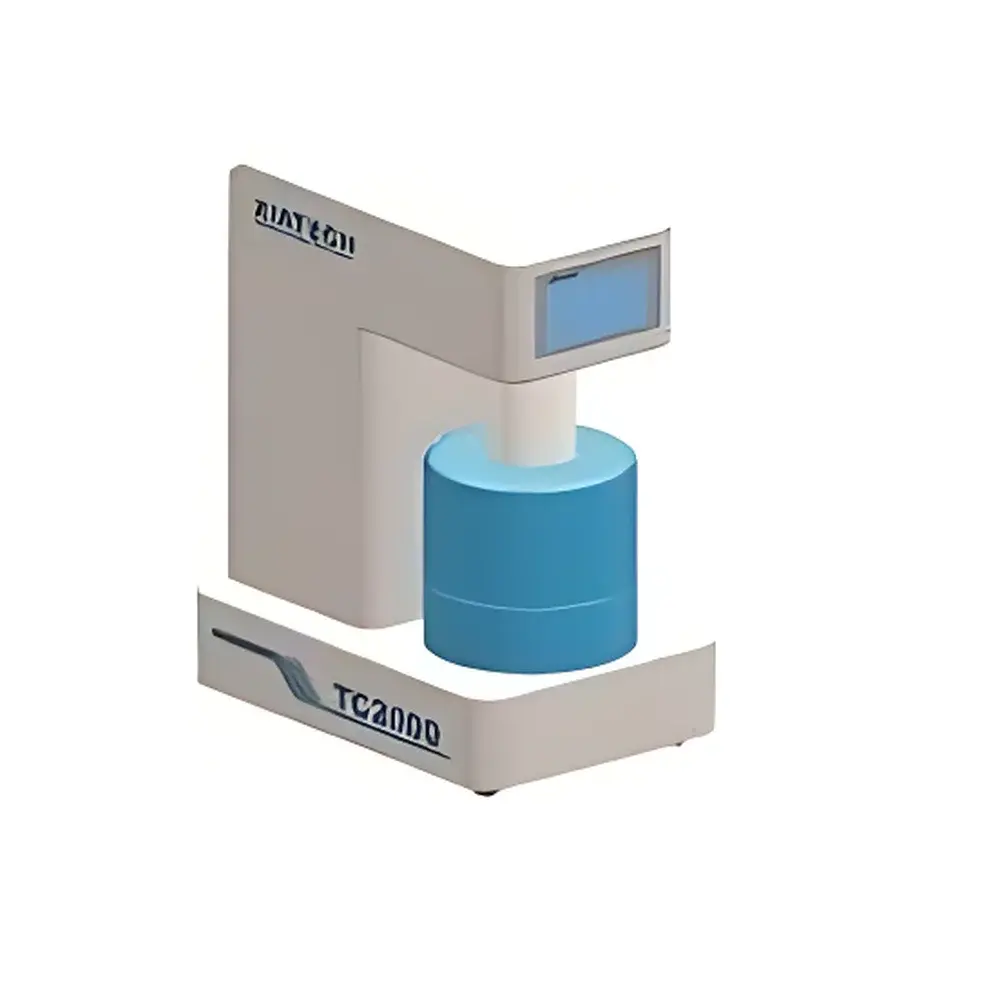
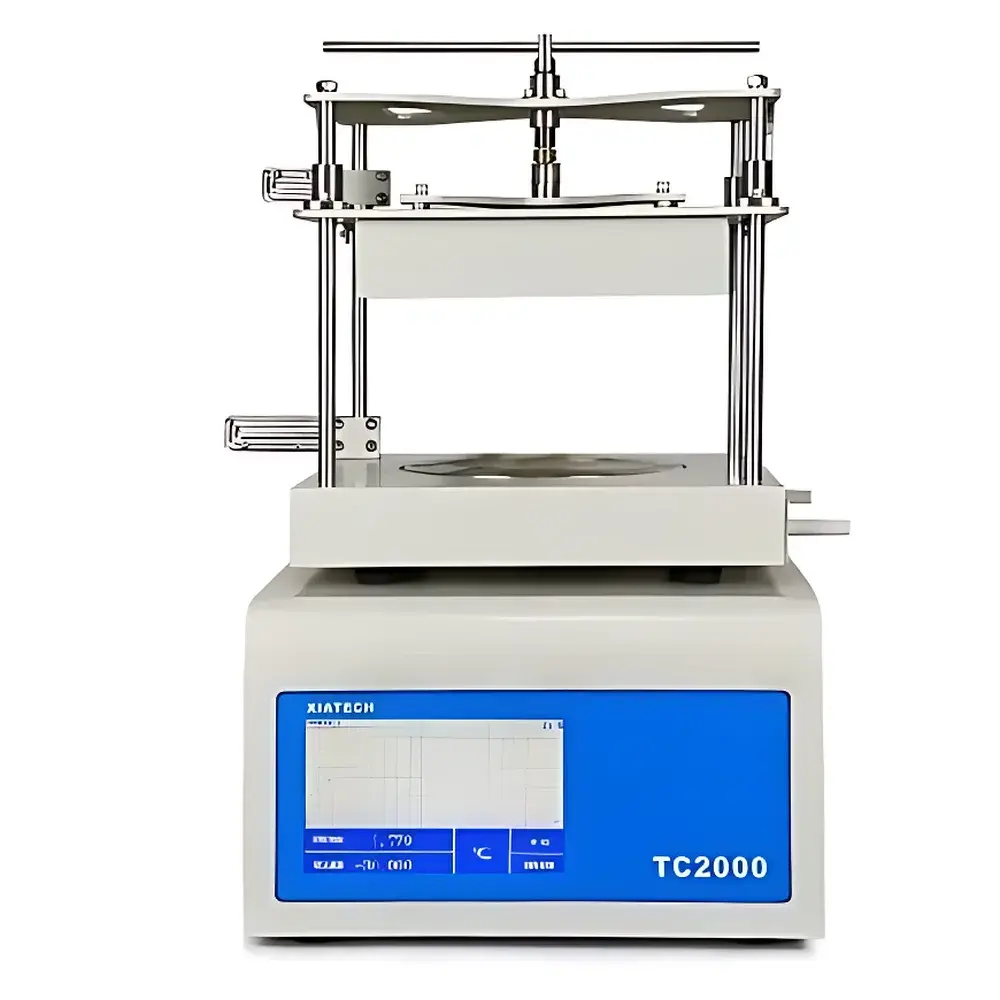
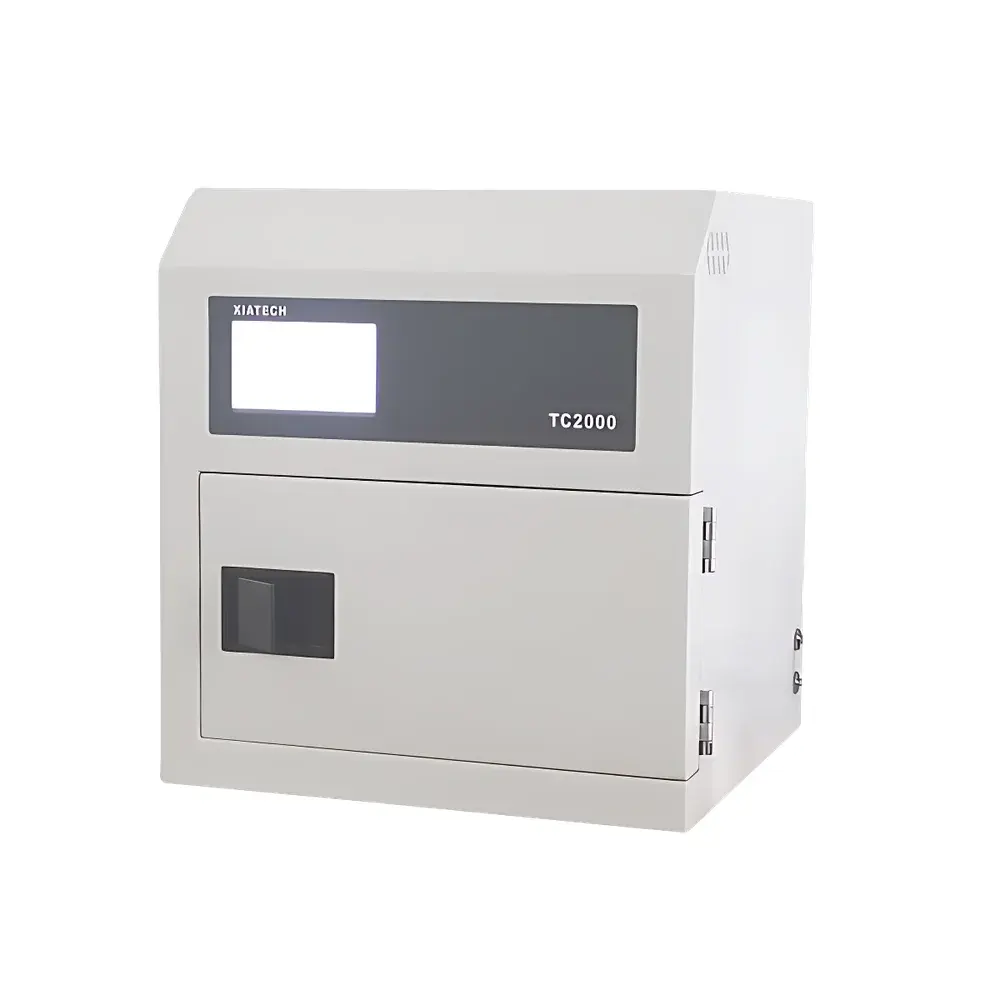
Xiatech TC2110 Heat Flow Meter Thermal Conductivity Analyzer
| Brand | Xiatech |
|---|---|
| Origin | Shaanxi, China |
| Model | TC2110 |
| Measurement Principle | Heat Flow Meter Method |
| Thermal Conductivity Range | 0.005–2 W/(m·K) |
| Thermal Resistance Range | 0.02–4 (m²·K)/W |
| Resolution | 0.001 W/(m·K) |
| Sample Diameter | Φ100–Φ160 mm or 300×300 mm |
| Sample Thickness | 5–40 mm (customizable) |
| Accuracy | ±3 % |
| Repeatability | ±2 % |
| Temperature Range | −10 to 100 °C |
| Pressure Range | 0–2.5 kPa |
| Test Atmosphere | Ambient air |
| Sample Forms | Insulation materials, composites, multilayer structures, porous media, building materials, pastes, powders |
| Compliance Standards | GB/T 10295, ISO 8301, ASTM C518 |
| Data Interface | USB |
| Power Supply | 220 V, 50 Hz |
Overview
The Xiatech TC2110 Heat Flow Meter Thermal Conductivity Analyzer is an engineered solution for precise, standardized measurement of thermal conductivity in low-conductivity solid and semi-solid materials. Based on the steady-state heat flow meter method (ASTM C518 / ISO 8301 / GB/T 10295), the instrument applies a controlled temperature gradient across a flat, parallel-faced sample while quantifying the resulting heat flux via calibrated dual thermopile sensors. This principle ensures traceable, reproducible results without requiring absolute temperature calibration of sensor outputs—making it especially suitable for quality assurance and R&D labs where robustness, ease of operation, and regulatory alignment are critical. Designed for ambient-temperature testing environments, the TC2110 delivers high signal-to-noise ratio measurements across its full dynamic range (0.005–2 W/(m·K)), with resolution down to 0.001 W/(m·K). Its mechanical architecture incorporates programmable axial loading (0–2.5 kPa) to minimize interfacial contact resistance while preserving sample integrity—a key requirement when characterizing compressible insulation foams, aerogels, or granular powders.
Key Features
- Calibrated dual-thermopile heat flux sensors provide high linearity and long-term stability, enabling consistent performance across repeated calibrations and extended operational cycles.
- Integrated automatic thickness measurement system eliminates manual micrometer dependency and reduces operator-induced variability during sample preparation.
- Programmable pressure control ensures uniform compression across heterogeneous or compliant samples—critical for accurate thermal resistance evaluation of multilayer assemblies or anisotropic composites.
- Full automation includes temperature stabilization, data acquisition, post-processing, and report generation—all executed within a single workflow without external scripting or third-party software dependencies.
- Modular sample stage accommodates circular specimens (Φ100–Φ160 mm) or square formats (300 × 300 mm), with thickness adaptability from 5 to 40 mm; custom fixtures available upon request for non-standard geometries.
- Thermal chamber maintains temperature stability within ±0.1 °C over the operating range (−10 to 100 °C), supporting both room-temperature benchmarking and elevated-condition validation per material specification requirements.
Sample Compatibility & Compliance
The TC2110 is validated for use with heterogeneous, low-density, and structurally complex materials including but not limited to rigid and flexible insulation panels (e.g., PU, XPS, phenolic foam), fibrous media (glass wool, mineral wool, carbon felt), aerogel composites (blankets, granules, laminates), hydrated pastes (firestop mortars, thermal interface compounds), and powdered insulators (perlite, vermiculite). It supports anisotropic characterization through directional mounting and accommodates multilayer stacks up to 40 mm total thickness. All measurement protocols align with internationally recognized standards: ASTM C518 (Standard Test Method for Steady-State Thermal Transmission Properties by Means of the Heat Flow Meter Apparatus), ISO 8301 (Thermal insulation — Determination of steady-state thermal resistance and related properties — Heat flow meter apparatus), and GB/T 10295 (Chinese national standard for heat flow meter method). The system meets fundamental GLP documentation requirements, including audit-ready test logs, user-accessible calibration history, and timestamped raw data export.
Software & Data Management
The TC2110 operates under Xiatech’s proprietary Windows-based control suite, which provides real-time monitoring of thermal gradient development, heat flux convergence, and system equilibrium status. Data acquisition occurs at configurable intervals (default: 10 s), with automatic detection of steady-state onset based on slope-threshold analysis of normalized heat flux drift (<0.1 %/min). All raw sensor voltages, calculated thermal conductivity values, uncertainty estimates (per GUM-compliant propagation), and environmental metadata (ambient T, chamber T, applied load) are stored in encrypted binary archives (.xtdf) and exportable CSV files. USB 2.0 interface enables direct transfer to laboratory information management systems (LIMS) or statistical process control platforms. Software supports multi-user role assignment (operator, supervisor, administrator), electronic signature capture for QA sign-off, and optional 21 CFR Part 11 compliance modules—including audit trail logging, password-protected configuration changes, and immutable record retention.
Applications
The TC2110 serves as a primary tool in thermal property validation workflows across construction science, advanced materials development, and energy efficiency certification. Typical use cases include: comparative screening of novel aerogel formulations against commercial benchmarks; verification of thermal performance claims for building envelope components (e.g., vacuum insulation panels, reflective insulation systems); qualification of fire-resistant composite laminates used in transportation or aerospace; batch-release testing of phase-change material (PCM) encapsulants; and structural integrity assessment of cryogenic insulation for LNG infrastructure. In academic research, it supports fundamental studies on phonon transport in nanoporous ceramics, interfacial thermal resistance in polymer–filler systems, and moisture-dependent conductivity shifts in hygroscopic biobased insulators.
FAQ
What standards does the TC2110 comply with?
The instrument conforms to ASTM C518, ISO 8301, and GB/T 10295 for steady-state thermal conductivity measurement using the heat flow meter method.
Can the TC2110 measure anisotropic materials?
Yes—the sample stage allows orientation-specific mounting, and directional heat flux interpretation is supported in the software for in-plane versus through-plane analysis.
Is vacuum or inert gas testing possible?
No—the TC2110 is designed for ambient-atmosphere operation only; it does not integrate sealed chambers or gas purging capabilities.
How is calibration traceability maintained?
Each unit ships with NIST-traceable calibration certificates for both reference standards and thermopile sensors, updated annually per ISO/IEC 17025 guidelines.
Does the system support automated reporting for ISO/IEC 17025 accreditation?
Yes—predefined report templates include uncertainty budgets, equipment IDs, environmental conditions, and operator signatures, fully compatible with ILAC-MRA accredited lab workflows.



