
Xinxianda CIT-3000SY Energy Dispersive X-Ray Fluorescence Spectrometer for Geological Cuttings Analysis
| Brand | Xinxianda |
|---|---|
| Origin | Sichuan, China |
| Model | CIT-3000SY |
| Form Factor | Benchtop/Floor-standing |
| Application Domain | Geological & Petrological Core Logging |
| Elemental Range | Na–U |
| Quantification Range | 1 ppm – 99.99% |
| Energy Resolution | ≤100 eV (at Mn Kα, 5.9 keV) |
| Repeatability | RSD ≤0.05% (major elements, n=5) |
Overview
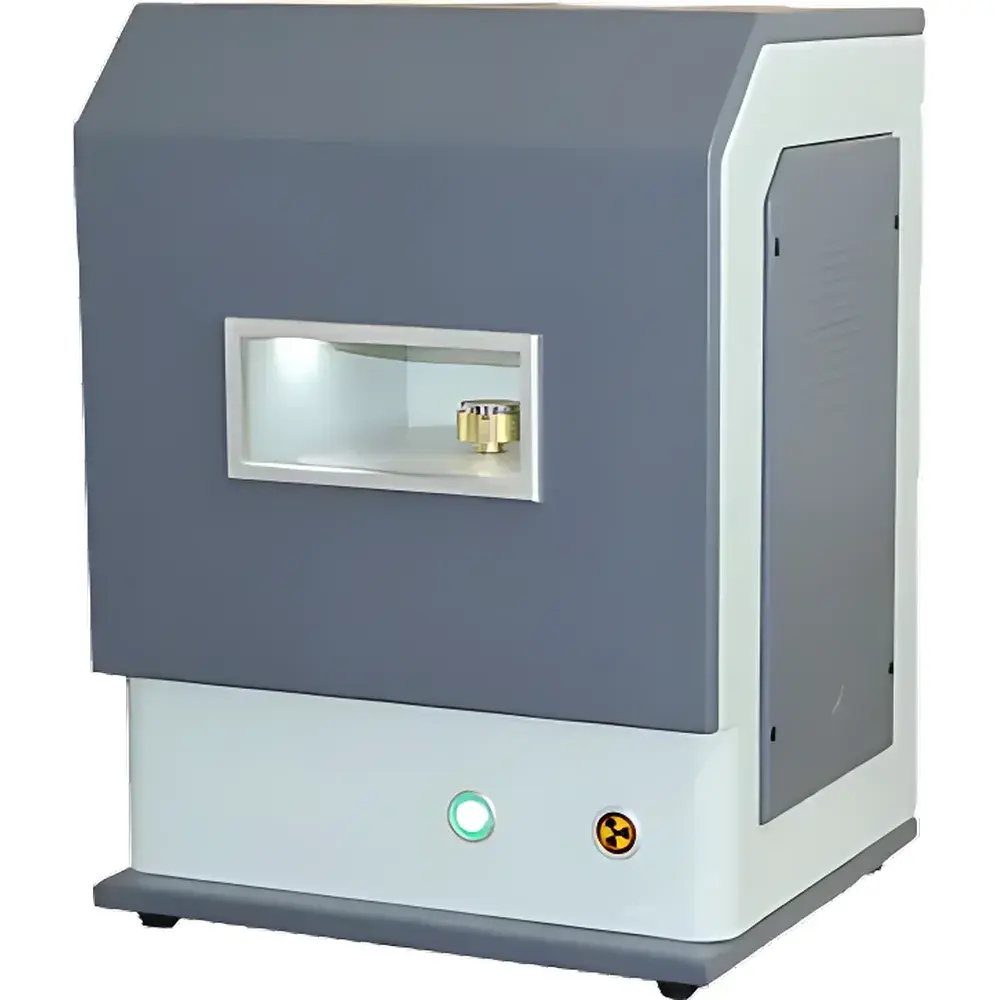
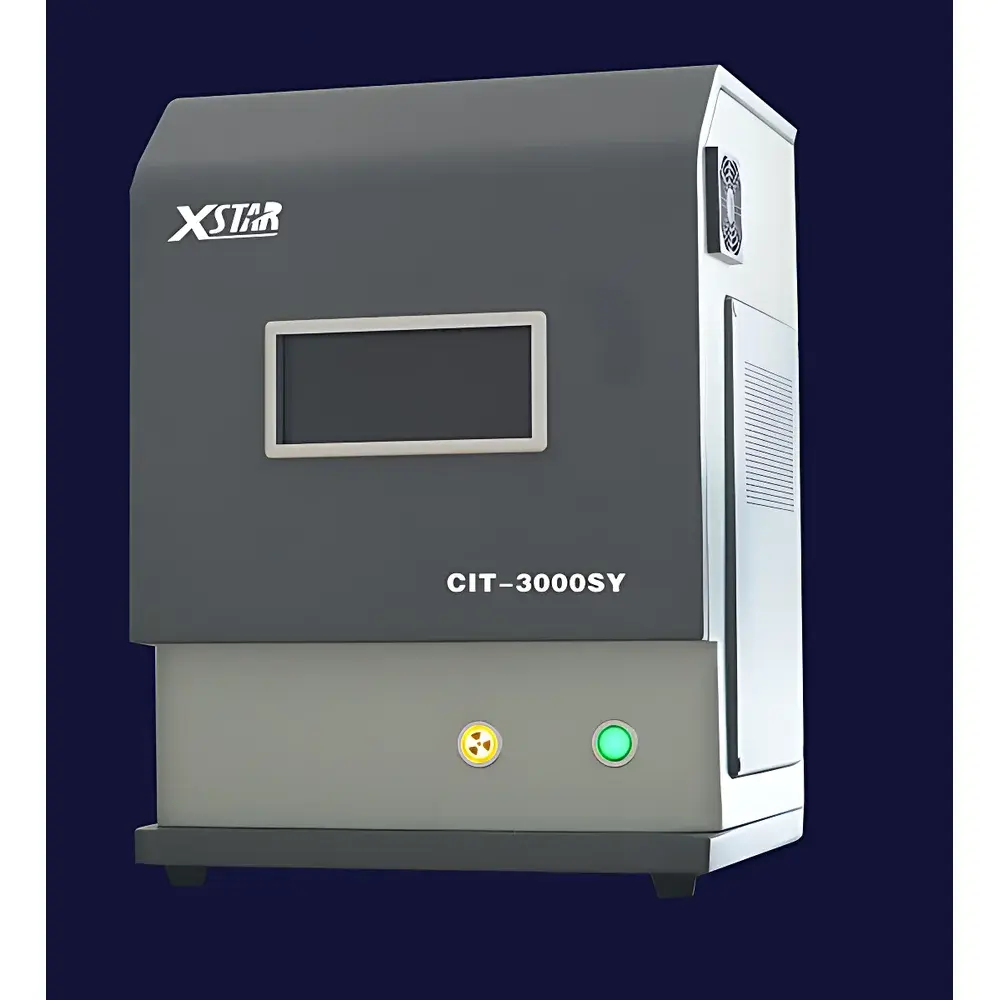
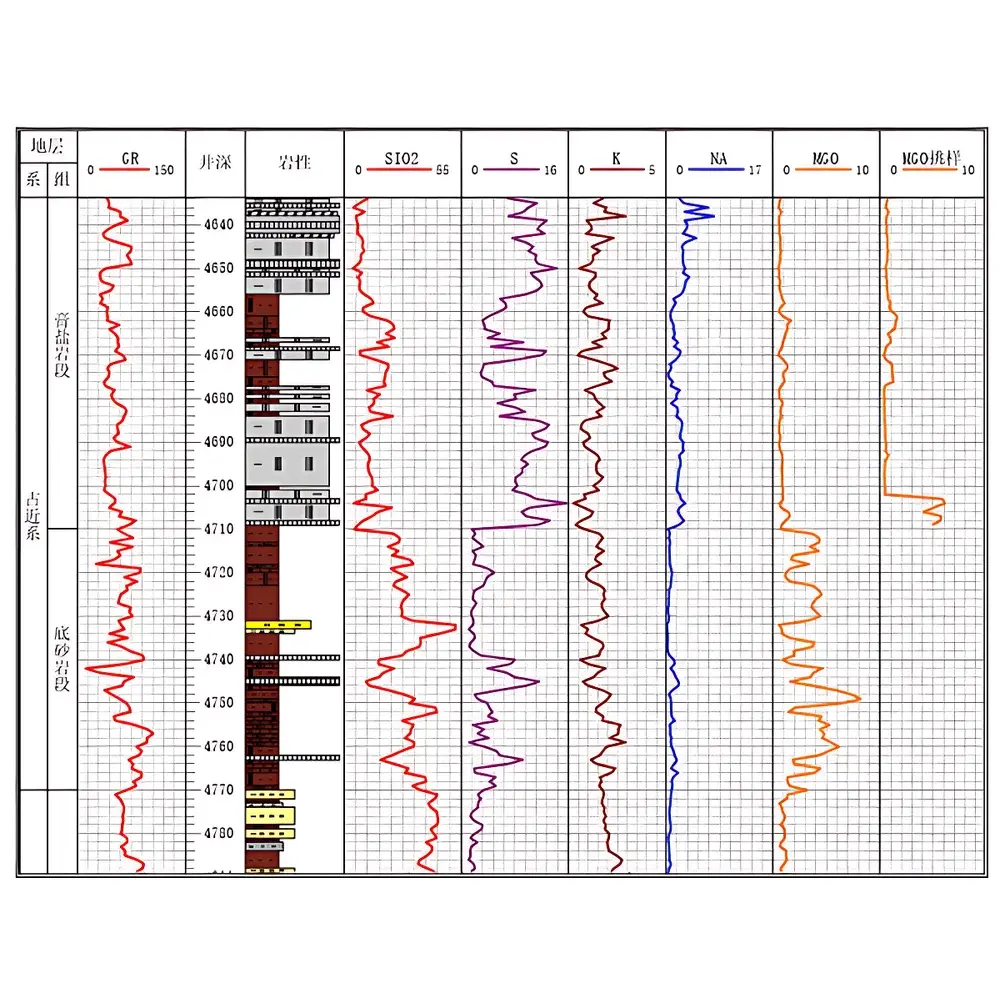
The Xinxianda CIT-3000SY is a purpose-built energy dispersive X-ray fluorescence (EDXRF) spectrometer engineered for quantitative elemental analysis of drill cuttings in petroleum geological logging applications. It operates on the fundamental principle of X-ray fluorescence: primary X-rays from a high-voltage X-ray tube excite inner-shell electrons in sample atoms; upon electron relaxation, characteristic secondary (fluorescent) X-rays are emitted, with energies uniquely identifying each element and intensities proportional to concentration. Unlike qualitative visual lithology logging—prone to observer bias and ineffective for fine-grained or pulverized cuttings—the CIT-3000SY delivers trace-to-major element quantification across 88 elements (Na to U), enabling statistically robust lithological classification via multivariate geochemical fingerprinting. Its design adheres to industry-specific standards including Q/SY 128–2015 (Logging Data Acquisition and Interpretation), Q/SY 1862–2016 (Elemental Logging Technical Specification), and JC/T 1085–2008 (XRF Instruments for Geological Applications), ensuring methodological consistency with upstream reservoir evaluation workflows.
Key Features
- High-resolution FAST-SDD (Silicon Drift Detector) with digital pulse processing, delivering ≤100 eV energy resolution at Mn Kα—critical for resolving overlapping peaks of adjacent light elements (e.g., Al/Si, S/Cl, Ca/Ti).
- Dual-mode vacuum system: achieves ≤1×10⁻² Pa within 10 seconds and maintains stable high vacuum for ≥30 minutes, significantly enhancing detection sensitivity for light elements (Na, Mg, Al, Si) by up to 70% compared to air-path operation.
- Top-illumination geometry optimized for loose powder cuttings: eliminates cross-contamination risk between samples, prevents detector/X-ray tube fouling from dust fallout, and incorporates motorized sample rotation to mitigate heterogeneity-induced bias.
- Automated excitation control: dynamically selects optimal tube voltage (0–50 kV) and current (1–1000 µA) per measurement, maximizing signal-to-background ratio without user intervention.
- Real-time 2048-channel MCA (Multi-Channel Analyzer) with live spectral display, enabling on-the-fly peak identification, background subtraction, and interference correction.
- Integrated HD video monitoring system: provides real-time visual confirmation of sample positioning, chamber integrity, and measurement status during analysis.
Sample Compatibility & Compliance
The CIT-3000SY accepts solid, pressed-powder, and liquid samples—optimized for routine analysis of drilled cuttings prepared using included hydraulic press and die set. Sample throughput is enhanced by rapid vacuum cycling (<10 s) and automated calibration verification. The instrument complies with radiation safety requirements per GBZ 18871–2002 (Basic Standards for Radiation Protection) and delivers an operational dose rate <25 µSv/h at 5 cm from the housing. Its analytical methodology supports GLP-aligned data integrity through audit-trail-enabled software, and results are traceable to certified reference materials (CRMs) such as USGS basalt standards (BCR-2, BHVO-2) and NIST SRMs (e.g., 2780, 2781). While not FDA 21 CFR Part 11–certified out-of-box, its data export architecture (CSV, XML, PDF) facilitates integration into LIMS environments meeting ISO/IEC 17025 and ASTM D7359–21 (Standard Test Method for Determination of Elements in Crude Oil by EDXRF) requirements.
Software & Data Management
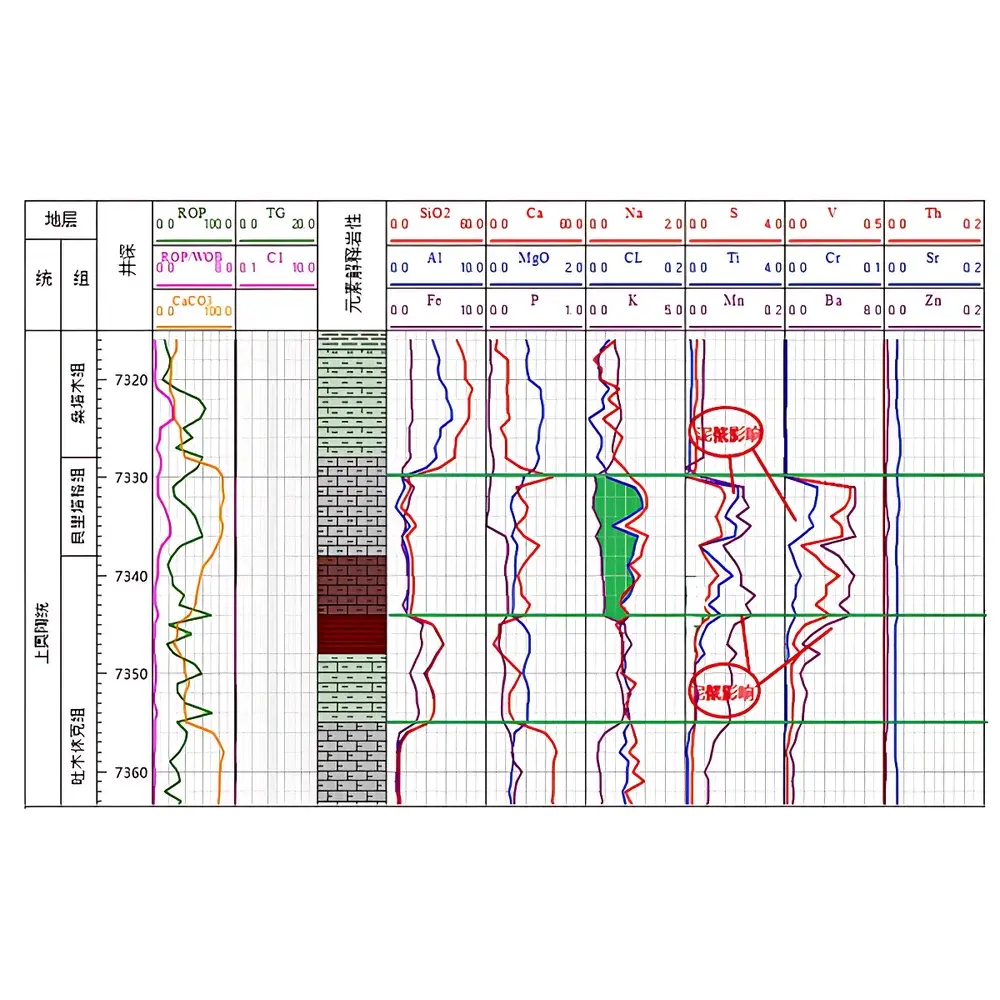
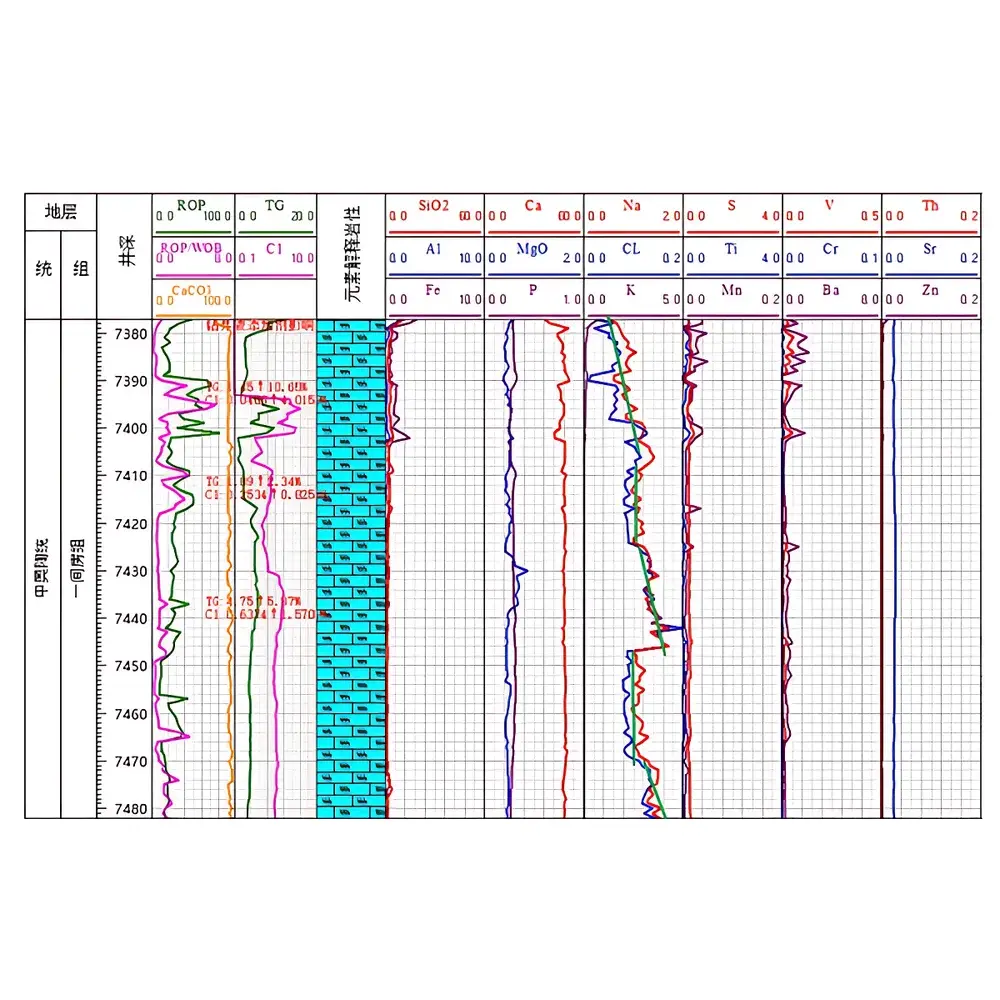
The system runs on a dedicated Windows-based application with fully localized Chinese UI and embedded geochemical interpretation modules. Pre-loaded factory calibrations eliminate the need for routine user standardization. Key software capabilities include: automatic spectral deconvolution using iterative least-squares fitting; lithology classification via Euclidean distance matching against a built-in library of >120 standardized rock types (e.g., quartz sandstone, dolomite, shale, basalt); batch processing of sequential cuttings with auto-generated stratigraphic logs; and customizable reporting templates compliant with Q/SY 128–2015 field report formats. All raw spectra, processed concentrations, acquisition parameters, and operator metadata are stored in a relational database with time-stamped entries, supporting retrospective QA/QC review and regulatory audits.
Applications
- Real-time lithological discrimination in on-site mud logging units during drilling operations.
- Quantitative assessment of clay mineral ratios (e.g., Al/Si, K/Al) for source rock maturity and diagenetic history modeling.
- Detection of trace metal anomalies (e.g., V/Ni, U/Th, As/Sb) associated with organic-rich intervals or hydrothermal alteration zones.
- Monitoring of drilling fluid contamination via Cl, Ca, and Ba profiles in cuttings.
- Supporting formation evaluation in complex carbonate or volcaniclastic sequences where optical microscopy fails due to grain size or alteration.
- Integration with petrophysical models requiring elemental-derived mineral volumes (e.g., using Na–Mg–Al–Si–Ca ternary diagrams).
FAQ
What sample preparation is required for cuttings analysis?
Minimal preparation is needed: cuttings are dried, homogenized, and pressed into 32-mm pellets using the supplied hydraulic press and mold set. No acid digestion or fusion is required.
Can the instrument analyze unconsolidated powders directly?
Yes—the top-illumination design accommodates loose powders in sample cups, though pressed pellets yield superior precision for routine logging due to reduced particle-size effects.
How does the system ensure long-term calibration stability?
It employs internal reference sources and periodic auto-checks against stored calibration spectra; drift correction is applied in real time using intensity ratios of stable matrix elements (e.g., Fe/Mn or Ca/Ti).
Is remote diagnostics or software update support available?
Firmware and software updates are distributed via secure FTP; remote desktop-assisted troubleshooting is supported under service agreement terms.
Does the system meet international export compliance for radiation-emitting devices?
Yes—it conforms to IEC 61010-1 (Safety Requirements for Electrical Equipment) and carries CE marking for electromagnetic compatibility (EMC) and low-voltage directive compliance. Export documentation includes full radiation shielding certification.



