
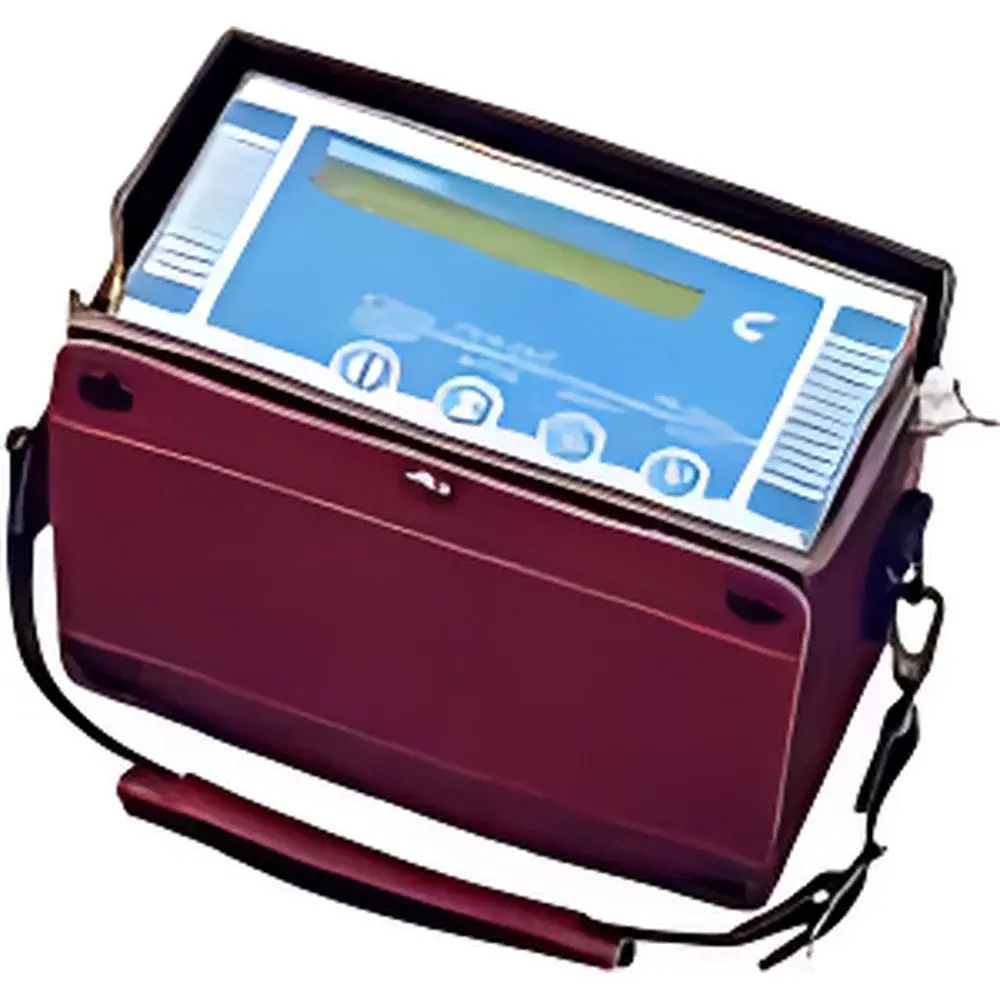
XP-308II Portable Formaldehyde Analyzer (by Kobunshi Keiki, Japan)
| Origin | Japan |
|---|---|
| Manufacturer Type | Authorized Distributor |
| Origin Category | Imported |
| Model | XP-308II |
| Price | Available Upon Request |
| Detection Gas | Formaldehyde (HCHO) |
| Detection Principle | Potentiostatic Electrolytic Sensor |
| Measurement Range (Standard) | 0.00–3.00 ppm |
| Minimum Resolution | 0.01 ppm |
| Sampling Method | Integrated Micro-Pump (Active Draw) |
| Display | Dual-mode — Digital Numeric + Analog Bar Graph |
| Power Supply | Six AA Alkaline Batteries or Optional DC Adapter |
| Battery Life | Approx. 100 Measurements per Set |
| Filter Lifetime | Approx. 100 Measurements (DNPH Cartridge) |
| Operating Temperature | 0 °C to +40 °C |
| Dimensions (W×H×D) | 175 × 140 × 86 mm |
| Weight | 2.5 kg |
| Standard Accessories | 5 × DNPH Filters, 6 × AA Batteries, Leather Carrying Case, Sampling Tube, 10 × Replacement Filter Discs, Stainless Steel Tweezers |
| Optional Accessories | DC Power Adapter, Data Export Software, RS-232 Communication Cable |
Overview
The XP-308II Portable Formaldehyde Analyzer is a field-deployable, electrochemical gas detection instrument engineered for precise, real-time quantification of gaseous formaldehyde (HCHO) in ambient air and indoor environments. Designed and manufactured by Kobunshi Keiki Co., Ltd. (Japan), the device implements a potentiostatic electrolytic sensing principle—where formaldehyde undergoes selective oxidation at a working electrode held at a fixed potential, generating a current linearly proportional to concentration. This method ensures high specificity in complex matrices, particularly when combined with the instrument’s proprietary DNPH (2,4-dinitrophenylhydrazine)-impregnated pre-filter cartridge, which chemically traps and removes common interferents such as acetaldehyde, nitrogen dioxide, and sulfur dioxide prior to sensor exposure. The XP-308II complies with China’s JJG 1022–2016 verification regulation for formaldehyde analyzers and holds a valid Chinese Metrological Instrument Type Approval Certificate (CPA), confirming its traceability to national standards. Its compact form factor, low power consumption, and dual-power capability (AA batteries or external DC supply) make it suitable for on-site compliance screening, post-renovation air quality audits, and routine occupational hygiene monitoring without reliance on laboratory infrastructure.
Key Features
- Potentiostatic electrolytic sensor with built-in temperature compensation for stable output across 0–40 °C operating range
- Integrated micro-pump enables active sampling at consistent flow rate—eliminating dependence on operator-induced airflow or diffusion-limited response
- On-site zero calibration function: no external zero-air source required; baseline adjustment performed directly in ambient background conditions
- Dual-display interface: high-contrast LCD shows numeric concentration (ppm, two decimal places) alongside real-time analog bar graph for rapid trend assessment
- Internal data logging capability stores up to 100 measurement records with timestamp; optional RS-232 interface supports export to PC for report generation and audit trail maintenance
- Modular filter system using standardized DNPH cartridges—each rated for ~100 measurements—ensures long-term sensor integrity and measurement reproducibility
- Robust mechanical design: impact-resistant housing, ergonomic grip, and IP54-rated ingress protection against dust and splashing water
Sample Compatibility & Compliance
The XP-308II is validated for direct analysis of formaldehyde in undiluted ambient air, residential and commercial indoor air, and workplace breathing zones. It meets the performance criteria outlined in GB/T 18204.2–2014 (China National Standard for Determination of Formaldehyde in Public Places) and aligns with ISO 16000-23:2012 (Indoor air — Part 23: Determination of formaldehyde — Active sampling method using DNPH-coated sorbent tubes followed by HPLC). While not a laboratory-grade reference method, its field accuracy (±5% of reading within 0.1–3.0 ppm range, per manufacturer validation data) satisfies Tier-2 screening requirements under national indoor air quality guidelines. The instrument supports GLP-aligned documentation workflows when used with optional data export software, enabling time-stamped records compliant with internal QA/QC protocols.
Software & Data Management
The optional XP-Link software (Windows-compatible) provides secure bidirectional communication via RS-232 cable. Users can download stored measurements, generate PDF reports with instrument ID, operator name, location tag, and calibration history, and export CSV files for statistical analysis in Excel or LIMS platforms. Audit-trail functionality logs all configuration changes, zero/calibration events, and firmware updates—supporting traceability in regulated environments. No cloud connectivity or remote access is implemented, preserving data sovereignty and minimizing cybersecurity exposure typical of IoT-enabled sensors.
Applications
- Routine indoor air quality (IAQ) assessments in newly constructed or renovated residential and office buildings
- Compliance verification against national formaldehyde exposure limits (e.g., China’s GB 50325–2020 limit of 0.07 mg/m³ ≈ 0.05 ppm for Class I civil buildings)
- Performance evaluation of formaldehyde removal products—including photocatalytic coatings, activated carbon filters, and air purifiers—via controlled chamber testing
- Field screening of building materials (e.g., particleboard, MDF, plywood) using desiccator or small-chamber emission methods (per JIS A 1912 or ASTM D6007)
- Ongoing occupational health surveillance in furniture manufacturing, textile dyeing, and resin production facilities
FAQ
Does the XP-308II require periodic factory recalibration?
Yes—annual sensor verification and full calibration against NIST-traceable formaldehyde standard gas are recommended to maintain metrological validity per JJG 1022–2016.
Can the instrument measure formaldehyde in humid environments?
It operates reliably up to 85% RH non-condensing; however, prolonged exposure above 90% RH may affect DNPH filter efficiency and sensor response time.
Is the DNPH filter compatible with other formaldehyde analyzers?
No—the XP-308II uses proprietary cartridge geometry and sealing; only Kobunshi Keiki OEM DNPH filters ensure correct residence time and chemical capture efficiency.
What is the typical response time (T90) under standard conditions?
Approximately 60 seconds from initial exposure to 90% of final reading, verified at 23 °C and 50% RH using 1.0 ppm formaldehyde challenge gas.
Does the device support ATEX or IECEx certification for hazardous area use?
No—it is designed exclusively for non-classified general-purpose environments and lacks intrinsic safety certification.
Related Products







