
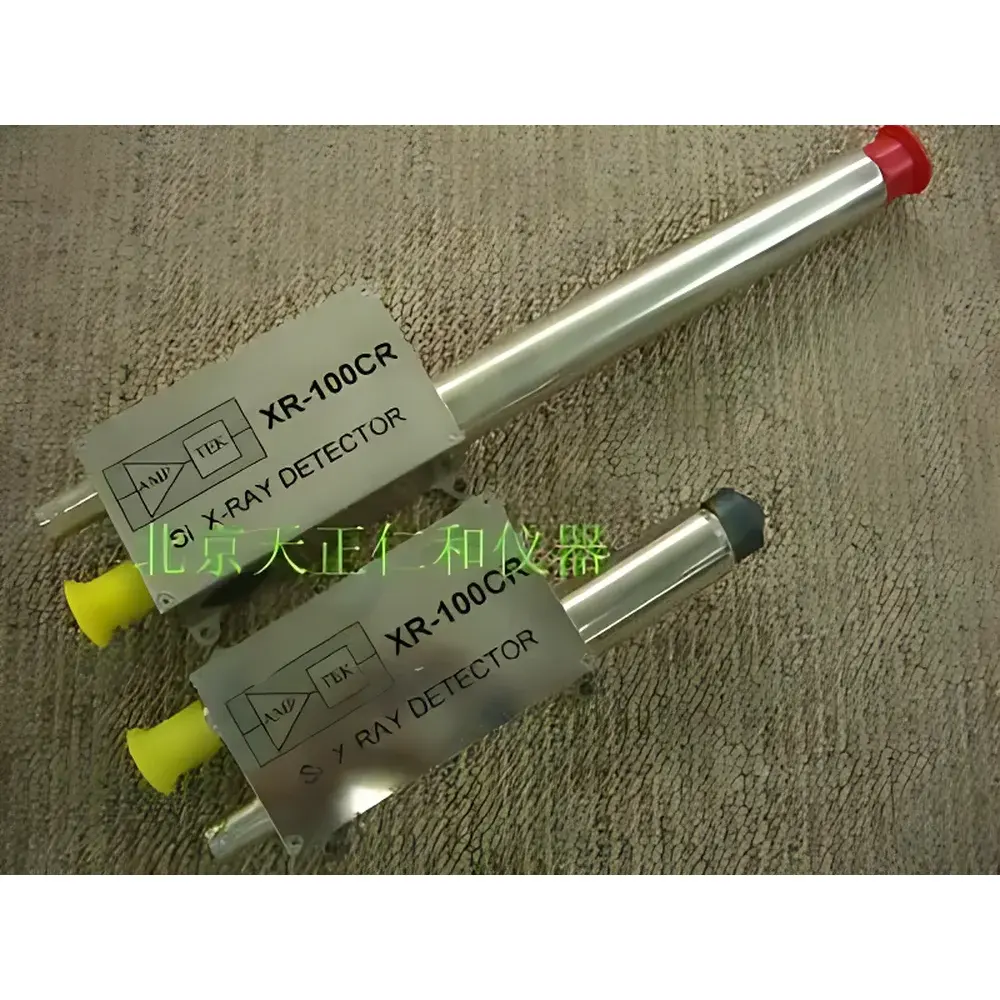
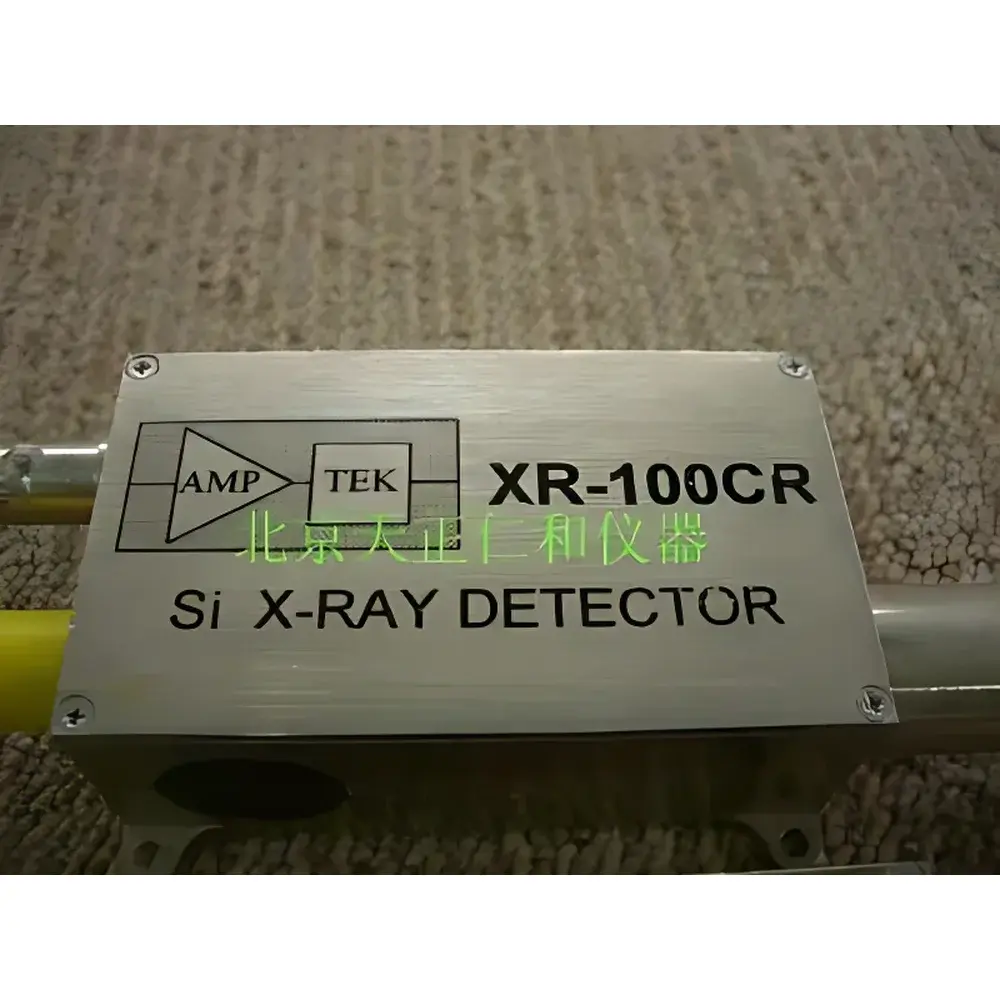
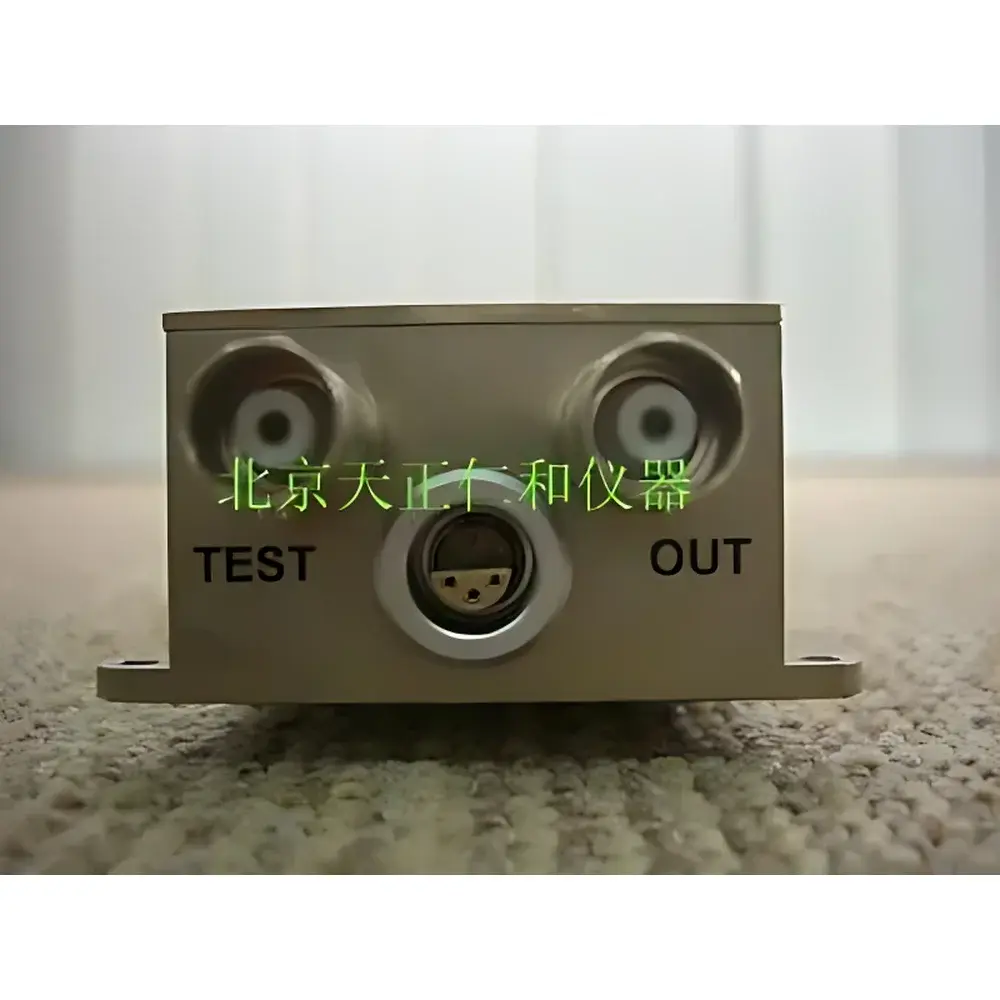
XR-100CR Si-PIN X-ray Detector with Thermoelectric Cooling
| Origin | USA |
|---|---|
| Manufacturer Type | Authorized Distributor |
| Origin Category | Imported |
| Model | XR-100CR |
| Pricing | Available Upon Request |
Overview
The XR-100CR is a high-performance, compact, solid-state X-ray detector engineered for precision spectroscopic applications across laboratory, field, and OEM integration environments. It utilizes a silicon p-i-n (Si-PIN) photodiode as the primary sensing element, operated under thermoelectric (Peltier) cooling to achieve stable, low-noise performance without liquid nitrogen. The detector employs a two-stage thermoelectric cooler to maintain the sensor at approximately −55 °C, actively regulated via an integrated temperature sensor and feedback-controlled thermal management circuitry. This architecture ensures consistent charge collection efficiency and energy resolution—critical for quantitative X-ray fluorescence (XRF), particle-induced X-ray emission (PIXE), and low-energy X-ray spectroscopy. Its hermetically sealed TO-8 package features a thin beryllium entrance window (12.5 or 25 µm), optimized for transmission of soft X-rays down to ~1 keV while maintaining mechanical integrity and vacuum compatibility. Designed for direct integration into analytical platforms—including portable XRF systems, teaching labs, space-borne instrumentation, and nuclear medicine prototypes—the XR-100CR delivers laboratory-grade spectral fidelity in a low-power (sub-1 W), lightweight (139 g), and robust mechanical form factor.
Key Features
- Silicon p-i-n (Si-PIN) detector with active two-stage thermoelectric cooling, enabling stable operation at −55 °C without cryogens
- Energy resolution of ≤149 eV FWHM at 5.9 keV (⁵⁵Fe), scalable across detector areas (5–25 mm²) and thicknesses (300–680 µm)
- Hermetically sealed TO-8 package with ultra-thin Be window (12.5 or 25 µm), supporting high transmission for soft X-ray detection (1–20 keV)
- Integrated charge-sensitive preamplifier with custom low-noise design, gain stability <20 ppm/°C, and negative-polarity output (1 mV/keV typical)
- Onboard temperature monitoring via calibrated Kelvin-scale readout through PX4-compatible software interface
- Low power consumption (<1 W total), compact dimensions (9.5 × 4.4 × 2.9 cm), and operational range of 0–40 °C ambient
- TÜV-certified for electrical safety and EMC compliance; suitable for GLP/GMP-aligned instrument design and FDA 21 CFR Part 11–ready data acquisition workflows
Sample Compatibility & Compliance
The XR-100CR supports non-destructive elemental analysis of solids, powders, thin films, and environmental samples in both vacuum and air (with appropriate window selection). Its 12.5 µm Be window enables detection of light elements including Na (1.04 keV), Mg (1.25 keV), Al (1.49 keV), and Si (1.74 keV), making it applicable to RoHS/WEEE screening, archaeometric provenance studies, soil and sediment contamination assessment, and cultural heritage material characterization. The detector complies with ISO 21043 (XRF instrumentation standards), ASTM E1598 (X-ray spectrometry terminology), and IEC 61000-6-3 (EMC emissions). Its solid-state construction and absence of moving parts or consumables ensure long-term reliability in field-deployable systems—validated for 5–10 years of continuous operation under controlled thermal cycling conditions.
Software & Data Management
The XR-100CR interfaces seamlessly with industry-standard multichannel analyzer (MCA) firmware and host software, including Amptek’s MCA8000D firmware and MCWin application suite. Spectral acquisition, real-time peak identification, background subtraction, and quantitative calibration (fundamental parameters or empirical) are fully supported via USB 2.0 communication. The embedded temperature sensor provides continuous thermal telemetry, enabling automatic gain correction and drift compensation algorithms. For regulated environments, the system supports audit-trail-enabled data logging, user-access controls, and electronic signature workflows compatible with FDA 21 CFR Part 11 requirements when deployed within validated AXAS-class acquisition platforms. Raw spectrum files (.spe, .mca) are exportable in ASCII or binary formats for third-party analysis (e.g., PyMCA, AXIL, QXAS).
Applications
- Portable and benchtop XRF analyzers for RoHS/WEEE compliance testing and scrap metal sorting
- OEM integration into PIXE, SEM-EDS, and synchrotron beamline end-stations
- Nuclear safeguards and environmental gamma/X-ray monitoring (e.g., landfill leachate, NORM surveys)
- Teaching laboratories for undergraduate physics and materials science spectroscopy courses
- Space-based instrumentation for planetary surface composition mapping (e.g., Mars rovers, lunar landers)
- Mössbauer spectrometry detectors requiring high-resolution, low-background X-ray counting
- Cultural heritage analysis—including pigment identification, corrosion layer characterization, and manuscript ink mapping
FAQ
What cooling method does the XR-100CR use, and what is its operating temperature?
The XR-100CR employs a two-stage thermoelectric (Peltier) cooler to stabilize the Si-PIN diode at approximately −55 °C. Temperature is continuously monitored and regulated via an integrated sensor and closed-loop control circuit.
Is liquid nitrogen required for operation?
No. The XR-100CR is a fully solid-state, cryogen-free detector designed for maintenance-free, field-deployable operation.
Can the XR-100CR detect light elements such as sodium or magnesium?
Yes—when equipped with the optional 12.5 µm Be window, it achieves sufficient transmission below 1.5 keV to resolve Kα lines from Na, Mg, Al, and Si.
What is the typical energy resolution specification, and how is it measured?
Resolution is specified as ≤149 eV FWHM at 5.9 keV (⁵⁵Fe source), measured under standard acquisition conditions (shaping time constant optimized for resolution vs. count rate trade-off).
Does the detector support integration into custom OEM instruments?
Yes. The XR-100CR is supplied with full electrical interface documentation (pinout, voltage rails, signal timing), mechanical drawings, and driver-level SDKs for seamless integration into proprietary analytical platforms.






