
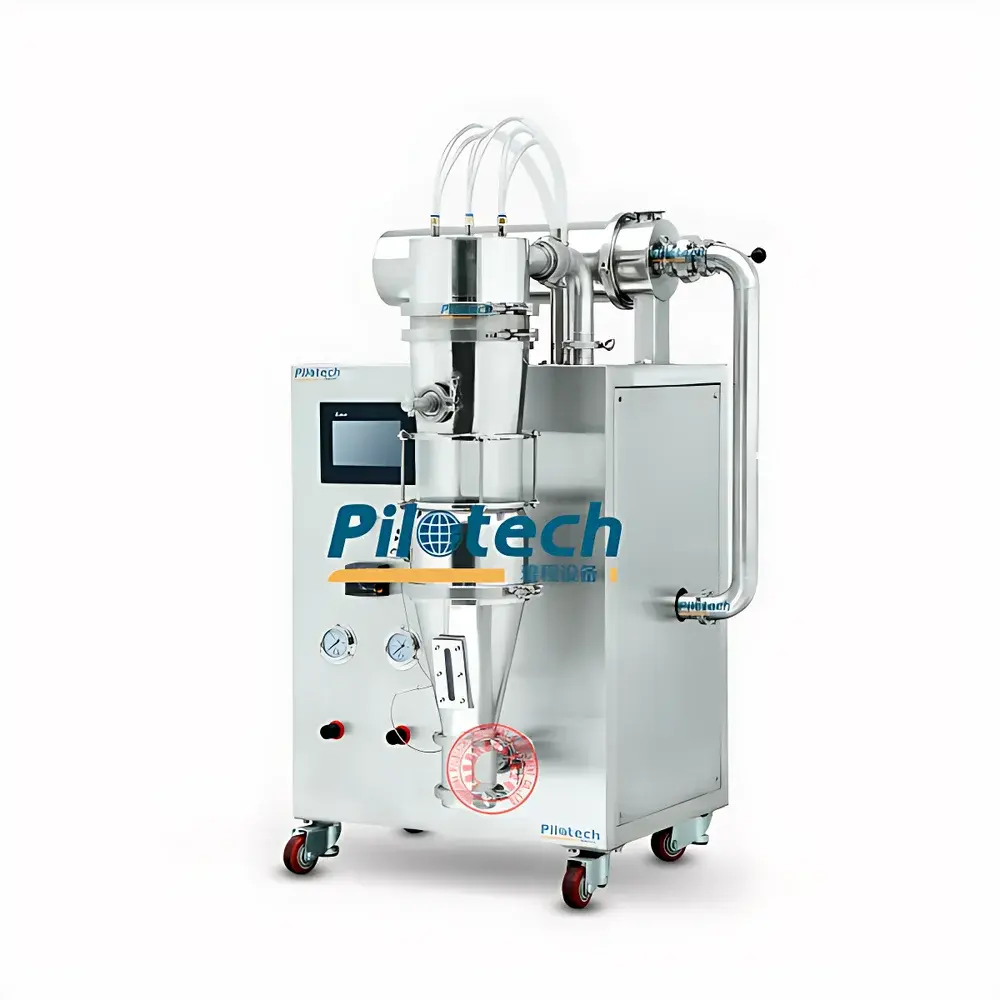
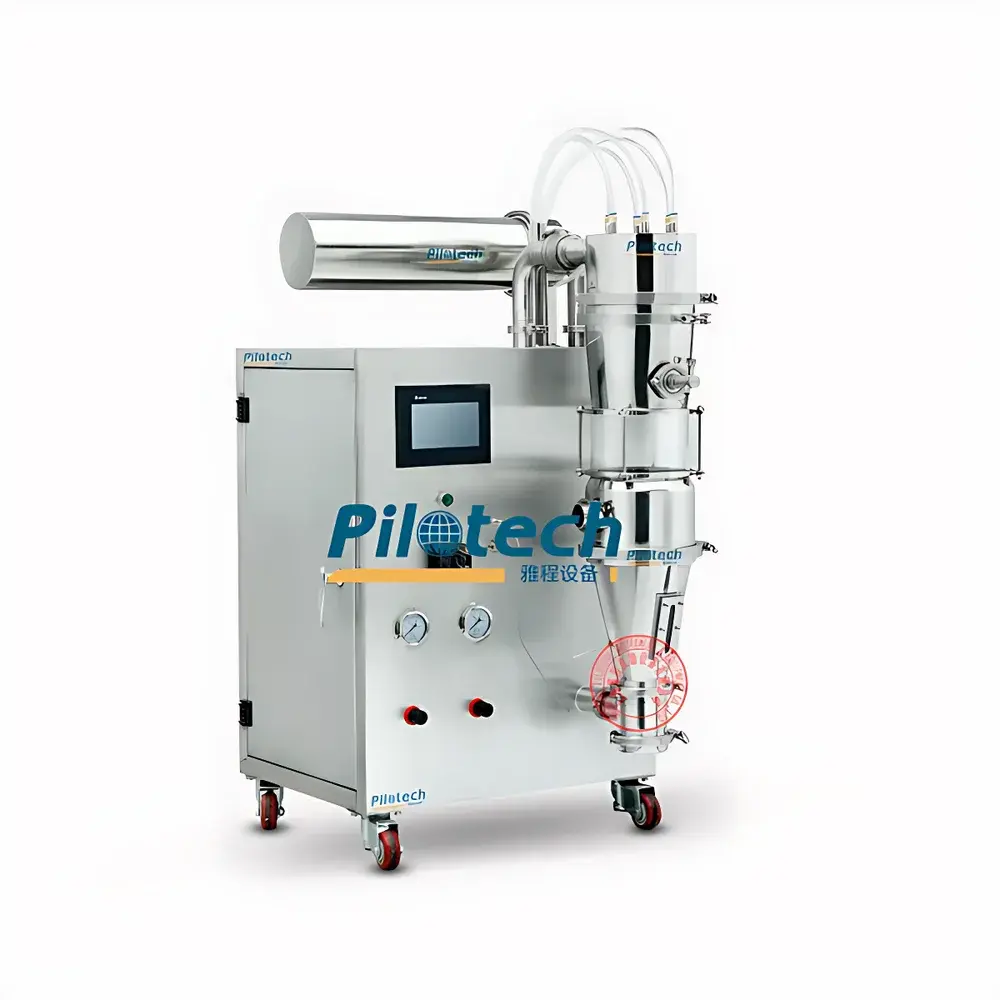
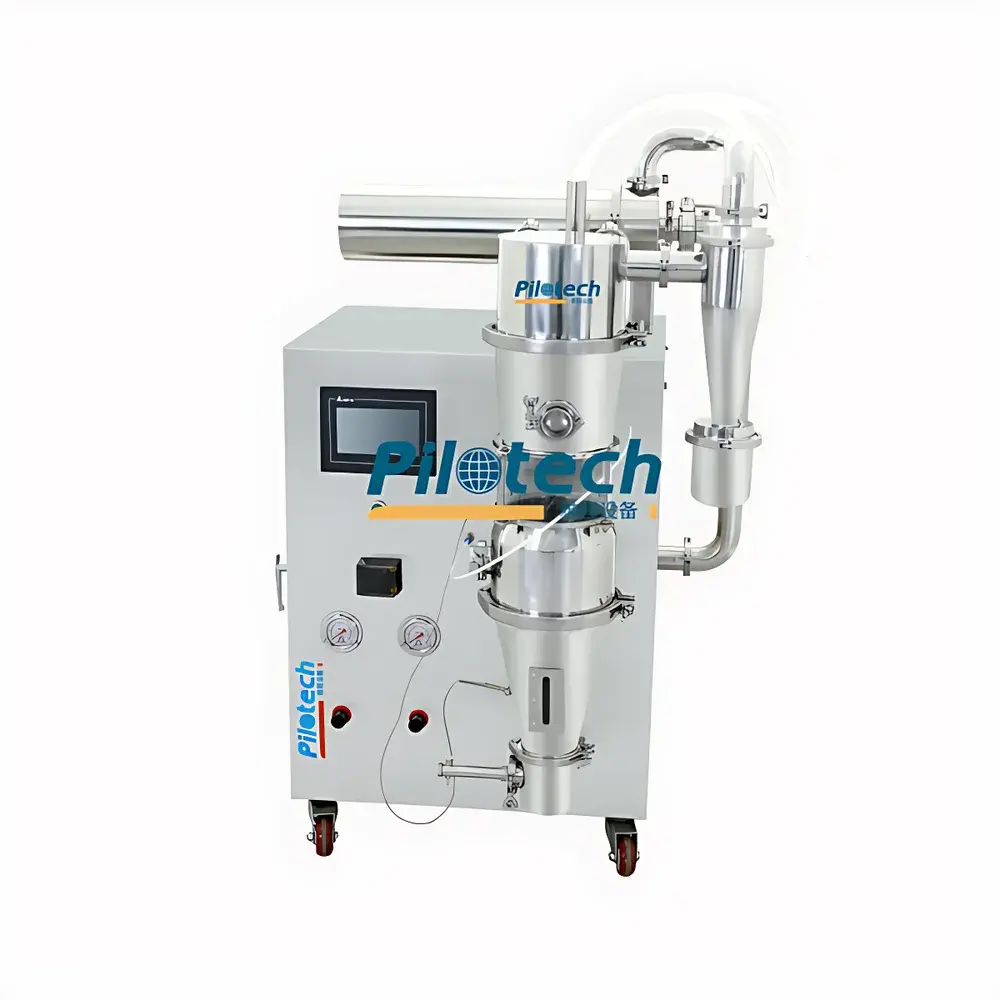
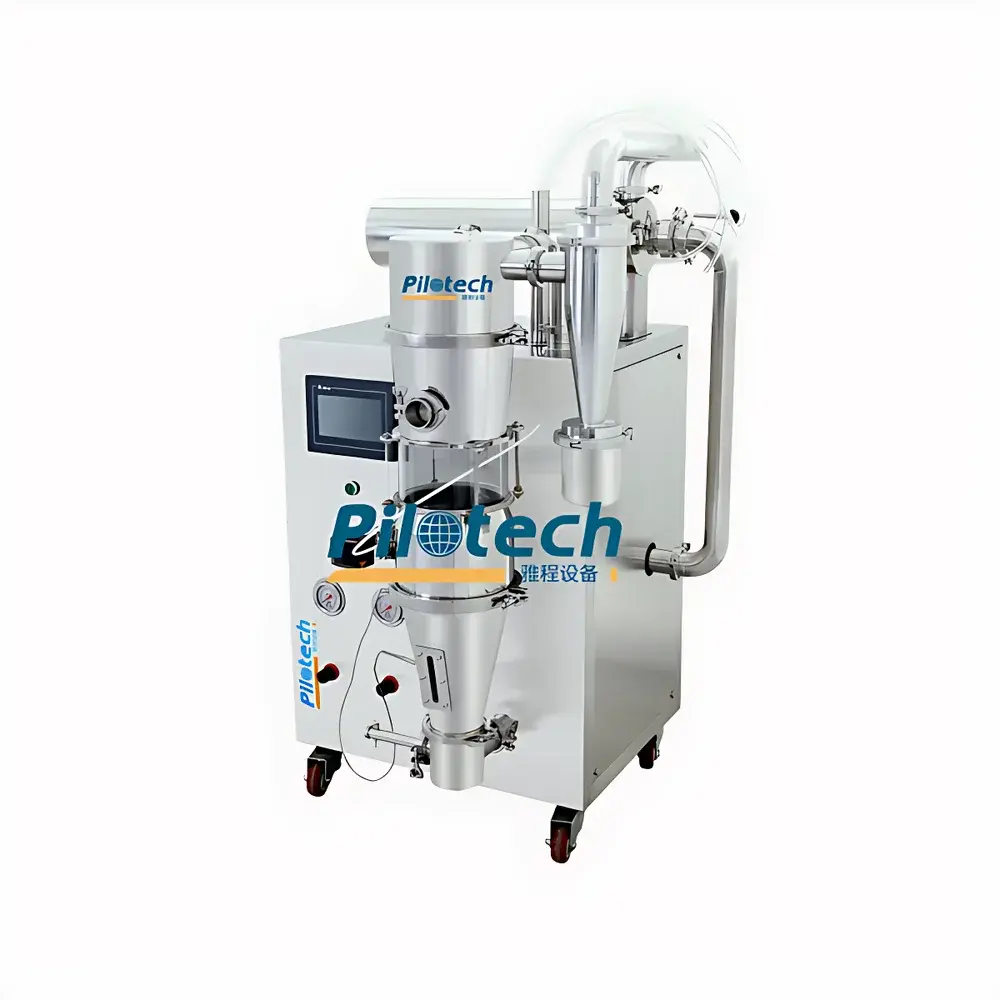
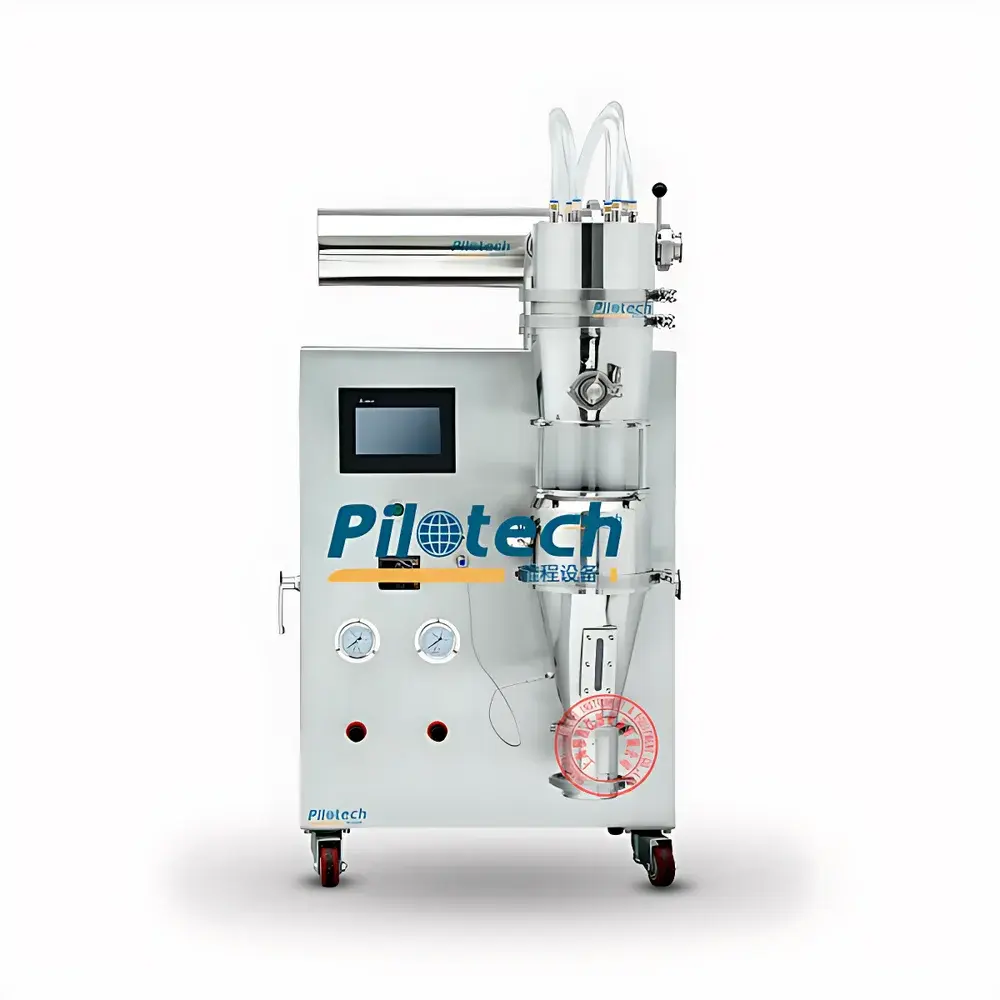
Yacheng PILOTECH YC-1000 Integrated Lab-Scale Spray Dryer, Fluidized Bed Granulator & Coater
| Key | Brand: Yacheng/PILOTECH |
|---|---|
| Origin | Shanghai, China |
| Manufacturer Type | Direct Manufacturer |
| Country of Origin | China |
| Model | YC-1000 |
| Max Feed Rate (Spray Drying) | 1500 mL/h |
| Inlet Air Temperature Range (Spray Drying) | 105–200 °C |
| Fluidized Bed Inlet Air Temp | 40–150 °C |
| Pump Flow Range | 0–1500 mL/h |
| Atomizing Air Pressure | 1–3 bar |
| Drying Chamber Volume | 10 L |
| Construction | Full 316L Stainless Steel + Borosilicate Glass Expansion Chamber |
| Heating Power | 3 kW |
| Total Electrical Load | 5 kW (220 V/50 Hz) |
| Minimum Sample Requirement | 50 g per granulation batch |
| Compliance | Designed for GLP-compliant R&D workflows |
Overview
The Yacheng PILOTECH YC-1000 is a fully integrated, benchtop-scale unit engineered to perform four core solid dosage development functions—spray drying, fluidized bed spray granulation, fluidized bed drying, and film coating—within a single, compact platform. It operates on the principle of rapid solvent evaporation via concurrent hot-air atomization (for spray drying) and controlled particle growth through binder solution atomization onto fluidized seed particles (for granulation), followed by thermally regulated drying or polymer-based coating under precise airflow and temperature conditions. This multi-mode architecture eliminates inter-unit transfer losses, reduces cross-contamination risk, and enables direct process translation from lab-scale formulation screening to pilot-scale parameter optimization. The system is specifically engineered for heat-sensitive biologics, amorphous solid dispersions, botanical extracts, and labile APIs where thermal degradation must be minimized without compromising particle morphology control.
Key Features
- Single-platform integration of spray drying, fluidized bed granulation, drying, and coating—reducing footprint, capital cost, and method transfer complexity.
- Compact design occupying only 0.5 m²; mobile on casters with integrated leveling feet for stable operation in standard fume hoods or ISO Class 7 clean benches.
- Full 316L stainless steel construction with borosilicate glass expansion chamber (10 L volume) for real-time process observation and residue-free cleaning.
- Dual-mode PID-controlled heating: independent inlet air temperature regulation for spray drying (105–200 °C) and fluidized bed processing (40–150 °C), enabling low-temperature granulation of thermolabile actives.
- Two-fluid nozzle system with adjustable atomizing air pressure (1–3 bar) and programmable peristaltic feed pump (0–1500 mL/h) for reproducible droplet size distribution and binder deposition control.
- PLC-based automation with 7-inch color LCD touchscreen interface displaying real-time parameters: inlet/outlet temperatures, blower frequency, fluidized bed temperature, pump speed, pulse-jet backflush interval, and alarm status.
- Integrated safety logic: automatic shutdown sequence upon “Stop” command—halting heater and pump while sustaining fan operation to prevent thermal soak-back and coil damage.
Sample Compatibility & Compliance
The YC-1000 accommodates aqueous solutions, ethanol/water mixtures, and other volatile solvent systems compatible with standard pharmaceutical excipients (e.g., HPMC, PVP, lactose, microcrystalline cellulose). Its minimum sample requirement of 50 g per granulation run supports early-stage formulation feasibility studies with limited API availability. The system meets mechanical and electrical safety requirements per IEC 61000-6-2/6-4 and is designed to support Good Laboratory Practice (GLP) and early-phase GMP-aligned workflows. Data integrity features—including timestamped parameter logging, user-access levels, and non-erasable audit trails—facilitate compliance with FDA 21 CFR Part 11 expectations for electronic records in preclinical and clinical trial material development. All wetted parts are electropolished and passivated to ASTM A967 standards.
Software & Data Management
The embedded control system records all operational parameters at 1-second intervals to internal flash memory, exportable via USB to CSV format for statistical analysis (e.g., DoE, PCA, or PAT modeling). No proprietary software installation is required—raw data files are natively readable in Excel, MATLAB, or JMP. Optional Ethernet connectivity enables remote monitoring and integration into centralized lab informatics platforms (e.g., LabVantage, STARLIMS) via Modbus TCP. The HMI supports multi-language UI (English, Chinese, Korean) and allows saving up to 99 user-defined process recipes with version-stamped metadata (operator ID, date/time, batch ID).
Applications
- Pharmaceutical R&D: Amorphous solid dispersion preparation, sustained-release granule development, taste-masking coatings, and nanoparticle spray drying.
- Nutraceuticals & Functional Foods: Encapsulation of omega-3 oils, probiotics, vitamins, and plant polyphenols using maltodextrin or gum arabic matrices.
- Materials Science: Synthesis of ceramic precursors (e.g., LiCoO₂ cathode materials), polymer microparticles for 3D printing feedstocks, and pigment agglomerates for inkjet formulations.
- Agrochemicals: Water-dispersible granules (WDGs) of pesticides and micronutrient complexes with controlled dissolution profiles.
- Biotechnology: Lyophilization precursor generation, enzyme immobilization on porous carriers, and vaccine adjuvant particle engineering.
FAQ
What is the minimum viable sample quantity for granulation trials?
A minimum of 50 g of dry powder or dissolved solids is required to establish stable fluidization and uniform binder distribution in the YC-1000’s 10-L chamber.
Can the system handle organic solvents beyond water/ethanol blends?
Yes—provided the solvent’s flash point exceeds 40 °C and vapor pressure remains compatible with the system’s maximum operating temperature and explosion-proof blower rating (ATEX optional). Consult technical documentation for solvent compatibility matrix.
Is validation support available for IQ/OQ protocols?
Yacheng provides standardized IQ/OQ test scripts, calibration certificates for all critical sensors (PT100 RTDs, pressure transducers), and traceable NIST-certified reference materials for temperature and flow verification.
How is particle size distribution influenced by operational parameters?
Primary control variables include atomizing air pressure (affects Sauter mean diameter), inlet air temperature (impacts drying kinetics and shell formation), and fluidization velocity (determines residence time and attrition rate); DOE studies using the YC-1000 have demonstrated ±5% CV in Dv50 across replicate runs under locked parameters.
Does the system comply with regulatory requirements for clinical trial material manufacturing?
While not certified for commercial GMP production, the YC-1000’s design, documentation package, and data integrity architecture align with ICH Q5C, Q8(R2), and FDA guidance on early-phase CMC development—supporting IND-enabling studies when operated within validated parameter spaces.



