
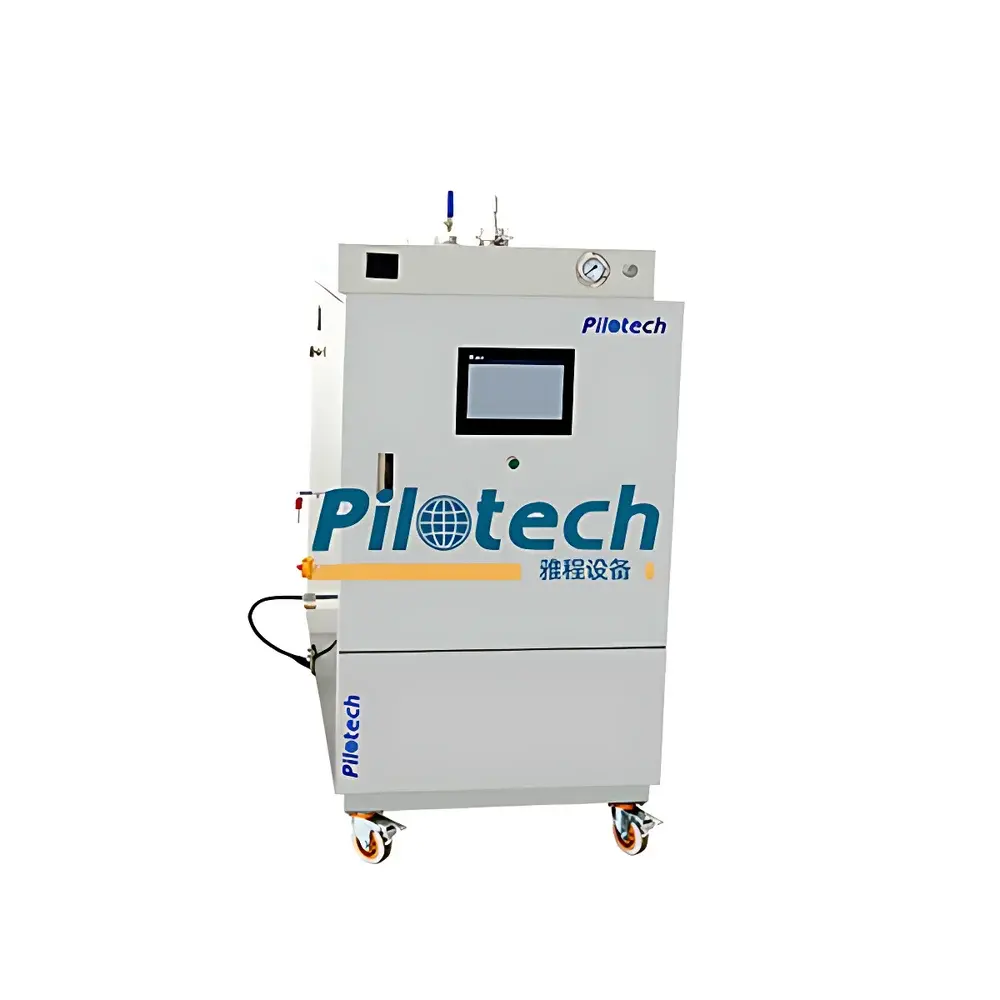
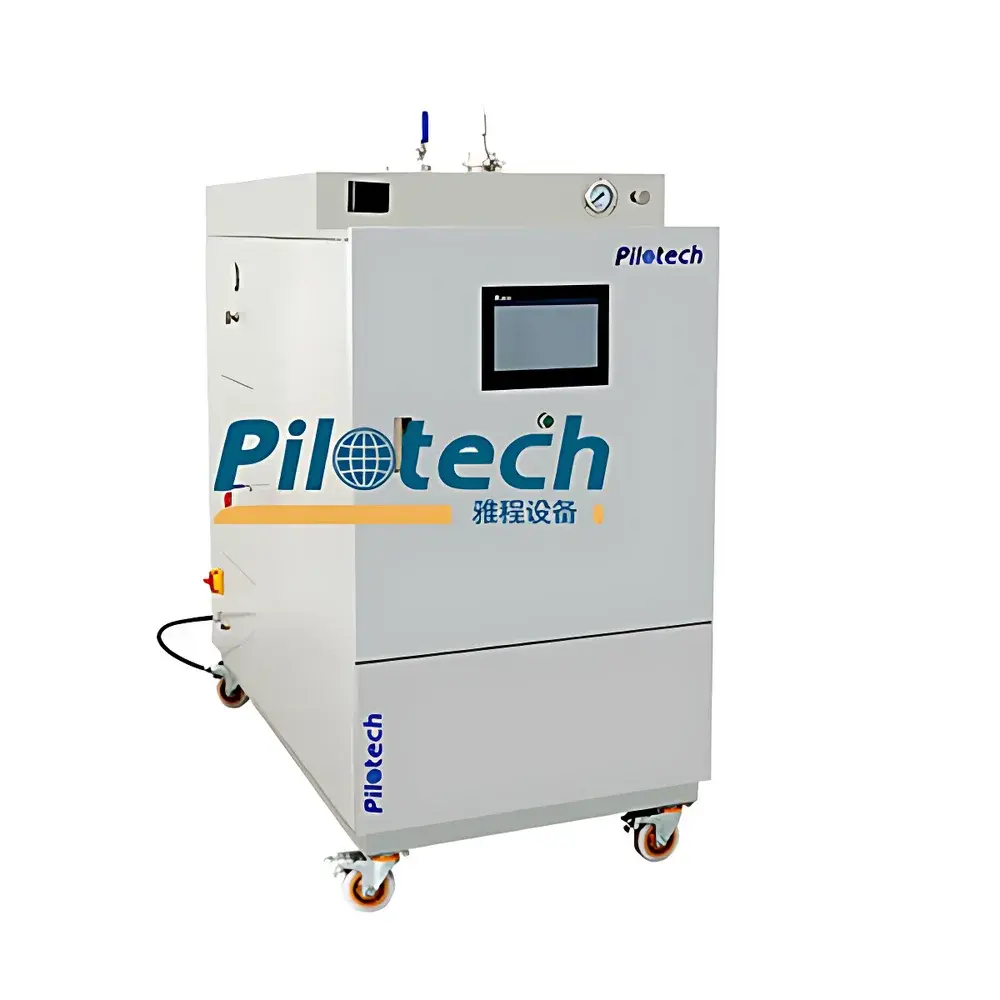
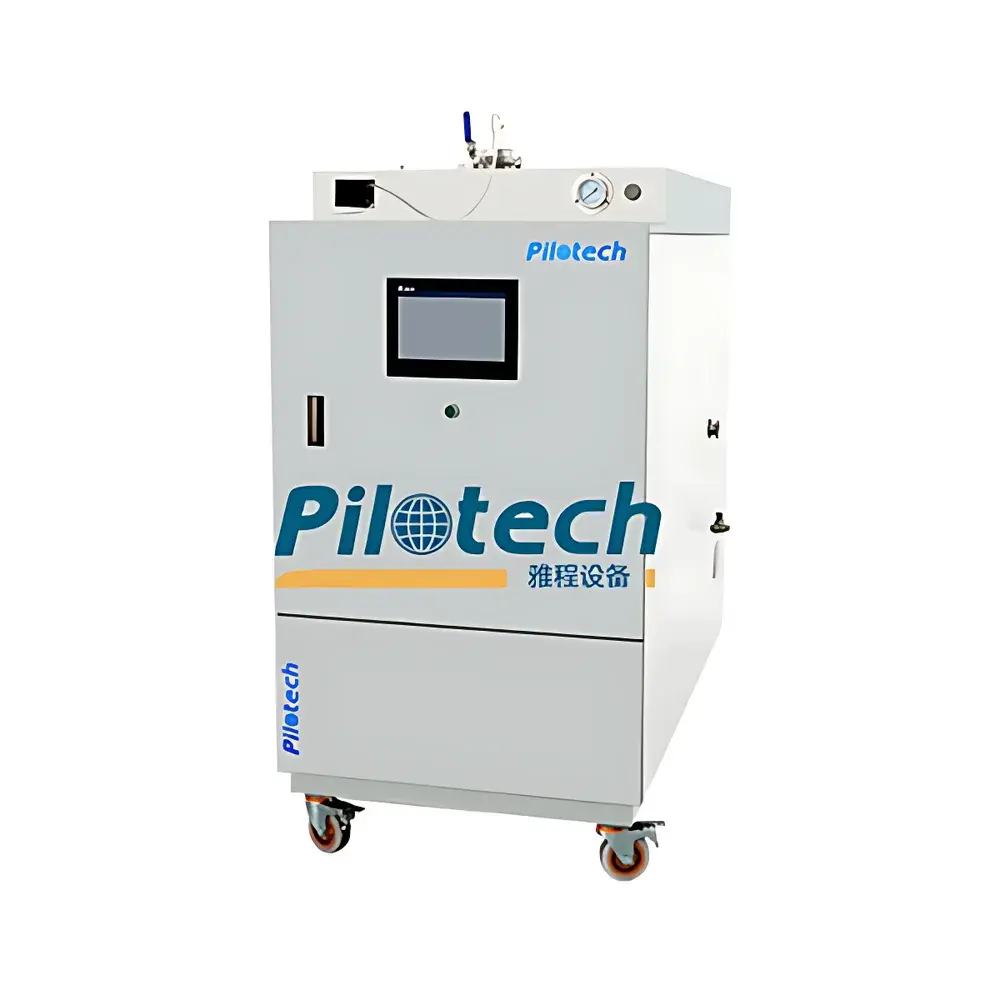
Yacheng YC-01 Laboratory Spray Freeze Dryer
| Brand | Yacheng / PILOTECH |
|---|---|
| Origin | Shanghai, China |
| Manufacturer Type | Direct Manufacturer |
| Product Category | Domestic |
| Model | YC-01 |
| Instrument Type | Standard Shelf-Type Freeze Dryer |
| Application Scope | Laboratory Use |
| Maximum Batch Capacity | 3 L per cycle |
| Spray Freezing Rate | 300–2500 mL/h |
| Collection Efficiency | ≥98% (based on 15% dextrin solution) |
| Construction Material | SUS304 Stainless Steel |
| Control System | PLC with 10-inch Color Touchscreen |
| Integrated Refrigeration | Built-in Compressor (No External Chiller Required) |
| Power Supply | 220 V, 3 kW |
| Heating Method | Radiant Heating |
| Vacuum Interface & Compressed Air Inlet | Standard Fitted |
| Footprint | ~1 m² |
| Mobility | Equipped with Casters |
Overview
The Yacheng YC-01 Laboratory Spray Freeze Dryer is an integrated, benchtop-scale system engineered for the controlled production of freeze-dried microparticles from liquid feedstocks via simultaneous spray freezing and primary drying under vacuum. Unlike conventional lyophilizers that rely on static tray freezing followed by sublimation, the YC-01 employs a dynamic cryo-spray process: liquid samples are atomized through a precision nozzle into a cryogenic zone—typically cooled by internal refrigeration or optional liquid nitrogen integration—where droplets undergo rapid solidification (<100 ms) into discrete ice microspheres. This morphology yields high specific surface area, uniform pore structure, and minimal thermal stress—critical for preserving conformational integrity in biologics, enzymes, probiotics, and other thermolabile actives. The system operates as a closed-loop unit with built-in compressor-based cooling, eliminating dependency on external chillers or cryogens for standard operation. Its design aligns with fundamental principles of cryo-microencapsulation and secondary drying kinetics governed by heat and mass transfer under low-pressure conditions (typically ≤10 Pa).
Key Features
- Integrated refrigeration architecture: Self-contained hermetic compressor system maintains freezing chamber temperatures down to –50 °C without auxiliary cooling infrastructure.
- PLC-controlled automation: 10-inch industrial-grade touchscreen interface enables real-time monitoring and logging of chamber temperature, vacuum pressure, spray rate, and heating plate setpoints.
- Center-aligned cryo-spray nozzle: Patented nozzle positioning ensures symmetrical droplet trajectory and uniform ice particle distribution across the freezing zone.
- High-efficiency particulate collection: Bottom-mounted product collector with motorized lift mechanism achieves ≥98% recovery yield (validated with 15% dextrin solutions per internal protocol).
- Radiant heating system: Programmable shelf heating (range: ambient to +60 °C) supports controlled secondary drying while minimizing localized overheating.
- Compact footprint & mobility: Unit occupies approximately 1 m² floor space and features locking casters for flexible lab reconfiguration.
- Materials compliance: Entire wetted path and chamber constructed from electropolished SUS304 stainless steel, meeting basic hygienic design requirements for R&D-scale pharmaceutical and food applications.
Sample Compatibility & Compliance
The YC-01 accommodates aqueous and organic solvent-based formulations—including protein solutions, bacterial suspensions, polymer dispersions, and nanoemulsions—with viscosities up to 500 cP (when paired with compatible peristaltic feed pumps). Feed rates are adjustable between 300–2500 mL/h, enabling optimization for particle size distribution (typical range: 10–100 µm post-drying). While not certified for GMP manufacturing, the system’s sealed construction, audit-trail-capable control logs, and material traceability support GLP-aligned documentation practices. It complies with general electrical safety standards (IEC 61010-1) and may be operated within ISO Class 7 or cleaner environments when installed with appropriate HVAC integration.
Software & Data Management
The embedded HMI firmware records timestamped operational parameters—including chamber temperature, vacuum level, spray duration, and heating profile—at user-defined intervals (1–60 s). Export formats include CSV and PDF reports; data can be transferred via USB port or Ethernet connection. Though not natively 21 CFR Part 11 compliant, the system supports manual electronic record retention and provides password-protected user roles (Operator, Technician, Administrator) to enforce procedural accountability. Optional third-party SCADA integration is feasible via Modbus TCP protocol.
Applications
- Preformulation studies of inhalable dry powders for pulmonary delivery
- Rapid generation of stable enzyme or vaccine powder intermediates for stability testing
- Production of porous microparticles for controlled-release excipient development
- Lyophilization optimization trials prior to scale-up on pilot or production freeze dryers
- Material science research involving amorphous solid dispersion stabilization
- Academic investigation of ice nucleation kinetics and crystallinity modulation under spray-freezing conditions
FAQ
What is the maximum batch volume the YC-01 can process in a single run?
The system supports up to 3 L of liquid feed per cycle, with continuous feeding capability during active spray freezing.
Does the YC-01 require external liquid nitrogen or chilled glycol?
No—it features an integrated refrigeration compressor capable of sustaining sub-zero freezing temperatures without external cryogenic support.
Can the YC-01 be used for sterile processing?
It is not designed for aseptic operation; however, it may be installed in classified environments and sterilized via vaporized hydrogen peroxide (VHP) after validation.
Is the control system compliant with FDA 21 CFR Part 11?
The base configuration does not include electronic signature or audit trail features required for Part 11 compliance, though data export and user access controls meet foundational ALCOA+ principles.
What maintenance is required for long-term reliability?
Routine tasks include vacuum pump oil changes every 500 operating hours, nozzle inspection/cleaning after each use, and annual calibration verification of temperature and pressure sensors.
Related Products



