
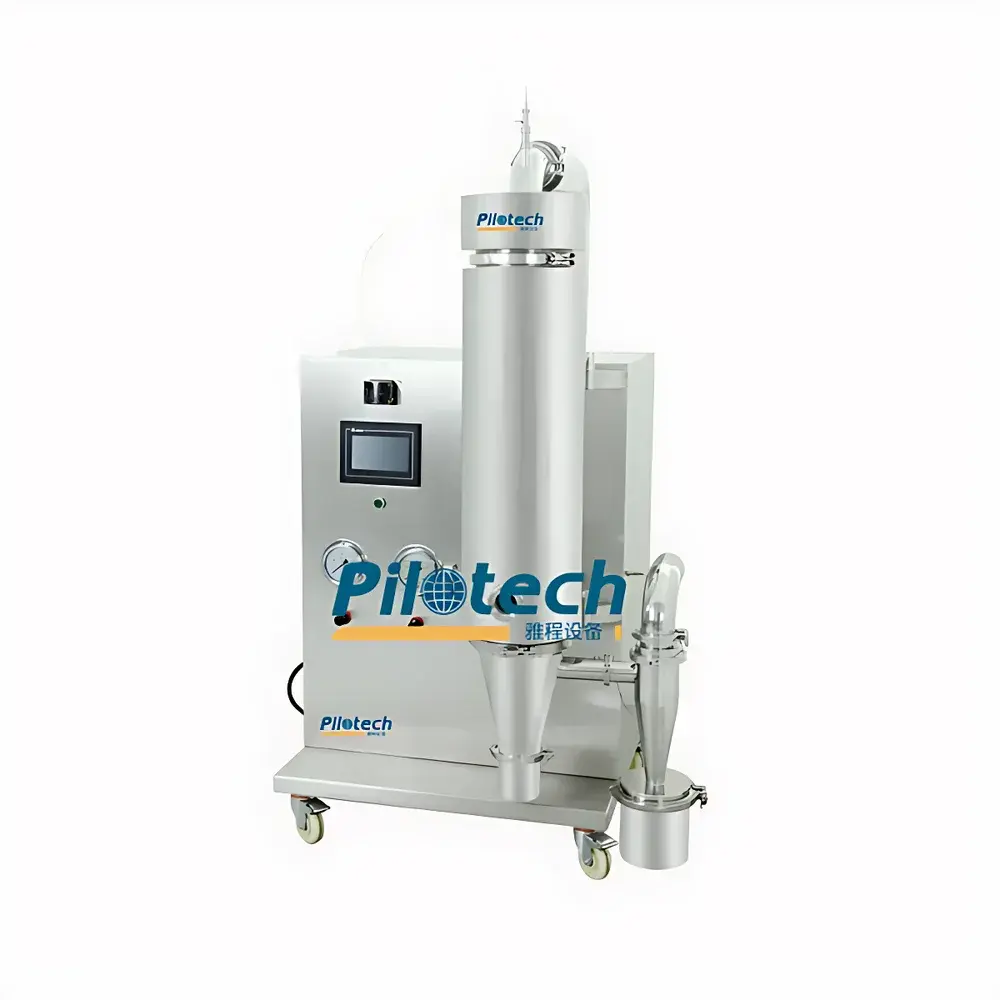
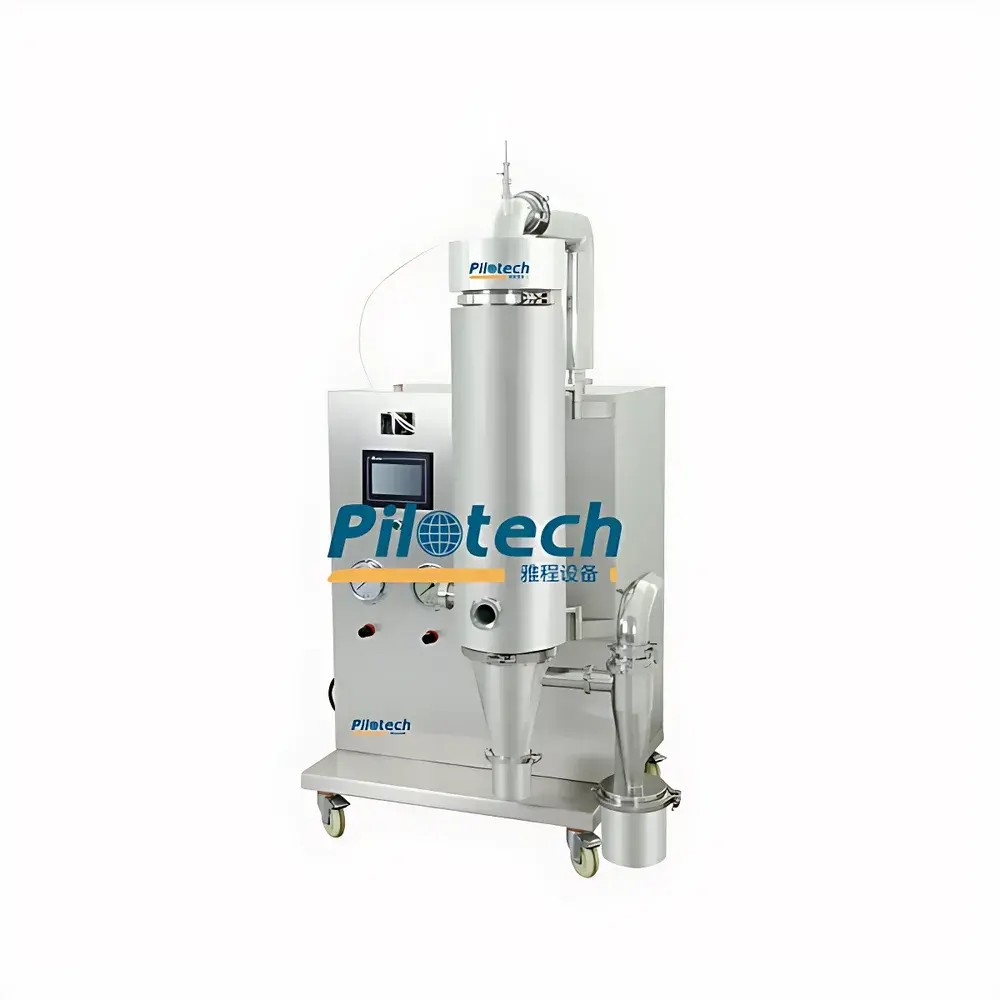
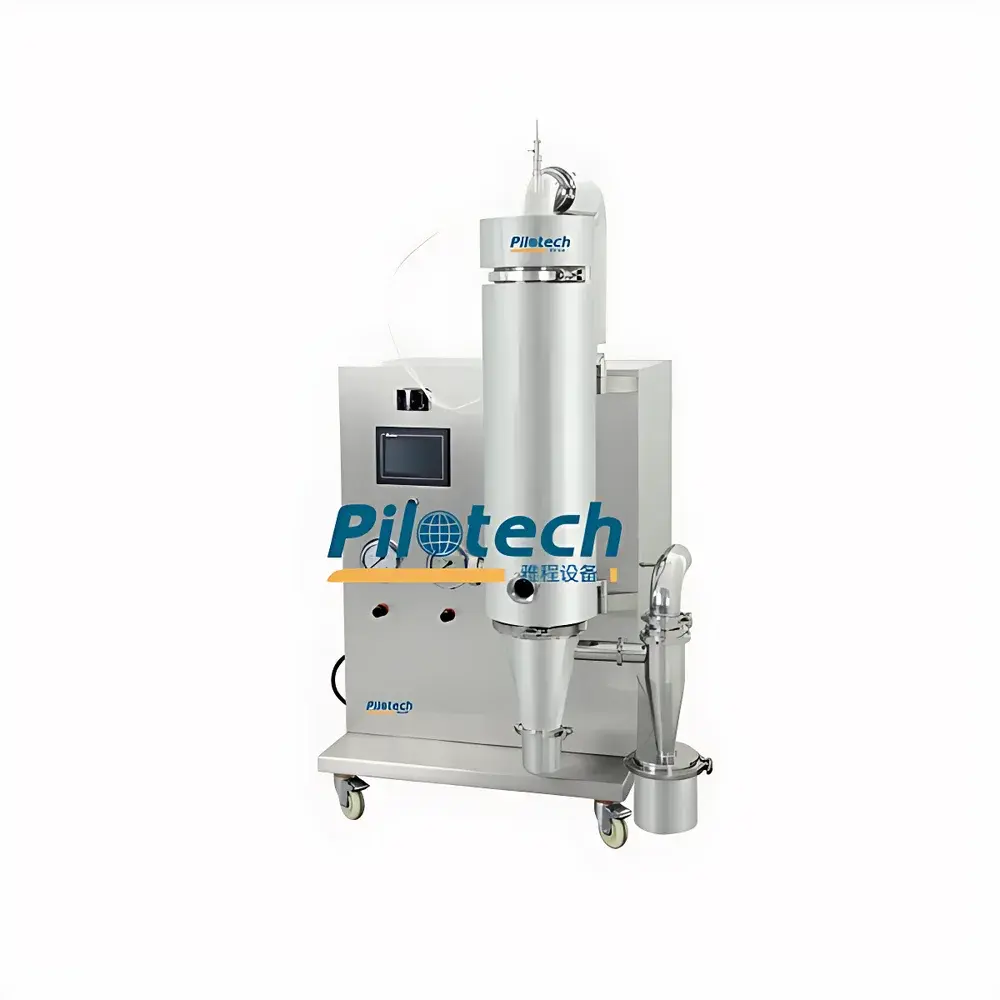
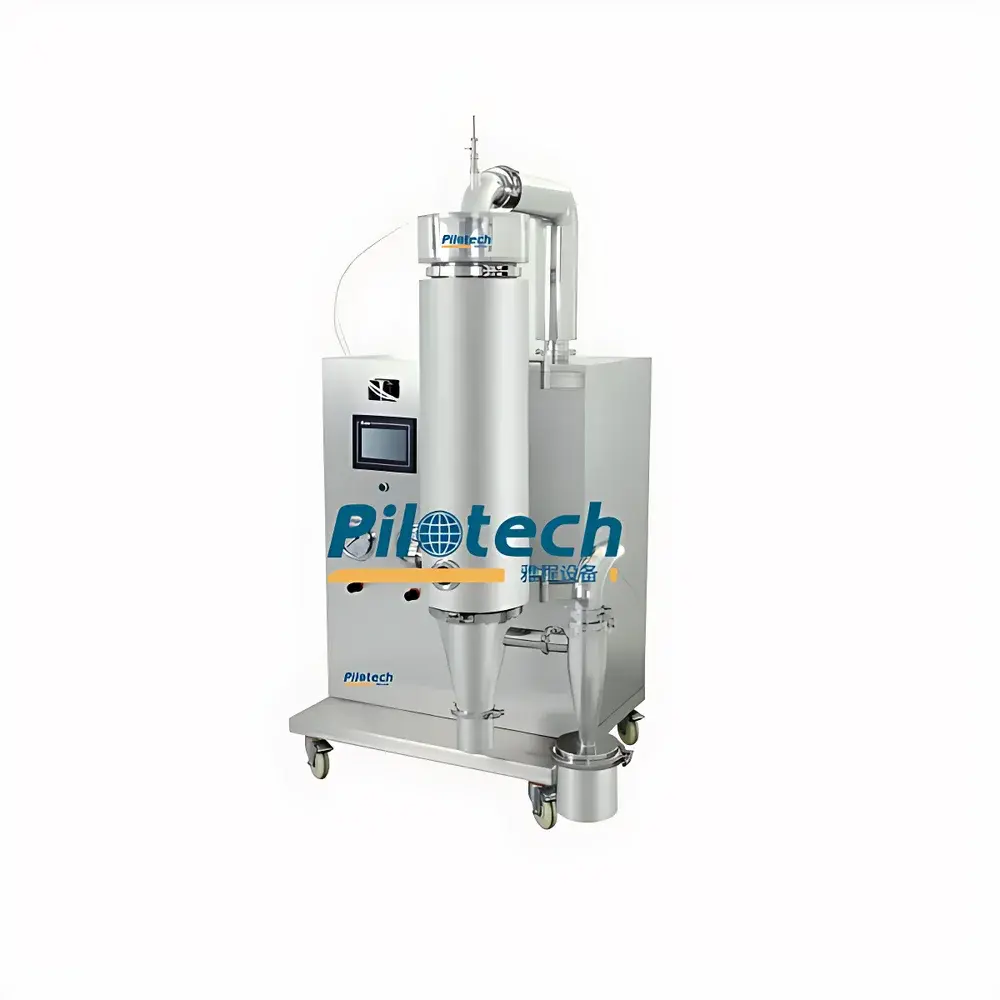
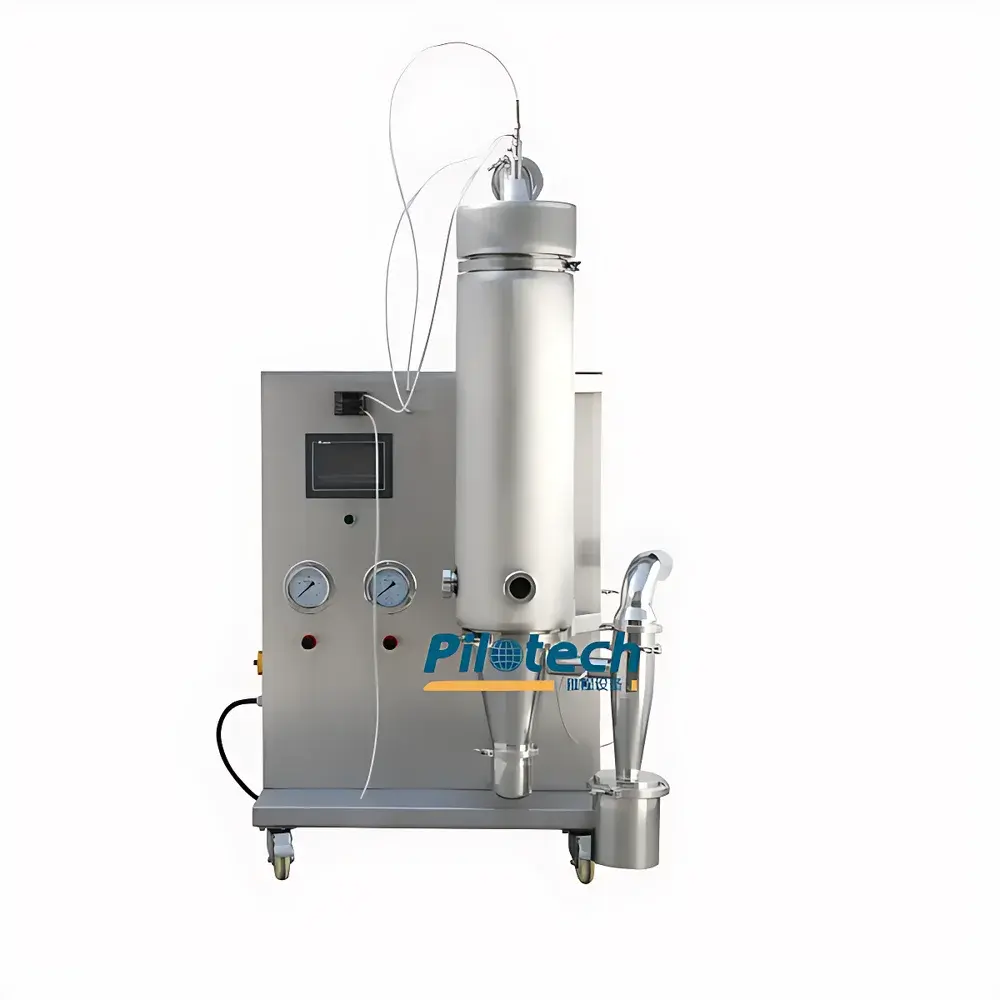
Yacheng YC-018 Pilot-Scale Spray Dryer
| Brand | Yacheng / PILOTECH |
|---|---|
| Origin | Shanghai, China |
| Manufacturer Type | Direct Manufacturer |
| Country of Origin | China |
| Model | YC-018 |
| Sample Type | Aqueous solutions only |
| Max Feed Rate | 3000 mL/h |
| Inlet Air Temperature Range | 105–280 °C |
| Particle Size Range | 1–80 µm |
Overview
The Yacheng YC-018 Pilot-Scale Spray Dryer is a benchtop-to-pilot transition system engineered for reproducible, scalable powder production from aqueous feedstocks. It operates on the principle of single-stage concurrent spray drying: liquid feed is atomized via a pneumatic nozzle into fine droplets, which are rapidly dried by hot inlet air in a stainless-steel drying chamber. The short residence time (1.0–1.5 s) ensures minimal thermal exposure—critical for thermolabile compounds including enzymes, probiotics, natural extracts, and biopolymer suspensions. Designed to bridge laboratory discovery and process development, the YC-018 supports continuous operation at variable feed rates (100 mL to 3000 mL/h), enabling method transfer validation under GMP-aligned conditions. Its modular architecture integrates seamlessly into QC labs, formulation R&D units, and early-stage process engineering workflows.
Key Features
- Dual-mode control system: Full automatic PID-regulated operation with real-time dynamic visualization on a 7-inch color LCD touchscreen—including animated airflow and temperature profiles.
- Wide thermal operating envelope: Inlet air temperature precisely adjustable from 105 °C to 280 °C; outlet air temperature controllable between 30 °C and 140 °C—enabling optimization for both heat-sensitive botanicals and high-decomposition-threshold ceramics or catalyst precursors.
- Optimized particle size distribution: Standard 1.5 mm nozzle (with optional 0.5/0.8/1.0/2.0 mm variants) combined with integrated needle-cleaning mechanism (adjustable frequency) ensures consistent atomization and eliminates nozzle clogging—supporting robust generation of particles up to 80 µm, ideal for catalytic supports and sustained-release excipients.
- High-efficiency recovery system: Redesigned cyclonic separation geometry with dual-stage collection (stainless-steel cyclone + bottom collection bottle) achieves ≥92% mass recovery—significantly exceeding industry-standard single-cyclone systems.
- Low-noise, oil-free air supply: Integrated oil-free compressor delivers clean, pulsation-free atomizing air (<55 dB(A)), compliant with ISO 14644-1 Class 8 cleanroom ambient noise requirements for shared laboratory spaces.
- Safety-integrated shutdown protocol: One-touch stop sequence halts heating elements and peristaltic pump immediately while maintaining fan operation for safe cooldown—preventing thermal damage from abrupt power cutoff.
Sample Compatibility & Compliance
The YC-018 accepts aqueous solutions, colloidal suspensions, and emulsions with total solids content ranging from 1% to 40% w/w. It is routinely deployed for drying herbal extracts, protein hydrolysates, polysaccharide dispersions, nanocellulose suspensions, and metal salt precursors. All wet-contact surfaces—including drying chamber, cyclone, and collection tubing—are fabricated from electropolished 304 stainless steel (ASTM A240), ensuring corrosion resistance and ease of cleaning. The system complies with general laboratory safety standards (IEC 61010-1) and supports GLP documentation workflows through timestamped parameter logging. While not certified for FDA 21 CFR Part 11 out-of-the-box, its audit-trail-capable touchscreen interface allows integration with validated electronic lab notebook (ELN) platforms for regulated environments.
Software & Data Management
The embedded controller records and displays real-time values for inlet/outlet temperature, blower frequency, peristaltic pump speed, and nozzle cleaning cycle timing. All parameters are logged at user-defined intervals (1–60 s) to internal flash memory and exportable via USB to CSV format. No proprietary software installation is required; data files are compatible with MATLAB, Python pandas, and standard statistical analysis packages. Optional Ethernet connectivity enables remote monitoring via Modbus TCP for centralized lab equipment management systems.
Applications
- Pharmaceutical R&D: Production of inhalable dry powders, amorphous solid dispersions, and excipient-coated API microparticles (10–80 µm).
- Natural product stabilization: Encapsulation of anthocyanins, curcuminoids, and omega-3 oils using maltodextrin or gum arabic matrices.
- Catalyst synthesis: Preparation of spherical Ni/Al₂O₃, Co-Mo/SiO₂, and zeolite-based granules requiring >50 µm particle diameter for fixed-bed reactor testing.
- Food ingredient development: Agglomeration of probiotic cultures, vitamin-fortified dairy powders, and low-moisture functional starch derivatives.
- Materials science: Synthesis of precursor powders for sol-gel derived ceramics, battery cathode materials (e.g., LiFePO₄), and conductive polymer composites.
FAQ
What is the minimum sample volume required for a valid run?
A minimum of 100 mL is recommended for stable atomization and representative particle formation; actual lower limit depends on feed viscosity and solids concentration.
Can the YC-018 handle organic solvents?
No—this model is explicitly rated for aqueous-phase feeds only. Solvent-based operation requires explosion-proof modifications and is not supported.
Is calibration traceable to NIST standards?
Temperature sensors are factory-calibrated against reference thermistors; users may perform field verification using NIST-traceable dry-block calibrators.
What maintenance intervals are recommended?
Daily: Visual inspection of nozzle and cyclone; weekly: Compressor filter replacement; annually: Full PID loop verification and touchscreen firmware update.
Does the system support IQ/OQ documentation packages?
Yes—Yacheng provides customizable qualification templates aligned with ASTM E2500 and ISPE GAMP5 principles for installation and operational qualification.



