
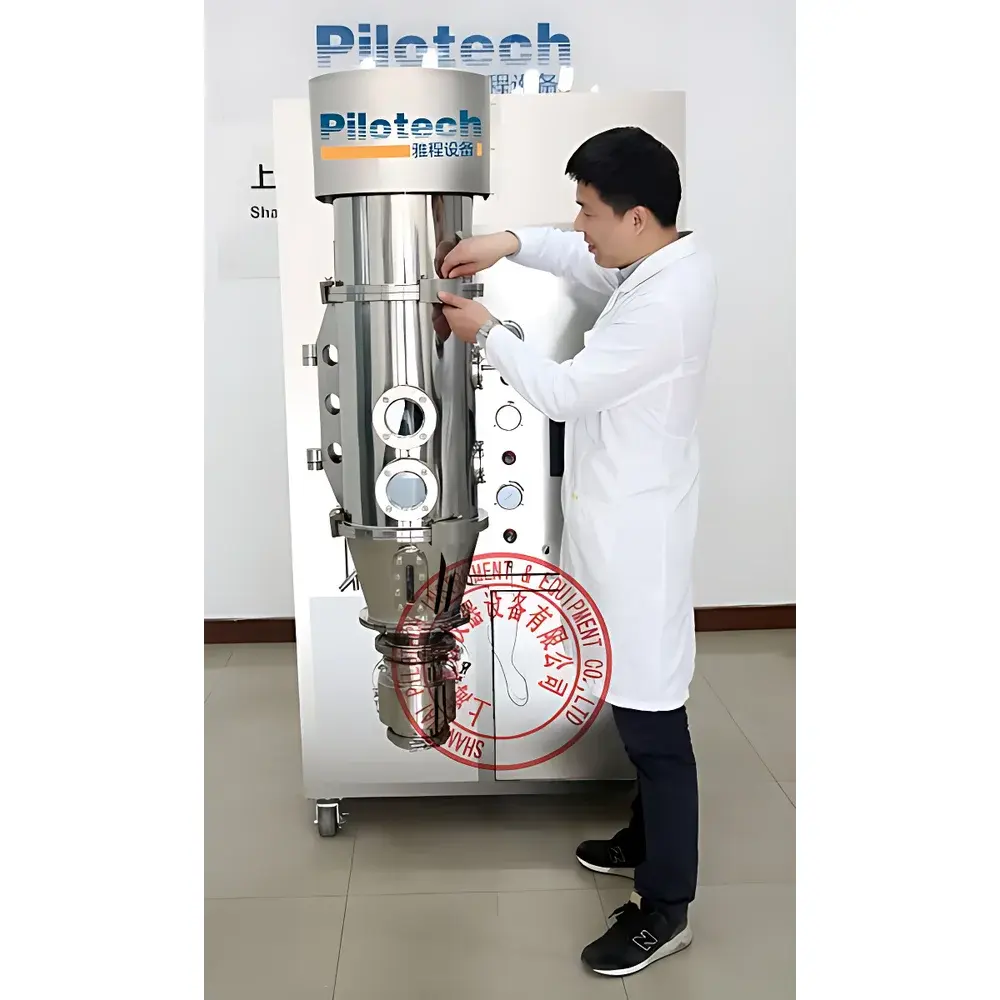
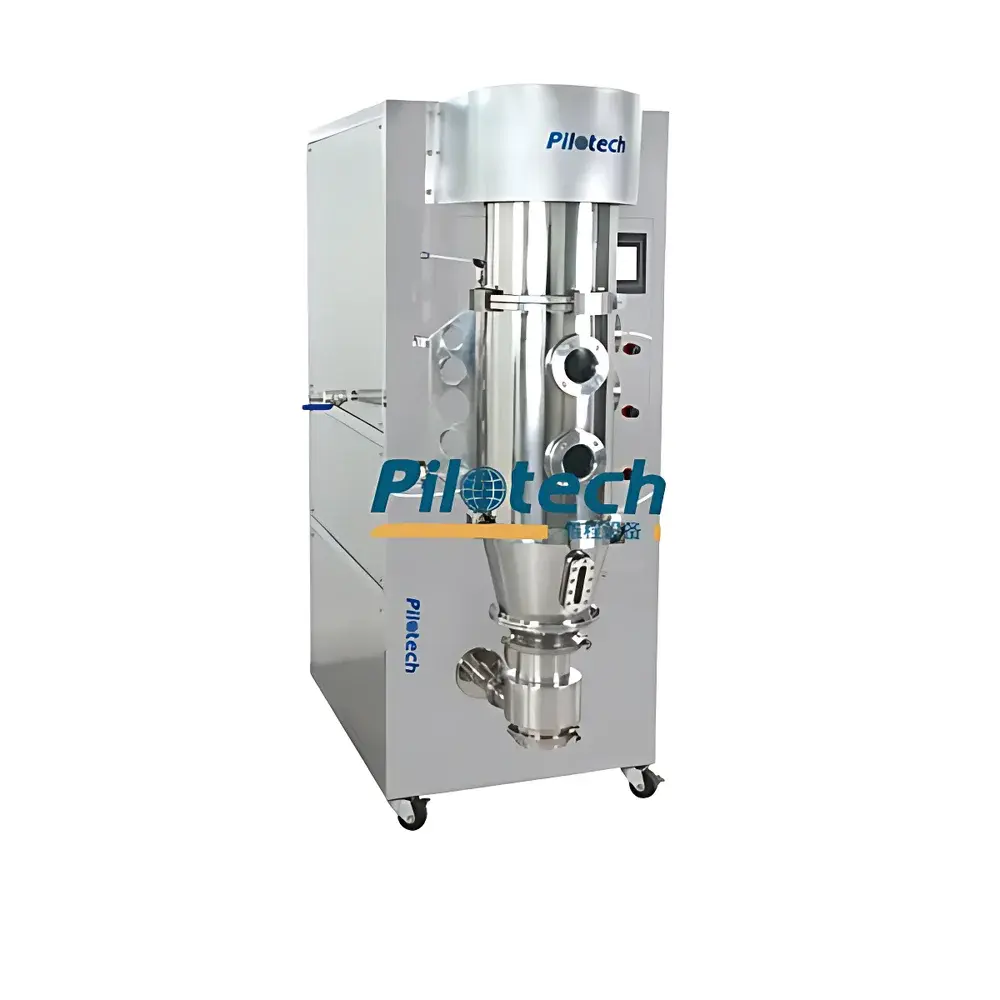
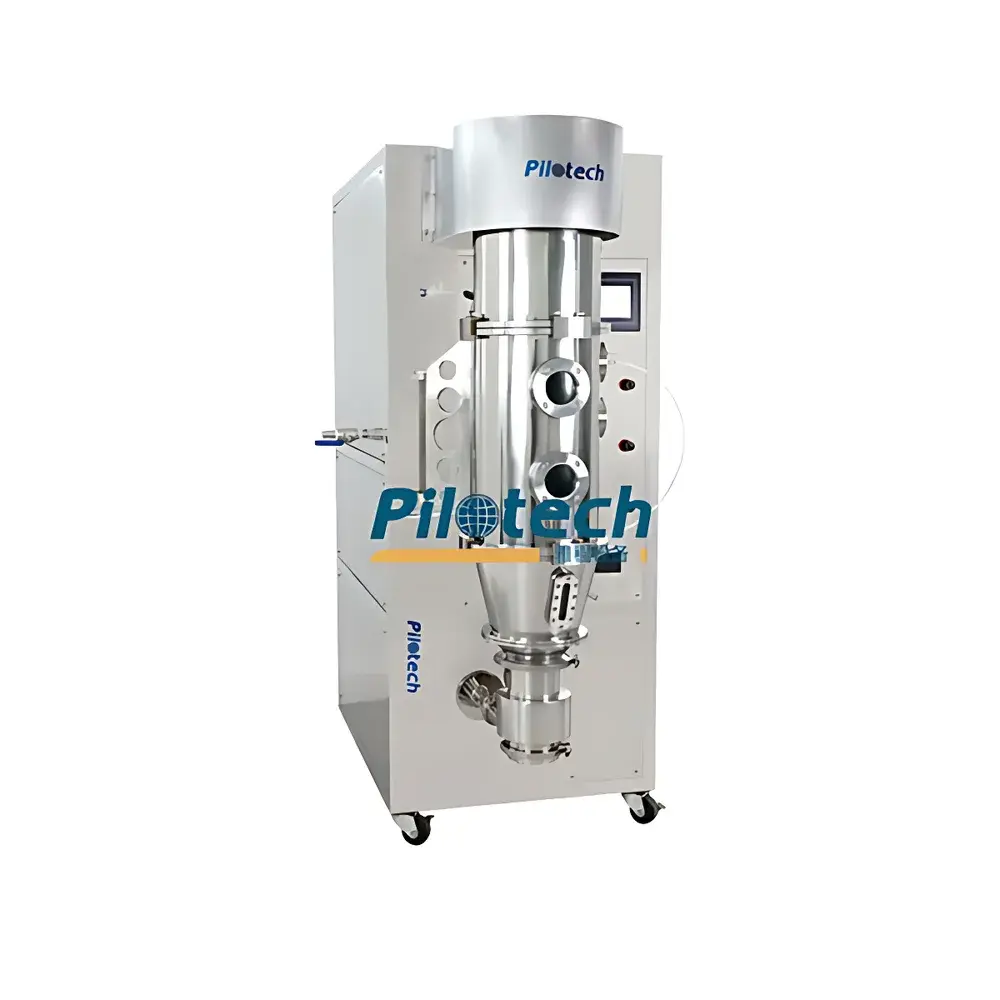
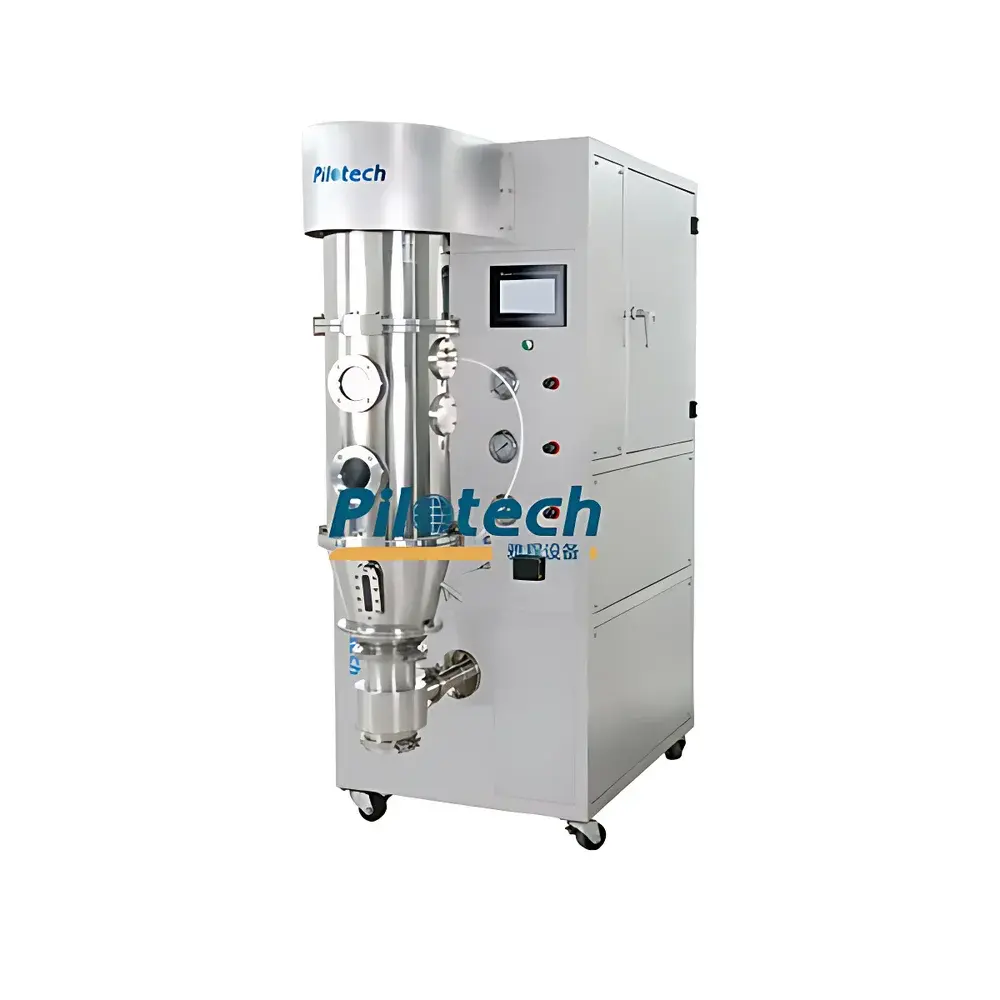
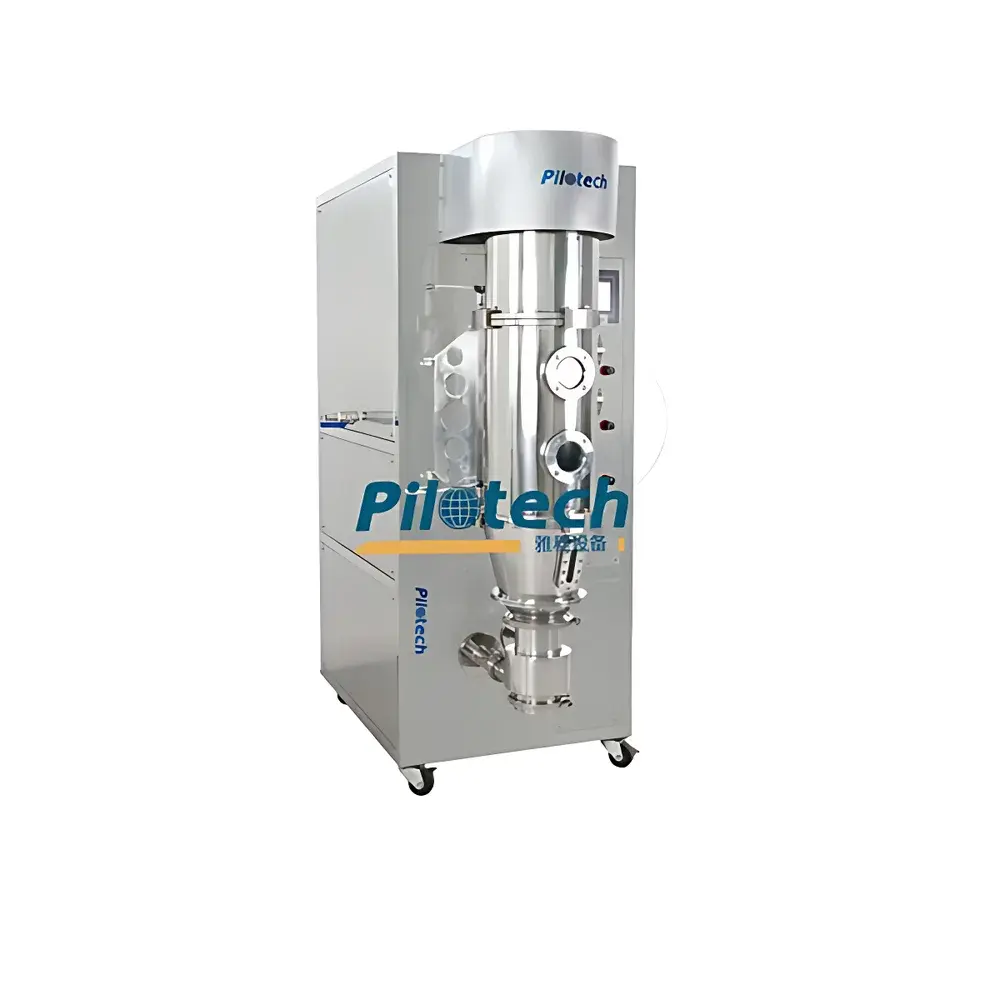
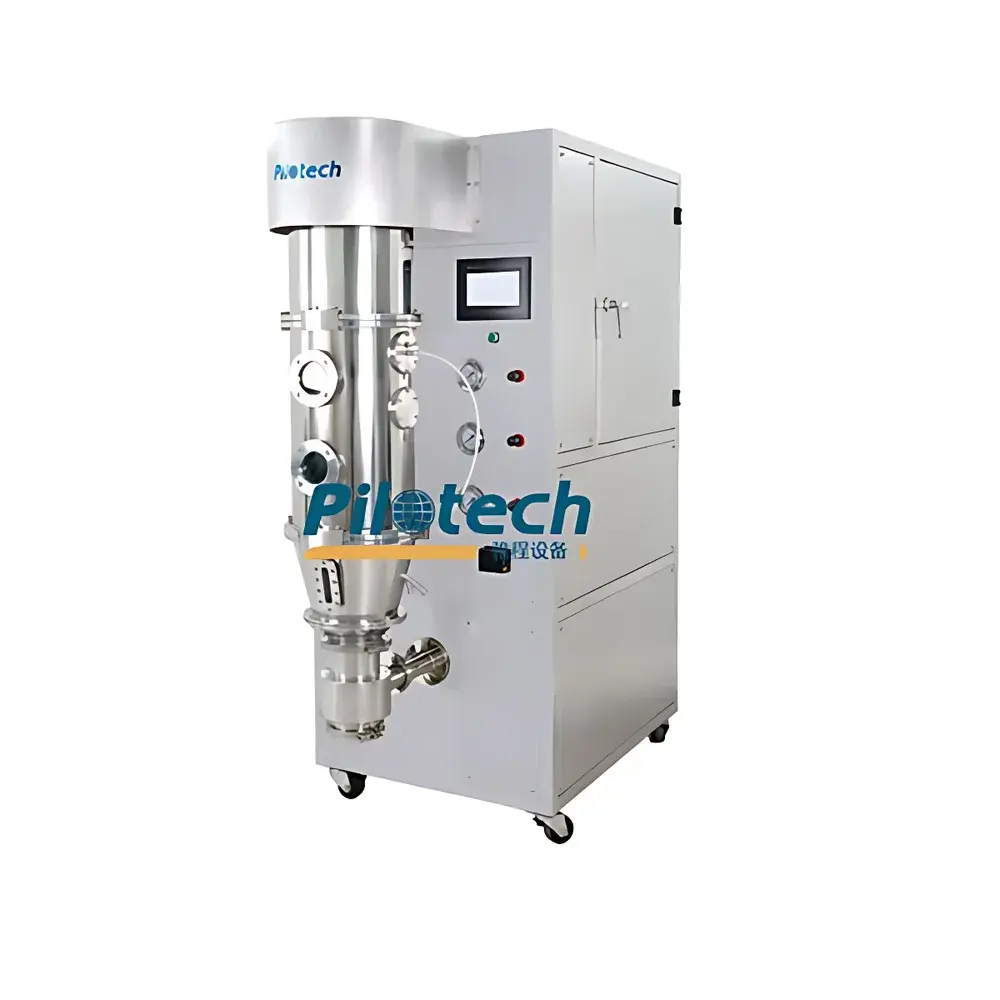
Yacheng YC-03 Fluid Bed Granulator and Coater
| Brand | Yacheng / PILOTECH |
|---|---|
| Origin | Shanghai, China |
| Manufacturer Type | Direct Manufacturer |
| Regional Classification | Domestic (China) |
| Model | YC-03 |
| Pricing | Upon Request |
| Sample Compatibility | Aqueous Solutions Only |
| Maximum Batch Capacity | 3,000 g |
| Temperature Range | 40–150 °C |
| Granule Size Range | Up to 5 mm |
Overview
The Yacheng YC-03 Fluid Bed Granulator and Coater is an integrated laboratory-scale fluidized bed processing system engineered for precision wet granulation and functional film coating of particulate solids. It operates on the fundamental principles of fluidization dynamics—utilizing controlled upward airflow to suspend solid particles in a turbulent yet uniform state—enabling homogeneous liquid distribution via top-spray or bottom-spray nozzles. The unit implements two distinct fluidization configurations: top-spray granulation, where aqueous binder solutions are atomized over a vertically oscillating fluidized bed within a conical bowl, promoting nucleation, growth, and densification through liquid bridge formation followed by solid bridge consolidation; and bottom-spray coating, wherein droplets are introduced axially from beneath a central draft tube, ensuring laminar impingement onto rapidly ascending particles before they disperse into the expansion chamber—ideal for achieving uniform, thin-film coatings on fine powders down to 50 µm. Designed for R&D scalability and process transfer validation, the YC-03 supports early-stage formulation development under GMP-aligned engineering controls.
Key Features
- PLC-based automation with color touchscreen HMI enabling real-time adjustment of critical process parameters—including inlet air temperature, product bed temperature, peristaltic pump feed rate, pulse reverse-jet frequency, and airflow velocity—without interrupting operation.
- Dual-mode fluidization architecture: interchangeable top-spray (granulation) and bottom-spray (coating) configurations, each supported by dedicated nozzle mounting interfaces in the expansion chamber and draft tube assembly.
- Modular conical processing bowl with rapid-release clamping mechanism; available in multiple volumes to accommodate batch sizes from 100 g to 3,000 g while maintaining consistent fluidization profiles and thermal mass response.
- Tri-stage air filtration system (pre-filter + medium-efficiency + HEPA) compliant with ISO 14644-1 Class 8 (equivalent to EU GMP Grade D cleanroom requirements) for particulate control during processing.
- Hot-swappable atomization nozzles: tool-free, sub-60-second online replacement without shutdown, facilitating rapid transition between formulations or process stages.
- PID-controlled, closed-loop temperature regulation across full operating range (40–150 °C), with dynamic coupling between inlet air temperature and measured bed temperature to minimize thermal lag and ensure reproducible drying kinetics.
- Patented pneumatic sealing ring design eliminating manual torque calibration and ensuring leak-tight integrity at elevated temperatures and variable pressure differentials.
- Optimized reverse-jet pulsation system synchronized with fluidization cycles to prevent agglomeration and enhance granule yield and size distribution narrowness.
Sample Compatibility & Compliance
The YC-03 is validated for aqueous-based formulations only, excluding organic solvents, volatile hydrocarbons, or high-viscosity suspensions beyond 500 mPa·s. Its construction meets ASME BPE surface finish standards (Ra ≤ 0.8 µm) for wetted parts in contact with product, and all electrical components comply with IEC 61000-6-2/6-4 EMC directives. While not certified for Class I Div 1 hazardous locations, the system supports installation in ISO Class 7/8 environments when paired with appropriate HVAC integration. Data logging functionality satisfies basic ALCOA+ principles (Attributable, Legible, Contemporaneous, Original, Accurate), and optional audit trail modules align with FDA 21 CFR Part 11 requirements for electronic records and signatures.
Software & Data Management
The embedded control software records time-stamped values for all active parameters at user-defined intervals (1–60 s), storing datasets internally with timestamped CSV export via USB 2.0 port. Optional Ethernet connectivity enables remote monitoring and integration into centralized LIMS or MES platforms using Modbus TCP protocol. All configuration changes are logged with operator ID, timestamp, and parameter delta—supporting GLP-compliant traceability. No cloud storage or proprietary file formats are employed; raw data remains fully accessible and editable in standard spreadsheet applications.
Applications
The YC-03 serves as a primary development platform across regulated and non-regulated industries requiring scalable particle engineering. In pharmaceutical R&D, it supports immediate-release granule optimization, enteric or sustained-release polymer coating trials, and excipient compatibility screening. Food and nutraceutical labs utilize it for agglomeration of hygroscopic powders (e.g., instant coffee, dairy blends), flavor encapsulation, and vitamin fortification. Ceramic and advanced materials researchers apply it for precursor granule conditioning prior to sintering, while polymer scientists employ it for controlled microencapsulation of catalysts or phase-change materials. Additional use cases include pigment dispersion stabilization, pesticide granule formulation, botanical extract microencapsulation, and functional food ingredient matrix development.
FAQ
Is organic solvent processing supported on the YC-03?
No. The system is designed exclusively for aqueous solutions and does not incorporate explosion-proof components or solvent recovery systems.
What is the minimum particle size that can be coated using the bottom-spray mode?
The bottom-spray configuration has been verified for uniform coating of particles ≥50 µm under optimized airflow and spray rate conditions.
Can the YC-03 be integrated into a continuous manufacturing line?
It is a batch-operated system intended for discrete process development; however, its operational parameters and scale-up ratios inform continuous fluid bed design per QbD principles.
Does the unit include validation documentation (IQ/OQ)?
Factory acceptance testing (FAT) reports are provided; site-specific IQ/OQ protocols must be executed by the end user or qualified third party in accordance with local regulatory expectations.
What maintenance intervals are recommended for the HEPA filter?
Filter replacement frequency depends on ambient air quality and usage intensity; typical service life ranges from 6–12 months, with differential pressure monitoring advised.



