
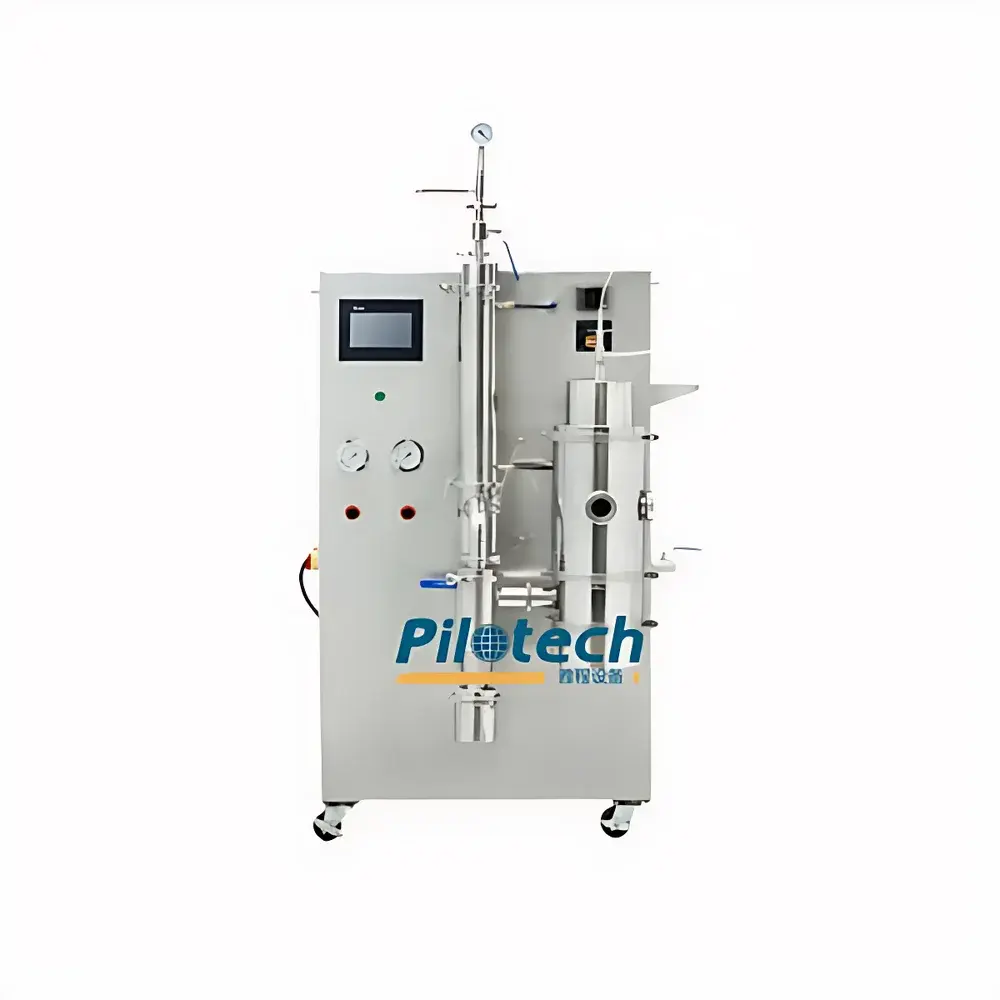
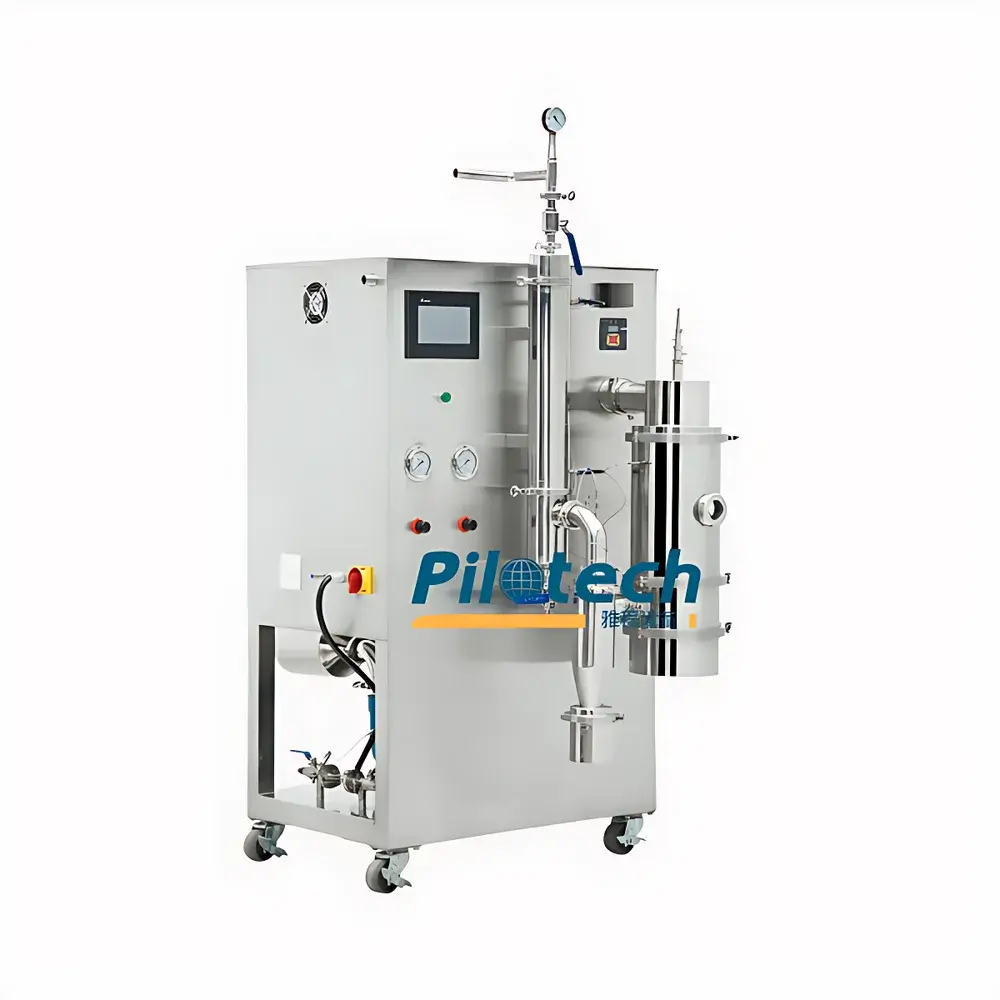
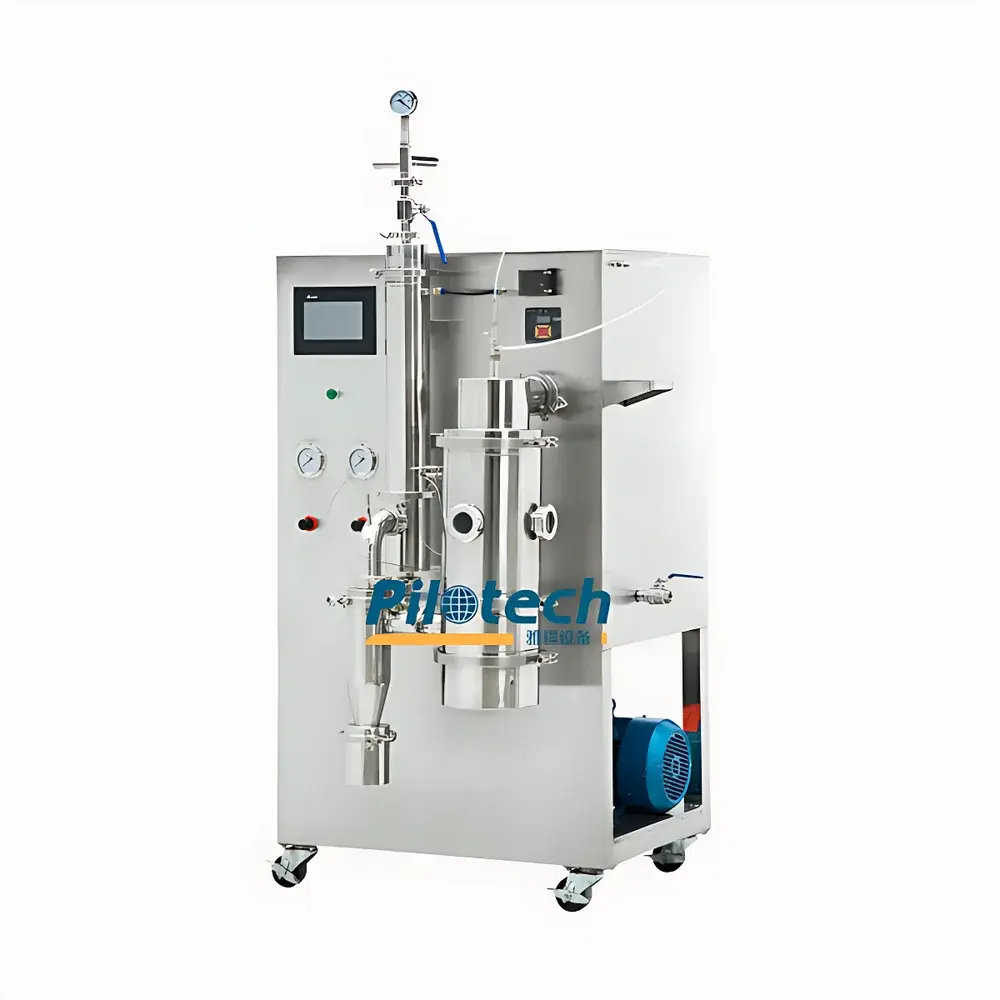
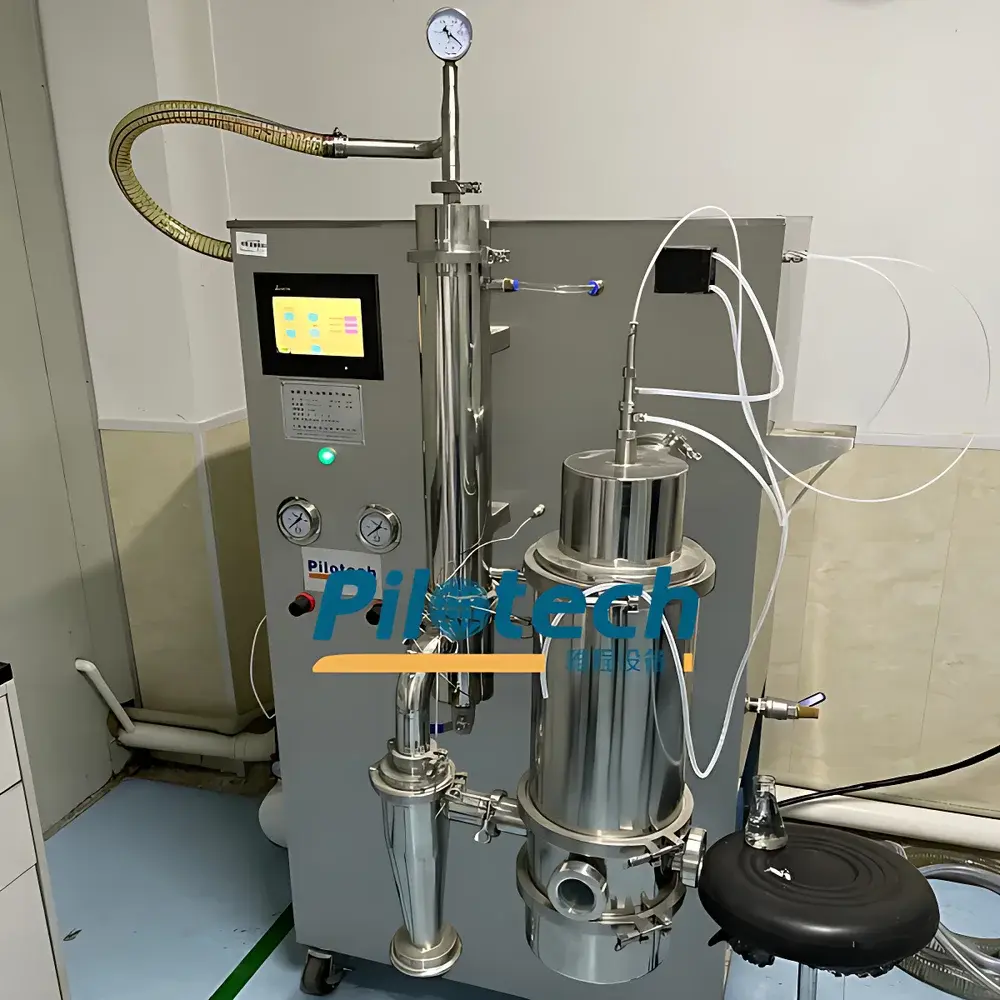
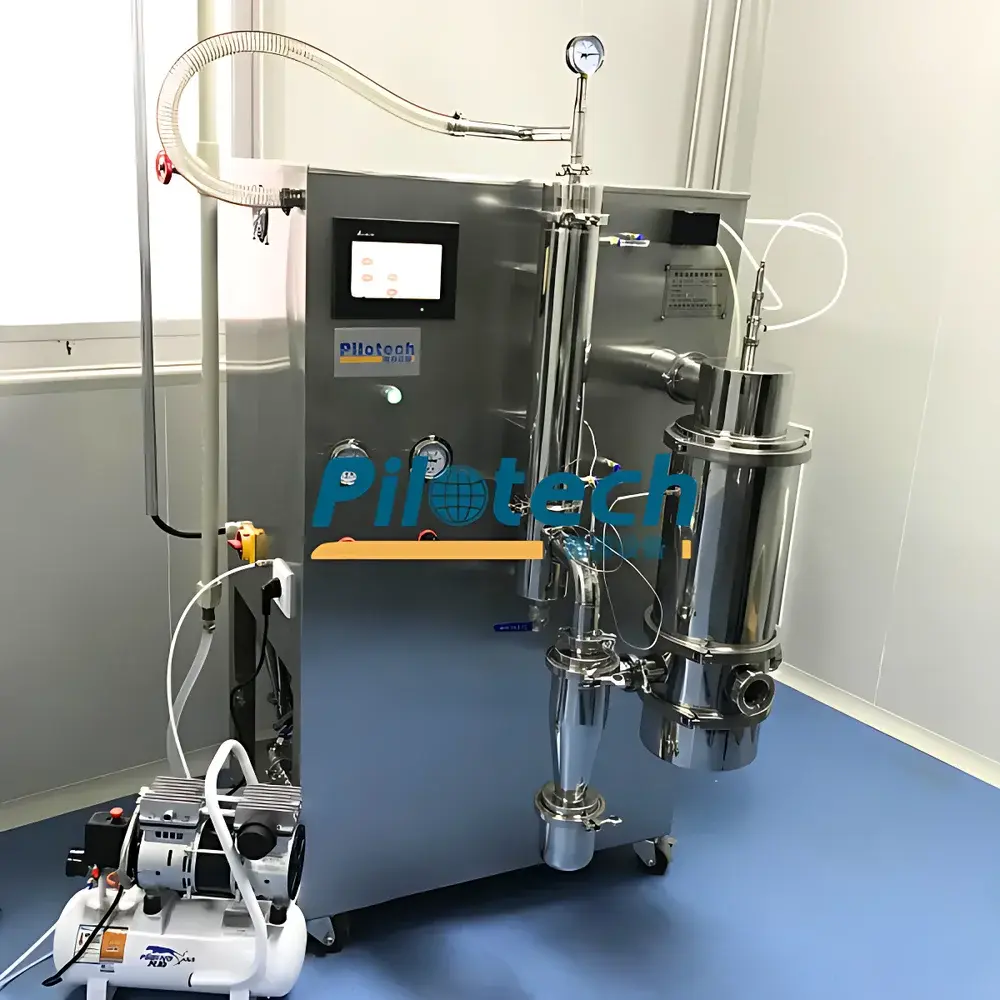
Yacheng YC-2000 Vacuum Low-Temperature Laboratory Spray Dryer
| Brand | Yacheng / PILOTECH |
|---|---|
| Origin | Shanghai, China |
| Manufacturer | Yes |
| Country of Origin | China |
| Model | YC-2000 |
| Sample Type | Aqueous solutions only |
| Max Feed Rate | 1500 mL/h |
| Temperature Range | 60–200 °C (operable down to 50 °C under vacuum) |
| Particle Size Distribution | 1–100 µm |
| Vacuum Range | –0.05 to –0.06 MPa |
| Heating Control Accuracy | ±1 °C |
| Nozzle Orifice | 1.0 mm standard (0.5/0.8/1.5/2.0 mm optional) |
| Power Supply | 7 kW / 380 V AC |
Overview
The Yacheng YC-2000 Vacuum Low-Temperature Laboratory Spray Dryer is an integrated, self-contained benchtop system engineered for the gentle, solvent-free drying of thermolabile and oxidation-sensitive materials. Unlike conventional atmospheric spray dryers, the YC-2000 operates under controlled vacuum conditions (–0.05 to –0.06 MPa), enabling rapid evaporation at significantly reduced boiling points—down to 50 °C for aqueous feeds. This principle leverages the physical relationship between vapor pressure and ambient pressure: lowering system pressure reduces the thermal energy required for solvent removal, thereby preserving molecular integrity, enzymatic activity, conformational stability of proteins, and structural fidelity of natural extracts or polymeric nanoparticles. The system employs a coaxial two-fluid nozzle design with compressed air-assisted atomization, ensuring symmetrical droplet formation and uniform residence time distribution within the drying chamber. Its all-stainless-steel construction (AISI 316L contact surfaces), built-in oil-free scroll air compressor, and fully sealed vacuum architecture meet baseline requirements for GLP-compliant lab-scale process development in pharmaceutical, nutraceutical, and biomaterial research.
Key Features
- Vacuum-enabled low-temperature drying: Achieves complete solvent removal at 50–80 °C, minimizing thermal degradation of heat-sensitive actives including enzymes, probiotics, peptides, polysaccharides, and volatile botanical compounds.
- PID-controlled heating system with ±1 °C accuracy across full operating range (60–200 °C), supporting reproducible method transfer and DOE-based parameter optimization.
- Intuitive 7-inch color LCD touchscreen interface with native English language support, real-time monitoring of inlet/outlet temperature, vacuum level, feed rate, and nozzle backpressure.
- Adjustable coaxial two-fluid nozzle with vertical positioning capability and interchangeable orifices (0.5–2.0 mm) to fine-tune droplet size distribution and match specific powder morphology targets.
- Automated needle-type nozzle cleaner (‘clearing pin’) with programmable activation frequency, preventing nozzle clogging during high-solids or viscous feed applications.
- Integrated oil-free scroll air compressor eliminates lubricant contamination risk and ensures compliance with ISO 8573-1 Class 0 air purity standards for pharmaceutical-grade drying.
- Compact footprint (W × D × H ≈ 850 × 650 × 1450 mm) and plug-and-play operation—no external chiller, vacuum pump, or exhaust ducting required.
Sample Compatibility & Compliance
The YC-2000 is validated for aqueous-based feedstocks only, including protein solutions, bacterial culture broths, plant extract suspensions, polymer emulsions, and nanostructured colloidal dispersions. It is not suitable for organic solvents, flammable liquids, or highly corrosive media. The system conforms to IEC 61010-1 safety standards for laboratory electrical equipment and incorporates dual-level overtemperature protection, vacuum interlock shutdown, and emergency stop circuitry. While not certified for GMP manufacturing, its audit-ready data logging (time-stamped temperature/vacuum/flow records), password-protected parameter locking, and non-volatile memory align with FDA 21 CFR Part 11 expectations for electronic record integrity in early-phase formulation studies. All wetted parts comply with USP Class VI biocompatibility testing protocols.
Software & Data Management
The embedded control firmware supports continuous acquisition of 12 process variables at 1 Hz resolution, stored locally on internal flash memory with automatic timestamping and CSV export via USB port. Data files include inlet temperature, outlet temperature, chamber vacuum, feed pump RPM, air flow rate, nozzle pressure, and system status flags. Optional Ethernet connectivity enables remote monitoring through Modbus TCP protocol for integration into centralized lab informatics platforms (e.g., LabVantage, STARLIMS). Audit trail functionality logs all user actions—including method edits, parameter overrides, and system start/stop events—with operator ID and timestamp, satisfying GLP documentation requirements for method validation reports.
Applications
- Stabilization of live microorganisms (e.g., Lactobacillus, Bifidobacterium) into inhalable or oral dry powders without loss of viability.
- Drying of monoclonal antibody formulations while retaining secondary structure, as verified by FTIR and DSC.
- Production of amorphous solid dispersions of poorly water-soluble APIs using hydrophilic polymers (e.g., HPMC-AS, PVPVA), with residual moisture content consistently <2.5% w/w.
- Rapid screening of excipient compatibility for herbal extract powders—preserving antioxidant capacity (measured via ORAC assay) and phenolic profile (HPLC-DAD).
- Scalable process mapping from lab to pilot scale: YC-2000 drying kinetics correlate linearly with industrial vacuum spray dryers (R² > 0.92) when normalized for dimensionless parameters (Deborah number, Capillary number).
FAQ
Can the YC-2000 handle organic solvents such as ethanol or acetone?
No. The system is designed exclusively for aqueous solutions. Organic solvents pose explosion risks under vacuum and may degrade seals or contaminate the oil-free air compressor.
What is the minimum sample volume required for a valid run?
30 mL is the practical lower limit, assuming ≥5% total solids; lower concentrations may require recirculation mode to maintain stable atomization.
Is the vacuum level adjustable during operation?
Yes—vacuum is actively regulated via a servo-controlled bleed valve, allowing dynamic adjustment between –0.05 and –0.06 MPa without interrupting drying.
Does the system support automated cleaning-in-place (CIP)?
No CIP function is built-in; however, the quick-release nozzle assembly and smooth-welded chamber interior enable manual cleaning per SOPs compliant with ISO 14644-1 Class 7 cleanroom protocols.
Can particle size be controlled independently of feed concentration?
Yes—via coordinated modulation of nozzle orifice diameter, atomizing air pressure, inlet temperature, and feed rate, enabling targeted Dv50 tuning within the 1–100 µm range.



