
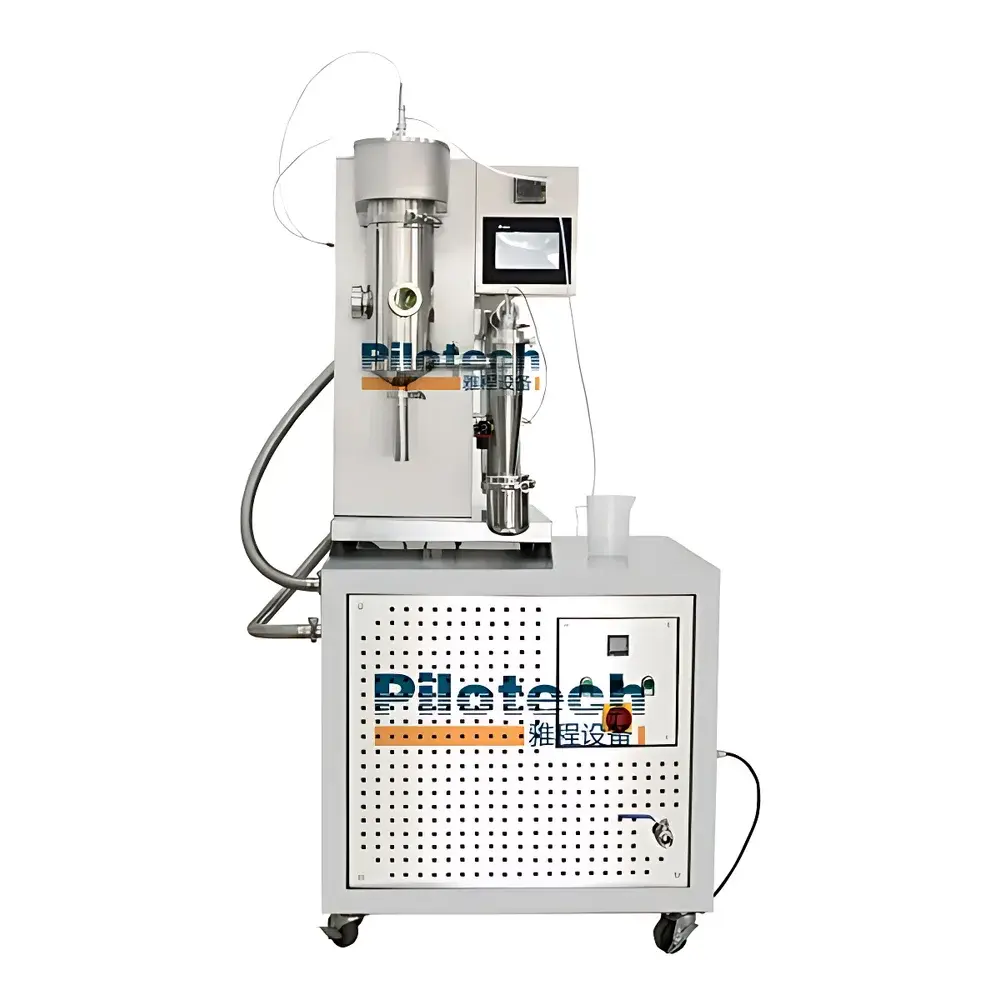
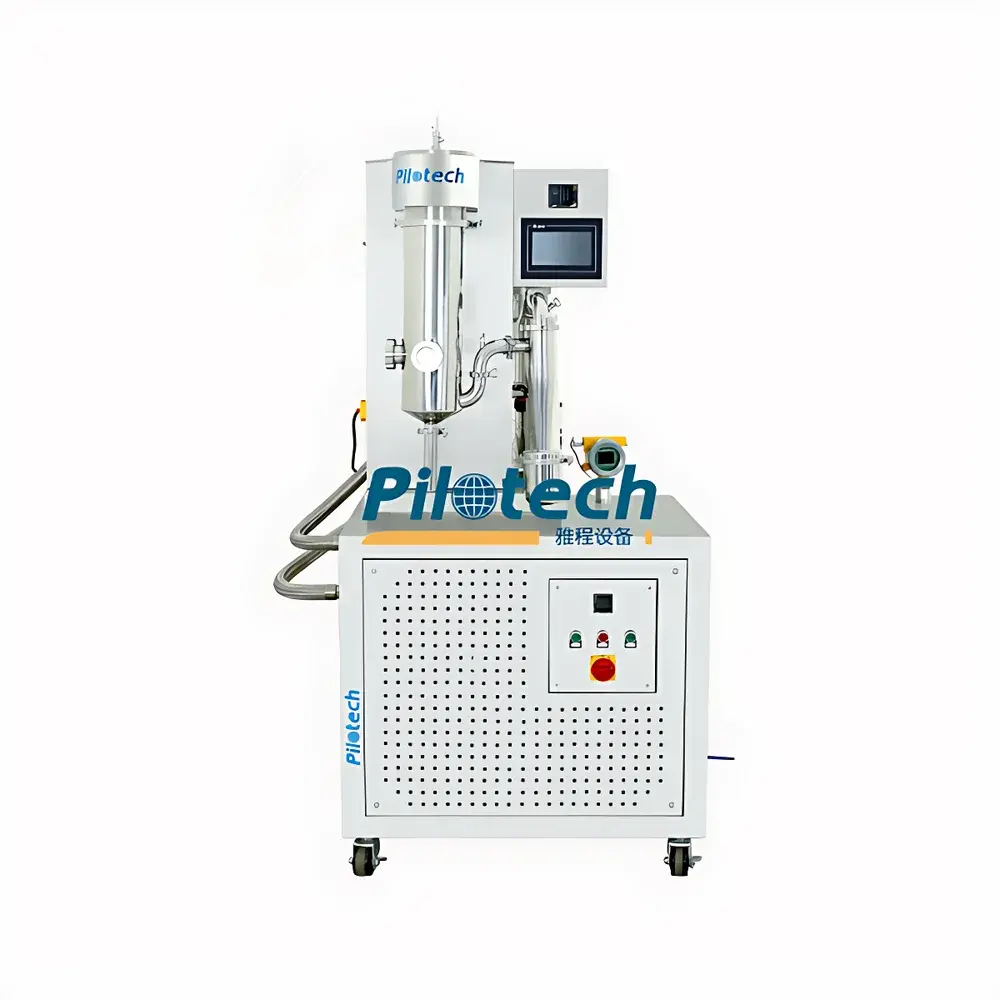
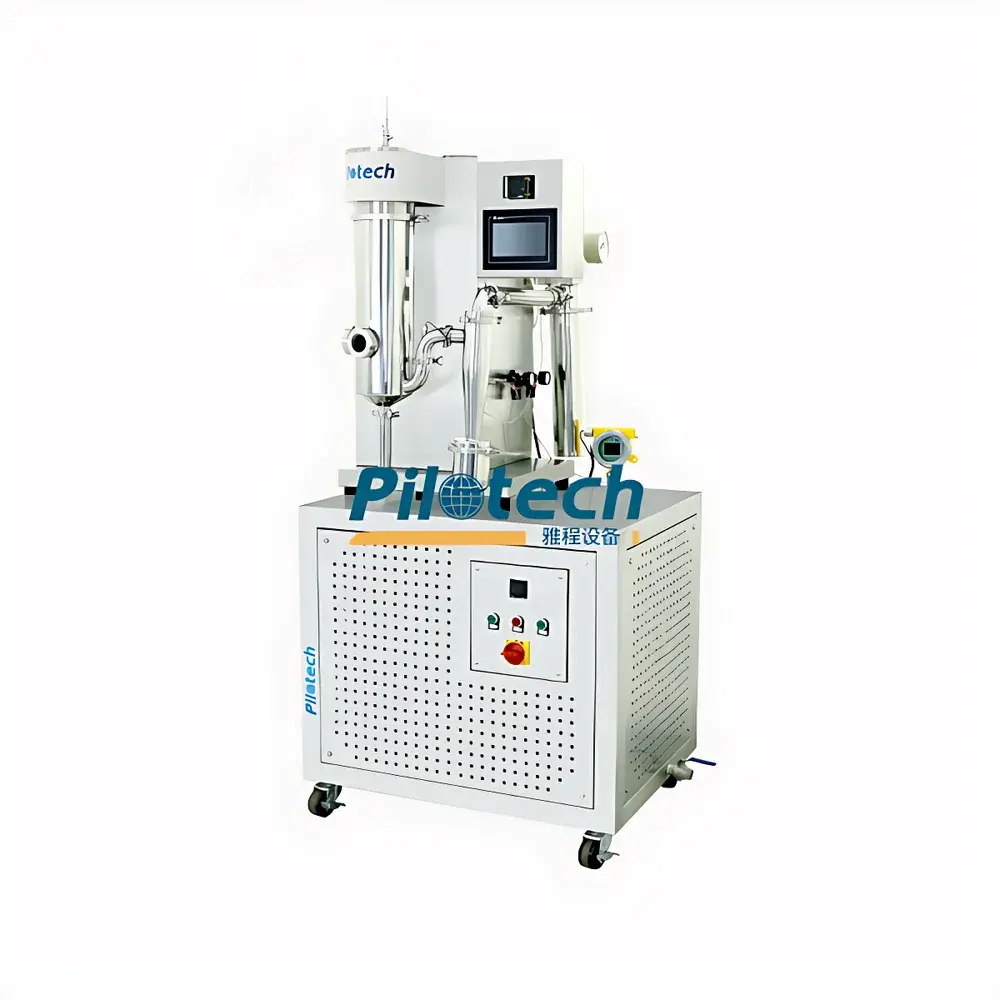
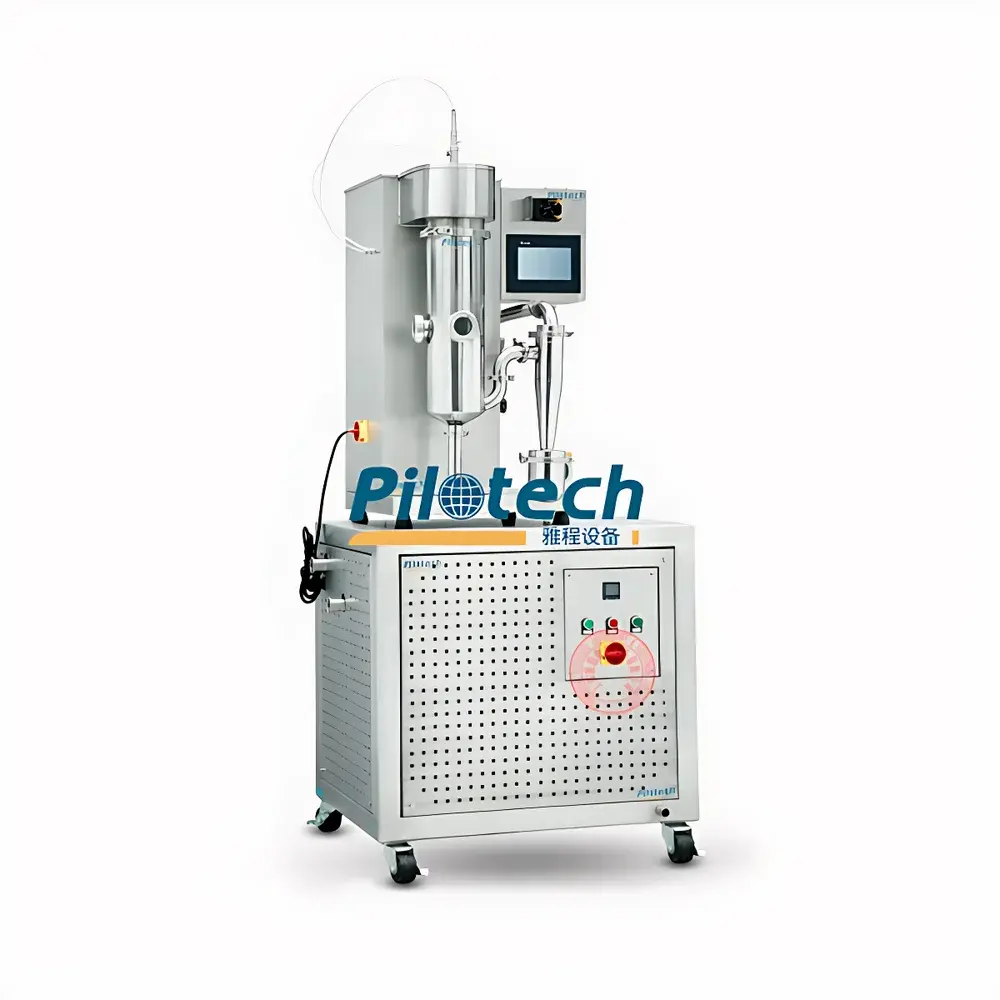
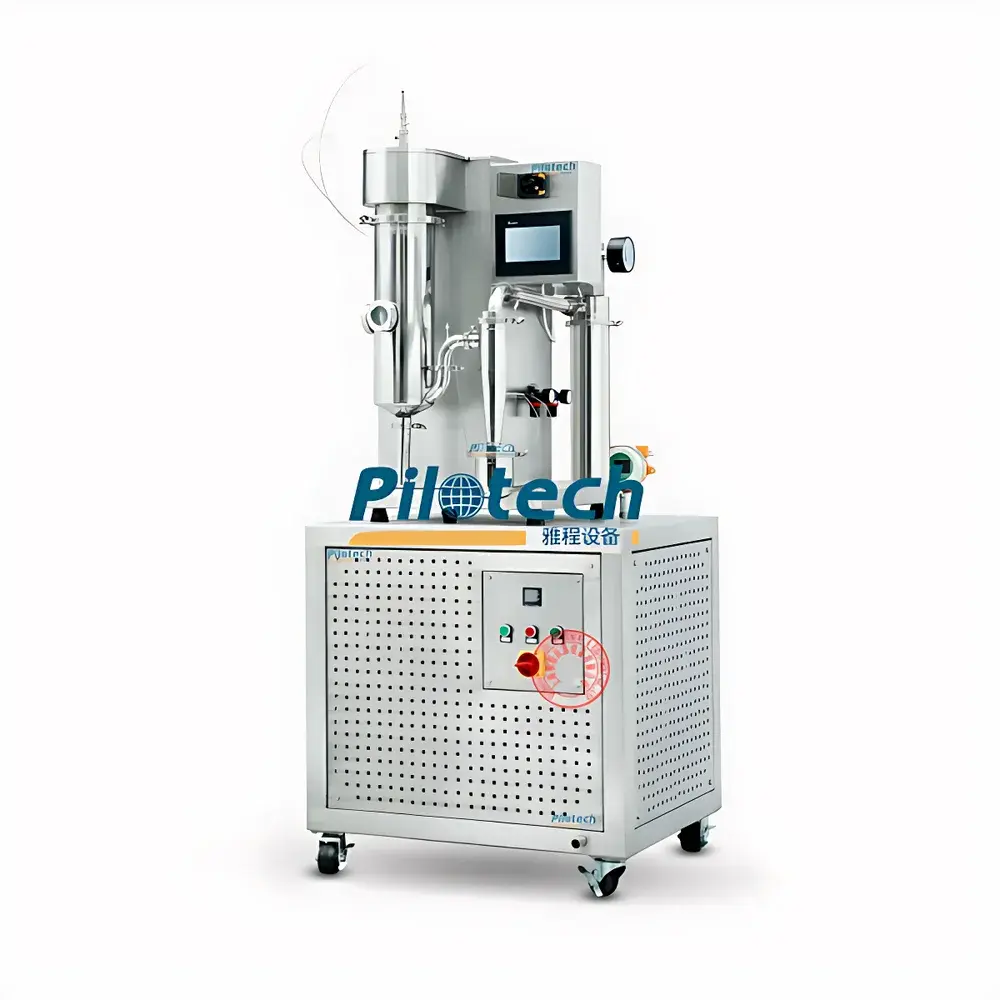
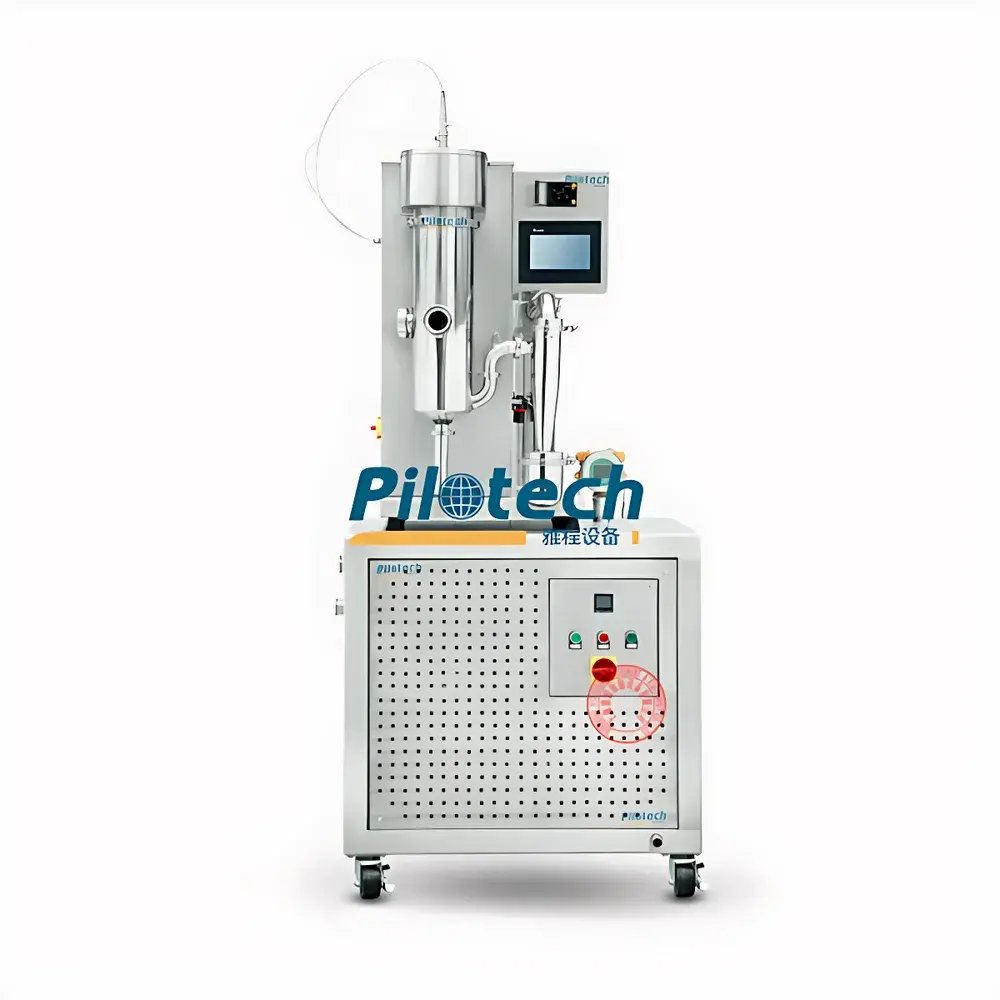
YaCheng YC-501 Closed-Cycle Organic Solvent Spray Dryer
| Brand | YaCheng / PILOTECH |
|---|---|
| Origin | Shanghai, China |
| Manufacturer Type | OEM Manufacturer |
| Product Category | Domestic Laboratory Equipment |
| Model | YC-501 |
| Quotation | Upon Request |
| Sample Compatibility | Aqueous & Organic Solvent Solutions |
| Max Feed Rate | 500 mL/h |
| Inlet Air Temperature Range | Up to 200 °C |
| Particle Size Output | 1–25 µm |
| Control Interface | 7-inch Color Touchscreen with Real-time Process Animation |
| Atomization | Coaxial Two-Fluid Nozzle (Standard 1.0 mm |
| Construction Material | Full SUS304 Stainless Steel (Including Drying Chamber, Cyclone, and Collection Vessel with Observation Window) |
| Integrated N₂ Recirculation System | Yes (with Condenser, Oxygen Monitoring, and Heat Exchanger) |
| Power Supply | 2.5 kW / 220 V AC |
| Minimum Feed Volume | 10–20 mL (dependent on solids content) |
| Outlet Air Temperature Range | ≥40 °C (solvent-dependent) |
| Safety Compliance | Inert Atmosphere Operation (O₂ < 5% vol), Explosion-Proof Enclosure Design, Closed-Loop Solvent Recovery |
Overview
The YaCheng YC-501 is a benchtop-scale, closed-cycle spray dryer engineered specifically for the safe, reproducible, and solvent-efficient drying of heat-sensitive, oxidation-prone, or hazardous organic solutions in research and development laboratories. Unlike conventional open-system spray dryers, the YC-501 operates under a fully recirculated nitrogen atmosphere—eliminating oxygen exposure and mitigating fire, explosion, and toxicity risks associated with volatile organic solvents such as acetone, ethanol, chloroform, THF, and DMF. Its core principle leverages two-fluid coaxial atomization: liquid feed is pneumatically dispersed by pressurized nitrogen through a precision-engineered concentric nozzle, forming fine droplets that undergo rapid convective drying upon contact with heated nitrogen (up to 200 °C inlet). The resulting microparticles are separated via inertial cyclonic action, collected in a sealed glass or stainless-steel vessel, while solvent-laden exhaust passes through a refrigerated condenser (−20 °C typical) for quantitative recovery (>95% typical for low-boiling solvents). This closed-loop architecture satisfies stringent laboratory safety protocols and supports green chemistry objectives by minimizing solvent emissions and enabling reuse.
Key Features
- Explosion-Safe Closed Nitrogen Loop: Integrated O₂ sensor, automatic N₂ purge control, and pressure-regulated recirculation ensure continuous operation below flammability limits (O₂ ≤ 4.5% vol)—fully compliant with ATEX Zone 2 and IEC 60079-0 design principles.
- Coaxial Two-Fluid Nozzle System: Precision-machined SUS304 concentric nozzle eliminates off-center spray drift; adjustable vertical positioning enables optimization of droplet trajectory relative to hot gas flow—critical for maximizing powder yield and minimizing wall deposition.
- Intelligent Touchscreen Controller: 7-inch color LCD with real-time animated process visualization displays and logs inlet/outlet temperature, peristaltic pump speed (0.1–99.9 rpm), needle cleaning frequency, N₂ flow rate, and dissolved oxygen concentration—supporting GLP-compliant data traceability.
- Modular Upgrade Path: Designed for interoperability with the YaCheng YC-500 base unit; users may deploy aqueous drying with compressed air and seamlessly transition to organic solvent processing by coupling the YC-501 nitrogen recirculation module—avoiding redundant capital investment.
- High-Efficiency Solvent Recovery: Dual-stage cooling system (air-cooled pre-condenser + Peltier-driven final condenser) achieves consistent dew point control, enabling >90% recovery of solvents with boiling points between 35–120 °C.
- Robust Thermal Architecture: Patented ceramic-insulated heating element with overtemperature cut-off and redundant thermal fusing prevents coil burnout—a common failure mode in entry-level dryers—ensuring long-term operational stability.
- Integrated Particulate Filtration: Downstream HEPA-grade cyclone + secondary cartridge filter captures sub-1 µm aerosols, improving product recovery (especially for low-density biopolymers and nanocellulose) and reducing ambient VOC exposure.
Sample Compatibility & Compliance
The YC-501 accommodates a broad spectrum of thermolabile and chemically reactive feedstocks, including polymer solutions (PLGA, PVP, cellulose acetate), pharmaceutical suspensions (nanocrystals, liposomes), natural extract concentrates (curcumin, quercetin, fish oil), and catalyst precursors (metal-organic frameworks, colloidal nanoparticles). It supports processing of both polar (methanol, acetonitrile) and non-polar (hexane, toluene) solvents—subject to compatibility verification with wetted materials (SUS304, fluorosilicone gaskets, borosilicate glass). The system meets ISO 22000 prerequisite programs for lab-scale food ingredient development and aligns with USP guidance on controlled-atmosphere processing. All electronic controls adhere to IEC 61000-6-2/6-4 EMC standards; full audit trail capability (user login, parameter changes, run logs) satisfies FDA 21 CFR Part 11 requirements when paired with validated software configuration.
Software & Data Management
The embedded microprocessor firmware records all critical process variables at 1-second intervals to internal flash memory (≥1000 h of continuous logging). Exportable CSV files include timestamped columns for Tin, Tout, pump RPM, O₂ %, and system pressure—enabling post-run statistical analysis (e.g., ANOVA of particle size vs. inlet temperature). Optional Ethernet/WiFi connectivity permits remote monitoring via YaCheng’s LabLink™ client (Windows/macOS), supporting live dashboard views and automated backup to network drives. Data integrity safeguards include write-protection modes, digital signature authentication for operator logins, and immutable event logs—facilitating inspection readiness for GMP-aligned academic core facilities and contract development labs.
Applications
- Encapsulation of volatile actives (vitamins, fragrances, pesticides) into polymeric microparticles using ethyl acetate or dichloromethane.
- Rapid screening of solvent-based nanoparticle formulations (e.g., paclitaxel-loaded albumin nanoparticles dried from DMSO/water mixtures).
- Stabilization of oxygen-sensitive biologics (enzymes, mRNA-LNPs) via anhydrous spray drying under ultra-low O₂ conditions.
- Production of solvent-free battery cathode precursors (e.g., LiFePO₄ slurries in NMP) with minimized residual solvent carryover (<50 ppm).
- Scale-down modeling for industrial closed-cycle spray drying processes—validating residence time distributions and thermal degradation thresholds prior to pilot trials.
FAQ
Can the YC-501 handle chlorinated solvents such as chloroform or DCM?
Yes—provided the condenser operating temperature is set below the solvent’s dew point (e.g., −30 °C for chloroform) and all elastomeric seals are verified for chemical resistance. Consult YaCheng’s Solvent Compatibility Matrix prior to first use.
Is nitrogen consumption high during continuous operation?
No—the closed-loop design consumes only make-up N₂ to compensate for minor leaks (<0.5 L/min typical); bulk flow remains recirculated, reducing operational cost versus once-through systems.
What maintenance is required for the coaxial nozzle?
The nozzle requires no disassembly for routine cleaning; automated needle purge cycles (configurable frequency/duration) prevent clogging—even with 15% w/v chitosan or 20% w/v sodium alginate solutions.
Does the system support Good Manufacturing Practice (GMP) documentation?
While classified as a laboratory R&D instrument, the YC-501’s electronic recordkeeping, user access controls, and calibration traceability enable alignment with GMP Annex 11 expectations when deployed in qualified environments under appropriate SOPs.
Can I dry emulsions or suspensions containing >10% solids?
Yes—feed viscosity up to 500 mPa·s is supported; however, nozzle orifice selection (e.g., 1.5 mm or 2.0 mm) and optimized pump speed must be validated empirically for each formulation to maintain stable atomization.



