
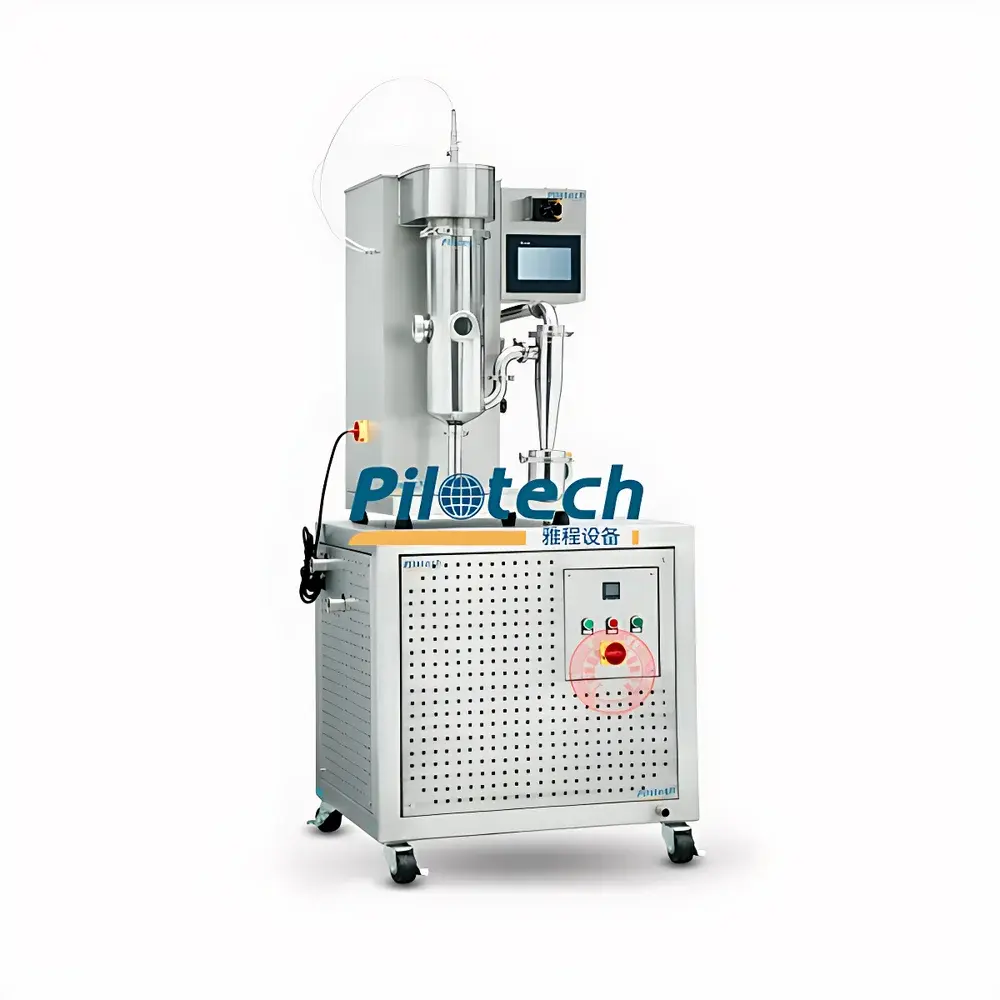
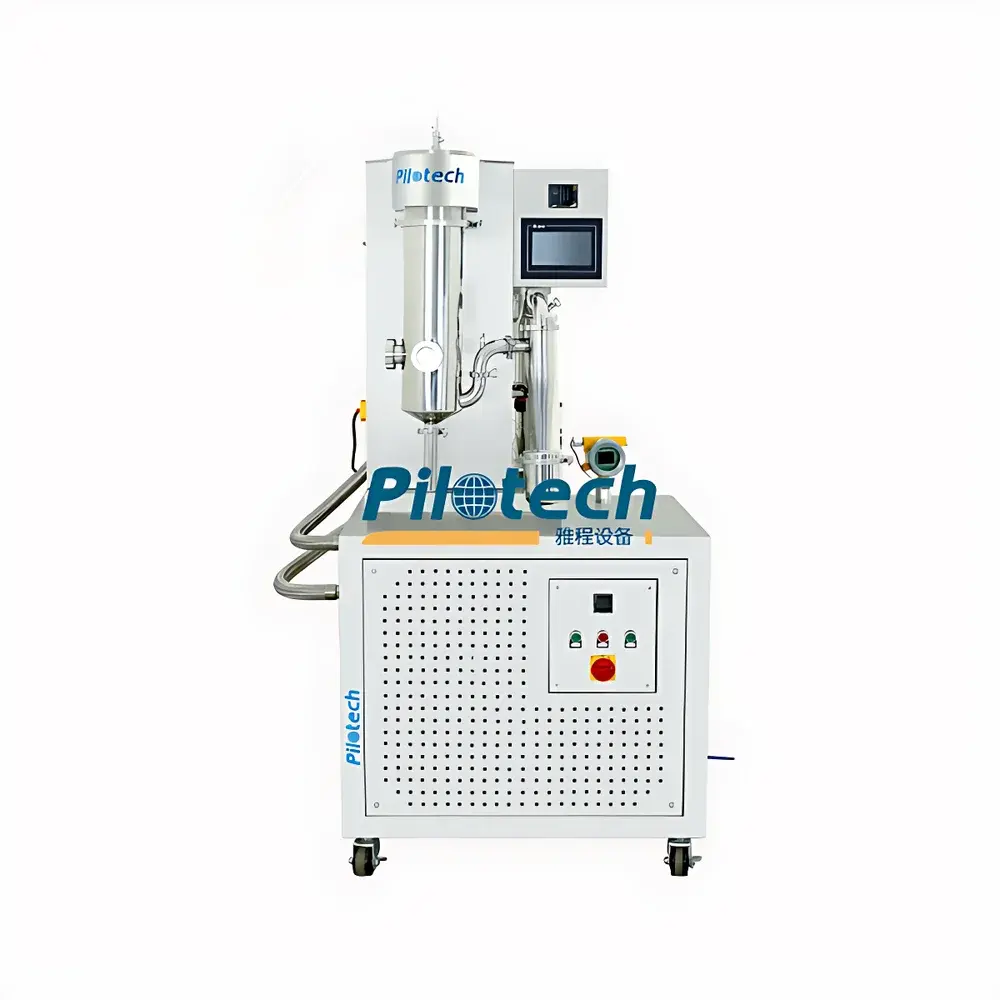
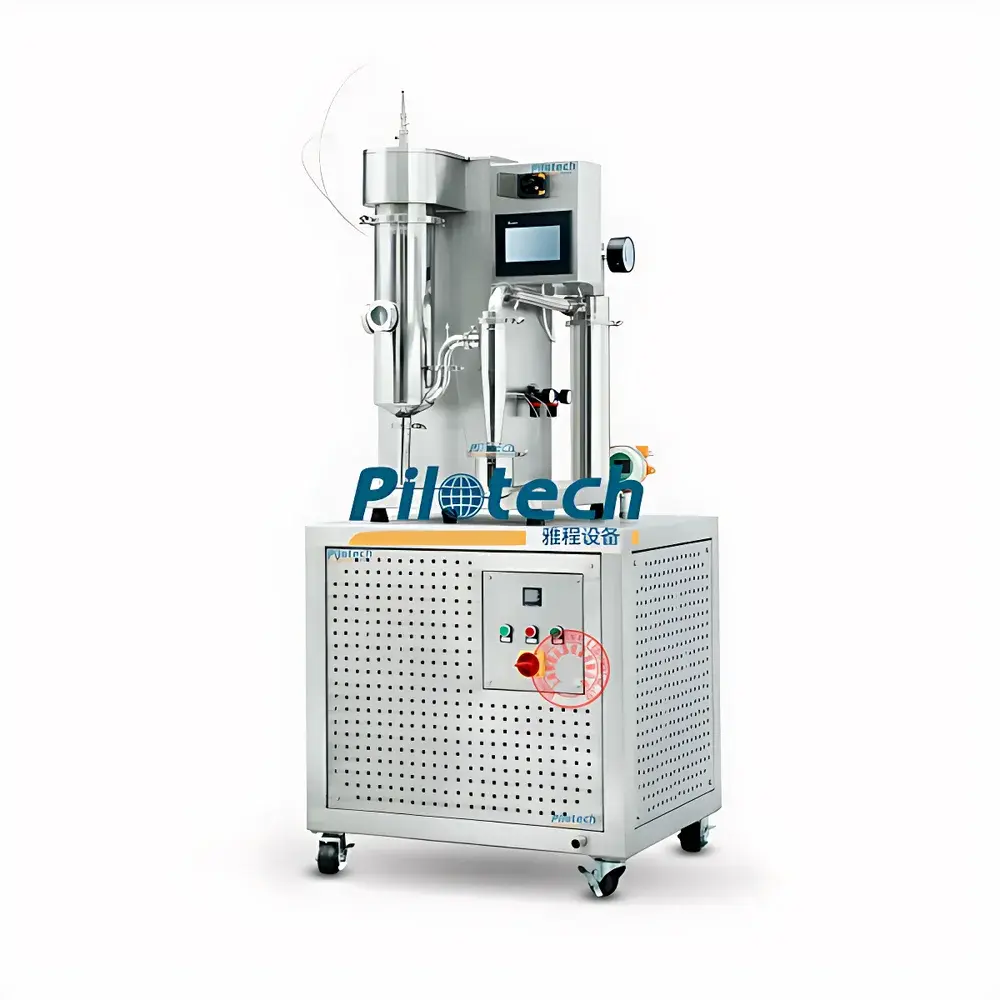
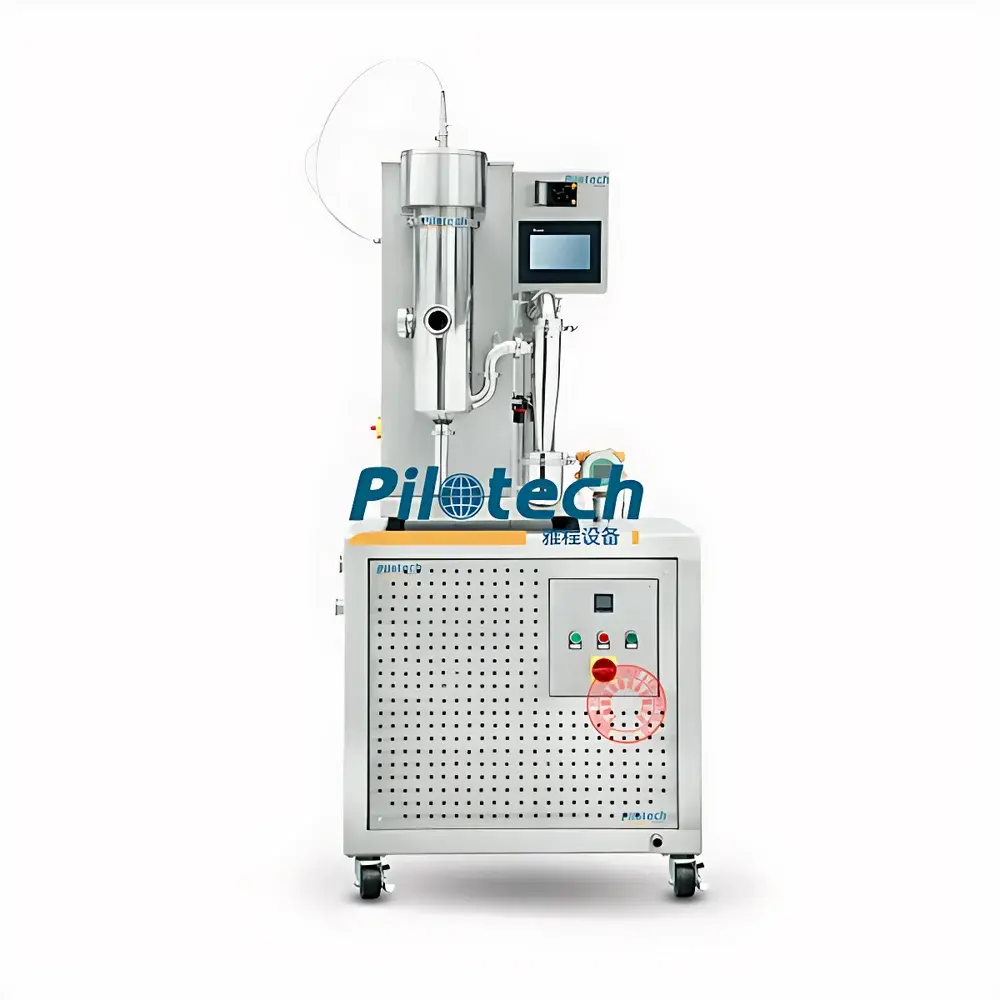
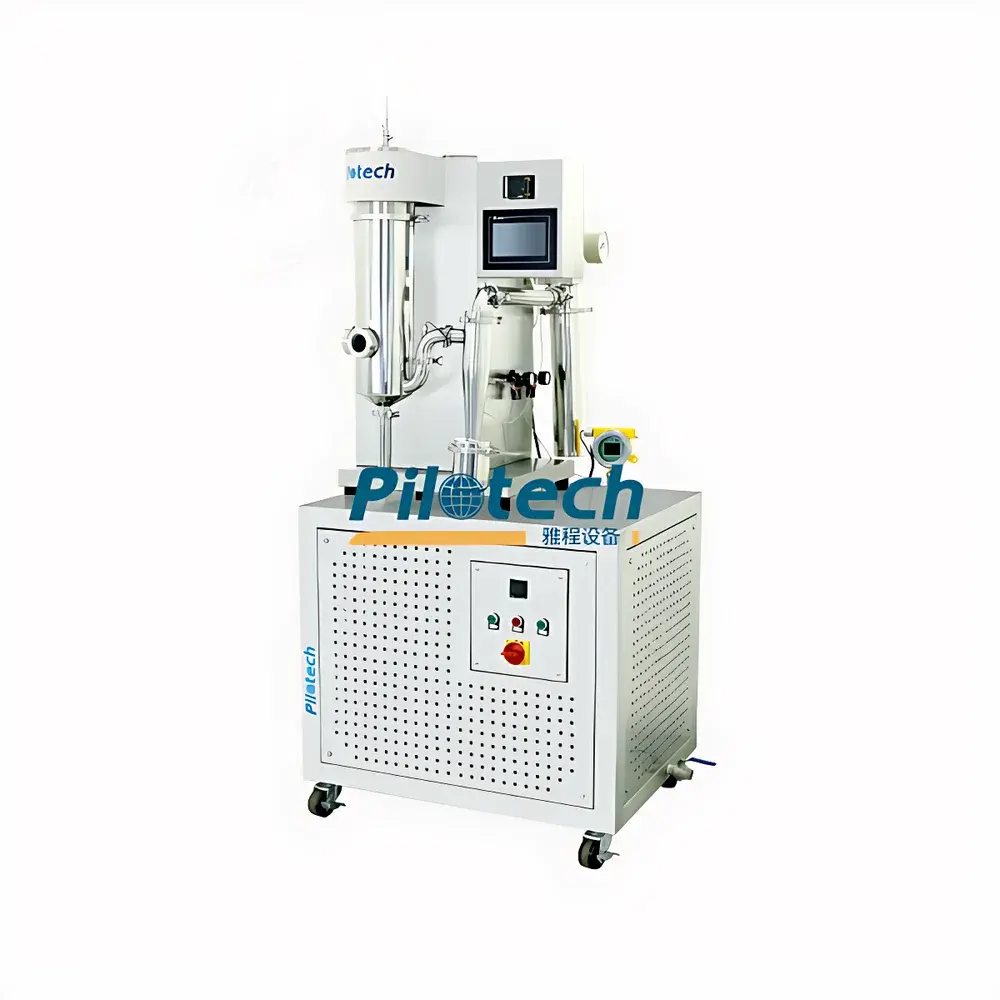
YaCheng YC-501 Miniature Closed-Cycle Spray Dryer for Organic Solvents
| Brand | YaCheng / PILOTECH |
|---|---|
| Origin | Shanghai, China |
| Manufacturer Type | Direct Manufacturer |
| Model | YC-501 |
| Sample Compatibility | Aqueous and organic solvent-based solutions |
| Max Feed Rate | 500 mL/h |
| Inlet Air Temperature Range | Up to 200 °C |
| Particle Size Output | 1–25 µm |
| Control Interface | 7-inch color touchscreen with programmable microprocessor |
| Drying Atmosphere | Nitrogen-closed loop (O₂ monitoring & control) |
| Construction Material | Full SUS304 stainless steel |
| Nozzle Type | Concentric two-fluid atomizer (standard 1.0 mm |
| Power Requirement | 2.5 kW / 220 V |
| Compliance | Designed for GLP-compliant labs |
Overview
The YaCheng YC-501 Miniature Closed-Cycle Spray Dryer is an engineered solution for safe, reproducible, and scalable spray drying of heat-sensitive, oxidation-prone, or flammable materials—including those dissolved in volatile organic solvents (e.g., acetone, ethanol, chloroform, ethyl acetate). Unlike conventional open-loop spray dryers, the YC-501 operates within a fully sealed nitrogen recirculation system, eliminating contact between solvent vapors and ambient oxygen. This inert-atmosphere architecture prevents combustion risk, suppresses oxidative degradation of labile compounds (e.g., polyphenols, lipids, peptides), and enables quantitative solvent recovery via integrated cryogenic condensation. Its core principle relies on two-fluid pneumatic atomization: liquid feed is co-axially sheared by pressurized nitrogen through a concentric nozzle, generating uniform droplets; heated nitrogen (up to 200 °C inlet) rapidly evaporates solvent in the drying chamber; dried particles are separated via cyclonic action and collected in a tempered glass or stainless-steel receiver; residual solvent-laden gas passes through a heat exchanger and low-temperature condenser (95% of volatile organics before purified nitrogen re-enters the loop. The system’s compact footprint (benchtop-compatible) and modular design make it ideal for university research labs, pharmaceutical formulation units, and nanomaterial synthesis workflows where safety, material integrity, and solvent stewardship are non-negotiable.
Key Features
- True closed-loop nitrogen recirculation with real-time O₂ concentration monitoring (0–10% range, ±0.1% accuracy) and automatic purge control
- Concentric two-fluid atomizer with vertical position adjustment—ensures symmetrical雾化 (no wall impingement), high recovery (>85% for model proteins), and robust performance with viscosities up to 200 cP
- 7-inch industrial-grade color touchscreen HMI: intuitive menu-driven interface for setting inlet temperature, peristaltic pump speed (0.1–99.9 rpm), needle cleaning frequency (0–60 s intervals), and O₂ setpoint
- Integrated cryogenic condenser (−10 °C minimum) and heat exchanger for >95% solvent recovery efficiency—reducing hazardous waste disposal costs and environmental impact
- Full SUS304 stainless-steel construction (including drying chamber, cyclone, collection vessel, and piping) with borosilicate observation window for process visualization
- Modular compatibility: YC-500 base unit can be upgraded to organic-solvent capability simply by adding the YC-501 nitrogen recirculation module—eliminating redundant capital expenditure
- Dual-mode operation: switch seamlessly between compressed air (for aqueous feeds) and nitrogen (for organic solvents) without hardware modification
- Standard particulate filtration on exhaust stream—minimizes airborne emissions and improves powder yield, especially for low-density or electrostatically cohesive materials
Sample Compatibility & Compliance
The YC-501 accommodates a broad spectrum of thermolabile and chemically reactive feedstocks, including but not limited to: polymer solutions (PLGA, PVP, cellulose derivatives), lipid nanoparticles (LNPs), small-molecule APIs dissolved in ethanol or DCM, natural extracts (curcumin, resveratrol), enzyme suspensions, and metal-organic framework (MOF) precursors. It meets essential engineering safety standards for Class I, Division 1 hazardous locations when operated with nitrogen purge protocols. While not certified as explosion-proof per UL/ATEX, its design inherently complies with OSHA 1910.106 and NFPA 30 requirements for handling flammable liquids in laboratory settings. For regulated environments, the system supports integration with third-party electronic lab notebooks (ELNs) and LIMS platforms; data logging (timestamped inlet/outlet temperatures, pump speed, O₂ %, pressure) satisfies ALCOA+ principles and facilitates 21 CFR Part 11 compliance when paired with qualified software validation packages. All wetted parts conform to USP and ISO 10993-1 biocompatibility guidelines.
Software & Data Management
The embedded controller records all critical process parameters at 1-second intervals and stores them locally in CSV format on internal flash memory (≥10,000-cycle retention). Export is supported via USB 2.0 port for post-run analysis in MATLAB, Python (Pandas), or industry-standard statistical tools (JMP, Minitab). Optional Ethernet/Wi-Fi connectivity enables remote monitoring and alarm notification (email/SMS) for out-of-spec events (e.g., O₂ > 2%, condenser temp > −5 °C, inlet temp deviation > ±2 °C). Audit trails include operator ID (login required), parameter change history with timestamps, and system error logs—all exportable for regulatory submissions. Firmware updates are delivered via secure HTTPS download and require digital signature verification to maintain integrity.
Applications
- Pharmaceutical R&D: Production of amorphous solid dispersions (ASDs) from solvent-based API-polymer blends; stabilization of mRNA-LNPs; preparation of inhalable dry powders
- Food & Nutraceutical Science: Encapsulation of omega-3 oils, probiotics, or anthocyanins using ethanol or limonene as carriers—preserving oxidative stability and bioactivity
- Materials Chemistry: Synthesis of porous silica nanoparticles, MOF microparticles, and conductive polymer microspheres without thermal decomposition
- Agrochemical Formulation: Conversion of pesticide emulsifiable concentrates (ECs) into free-flowing, dust-free granules for field trials
- Academic Research: Teaching spray drying fundamentals in chemical engineering labs; method development for novel biopolymer processing
FAQ
Can the YC-501 handle chlorinated solvents such as chloroform or dichloromethane?
Yes—provided the condenser operating temperature is maintained below the solvent’s dew point (e.g., −20 °C for DCM) and compatible gasket materials (FFKM) are specified. Contact technical support for solvent-specific configuration guidance.
Is validation documentation (IQ/OQ/PQ) available?
Factory-issued IQ/OQ protocols are provided; PQ must be executed onsite by the user or qualified contractor using NIST-traceable calibration standards. We supply test templates aligned with ASTM E2500 and ISO 9001.
What maintenance intervals are recommended?
Daily: Visual inspection of nozzle, O-ring integrity, and condensate level. Quarterly: Calibration of temperature sensors (±0.5 °C), O₂ sensor zero/span check, and pump tubing replacement. Annually: Full system leak test (≤1 mbar/min pressure decay at 0.5 bar N₂).
Does the system meet GMP requirements for pilot-scale manufacturing?
The YC-501 is designed for laboratory-scale development and feasibility studies—not commercial GMP manufacturing. However, its design basis (traceability, repeatability, closed processing) aligns with ICH Q5C and Q8(R2) principles for early-phase process characterization.
Can I integrate this dryer with my existing nitrogen generator?
Yes—the inlet nitrogen connection uses standard 1/4″ VCR fittings. Minimum supply pressure: 6 bar; dew point: ≤ −40 °C; oil content: < 0.01 ppm. Flow rate must exceed 120 L/min at dryer inlet conditions.



