
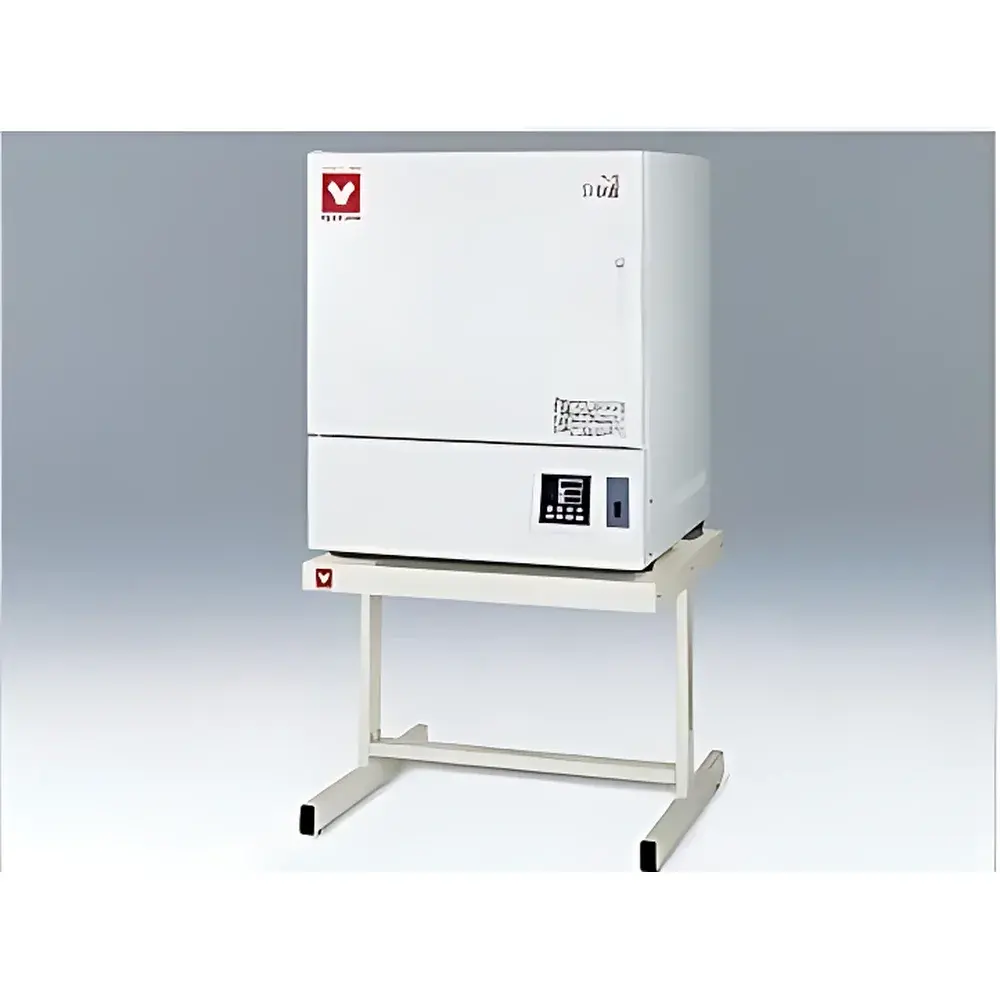
YAMATO SI611C Programmable Natural Convection Dry Heat Sterilizer
| Brand | YAMATO |
|---|---|
| Origin | Japan |
| Model | SI611C |
| Heating Method | Natural Convection |
| Temperature Range | Ambient +5°C to 260°C |
| Control System | 3-Stage PID with 30-Step Programmable Controller (3 segments × 30 steps) |
| Interior Volume | 159 L |
| Interior Dimensions (W×D×H) | 600 × 530 × 500 mm |
| Temperature Uniformity | ±20°C at 260°C |
| Temperature Accuracy | ±2°C at 260°C |
| Heating Power | 1.36 kW |
| Construction | Stainless Steel Interior, Powder-Coated Cold-Rolled Steel Exterior |
| Insulation | Glass Fiber |
| Safety Systems | Dual Independent Over-Temperature Protection (Main Controller + Dedicated Over-Temp Preventer), Heater Break Detection, SSR Short-Circuit Monitoring, Leakage Current Circuit Breaker, Keypad Lock, Power Failure Recovery |
| Compliance | Designed for GLP/GMP environments |
Overview
The YAMATO SI611C is a CE-marked, programmable natural convection dry heat sterilizer engineered for precise, repeatable thermal decontamination of heat-stable laboratory instruments, glassware, metal tools, and powders. Unlike steam-based autoclaves, dry heat sterilization relies on sustained elevated temperatures (typically ≥160°C for ≥2 hours or ≥180°C for ≥30 minutes) to achieve microbial inactivation through oxidative destruction of cellular components—particularly effective against spores resistant to moist heat. The SI611C implements this principle via a robust, double-walled chamber insulated with high-density glass fiber and heated by nickel-chromium alloy elements. Its natural convection architecture eliminates forced-air turbulence, minimizing particle resuspension and ensuring gentle, uniform thermal exposure—critical for calibration standards, surgical instruments, and pharmaceutical contact surfaces where moisture-induced corrosion or residue must be avoided.
Key Features
- Natural convection heating system ensures stable, low-turbulence thermal environment—ideal for sterilizing delicate glassware, stainless steel tools, and desiccants without mechanical stress or condensation.
- 3-segment, 30-step programmable controller enables complex thermal profiles: e.g., ramp-to-hold-cool sequences for depyrogenation validation or multi-stage drying-sterilization cycles.
- Dual independent temperature control architecture: primary 3-stage PID controller with K-type thermocouple feedback, plus a physically separate over-temperature preventer with independent sensor and cutoff circuitry—meeting IEC 61010-1 safety requirements.
- Comprehensive self-diagnostic system continuously monitors heater continuity, thermocouple integrity, SSR functionality, and power supply anomalies—logging fault codes and halting operation upon detection.
- Digital interface with dual 4-digit LED displays: green for real-time chamber temperature, red for setpoint; intuitive menu navigation via dedicated function keys and up/down buttons.
- Power failure recovery retains program state and resumes operation post-interruption—essential for unattended overnight cycles in regulated labs.
- Keypad lock prevents accidental parameter changes during active runs; configurable via auxiliary menu.
Sample Compatibility & Compliance
The SI611C accommodates a wide range of sterilization loads: borosilicate glass vials, pipette tips, forceps, scalpels, ceramic crucibles, and anhydrous powders (e.g., talc, starch). Its 159 L chamber (600 × 530 × 500 mm internal) supports up to 13 stainless-steel wire mesh shelves (30 mm spacing, 15 kg capacity per shelf). Chamber uniformity of ±20°C at 260°C—verified per ISO 17665-1 Annex D methodology—ensures consistent lethality across the entire load volume. The unit complies with JIS B 8601 (Japanese Industrial Standard for dry heat sterilizers), meets essential requirements of the EU Medical Device Regulation (MDR) Annex I for Class IIa devices when used in medical device reprocessing, and supports alignment with FDA 21 CFR Part 11 when paired with optional RS485 data logging and electronic signature-capable software.
Software & Data Management
While the SI611C operates as a standalone instrument, its optional RS485 serial interface enables integration into centralized lab monitoring systems (e.g., LabVantage, Thermo Fisher SampleManager) for remote start/stop, real-time temperature streaming, and automated report generation. The 4–20 mA analog output permits connection to chart recorders or PLCs for continuous traceability. External alarm terminals support integration with facility-wide alert systems (e.g., strobe lights, email/SMS gateways). All time- and temperature-critical events—including program initiation, deviation alarms, and cycle completion—are timestamped and stored in non-volatile memory, satisfying GLP audit requirements for data integrity and retention.
Applications
- Depyrogenation of glassware and stainless-steel components in parenteral drug manufacturing (per USP ).
- Sterilization of lubricant-free instruments prior to aseptic assembly in cleanrooms (ISO 14644-1 Class 5/7).
- Moisture-sensitive material conditioning: drying of hygroscopic reagents, pre-baking of quartz cuvettes, and residual solvent removal from analytical hardware.
- Validation studies requiring precise thermal mapping: chamber qualification per IQ/OQ protocols using calibrated thermocouples at 9–15 spatial points.
- Research laboratories performing thermal stability testing of polymers, catalysts, or inert matrices under controlled oxidative conditions.
FAQ
What is the maximum validated sterilization temperature and dwell time for bacterial endospores?
The SI611C achieves full sporicidal efficacy at 180°C for 30 minutes or 160°C for 120 minutes—consistent with ISO 14937 and EN 556-1 requirements for dry heat sterilization of medical devices.
Can the unit be validated for GMP compliance?
Yes—its digital control architecture, audit-trail-capable optional outputs, and documented thermal uniformity support IQ/OQ/PQ execution per ASTM E2500 and EU Annex 15 guidelines.
Is the interior chamber passivated or electropolished?
No—the interior uses standard 304 stainless steel sheet; for ultra-high-purity applications, users may specify optional electropolished lining as a custom modification.
Does the SI611C support Ethernet or Wi-Fi connectivity?
No—only RS485 serial communication is available; Ethernet/Wi-Fi requires external protocol converters compatible with Modbus RTU.
What maintenance intervals are recommended for routine operation?
Thermocouple calibration verification every 6 months; door gasket inspection before each use; annual inspection of heating element resistance and insulation integrity by authorized YAMATO service personnel.



