
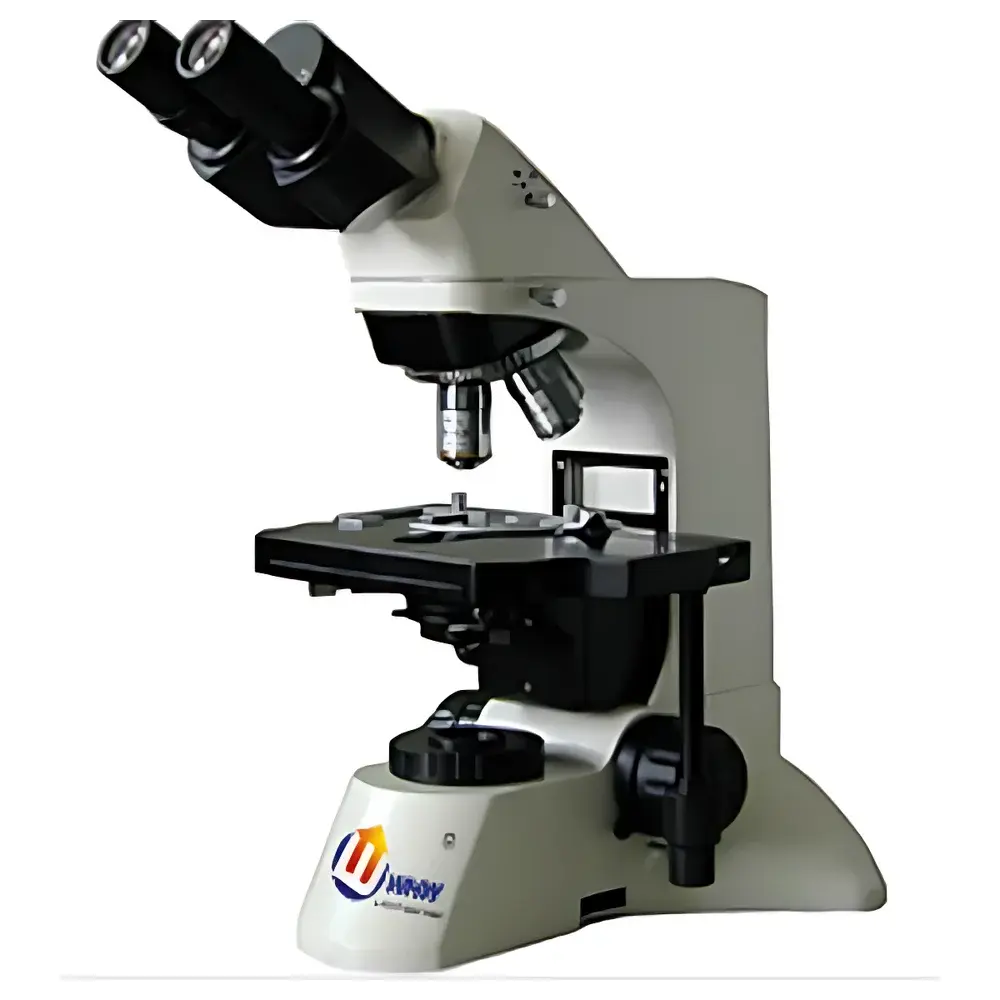
YANRUN BI-25 Biological Inverted Microscope
| Brand | YANRUN |
|---|---|
| Origin | Shanghai, China |
| Manufacturer Type | Direct Manufacturer |
| Product Category | Domestic (China-made) |
| Model | BI-25 |
| Instrument Type | Inverted Microscope |
| Eyepiece Configuration | Binocular |
| Magnification Range | 40×–1000× |
| Objective Lens System | Infinity-Corrected Achromatic Plan Objectives (4×/0.10, 10×/0.25, 40×/0.65 spring-loaded, 100×/1.25 oil immersion spring-loaded) |
| Eyepieces | Widefield WF10× (Φ22 mm) |
| Interpupillary Adjustment | Binocular tube inclined at 30° |
| Focusing Mechanism | Coaxial coarse/fine focus with adjustable tension, locking mechanism, and limit stop |
| fine focus graduation | 2 µm |
| Nosepiece | Four-position inward-rolling ball bearing turret with positive positioning |
| Stage | Dual-layer mechanical stage (210 mm × 140 mm), travel range 75 mm × 50 mm |
| Condenser | Abbe condenser (N.A. 1.25), vertically adjustable |
| Illumination | 6 V / 30 W halogen lamp with continuous intensity control |
| Built-in Field Diaphragm | Integrated in collector lens |
| Filter Holder | Includes blue filter and ground glass diffuser |
Overview
The YANRUN BI-25 Biological Inverted Microscope is engineered for routine and advanced life science applications requiring high-resolution observation of living cells, adherent cultures, and tissue specimens in standard Petri dishes, flasks, and multi-well plates. Its inverted optical architecture positions the objective lenses beneath the specimen stage and the condenser above—enabling unobstructed access to samples during manipulation, microinjection, or long-term time-lapse imaging. The microscope employs an infinity-corrected achromatic plan optical system, optimized to minimize chromatic and spherical aberrations across the full magnification range (40× to 1000×). This design ensures consistent image flatness, contrast, and resolution—critical for quantitative morphological assessment and documentation under both brightfield and phase contrast modalities.
Key Features
- Infinity-corrected achromatic plan objectives (4×, 10×, 40× spring-loaded, 100× oil immersion spring-loaded) with specified numerical apertures and working distances for optimal depth-of-field control and reduced cover-slip artifacts.
- Binocular viewing head inclined at 30°, equipped with widefield WF10× eyepieces (22 mm field number), supporting extended user comfort during prolonged observation sessions.
- Robust cast-metal frame with vibration-damping base and rigid column structure—designed to maintain optical alignment under laboratory environmental fluctuations and bench-top disturbances.
- Coaxial coarse/fine focusing system featuring adjustable coarse-focus tension, mechanical lock, upper/lower travel limits, and a calibrated fine-focus scale (2 µm per division) for reproducible Z-axis positioning.
- Large dual-layer mechanical stage (210 mm × 140 mm) with 75 mm × 50 mm travel range—facilitating rapid scanning of large culture vessels without frequent repositioning.
- Abbe condenser (N.A. 1.25) with vertical height adjustment and integrated field diaphragm for precise Köhler illumination alignment and optimal contrast control.
- 6 V / 30 W halogen illumination system with continuously variable brightness control and built-in heat-absorbing filter—ensuring stable color temperature and minimal thermal load on live specimens.
Sample Compatibility & Compliance
The BI-25 accommodates standard cell culture formats including 35 mm–150 mm Petri dishes, T-flasks (T25–T225), and 6–96-well plates—without requiring specialized holders. Its low-profile stage and extended working distance objectives support direct observation through bottom-glass surfaces up to 1.2 mm thick. Phase contrast compatibility is achieved via optional phase-specific objectives (10×, 20×, 40×, 100× PHP) and interchangeable phase annuli (PH-I, PH-II, slide-in, or pull-out condenser configurations). While not certified to ISO 13485 or FDA 21 CFR Part 11 out-of-the-box, the instrument’s mechanical stability, repeatable focusing, and standardized optical interfaces support integration into GLP-compliant workflows when paired with validated digital capture systems and documented SOPs.
Software & Data Management
The BI-25 supports analog and digital imaging via optional USB/VIDEO-capable phototubes and C-mount adapters. When coupled with third-party scientific imaging software (e.g., NIS-Elements, ZEN, or open-source tools such as ImageJ/Fiji), it enables time-series acquisition, measurement annotation, and export of TIFF/OME-TIFF metadata-rich files. Optional calibration slides and stage micrometers allow pixel-to-micron conversion for quantitative analysis. All hardware interfaces adhere to standard DIN 292 and ISO 8039 mechanical mounting specifications, ensuring interoperability with motorized stages, environmental chambers, and external shutter controllers.
Applications
- Routine inspection and confluence assessment of mammalian, insect, and stem cell monolayers.
- Phase contrast observation of unstained, transparent specimens—including primary neurons, fibroblasts, and organoids—without fixation or staining artifacts.
- Long-term live-cell imaging experiments when combined with incubation enclosures and low-heat illumination protocols.
- Quality control in biomanufacturing environments for monitoring cell viability, morphology, and contamination events.
- Academic teaching laboratories where durability, modularity, and ease of maintenance are prioritized alongside optical fidelity.
FAQ
Is the BI-25 compatible with oil immersion objectives?
Yes—the 100×/1.25 NA objective is specifically designed for oil immersion use and includes spring-loaded correction for cover-slip thickness variability.
Can the microscope be upgraded for fluorescence imaging?
No—this model lacks epi-illumination capability, filter cube slots, or dichroic mirror mounts required for fluorescence. It is optimized exclusively for transmitted-light techniques (brightfield, phase contrast, and darkfield with optional accessories).
What is the maximum specimen height clearance beneath the stage?
With the condenser fully retracted, vertical clearance between the stage aperture and lowest objective (4×) exceeds 55 mm—accommodating standard T75 flasks and thick-bottomed dishes.
Does the BI-25 include compliance documentation for regulated environments?
As a Class I general-purpose microscope, it ships with CE marking (per 2014/30/EU EMC Directive) and RoHS certification. Full GMP/GLP validation packages require site-specific IQ/OQ/PQ protocols developed in collaboration with end-user quality units.
Are replacement parts and service manuals available internationally?
Yes—YANRUN provides English-language technical documentation, exploded diagrams, and OEM-grade spare components (objectives, bulbs, condensers, stage assemblies) through authorized distribution partners in North America, EMEA, and APAC regions.





