
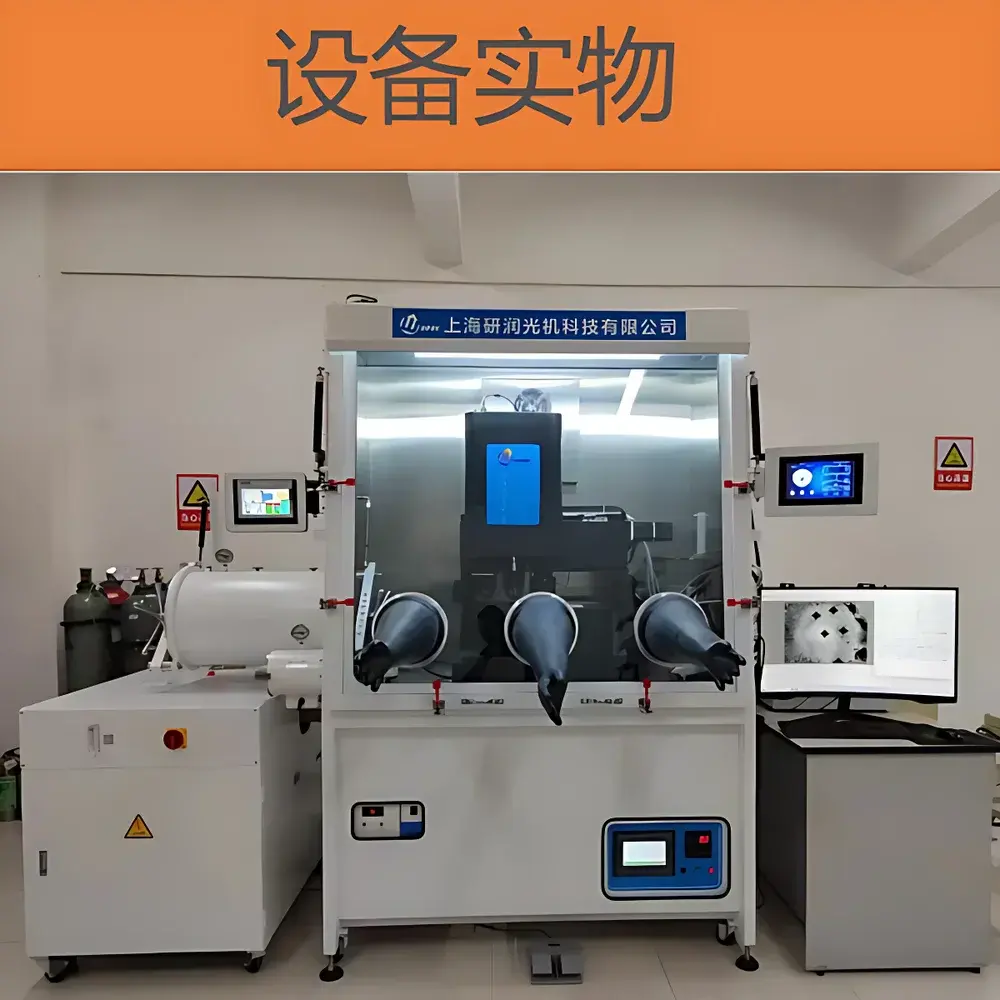

YANRUN HMAS-H1000 High-Temperature Vickers Hardness Testing System
| Brand | YANRUN |
|---|---|
| Origin | Shanghai, China |
| Manufacturer Type | Direct Manufacturer |
| Instrument Type | Vickers Hardness Tester |
| Measurement Range | 1–3000 HV |
| Operating Temperature Range | 400–1600 °C (up to 1700 °C furnace rating) |
| Maximum Test Load | ≤50 kgf (adjustable in continuous or stepwise mode) |
| Load Holding Duration | ≥3 h at ≤1600 °C |
| Optical Observation Capability | Real-time in-situ imaging up to 1600 °C (10×/20× objectives |
| Positioning Accuracy | ≤±1 µm (optional), Resolution: 0.01 µm |
| Thermal Stability | Furnace control precision ≤±1 °C |
| Sample Handling | Rapid in-situ exchange at full operating temperature (≤100 s at 1600 °C) |
| Indenter Material | Refractory ceramic/metallic composite, repairable up to 1700 °C |
| Cooling Systems | Dual-mode inert-gas convection (air & spiral external flow), water-cooled enclosure (±0.3 °C stability) |
| Compliance Support | Configurable for GLP/GMP-aligned data integrity (audit trail, electronic signatures, 21 CFR Part 11 readiness) |
Overview
The YANRUN HMAS-H1000 High-Temperature Vickers Hardness Testing System is an engineered platform for quantitative mechanical property evaluation of advanced materials under extreme thermal conditions—specifically designed for in-situ, real-time hardness, fracture toughness, elastic modulus (A- and B-type), scratch resistance, creep deformation, and microstructural evolution analysis at temperatures ranging from 400 °C to 1600 °C. Unlike conventional room-temperature hardness testers, the HMAS-H1000 integrates a fully synchronized multi-axis motion architecture with high-stability resistive heating, inert-atmosphere containment, and optical-grade high-temperature microscopy. Its core measurement principle relies on controlled indentation mechanics governed by ASTM E384 and ISO 6507-1, adapted for elevated-temperature environments through dynamic load compensation, thermal drift correction, and in-situ image-based impression metrology. The system enables direct correlation between thermally activated deformation mechanisms (e.g., dislocation mobility, grain boundary sliding, phase transformation) and quantitative mechanical response—critical for R&D in aerospace superalloys, nuclear ceramics, refractory composites, and next-generation thermal barrier coatings.
Key Features
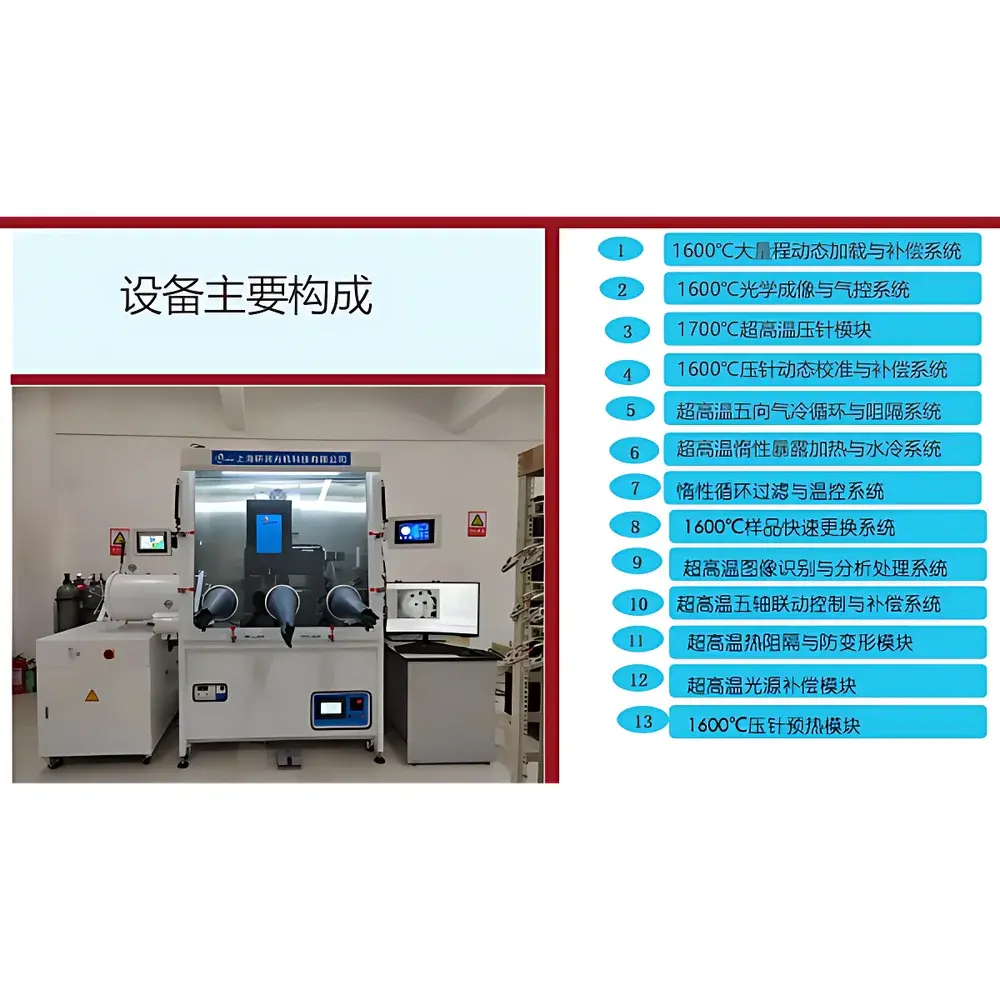
- Full-temperature-field operation: Uniform sample heating and stabilization from 400 °C to 1600 °C, with furnace-rated capability up to 1700 °C.
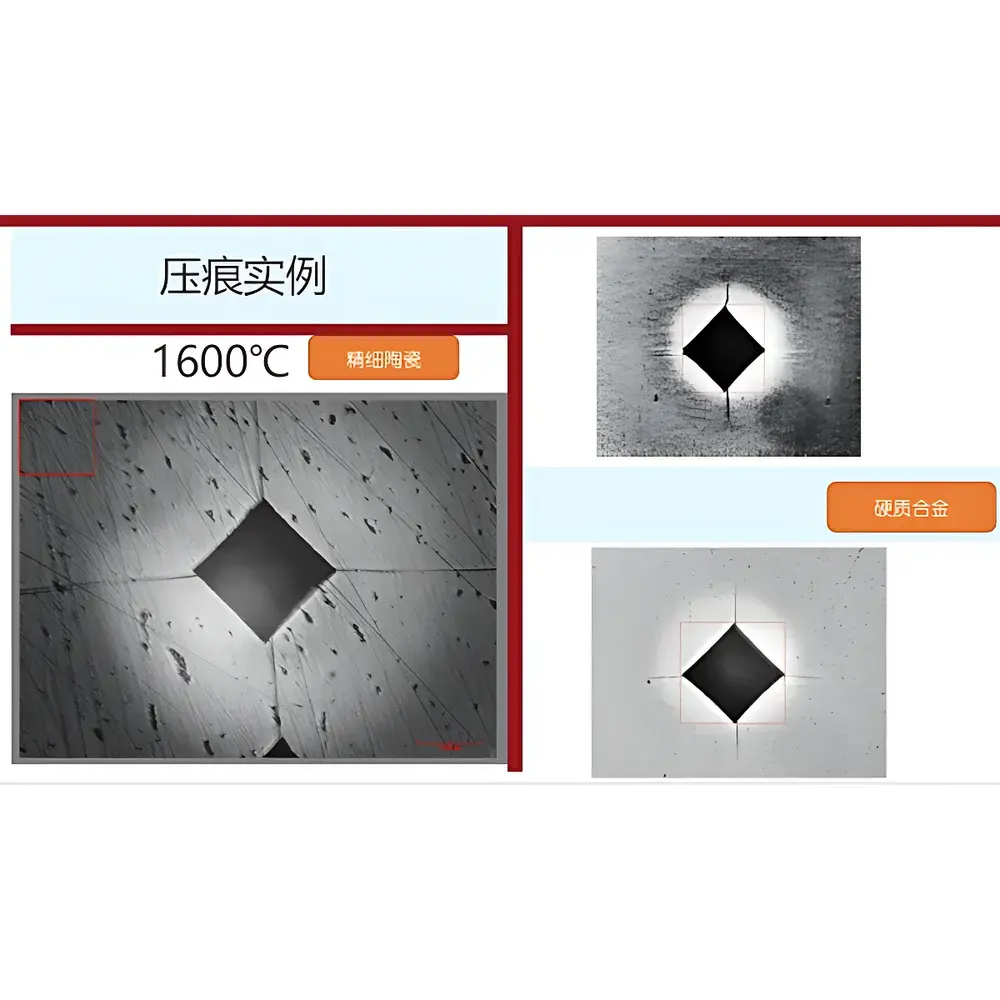
- In-situ high-temperature imaging: Dual-objective optical path (10× and 20×) rated for continuous operation at 1600 °C; optional ultra-high-magnification configurations support detailed crack-tip and phase-boundary analysis.
- Repairable indenter module: Fully sintered refractory indenter (110 mm length, ≤2300 °C sintering temperature) operable up to 1700 °C and field-repairable after thermal or mechanical degradation.
- Dynamic load control: Continuous or programmable stepwise loading from 50 g to 50 kgf, with real-time force–displacement–time acquisition and ≥3-hour sustained hold capability at maximum service temperature.
- Five-axis synchronized motion: Sub-micron positioning accuracy (≤±1 µm, optional), 0.01 µm resolution, and velocity range of 1–50,000 µm/s enable precise indenter approach, multi-point grid testing, and automated feature tracking.
- Rapid in-situ sample exchange: Mechanically isolated hot-stage module permits full-temperature specimen replacement in ≤100 seconds without thermal cycling or system cooldown.
- Dual cooling architecture: Integrated inert-gas convection (four-phase spiral airflow + 180° counterflow) and closed-loop water cooling maintain optical train and chamber ambient ≤50 °C while sustaining 1600 °C furnace operation.
Sample Compatibility & Compliance
The HMAS-H1000 accommodates cylindrical, disc-shaped, and irregularly contoured specimens up to φ30 × 30 mm (with optional large-viewport configuration). It supports metallic alloys (Ni-, Co-, Fe-based), oxide and non-oxide ceramics (Al₂O₃, SiC, ZrO₂), CMCs, and functionally graded materials. All thermal, mechanical, and optical subsystems are constructed from vacuum-compatible, low-outgassing stainless steel and high-purity alumina components. The integrated glovebox module maintains O₂/H₂O ≤1 ppm via continuous purification and automatic regeneration—meeting ISO 14644-1 Class 5 cleanroom requirements for sensitive material handling. System software architecture supports configurable audit trails, user access controls, and electronic signature workflows aligned with FDA 21 CFR Part 11 and EU Annex 11 expectations. Data output conforms to ASTM E2371 (digital reporting of indentation test results) and ISO 17025 traceability frameworks when paired with NIST-traceable reference standards.
Software & Data Management
The proprietary YANRUN HT-Analyzer Suite provides unified control of thermal, mechanical, optical, and environmental subsystems via deterministic real-time OS integration. Core modules include: (i) HT-Indent: Automated Vickers/Knoop impression detection, diagonal measurement, and hardness conversion per ISO 6507-2; (ii) HT-Fracture: Crack-length–load modeling for Palmqvist and median radial fracture toughness calculation; (iii) HT-Modulus: Unloading curve fitting (Oliver–Pharr method) for contact stiffness-derived elastic modulus; (iv) HT-Creep: Time-dependent displacement interpolation and strain-rate derivation; (v) HT-Morphology: Multi-scale image registration for post-test microstructural correlation (porosity, phase distribution, interfacial delamination). Raw sensor streams (load cell, LVDT, encoder, thermocouple) are timestamped at 1 kHz and stored in HDF5 format with embedded metadata (test parameters, calibration IDs, operator log). Export options include CSV, XML, and PDF reports compliant with internal QA protocols and third-party LIMS ingestion.
Applications
- Aerospace material qualification: Creep–rupture life prediction of single-crystal turbine blades under thermal–mechanical cycling.
- Nuclear fuel cladding development: Interfacial hardness gradients and irradiation-induced embrittlement assessment in SiC/SiC composites.
- Thermal barrier coating (TBC) durability: Bond coat/thermally grown oxide (TGO)/ceramic top coat hardness profiling across thermal gradient zones.
- Refractory metallurgy: Solidus–liquidus transition mapping via localized indentation softening in Mo–Si–B alloys.
- Additive manufacturing process optimization: In-situ hot-isostatic-pressing (HIP) simulation and residual stress relaxation kinetics in LPBF Inconel 718.
- Geophysical mineral physics: Phase-transition–hardness coupling in mantle silicates (e.g., MgSiO₃ perovskite) under simulated lower-mantle P–T conditions.
FAQ
What is the maximum continuous operating temperature for in-situ indentation testing?
The system performs real-time indentation, imaging, and load holding continuously at temperatures up to 1600 °C. The furnace is rated to 1700 °C for thermal soak-only applications.
Can the indenter be replaced or refurbished without system disassembly?
Yes—the 1700 °C-rated indenter module is fully removable and repairable in situ using standard high-temperature sintering protocols; no vacuum break or optical recalibration is required.
Is the system compatible with existing laboratory LIMS or ELN platforms?
Raw data export (HDF5, CSV) and RESTful API endpoints are provided for seamless integration with commercial LIMS, ELN, and MES systems. Audit trail logs meet 21 CFR Part 11 electronic record requirements.
What calibration standards are supported for high-temperature hardness verification?
The system accepts NIST-traceable high-temperature reference blocks (e.g., certified WC–Co, NiCrAlY, and Al₂O₃ standards) with documented thermal expansion coefficients and temperature-dependent hardness curves.
Does the glovebox integrate with the main testing chamber without compromising thermal isolation?
Yes—a differential-pressure-sealed interface ensures inert atmosphere continuity between glovebox and furnace chamber while maintaining independent pressure regulation and purge sequencing.



