
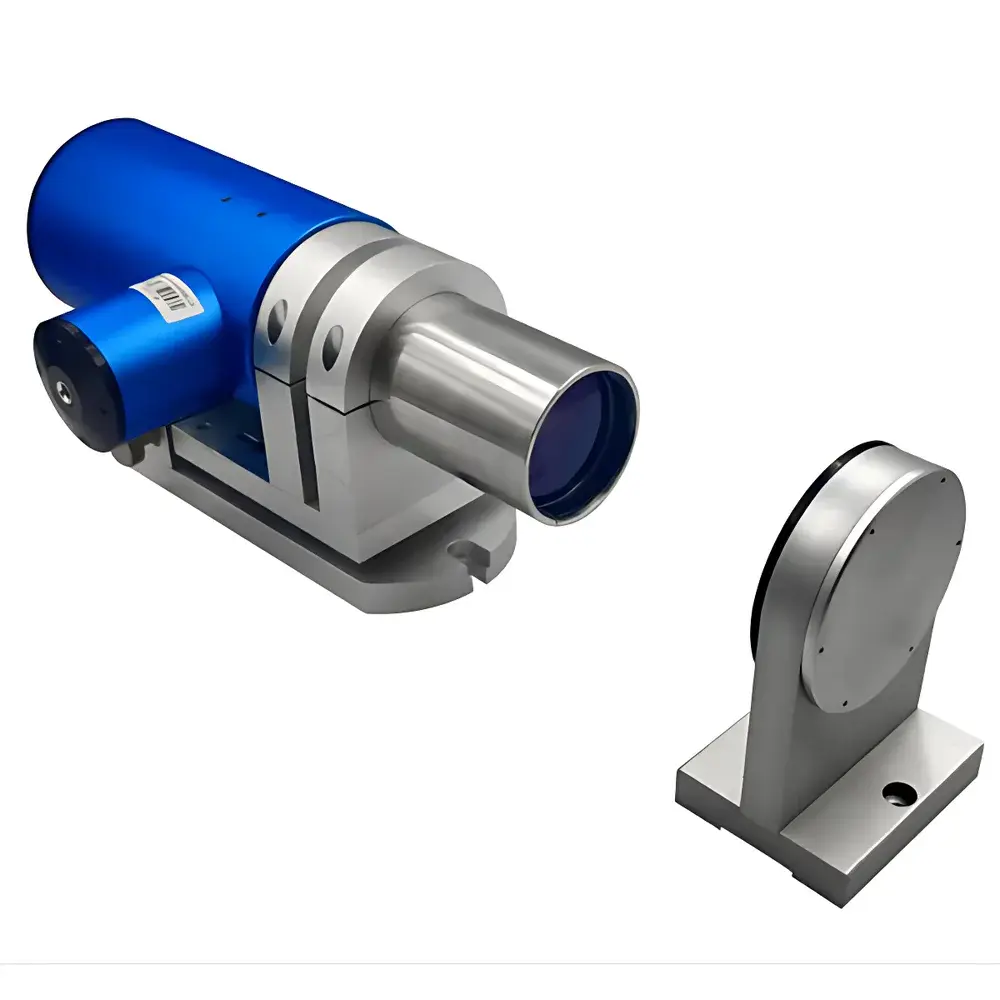
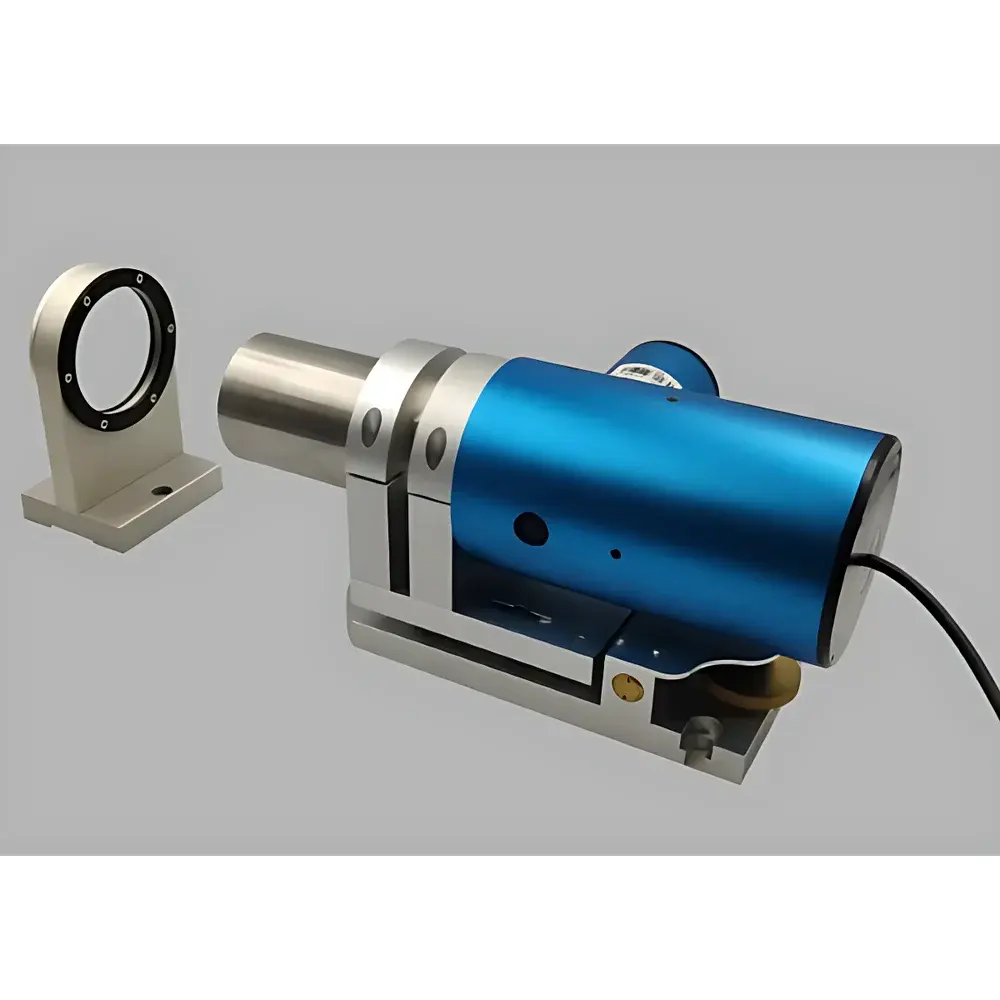
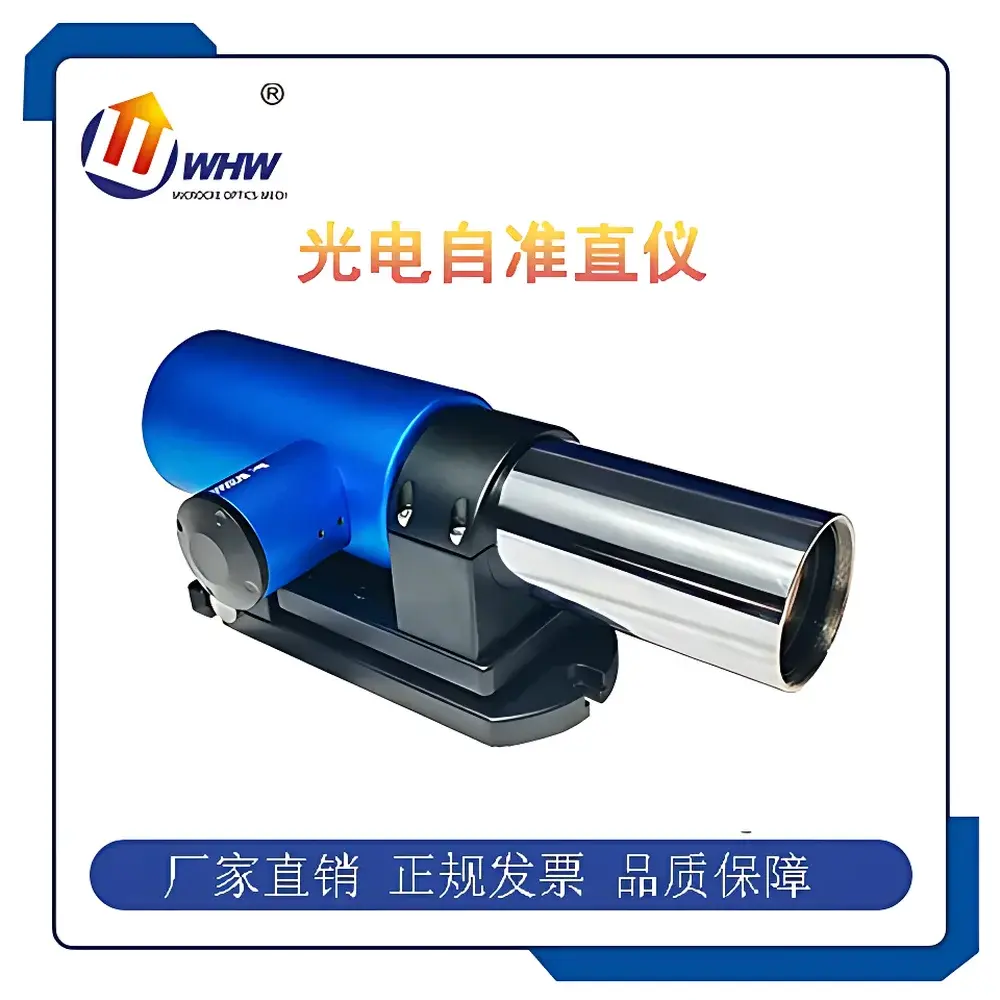
YANRUN YRMAT2020H Dual-Axis Electronic Autocollimator (1 arcsecond resolution)
| Brand | YANRUN |
|---|---|
| Origin | Shanghai, China |
| Manufacturer Type | Direct Manufacturer |
| Model | YRMAT2020H |
| Focal Length | 200 mm |
| Aperture | 50 mm |
| Measurement Range | 0–20 m |
| Resolution | Adjustable from 1″ to 0.1″ (arcseconds) |
| Field of View (X/Y) | 3200″ × 2400″ (arcseconds) |
| Accuracy (Center, ±1000″) | ≤ ±1″ |
| Detector | High-Precision Photodiode Array |
| Light Source | Imported Semiconductor LED (Lifespan > 30,000 h) |
| Interface | USB 2.0/3.0 |
| Software | Windows 7+ (64-bit), Intel Core i3-4th Gen or higher, ≥2.3 GHz |
| Dimensions | 288 × 130 × 115 mm |
| Weight | 3.3 kg |
Overview
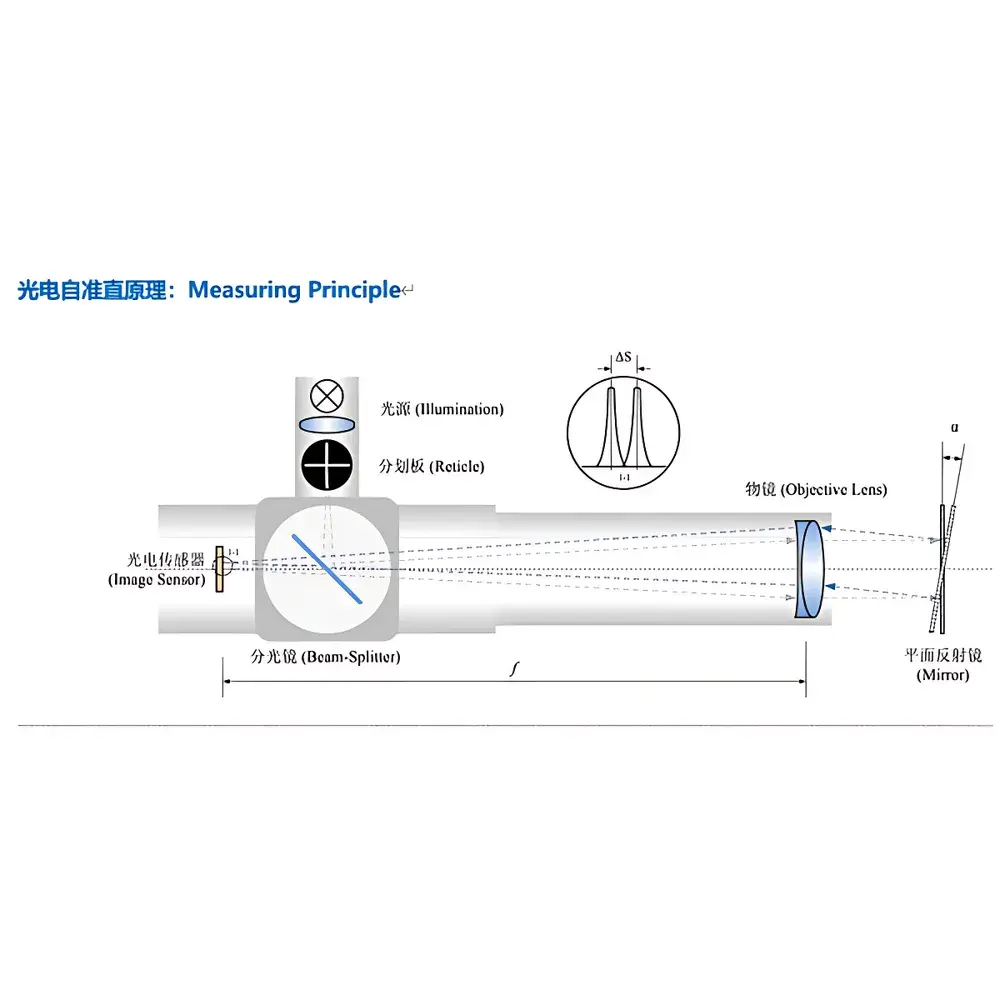
The YANRUN YRMAT2020H Dual-Axis Electronic Autocollimator is a precision angular metrology instrument engineered for high-reproducibility measurement of minute angular deviations in two orthogonal axes (X and Y). It operates on the fundamental optical principle of autocollimation: collimated light—generated by projecting a reticle image located at the focal plane of a 200 mm focal-length objective lens—is reflected by a planar mirror perpendicular to the optical axis. Any angular tilt (α) of the mirror results in a lateral displacement (ΔS) of the returned reticle image on a co-located photodetector array, where ΔS ∝ 2α. This linearized relationship enables traceable, sub-arcsecond angular quantification without mechanical interpolation. Unlike traditional visual autocollimators requiring subjective eyepiece alignment, the YRMAT2020H employs a high-resolution digital imaging sensor and real-time centroid detection algorithms to eliminate observer-induced parallax and fatigue errors. Its compact monolithic design (288 × 130 × 115 mm, 3.3 kg), combined with an integrated long-life LED illumination system (>30,000 h), ensures operational stability across laboratory, workshop, and field environments. The instrument is calibrated per ISO 10110-5 and verified against NIST-traceable angle standards; accuracy specifications (≤ ±1″ within ±1000″ range) are valid under controlled metrological conditions (24 h thermal stabilization at 20 ± 0.5 °C).
Key Features
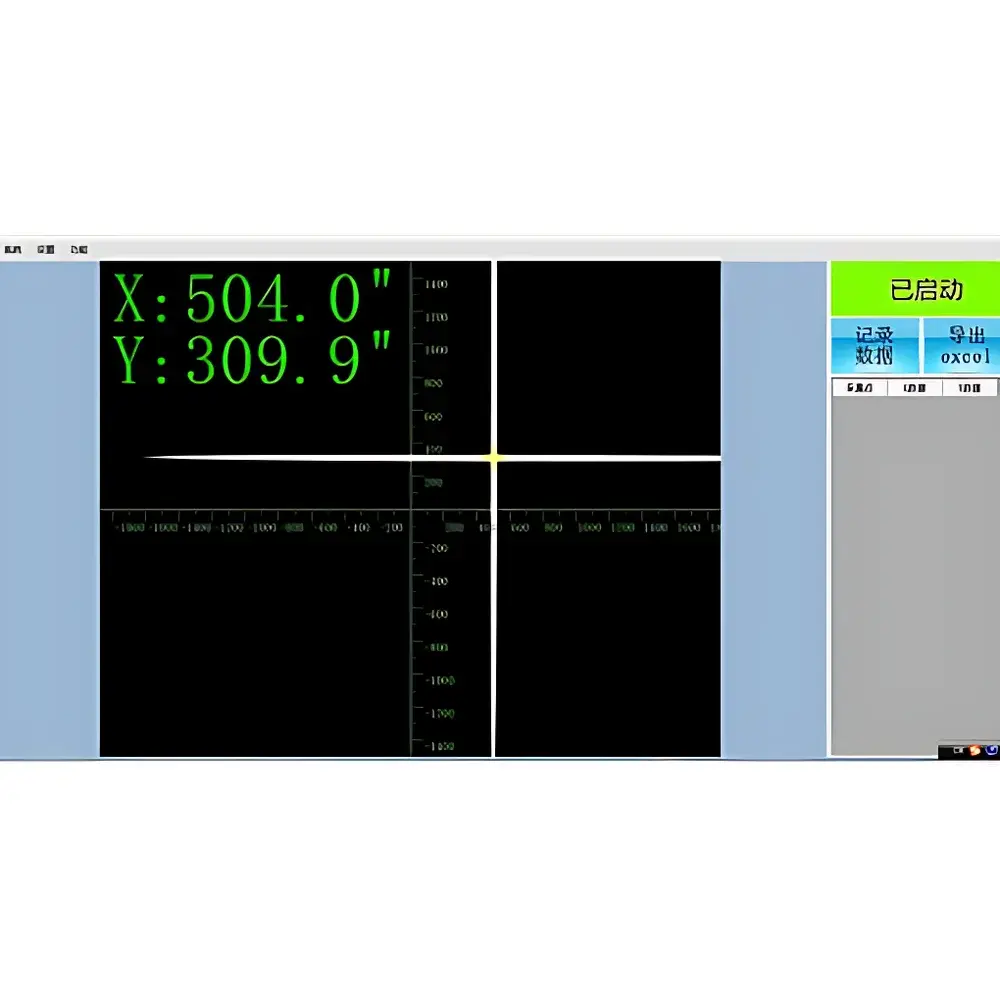
- Dual-axis simultaneous measurement capability with independent X/Y coordinate acquisition and real-time deviation visualization.
- Adjustable angular resolution from 1″ down to 0.1″ (arcseconds), configurable via software to match application-specific uncertainty budgets.
- Real-time electronic eyepiece interface displaying live centroid position, statistical dispersion (σx, σy), and dynamic trend plots—eliminating human aiming variability.
- High-sensitivity photodiode array detector optimized for low-noise signal capture and robust centroid computation under varying ambient lighting.
- USB 2.0/3.0 interface enabling deterministic data transfer to host PC; compatible with Windows 7/10/11 (64-bit), requiring ≥Intel Core i3-4th Gen CPU and ≥2.3 GHz clock speed.
- Modular software architecture supporting on-the-fly curve fitting, error band calculation (e.g., straightness envelope per ISO 230-2), and automated report generation in standardized Excel format.
- Multi-language UI (English, Chinese, Russian, Korean) compliant with international lab documentation requirements and multilingual operator training protocols.
- Compact, vibration-damped housing rated IP52 for dust resistance and incidental moisture protection during transport and setup.
Sample Compatibility & Compliance
The YRMAT2020H is designed for non-contact angular assessment of reflective surfaces—including precision-ground mirrors, optical flats, machine tool ways, rotary tables, and aerospace structural components—with surface roughness < λ/4 (633 nm HeNe equivalent) and reflectivity ≥4% (uncoated aluminum) or ≥95% (dielectric-coated optics). It meets essential requirements of ISO 10360-1 (coordinate measuring machines), ISO 230-1 (machine tool testing), and ASTM E2917 (standard practice for autocollimator use in angular metrology). While not FDA-regulated, its software architecture supports audit trails and user-access controls aligned with GLP/GMP documentation frameworks. All firmware and measurement algorithms are protected under Chinese Utility Model Patent ZL20212XXXXXXX.X and registered intellectual property (CNIPA Certificate No. XXXXXXXX). Calibration certificates include traceability statements referencing national metrology institutes (NIM, China) and optional UKAS-accredited calibration upon request.
Software & Data Management
The included YR-MeasureSuite v3.x software provides a deterministic, deterministic acquisition engine with sub-millisecond frame synchronization and hardware-triggered data logging. Measurement modules include Straightness (ISO 230-2 Annex B), Flatness (per ISO 10360-2), Perpendicularity/Parallelism (using dual-mirror or pentaprism configurations), and Rotary Table Indexing Error Analysis (compatible with multi-face polygon calibrators). Raw pixel coordinates, temperature-compensated angular values, and statistical summaries (mean, std dev, max/min, Cg/Cgk) are stored in structured binary files (.yrm) with embedded metadata (operator ID, timestamp, environmental conditions). Export options include CSV, PDF reports with configurable headers/footers, and native Excel (.xlsx) with formula-locked cells for regulatory submission. Software complies with ISO/IEC 17025:2017 clause 7.7.1 for data integrity; all changes to measurement parameters are logged with timestamps and user credentials for full traceability.
Applications
- Precision alignment of CNC machine tool spindles, guideways, and linear motion stages per ISO 230-1 and VDI/VDE 2617.
- Verification of optical component mounting angles in laser resonators, interferometer setups, and astronomical instrumentation.
- Flatness evaluation of granite surface plates (Grade 0/AA per ISO 8512-2) using bridge-type or grid-based scanning protocols.
- Aerospace component inspection: wing spar angularity, turbine blade root orientation, and satellite payload boresight validation.
- Calibration of angular encoders, rotary tables, and indexing heads using multi-facet polygons (8-, 12-, 24-face) and reversal techniques.
- Physics education labs: quantitative demonstration of small-angle approximation, diffraction-limited resolution, and optical lever principles.
- Quality control in semiconductor lithography equipment assembly, where stage-leveling tolerances demand <0.5″ repeatability.
FAQ
What is the minimum measurable angle and its associated uncertainty?
The instrument achieves a base resolution of 0.1″ (arcsecond) with typical Type A uncertainty of ±0.3″ (k=2) under stabilized thermal conditions (20 ± 0.2 °C, 48 h soak). Uncertainty increases to ±0.8″ at 20 m working distance due to atmospheric turbulence and mirror flatness limitations.
Is the system compatible with third-party motion controllers or PLCs?
Yes—via ASCII command protocol over USB CDC virtual COM port; documented API supports integration with LabVIEW, MATLAB, Python (PySerial), and Beckhoff TwinCAT.
Does the software support 21 CFR Part 11 compliance for regulated industries?
The standard version includes electronic signatures, audit trails, and role-based access control. Full 21 CFR Part 11 validation packages (including IQ/OQ/PQ protocols) are available as optional add-ons.
Can the YRMAT2020H measure non-perpendicular surfaces?
It requires a retroreflector or corner cube for off-normal incidence; angular deviation is reported relative to the local surface normal, not the instrument’s optical axis.
What environmental conditions affect measurement stability?
Air turbulence (ΔT > 0.5 °C/m), vibration (≥2.5 µm peak-to-peak at 10–100 Hz), and stray light exposure degrade centroid repeatability. Use of active vibration isolation and thermal shielding is recommended for <0.5″ applications.





