
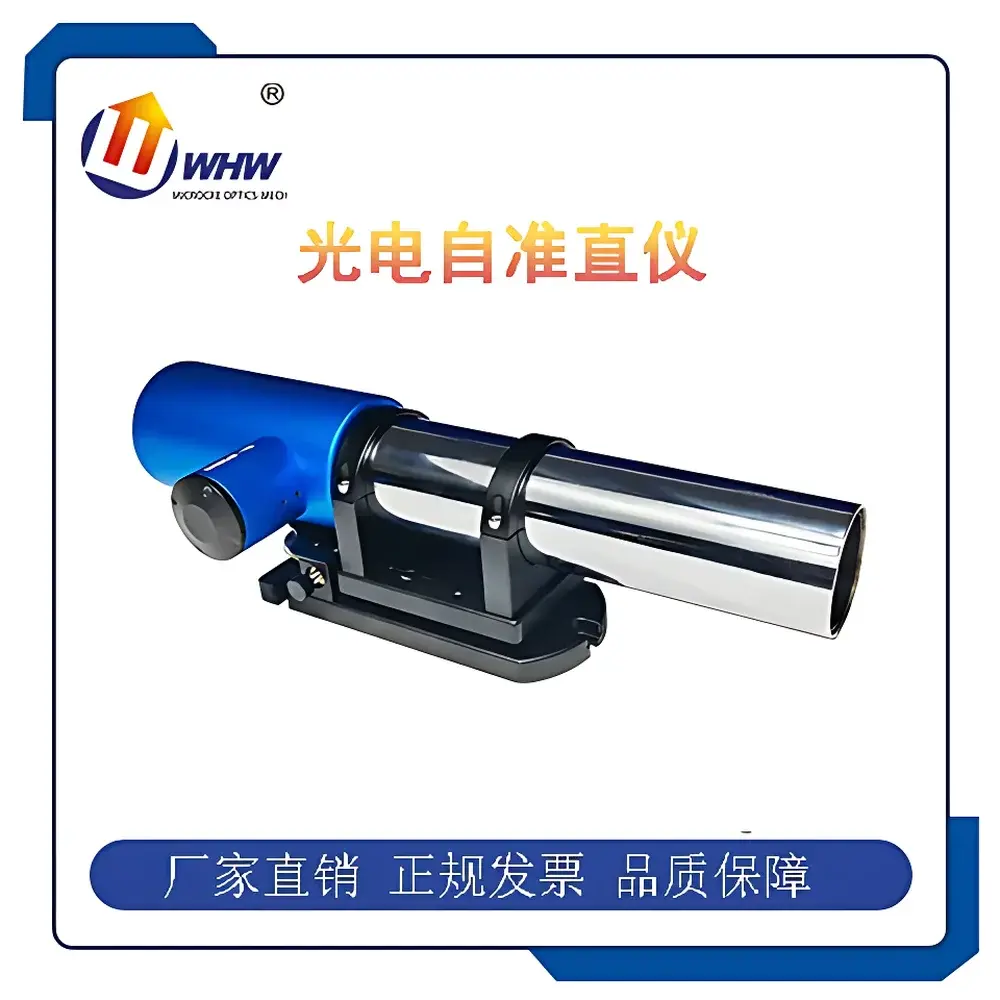
Yanrun YRMAT3035B Dual-Axis Electronic Autocollimator (0.5 arcsecond)
| Brand | Yanrun |
|---|---|
| Origin | Shanghai, China |
| Manufacturer Type | Manufacturer |
| Model | YRMAT3035B |
| Focal Length | 300 mm |
| Aperture Diameter | 50 mm |
| Measurement Range | 0–35 m |
| Detector | High-Resolution Image Sensor |
| Display Resolution | 0.01–1 arcsecond |
| Field of View (X/Y) | 2200″ × 1800″ |
| Central Accuracy | ±0.5″ (±100″ full range) |
| Light Source | Semiconductor LED |
| Interface | USB 2.0 |
| Software | Autocollimator Control Software V2.0 (incl. Straightness Module) |
| Dimensions (L×W×H) | 388 × 135 × 125 mm |
| OS Requirement | Windows 7 or later, 64-bit |
Overview
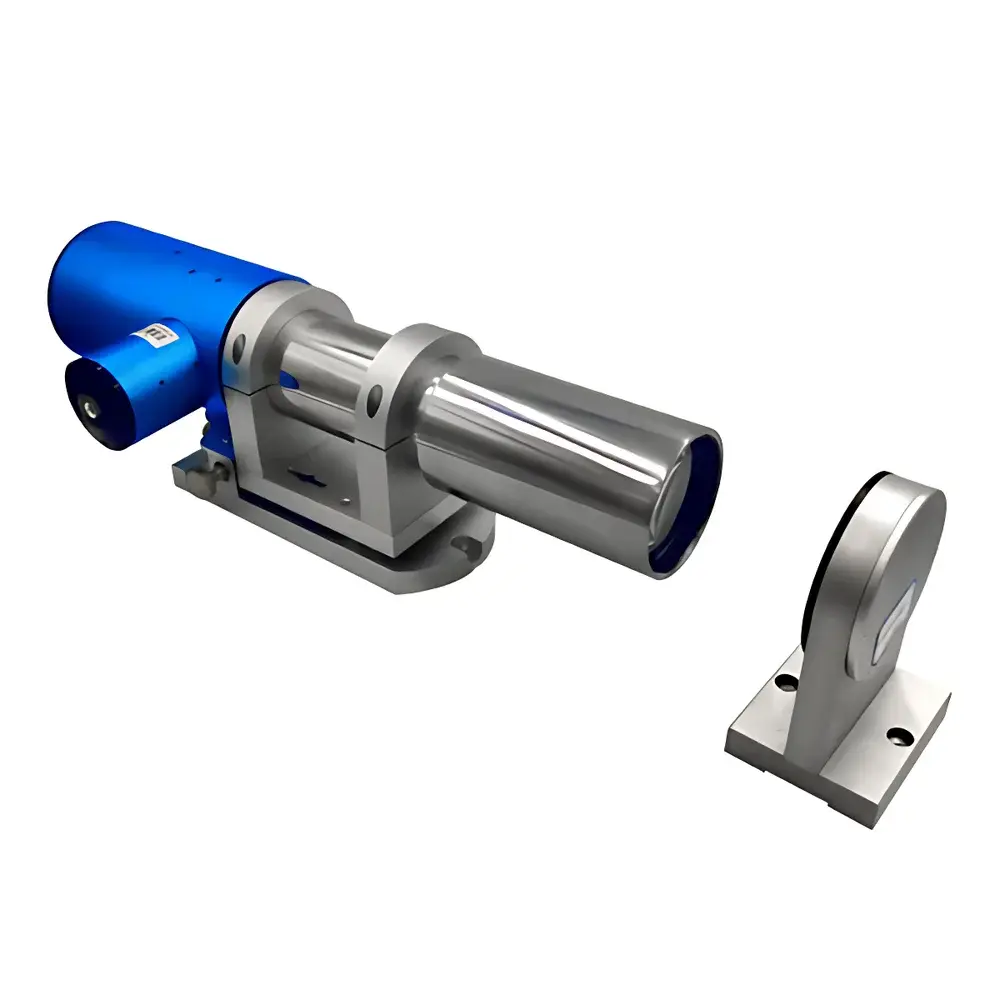
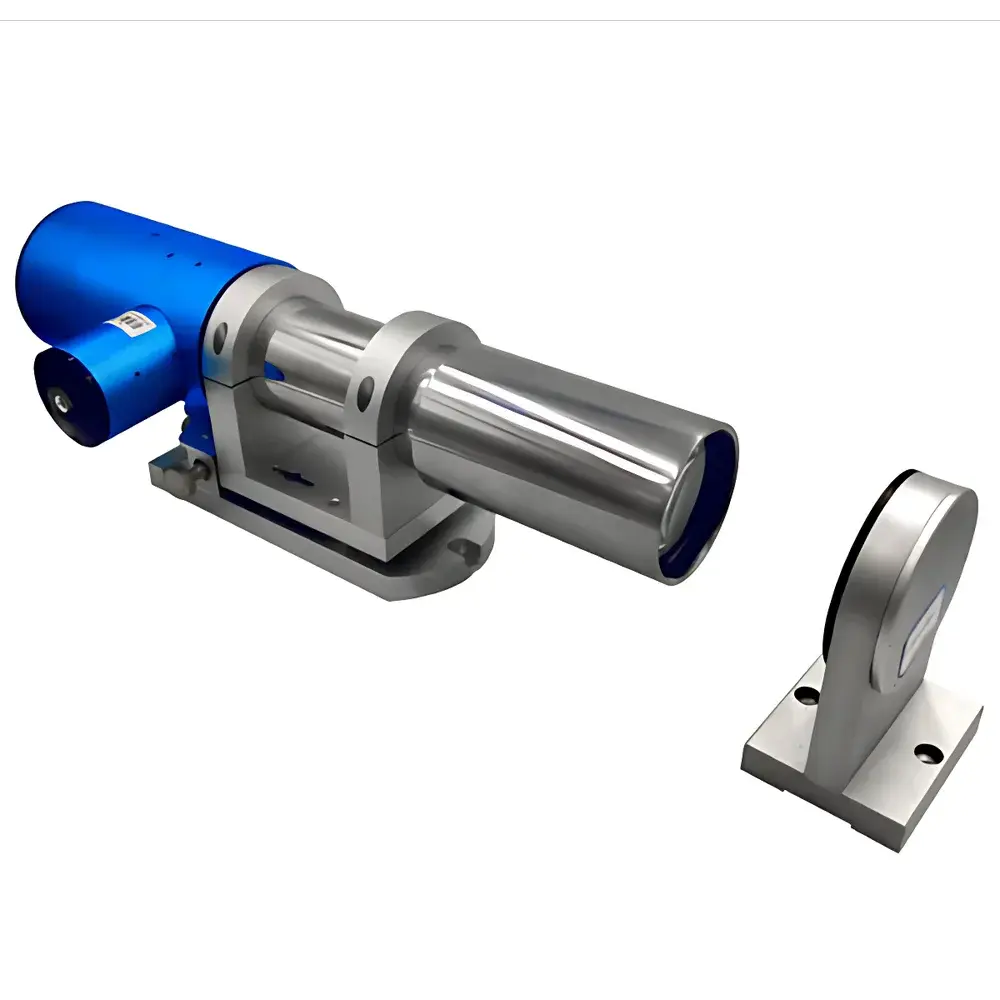
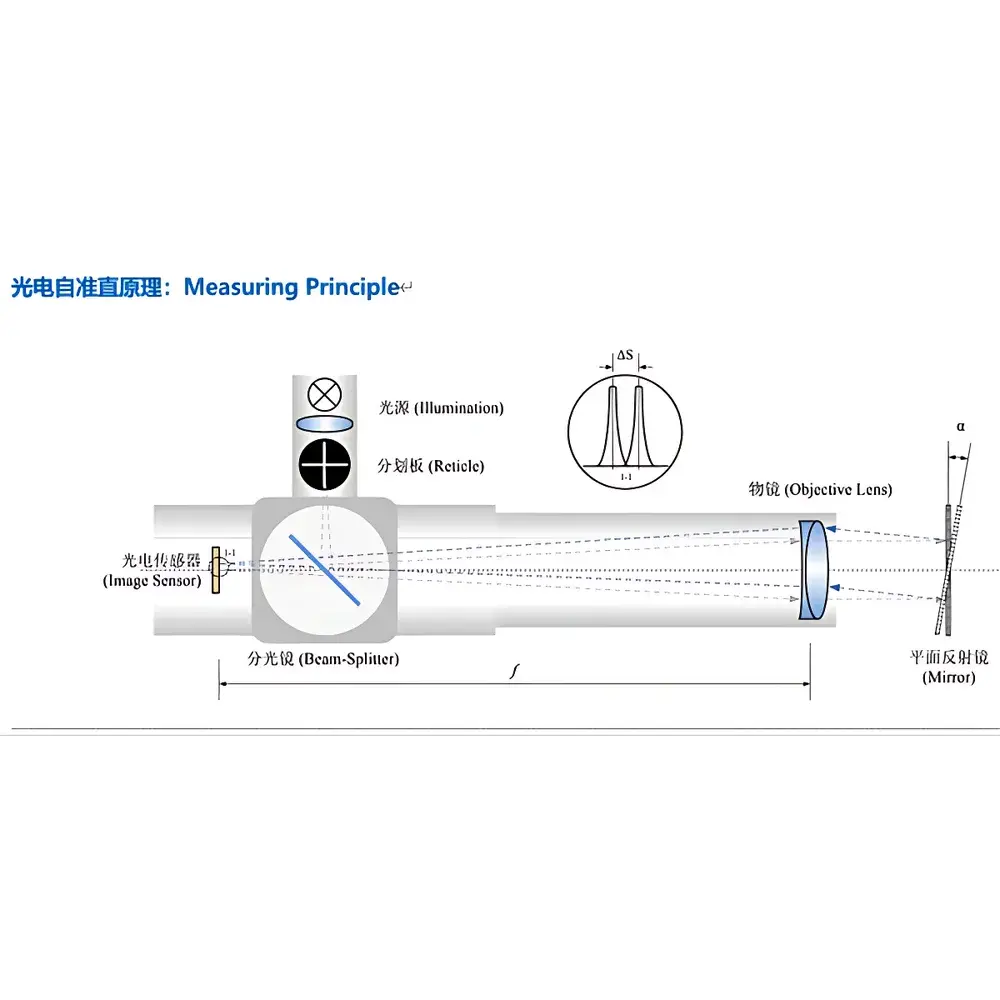
The Yanrun YRMAT3035B Dual-Axis Electronic Autocollimator is an advanced optical metrology instrument engineered for high-precision angular measurement and alignment verification in industrial metrology, precision manufacturing, and research laboratories. Based on the fundamental principle of autocollimation—where a collimated beam is reflected back by a retroreflector (e.g., a plane mirror) and its displacement on a high-resolution image sensor is translated into angular deviation—the YRMAT3035B delivers real-time, non-contact, dual-axis (X and Y) angular measurements with a central accuracy of ±0.5 arcseconds. Its 300 mm focal length objective and 50 mm clear aperture ensure optimal signal-to-noise ratio and beam stability over working distances up to 35 meters. Unlike traditional visual autocollimators reliant on operator-dependent eyepiece alignment, this system integrates embedded digital image processing, an electronic reticle display, and semiconductor LED illumination—eliminating parallax and observer-induced error while enabling traceable, repeatable, and auditable measurement records.
Key Features
- Dual-axis simultaneous measurement capability (X and Y) enables efficient evaluation of angular deviations without mechanical reorientation.
- Real-time electronic eyepiece visualization provides immediate visual feedback and eliminates human aiming uncertainty inherent in analog instruments.
- High-resolution CMOS/CCD image sensor ensures sub-arcsecond resolution and stable centroid detection under varying ambient lighting conditions.
- Long-life, low-heat, high-efficiency LED light source guarantees consistent beam intensity over extended operational cycles (>20,000 hours), reducing calibration drift risk.
- Compact, integrated design (388 × 135 × 125 mm) facilitates portability across shop floor, cleanroom, and laboratory environments without compromising optical rigidity.
- USB 2.0 interface enables direct connection to host PC; no external power supply required—power delivered via bus.
- Autocollimator Control Software V2.0 supports automated error calculation, real-time curve generation, and export to Excel-compatible CSV formats for downstream statistical process control (SPC) or reporting.
Sample Compatibility & Compliance
The YRMAT3035B is compatible with standard optical flat mirrors (λ/20 or better surface quality), kinematic mounts, and optional accessories such as magnetic bases, laser-assisted targeting units, and multi-faceted polygons for calibration traceability. It supports measurement of angular displacement, straightness (via reversal or sequential positioning), verticality, parallelism, flatness (when used with adjustable bridge plates), and coaxiality—applications aligned with ISO 230-1 (machine tool testing), ISO 10360 (coordinate measuring machine acceptance), and ASTM E1316 (non-destructive testing terminology). While not inherently FDA 21 CFR Part 11 compliant out-of-the-box, audit trail functionality—including timestamped measurement logs, user ID tagging, and version-controlled software binaries—can be implemented within validated laboratory environments adhering to GLP/GMP documentation requirements.
Software & Data Management
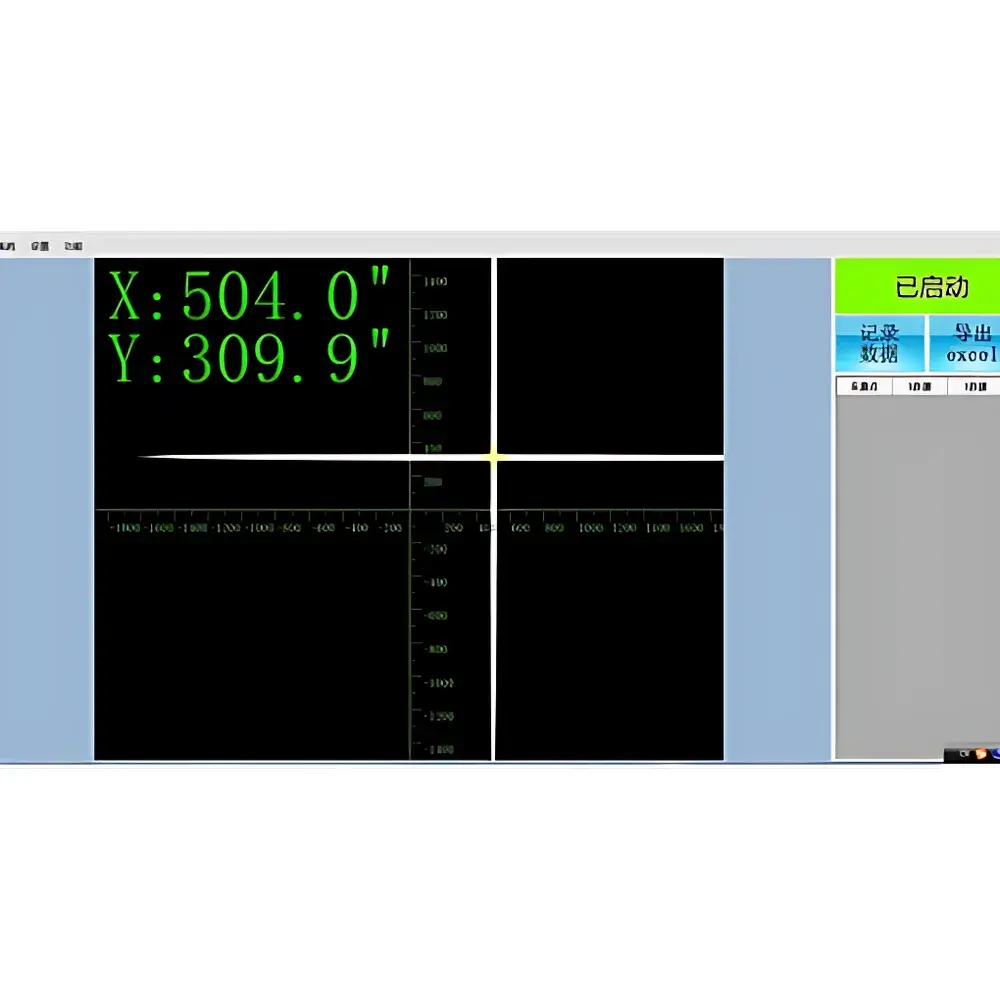
The included Autocollimator Control Software V2.0 runs natively on Windows 7 (64-bit) and later. It provides a calibrated graphical interface displaying live electronic crosshair alignment, numeric angular readouts (in arcseconds or microradians), and dynamic trend plots. The software architecture supports modular expansion: optional licensed modules include Straightness Analysis, Flatness Evaluation (with grid-based probe point interpolation), Verticality/Parallelism Error Decomposition, and Rotary Table Harmonic Error Mapping. All raw and processed data are stored in structured CSV files containing metadata (date/time, operator ID, instrument serial number, configuration parameters), ensuring compatibility with LIMS, MES, or custom QA databases. No proprietary binary formats are used—facilitating third-party integration and long-term data archival.
Applications
- Precision alignment of CNC machine tool spindles, guideways, and rotary tables during installation and periodic verification.
- Verification of geometric tolerances—including straightness, flatness, perpendicularity, and parallelism—in aerospace structural assemblies and optical benches.
- In-process monitoring of lens cell centering and prism orientation during high-accuracy optical assembly.
- Calibration of angle encoders, polygon mirrors, and indexing tables against national metrology institute (NMI) traceable standards.
- Research-grade angular vibration analysis in physics laboratories using time-series acquisition mode (requires optional dynamic measurement module).
- Quality assurance of large-scale coordinate measuring machine (CMM) granite tables and air-bearing stages.
FAQ
What is the maximum measurable distance for the YRMAT3035B?
The instrument supports reliable angular measurement up to 35 meters when used with a high-quality plane mirror (surface flatness ≤ λ/20) and stable environmental conditions (temperature variation < ±1°C/hour, minimal air turbulence).
Does the system support automated calibration routines?
Yes—the software includes built-in zero-setting, sensitivity calibration, and mirror tilt compensation functions. Full calibration against traceable angle standards (e.g., NIST-traceable polygons) requires external reference equipment.
Can measurement data be integrated into enterprise QA systems?
All exported CSV files contain standardized headers and metadata fields compatible with common SPC platforms (e.g., Minitab, JMP) and SQL-based QA databases. Custom API integration is possible via documented COM/ActiveX interfaces.
Is thermal drift compensated in real time?
The YRMAT3035B does not feature active temperature compensation; however, its all-metal optical housing and low-power LED source minimize thermal hysteresis. For critical applications, users are advised to perform warm-up stabilization (≥30 min) and conduct measurements within controlled lab environments (ISO 230-2 Class 2 or better).
What accessories are required for flatness measurement?
Flatness evaluation requires the optional Adjustable Bridge Plate, motorized or manual translation stage, and the licensed Flatness Error Analysis Module. Standard configuration includes only straightness-capable components.




